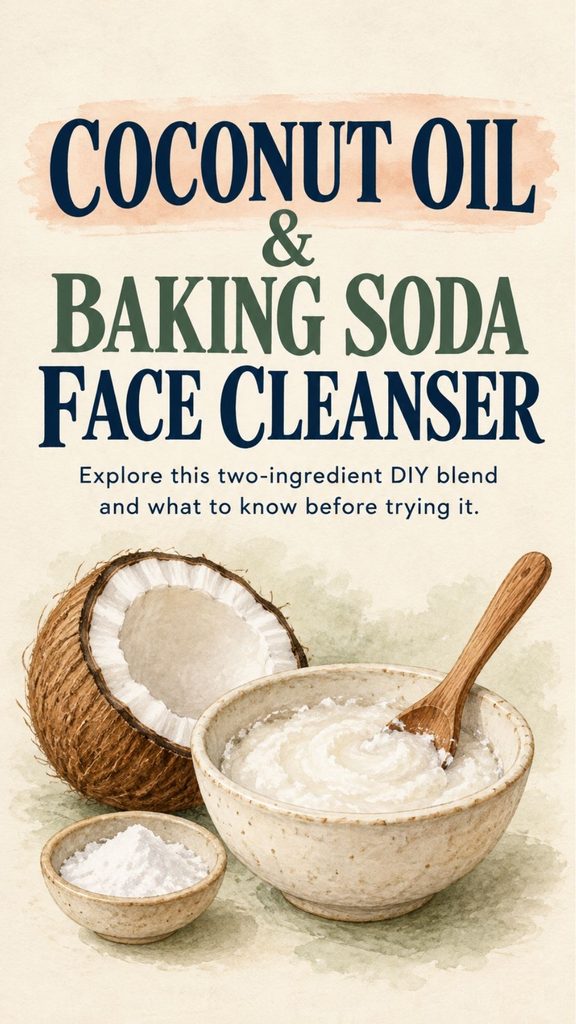
What if two simple ingredients from your kitchen could make your skin look smoother, softer, and younger?
That’s the promise behind a popular homemade beauty treatment made with coconut oil and baking soda.
According to the viral recipe, combining these ingredients creates a natural facial cleanser that can remove dead skin cells, fight blackheads, reduce acne, fade scars, and even make wrinkles less noticeable.
You Might Also Like:
- Loading posts...
It’s easy to see why the idea has attracted so much attention.
Coconut oil is inexpensive and well known for its moisturizing properties. Baking soda is a familiar household ingredient often used for cleaning and deodorizing.
But while both ingredients have useful properties, that doesn’t mean mixing them together creates a safe anti-aging treatment.
In fact, regularly rubbing baking soda on facial skin can cause irritation, dryness, and damage to the skin’s protective barrier. Coconut oil may be moisturizing for some people, but it can also contribute to clogged pores.
So, can this popular combination really make you look 10 years younger?
Let’s explore what happens when you apply these ingredients to your face, which claims are supported by evidence, and how to achieve healthier-looking skin without relying on harsh homemade treatments.
Why Coconut Oil and Baking Soda Became a Popular Beauty Treatment
Homemade skincare recipes have been around for generations.
People have used ingredients such as honey, oatmeal, plant oils, and yogurt in traditional beauty routines.
Coconut oil and baking soda became especially popular because they seem to offer two benefits in one treatment.
Coconut oil helps soften the skin and reduce moisture loss.
Baking soda has a mildly abrasive texture that can remove some loose surface debris.
Together, they may temporarily make skin feel smooth and oily.
However, that immediate sensation doesn’t necessarily mean the mixture is improving skin health.
In some cases, the ingredients can actually make existing problems worse.
Understanding how each ingredient affects the skin is the first step toward making a better skincare decision.
1. Coconut Oil Can Help Moisturize Dry Skin
One of coconut oil’s better-supported cosmetic benefits is its ability to reduce moisture loss.
Coconut oil contains fatty acids that help soften skin and form a protective layer over its surface.
This type of ingredient is called an emollient and occlusive.
It can help dry areas feel smoother and more comfortable.
Potential Benefits
When tolerated, coconut oil may:
- Soften rough skin.
- Reduce moisture loss.
- Improve the temporary appearance of dry patches.
- Make skin feel more supple.
- Help maintain a smoother-looking surface.
These effects can be particularly noticeable on naturally dry areas such as elbows, knees, and hands.
Can Coconut Oil Reduce Fine Lines?
Sometimes moisturizing dry skin makes fine lines appear less noticeable.
This happens because hydrated skin often looks smoother and more supple.
But it is a temporary cosmetic improvement.
Coconut oil hasn’t been shown to reverse wrinkles, rebuild lost collagen, or make skin biologically 10 years younger.
For people with oily or acne-prone skin, it may also be too heavy for regular facial use.
2. Baking Soda Can Remove Surface Debris, but There’s a Catch
Baking soda, also known as sodium bicarbonate, is commonly used in baking and household cleaning.
Its fine particles can create a scrubbing effect when mixed with liquid or oil.
This is why some homemade beauty recipes recommend using it to exfoliate the face.
However, facial skin is much more delicate than many household surfaces.
Why Baking Soda Can Be Problematic
Healthy skin has a naturally slightly acidic surface, generally around pH 4.5–5.5.
This helps support its protective barrier.
Baking soda is alkaline, with a pH of approximately 8–9 when dissolved in water.
Repeated exposure can disrupt the skin’s natural balance.
Possible effects include:
- Tightness
- Dryness
- Redness
- Burning or stinging
- Flaking
- Irritation
- Increased sensitivity
The risk becomes greater when baking soda is rubbed aggressively or left on the skin for extended periods.
Does Baking Soda Really Deep-Clean Pores?
Not in the way viral beauty articles often suggest.
Baking soda may remove some surface oil and debris, but it doesn’t reliably clear clogged pores or address the biological causes of acne.
Scrubbing too hard can also aggravate existing pimples.
For this reason, baking soda isn’t a good choice for regular facial exfoliation.
3. Can the Mixture Remove Blackheads?
Blackheads develop when hair follicles become clogged with oil and dead skin cells.
The exposed material darkens through oxidation.
Despite what some homemade beauty recipes claim, blackheads are not simply dirt trapped on the face.
That means washing harder or using stronger scrubs isn’t necessarily the solution.
Why the Homemade Mixture May Disappoint
Baking soda may remove surface residue, but it doesn’t consistently clear the material inside clogged pores.
Coconut oil can also contribute to breakouts in some people.
The result may be temporary smoothness without meaningful improvement in blackheads.
What Works Better?
If blackheads are your main concern, consider products formulated with salicylic acid.
Salicylic acid is commonly used in acne skincare because it helps exfoliate within pores.
A gentle cleanser, suitable moisturizer, and consistent routine are also important.
If blackheads persist, a dermatologist can recommend additional options.
4. Does Coconut Oil Help With Acne?
Coconut oil contains fatty acids, including lauric acid.
Some research has found that certain coconut-derived compounds have antimicrobial effects in laboratory settings.
However, laboratory findings don’t prove that applying ordinary coconut oil to your face will treat acne.
Acne is influenced by multiple factors, including oil production, clogged follicles, inflammation, and hormonal activity.
Coconut oil doesn’t reliably address these issues.
Could Coconut Oil Make Acne Worse?
For some people, yes.
Coconut oil can feel heavy on facial skin and may contribute to clogged pores or breakouts.
If your skin is naturally oily or prone to acne, a lightweight, non-comedogenic moisturizer is usually a more suitable choice.
Better Ingredients for Acne-Prone Skin
Depending on your needs, evidence-based skincare options may include:
- Salicylic acid
- Benzoyl peroxide
- Adapalene
- Azelaic acid
- Gentle, non-comedogenic moisturizers
Choose products suitable for your skin and follow their instructions.
Persistent or painful acne may require professional treatment.
5. Can Coconut Oil and Baking Soda Remove Wrinkles?
This is the biggest claim behind the viral face wash.
Some articles suggest that applying coconut oil and baking soda can make wrinkles disappear and dramatically rejuvenate the face.
Unfortunately, there is no convincing clinical evidence supporting that promise.
What Causes Wrinkles?
Wrinkles develop through several processes, including:
- Natural aging
- Changes in collagen and elastin
- Repeated facial movements
- Sun exposure
- Genetics
- Smoking
- Changes in skin hydration
A homemade scrub cannot reverse all of these processes.
Why Skin Might Look Smoother After Using Oil
Moisturizing ingredients can improve the appearance of dryness-related fine lines.
When dry skin becomes softer and more hydrated, it may temporarily look smoother.
But that isn’t the same as permanently reducing deeper wrinkles.
What About Baking Soda?
Baking soda doesn’t have established anti-aging benefits.
In fact, irritating the skin can make dryness and visible lines more noticeable.
The bottom line: Coconut oil may temporarily soften skin, but mixing it with baking soda isn’t a proven wrinkle treatment.
6. Can Coconut Oil Fade Dark Spots and Acne Scars?
Another popular claim is that coconut oil can fade acne marks, brighten the complexion, and help remove scars.
However, different types of skin discoloration require different treatments.
Dark Spots
Dark spots may develop after inflammation, sun exposure, hormonal changes, or other skin conditions.
Coconut oil isn’t an established treatment for hyperpigmentation.
Acne Scars
True acne scars can involve changes to the skin’s underlying structure.
Moisturizing may soften the appearance of dry skin, but it cannot reliably repair depressed or raised scars.
What May Help Instead?
Depending on the concern, useful options may include:
- Daily broad-spectrum sunscreen
- Azelaic acid
- Appropriate retinoid products
- Niacinamide
- Professional dermatological treatments
A dermatologist can help identify whether you’re dealing with pigmentation, scarring, or another skin concern.
7. Is Coconut Oil Suitable for Every Skin Type?
No single moisturizer is ideal for everyone.
Your skin type, sensitivity, existing conditions, and product preferences all matter.
Dry Skin
Coconut oil may help reduce moisture loss if your skin tolerates it.
However, a fragrance-free moisturizer containing ceramides, glycerin, or other barrier-supporting ingredients may be more versatile.
Oily Skin
Coconut oil may feel greasy or heavy.
A lightweight moisturizer may be more comfortable.
Acne-Prone Skin
Coconut oil can contribute to clogged pores in some individuals.
Products labeled non-comedogenic may be a better starting point.
Sensitive Skin
Both coconut oil and baking soda can cause unwanted reactions.
Baking soda is especially concerning because of its alkalinity and scrubbing effect.
Mature Skin
Mature skin often benefits from consistent moisturizing and sun protection.
A gentle moisturizer and appropriate evidence-based treatments are more useful than harsh homemade scrubs.
8. What Happens if You Use Baking Soda on Your Face Too Often?
A homemade baking soda scrub may feel effective immediately because the skin feels unusually clean.
But frequent use can strip away surface oils and irritate the protective barrier.
Over time, some people may notice:
- Persistent dryness
- Increased redness
- Flaking
- Sensitivity to skincare products
- Discomfort after washing
- Worsening irritation
Signs Your Skin Barrier May Be Irritated
Your face may feel tight after cleansing.
Moisturizer may suddenly sting.
Products that previously felt comfortable may begin causing redness.
Your skin may also look unusually dry or rough.
If this happens, stop using the irritating product.
Focus on gentle cleansing, moisturizing, and protecting your skin while it recovers.
If symptoms are severe or persistent, consult a healthcare professional.
9. The Original Coconut Oil and Baking Soda Recipe Explained
The viral recipe commonly recommends combining:
- 2 teaspoons extra-virgin coconut oil
- 1 teaspoon baking soda
The ingredients are mixed into a paste and applied to the face.
Some versions recommend gently rubbing the mixture into the skin and leaving it on for approximately five minutes before rinsing.
Why This Recipe Isn’t Recommended
The combination has not been established as a safe, effective facial cleanser or anti-aging treatment.
The baking soda may irritate the skin.
The coconut oil may leave a heavy residue or contribute to clogged pores.
And the mixture doesn’t reliably remove wrinkles, scars, acne, or blackheads.
The claim that you won’t need moisturizer afterward is also misleading.
A properly formulated facial moisturizer may provide hydration and barrier support that coconut oil alone doesn’t offer.
What Does “Aluminum-Free Baking Soda” Mean?
Some homemade beauty instructions specifically ask for aluminum-free baking soda.
Pure baking soda is sodium bicarbonate and does not normally contain aluminum as an ingredient.
It is sometimes confused with baking powder, which is a different product.
Choosing an aluminum-free label doesn’t solve the main concern: baking soda’s alkalinity makes it poorly suited to repeated facial application.
10. A Gentler Way to Cleanse Your Face
If your goal is smoother, healthier-looking skin, you don’t need to rely on a homemade abrasive mixture.
A simple routine can be both effective and affordable.
What You’ll Need
- Gentle facial cleanser
- Lukewarm water
- Soft, clean towel
- Moisturizer suitable for your skin
- Broad-spectrum SPF 30 or higher sunscreen for daytime use
Step 1: Wash With Lukewarm Water
Wet your face gently.
Avoid very hot water, which can aggravate dryness and irritation.
Step 2: Apply a Mild Cleanser
Use a small amount of gentle facial cleanser.
Massage lightly with your fingertips.
There is no need to scrub aggressively.
Step 3: Rinse Thoroughly
Remove the cleanser with lukewarm water.
Avoid leaving product residue around your hairline, nose, and jaw.
Step 4: Pat Dry
Use a clean towel and gently pat your skin.
Don’t rub harshly.
Step 5: Moisturize
Apply a suitable moisturizer while your skin is still slightly damp.
This helps support hydration and comfort.
Step 6: Protect Your Skin During the Day
Use a broad-spectrum sunscreen with SPF 30 or higher.
Sun protection is one of the most important habits for reducing preventable skin aging.
11. Five Skincare Ingredients That May Be More Useful Than a Homemade Scrub
You don’t need every ingredient on this list.
Choose products based on your actual skin concerns.
1. Glycerin
Glycerin is a humectant that helps attract and retain water.
It is commonly found in facial moisturizers.
2. Ceramides
Ceramides are lipids that help support the skin barrier.
They can be especially useful in moisturizers designed for dry or sensitive skin.
3. Niacinamide
Niacinamide is a form of vitamin B3 used in many skincare products.
It may help support the skin barrier and improve certain aspects of uneven skin tone.
4. Hyaluronic Acid
Hyaluronic acid helps bind water and can temporarily improve the appearance of hydrated skin.
5. Retinoids
Certain retinoids have evidence supporting improvements in fine lines and some acne-related concerns.
However, they may cause irritation, and some should not be used during pregnancy.
Ask a healthcare professional which options are appropriate if you’re unsure.
12. Everyday Habits That Help Skin Look Healthier
Skincare products are only one part of maintaining healthy-looking skin.
Simple daily habits matter too.
Wear Sunscreen Consistently
Sun exposure contributes to wrinkles, pigmentation, and other visible changes in skin.
Use sunscreen as directed and combine it with shade and protective clothing.
Avoid Excessive Exfoliation
Removing dead surface cells can be useful when done appropriately.
But exfoliating too frequently can irritate your skin.
Stay Consistent With Moisturizer
Regular moisturizing can improve the appearance and comfort of dry skin.
Get Adequate Sleep
Sleep supports overall health and recovery.
While sleeping more won’t erase wrinkles, poor sleep can affect how refreshed you look and feel.
Eat a Balanced Diet
Include a variety of:
- Vegetables
- Fruit
- Whole grains
- Protein-rich foods
- Healthy fats
No single food can reverse skin aging, but balanced nutrition supports general health.
Avoid Smoking
Smoking contributes to premature skin aging and many serious health problems.
Avoiding tobacco is beneficial for both skin and overall health.
13. A Simple Skincare Routine for Adults Over 40 and 50
As skin changes with age, a complicated beauty routine isn’t always necessary.
Many people benefit from using fewer products consistently.
Morning Routine
- Cleanse gently if needed.
- Apply a hydrating moisturizer.
- Use broad-spectrum SPF 30 or higher sunscreen.
Evening Routine
- Remove makeup and sunscreen.
- Cleanse with a gentle facial wash.
- Apply any suitable treatment product.
- Finish with moisturizer.
If your skin is particularly dry, a richer fragrance-free moisturizer may be helpful.
Introduce new active ingredients gradually rather than starting several treatments at once.
The goal is comfortable, healthy-looking skin rather than an unrealistic promise of looking a certain number of years younger.
Frequently Asked Questions
Can Coconut Oil Make Your Face Look Younger?
Coconut oil may temporarily soften dry skin and make dehydration-related fine lines look less noticeable.
It has not been proven to reverse aging or make someone look 10 years younger.
Can I Mix Coconut Oil and Baking Soda for My Face?
Regular use isn’t recommended because baking soda can disrupt the skin barrier and cause irritation.
Coconut oil may also contribute to clogged pores in some people.
Does Baking Soda Remove Wrinkles?
No convincing clinical evidence shows that baking soda removes wrinkles.
Its abrasive and alkaline properties may irritate facial skin.
Can Coconut Oil Remove Dark Spots?
Coconut oil isn’t an established treatment for hyperpigmentation.
Appropriate sunscreen and targeted skincare products have stronger supporting evidence.
Does Coconut Oil Help With Dry Skin?
Yes, coconut oil can reduce moisture loss and soften dry skin in some people.
However, it isn’t suitable for every skin type.
Can I Use Coconut Oil as a Makeup Remover?
It may help dissolve certain makeup products, but it can leave residue and may clog pores.
A properly formulated cleansing balm or oil that rinses away easily is often more convenient.
Avoid getting coconut oil directly into your eyes.
Is Baking Soda Safe for Sensitive Skin?
Baking soda can be irritating, particularly when used repeatedly or as a scrub.
People with sensitive or damaged skin should avoid using it as a homemade facial exfoliant.
What Is the Best Way to Reduce Fine Lines?
Daily sun protection, regular moisturizing, and appropriate evidence-based skincare treatments can help improve the appearance of certain fine lines.
Results vary by person, and deeper wrinkles may require professional treatment.
The Bottom Line: You Don’t Need a Harsh Homemade Scrub for Younger-Looking Skin
Coconut oil and baking soda are inexpensive, familiar ingredients, which helps explain why the homemade facial-cleanser recipe became so popular.
But inexpensive and natural don’t automatically mean effective or gentle.
Coconut oil can help moisturize dry skin when tolerated, but it may contribute to clogged pores in some people.
Baking soda can remove some surface debris, yet its alkaline nature and abrasive texture make it a poor choice for regular facial cleansing.
The combination has not been proven to eliminate wrinkles, fade scars, cure acne, or make your skin look 10 years younger.
For a healthier-looking complexion, the most dependable approach is usually much simpler.
Cleanse gently.
Moisturize consistently.
Protect your face from unnecessary sun exposure.
Choose products suited to your skin type.
And avoid treatments that repeatedly leave your skin irritated.
Healthy, comfortable, well-cared-for skin is a much better goal than trying to achieve dramatic anti-aging promises with two kitchen ingredients.
You don’t need a miracle face wash.
You need a routine your skin can tolerate and benefit from over time.