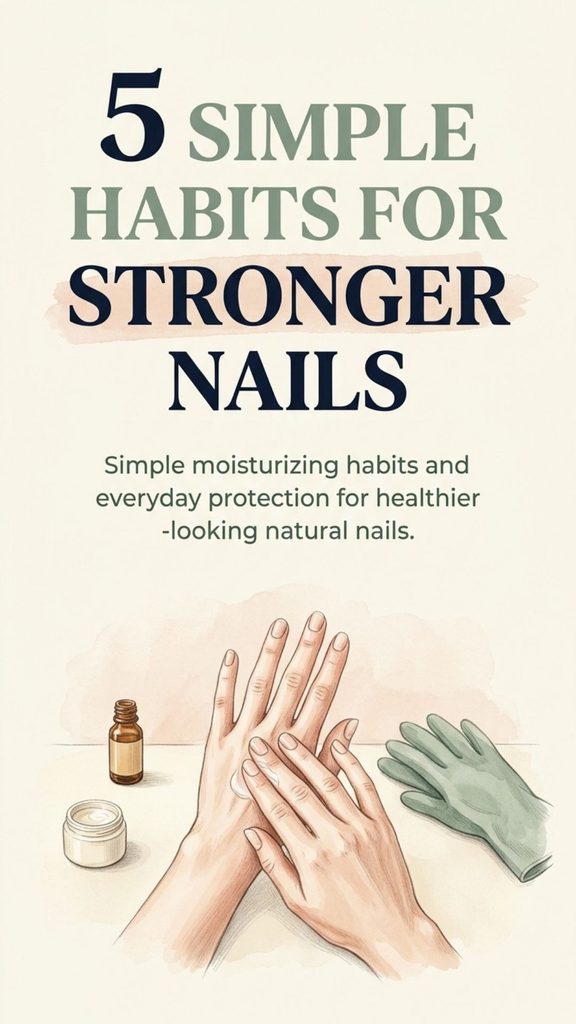
Strong, smooth, healthy-looking nails don’t necessarily require expensive salon treatments, complicated beauty routines, or a collection of specialized products.
Sometimes, the most useful nail-care habits involve things you already have at home: a good moisturizer, a little oil, protective gloves, and a few minutes of regular care.
If your nails frequently bend, peel, split, or break before they grow longer, the problem may have less to do with finding a miracle treatment and more to do with everyday wear and moisture loss.
You Might Also Like:
- Loading posts...
Frequent handwashing, cleaning products, prolonged exposure to water, and certain manicure habits can all contribute to nail damage.
The encouraging news is that many people can improve the condition of their nails by changing how they care for them.
However, there’s an important distinction between making nails look shinier immediately and helping healthier nails grow over time.
These seven practical habits focus on protecting your nails, reducing unnecessary damage, and maintaining moisture without making unrealistic promises about overnight results.
Why Do Nails Become Soft, Brittle, or Weak?
Fingernails are made primarily of keratin, a structural protein also found in hair and the outer layer of skin.
The visible nail plate is formed from cells produced in the nail matrix, which lies beneath the skin near the base of the nail.
As new cells form, the nail gradually grows forward.
Healthy nails normally have some flexibility. Being extremely hard is not necessarily the same as being healthy, and nails do not need to feel rigid to be strong.
Problems arise when the nail plate repeatedly splits, peels, or breaks.
Common contributing factors include:
- Frequent handwashing
- Repeated wetting and drying
- Exposure to detergents and cleaning products
- Nail biting or picking
- Aggressive filing
- Repeated gel or artificial nail removal
- Dry skin around the nails
- Physical damage from everyday activities
Sometimes, persistent nail changes are associated with skin conditions, infections, nutritional problems, or other health concerns.
That’s why the best approach is to protect nails from avoidable damage while paying attention to unusual or persistent changes.
1. Moisturize Your Nails and Cuticles Every Day
Moisturizing is one of the simplest and most useful habits for maintaining healthy-looking nails.
The skin surrounding your nails can become dry from frequent washing, cold weather, and exposure to household products.
Dry cuticles may develop rough edges and painful hangnails.
The nail plate itself can also become brittle when repeatedly exposed to moisture and drying.
Applying a suitable moisturizer helps reduce dryness and keeps the surrounding skin more comfortable.
What to Look for in a Hand Cream
You don’t necessarily need a product marketed specifically as a nail-strengthening cream.
A regular hand moisturizer may work well.
Useful moisturizing ingredients include:
- Glycerin
- Petrolatum
- Mineral oil
- Shea butter
- Dimethicone
- Ceramides
- Hyaluronic acid
These ingredients work in different ways to attract moisture, soften skin, support the skin barrier, or reduce water loss.
A fragrance-free cream is often a sensible choice for people with sensitive or easily irritated skin.
How to Apply Moisturizer Properly
After washing your hands:
- Dry them gently with a clean towel.
- Apply a small amount of hand cream.
- Massage it over your fingers and the backs of your hands.
- Work a little cream around each nail and cuticle.
- Reapply whenever your skin feels dry.
For particularly dry areas, a thin layer of petroleum jelly can provide additional moisture protection.
The American Academy of Dermatology recommends moisturizing nails and cuticles, particularly after handwashing and between manicures.
2. Use Olive Oil to Soften Dry Cuticles
Olive oil is a familiar kitchen ingredient that can also function as an emollient.
When applied to the skin, it can help soften dry areas and temporarily give nails a glossy appearance.
This makes it a possible option for people who enjoy simple, inexpensive beauty routines.
However, olive oil should not be described as a proven nail-growth treatment.
There is insufficient evidence that applying ordinary olive oil directly to the nails makes them grow faster or become structurally stronger.
Its most reasonable use is as a conditioning product for the surrounding skin.
A Simple Olive Oil Nail-Care Routine
If your skin tolerates olive oil:
- Wash your hands and dry them.
- Place a small drop of olive oil on a clean fingertip.
- Massage it gently around the cuticle area.
- Allow it to absorb or remain briefly on the skin.
- Wipe away excess oil if your hands feel greasy.
You can do this occasionally, particularly when the skin surrounding your nails feels dry.
There is no established benefit to soaking your nails in olive oil for long periods.
A small amount is sufficient for basic conditioning.
If you develop irritation, stop using it and choose a fragrance-free hand moisturizer instead.
3. Try Coconut Oil as an Alternative Moisturizer
Coconut oil is another household ingredient sometimes used for skin and nail care.
Like other oils, it can soften dry skin and reduce some moisture loss.
A small amount applied around the nails may leave the cuticles feeling smoother.
However, claims that coconut oil dramatically accelerates nail growth or repairs damaged nail plates are not supported by strong clinical evidence.
Its potential benefit is primarily related to moisturizing and conditioning.
How to Use Coconut Oil Around Your Nails
Choose a small amount of plain coconut oil.
Warm it between your fingertips until it softens.
Massage it gently around the nails and cuticles.
Remove excess oil if necessary.
You don’t need to combine coconut oil with several other oils or create a complicated homemade treatment.
If you already have a moisturizer that works well, there may be little reason to add coconut oil at all.
People who experience irritation or allergic reactions should avoid it.
The simplest routine is often the easiest to maintain.
4. Wear Protective Gloves When Cleaning and Washing Dishes
This may be the most practical habit for anyone whose nails frequently split or peel.
Prolonged exposure to water can contribute to brittle nails.
Frequent contact with detergents, cleaning products, and other household chemicals can make the problem worse.
Think about how often your hands come into contact with water throughout the day.
Washing dishes, cleaning the kitchen, scrubbing the bathroom, handwashing clothes, and other household chores can create repeated cycles of wetting and drying.
Protective gloves help reduce that exposure.
When Should You Wear Gloves?
Use suitable gloves when:
- Washing dishes
- Scrubbing the bathtub
- Cleaning sinks and toilets
- Handling household cleaning products
- Handwashing laundry
- Completing messy household projects
- Gardening in wet soil
Choose gloves appropriate for the task and the products you’re handling.
If your hands become sweaty inside waterproof gloves, take breaks and dry them as needed.
For longer tasks, comfortable cotton liners may help some people manage moisture inside their gloves.
Why This Habit Matters
You can apply moisturizer every evening, but if your nails spend hours exposed to water and detergents during the day, maintaining their condition may remain difficult.
Protecting them from repeated exposure addresses one of the contributing causes of brittleness.
Even cleaning products labeled natural can irritate skin or damage nails with prolonged contact.
Natural does not automatically mean gentle.
5. Keep Nails Trimmed and File Them Gently
Growing longer nails requires patience.
The longer a nail becomes, the more opportunities it has to catch on clothing, strike hard objects, or bend during ordinary activities.
If your nails are already weak or peeling, keeping them relatively short may reduce breakage while healthier nail growth gradually replaces damaged sections.
The Best Way to Shape Your Nails
Use clean, sharp nail clippers or appropriate nail scissors.
Trim carefully without cutting into the surrounding skin.
Smooth rough edges with a fine nail file.
Avoid aggressive back-and-forth filing that leaves the edges ragged.
A softly rounded or slightly squared shape with smooth corners can be practical for everyday activities.
The exact shape is a matter of preference.
What’s more important is avoiding sharp, uneven edges that snag easily.
Don’t Use Your Nails as Tools
This small habit makes a difference.
Avoid using your fingernails to:
- Pry open containers
- Scrape stubborn labels
- Open tight packaging
- Remove staples
- Pick at hardened substances
- Separate objects that require force
Use an appropriate tool instead.
Protecting the nail tips reduces unnecessary mechanical damage.
6. Be Gentle With Your Cuticles and Manicures
Cuticles have a protective function.
The tissue around the nail base helps protect the area where new nail growth begins.
Cutting or forcefully pushing back cuticles can injure the skin and increase the risk of infection.
For ordinary home nail care, it’s usually best to leave them alone and keep the surrounding skin moisturized.
If you develop a hangnail, don’t pull it off.
Carefully trim the loose piece of skin with a clean, suitable tool without cutting healthy surrounding tissue.
Limit Damaging Manicure Habits
Nail polish isn’t automatically harmful, but certain manicure practices can contribute to dryness and damage.
Frequent removal of gel polish, aggressive scraping, excessive buffing, and repeated artificial nail applications can weaken the nail plate.
If your nails have become thin or brittle after manicures, consider reducing these treatments while the damaged sections grow out.
Never peel gel polish off by force.
Doing so can remove layers from the surface of the natural nail.
When removing polish, follow the product’s instructions and moisturize afterward.
Give your nails time to recover if they begin showing signs of damage.
7. Support Nail Growth With Balanced Nutrition
Nails grow from living tissue, so overall nutritional health matters.
A balanced diet provides the protein, vitamins, and minerals needed for normal tissue maintenance and growth.
Rather than relying on one supposedly magical nail-strengthening food, focus on eating a variety of nutritious foods.
Nutrients Involved in Nail Health
Protein: Nails are made primarily of keratin, so adequate dietary protein supports normal tissue growth.
Iron: Iron deficiency can sometimes be associated with nail changes, although brittle nails alone do not establish an iron deficiency.
Zinc: Zinc plays a role in normal growth and tissue repair.
Biotin: This B vitamin is involved in normal metabolism. Deficiency can affect nails, but deficiency is uncommon, and evidence for routine high-dose supplementation in otherwise healthy people is limited.
A varied diet containing appropriate sources of protein, vegetables, fruits, whole grains, and other nutrient-rich foods is a sensible foundation.
Do You Need Nail-Growth Supplements?
Not necessarily.
Many supplements are marketed with promises of faster nail growth or dramatic strengthening.
However, taking additional nutrients does not guarantee stronger nails if you’re not deficient in them.
High-dose biotin deserves particular caution because it can interfere with certain medical laboratory tests and produce misleading results.
If you suspect a nutritional deficiency, it’s better to discuss symptoms with a healthcare professional than to begin taking large doses of supplements without a clear reason.
Does Lemon or Lime Juice Really Strengthen Nails?
Lemon and lime juice are frequently promoted as inexpensive home remedies for weak or discolored nails.
Some beauty tips recommend rubbing a citrus wedge directly over the nails and leaving the juice in place.
The claim is that the acid makes nails harder, whiter, and stronger almost immediately.
There is no reliable evidence that applying lemon or lime juice can strengthen the internal structure of the nail plate or significantly accelerate nail growth.
Citrus juice may temporarily affect surface staining, but that does not mean it repairs brittle nails.
More importantly, applying citrus juice directly to the skin is not risk-free.
The Problem With Citrus Juice and Sunlight
Limes and some other citrus fruits contain compounds that can cause a skin reaction when followed by exposure to ultraviolet light.
This condition is called phytophotodermatitis.
It can produce redness, irritation, blistering, or lingering discoloration.
Citrus juice may also sting cracked or irritated skin around the nails.
For these reasons, routinely leaving lemon or lime juice on your hands is not a recommended nail-strengthening method.
If you handle citrus fruit while cooking, wash the juice from your skin afterward, particularly before spending time in the sun.
For healthier-looking nails, moisturizing and protecting your hands are more dependable strategies.
How Long Does It Take to Grow Stronger Nails?
Nails grow slowly, so meaningful changes generally require patience.
A damaged nail does not instantly transform into a healthy one after applying oil or moisturizer.
The visible nail plate must gradually grow forward as new nail material forms.
A fingernail can take approximately six months to grow out completely, although individual growth rates vary.
This means a consistent nail-care routine may need several months before the full effect becomes visible.
You might notice softer cuticles and a shinier appearance much sooner.
However, improvements in splitting or breakage often become clearer as new nail growth replaces older damaged sections.
Be cautious of products promising noticeably thicker or permanently stronger nails overnight.
Healthy nail growth does not happen that quickly.
A Simple Daily Routine for Naturally Healthier Nails
You don’t need to spend half an hour on nail care every day.
A few small habits are usually more manageable.
Morning
Wash your hands as usual.
Apply a suitable hand moisturizer, remembering to cover the nails and cuticles.
Before starting housework, put on protective gloves for tasks involving water, detergents, or cleaning chemicals.
During the Day
Reapply hand cream after washing when needed.
Avoid biting, picking, or using your nails as tools.
Keep damaged edges smooth so they don’t catch on clothing.
Evening
Wash and gently dry your hands.
Apply a richer hand cream or a small amount of petroleum jelly around dry cuticles.
If you enjoy using a plain cosmetic oil and your skin tolerates it, you can use a little on the surrounding skin instead.
There is no need to layer multiple oils, lemon juice, and several treatments.
Once a Week
Inspect your nails for rough edges, splitting, or signs of irritation.
Trim or file them as needed.
Clean your nail-care tools and store them in a dry place.
If your nails are recovering from damage, avoid unnecessary manicures or harsh treatments.
This simple routine focuses on reducing damage rather than constantly trying new products.
When Weak Nails May Need Medical Attention
Not every nail problem is caused by dryness or household chores.
Sometimes, changes in nail appearance are associated with infections, skin conditions, or other medical issues.
Consider seeking professional advice if you notice:
- Persistent splitting despite gentle care
- New or changing dark streaks beneath a nail
- Painful swelling around the nail
- Nails separating from the nail bed
- Significant thickening or unusual discoloration
- Recurrent nail infections
- Sudden changes affecting several nails
A new or changing dark band beneath a nail deserves particular attention because, although many causes are harmless, certain nail changes can occasionally signal serious conditions.
Avoid covering unexplained changes with polish or repeatedly applying homemade remedies while waiting for them to disappear.
A dermatologist can help determine whether a nail problem is cosmetic, related to repeated damage, or caused by an underlying condition.
Common Mistakes That Can Make Nails Weaker
Even people who regularly moisturize their hands sometimes develop brittle nails because of habits they overlook.
Leaving hands wet for long periods: Repeated wetting and drying can contribute to nail brittleness.
Using harsh cleaners without gloves: Detergents and chemicals can irritate skin and increase nail damage.
Cutting cuticles: Damaging the protective tissue around the nail may increase infection risk.
Peeling off gel polish: Forceful removal can strip layers from the nail plate.
Filing too aggressively: Rough handling can encourage splitting.
Using citrus juice as a daily treatment: Acidic juice can irritate surrounding skin and offers no established structural strengthening benefit.
Expecting immediate growth: Nail growth takes months, not days.
Relying on supplements without assessing your diet or health: Extra vitamins do not automatically produce stronger nails.
Recognizing these habits can be more useful than purchasing another nail treatment.
The Secret to Stronger, Healthier-Looking Nails
Healthy nails usually benefit from consistent protection and gentle care.
You don’t have to buy expensive products or experiment with complicated homemade mixtures.
A reliable moisturizer, careful trimming, occasional use of a suitable conditioning oil, and protective gloves can help reduce everyday damage.
Olive oil and coconut oil may be useful for softening dry cuticles, but they are not proven treatments for accelerating nail growth.
Likewise, lemon and lime juice should not be considered essential nail-strengthening ingredients, especially given their potential to irritate skin.
The most effective routine is one that addresses the reasons your nails are becoming brittle in the first place.
Keep them moisturized, protect them from prolonged water exposure, handle them gently, and support your overall health.
Give the new nail growth time to replace damaged areas, and seek medical advice if changes are persistent or unusual.
Strong, attractive natural nails don’t require a perfect beauty routine. They benefit most from small, sensible habits practiced consistently.