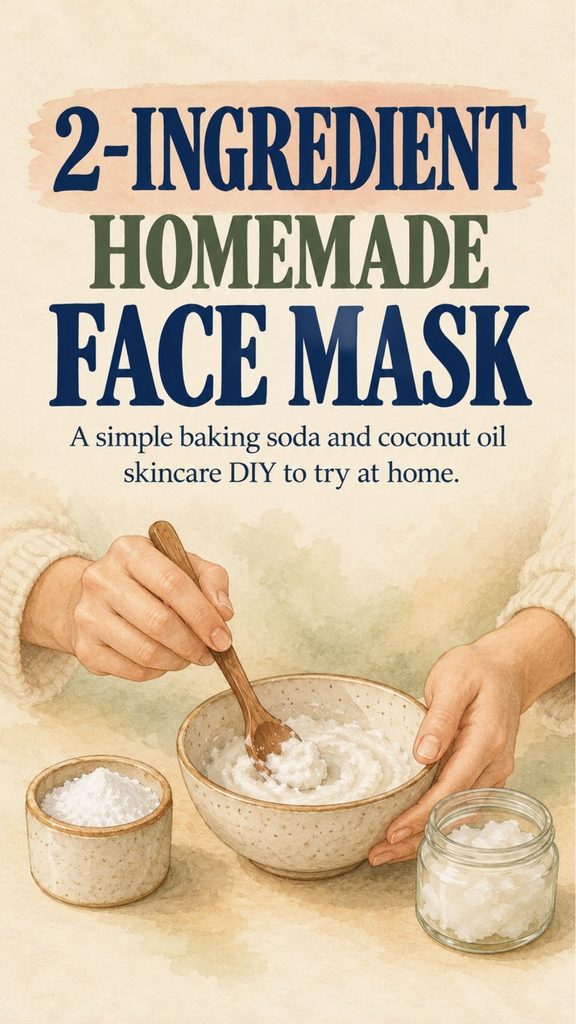
A popular homemade skincare recipe claims that mixing baking soda with coconut oil can make the face look younger, smooth wrinkles, and refresh tired-looking skin in only a few minutes.
The usual recipe combines:
- 1 tablespoon baking soda
- 2 tablespoons coconut oil
The mixture is then massaged over the face, especially around wrinkles, left on for several minutes, and rinsed away.
You Might Also Like:
- Loading posts...
It sounds appealing because both ingredients are inexpensive and probably already in the kitchen. But when it comes to facial skin—especially the delicate areas around the eyes—simple does not always mean gentle.
Baking soda can be too harsh for regular facial use, and coconut oil, while moisturizing for some people, can clog pores or cause breakouts in others.
So before trying this viral two-ingredient mask, it is worth understanding what each ingredient actually does and what safer options can give you the smoother, more hydrated look you are after.
What Baking Soda Does to the Skin
Baking soda, or sodium bicarbonate, is alkaline.
Healthy facial skin naturally has a mildly acidic surface. This protective environment helps support the skin barrier and keeps moisture inside.
Applying strongly alkaline ingredients such as baking soda can temporarily disturb that balance.
Some people may notice that baking soda makes the skin feel unusually smooth immediately after rinsing. That is largely because its fine particles physically exfoliate the surface.
Unfortunately, the same exfoliating action can also cause:
- Dryness
- Redness
- Burning
- Tightness
- Irritation
- Increased sensitivity
The risk becomes greater if you scrub aggressively or use baking soda repeatedly.
Older or already-dry skin may be particularly vulnerable because its natural barrier can be more delicate.
Baking Soda Does Not Remove Wrinkles
A scrub can make skin feel smoother temporarily because it removes some loose surface cells.
That is very different from reversing wrinkles.
Wrinkles develop because of factors such as:
- Natural aging
- Loss of collagen and elastin
- Repeated facial movement
- Genetics
- Sun exposure
- Smoking
- Skin dehydration
Baking soda cannot rebuild lost collagen or permanently tighten aging skin.
In fact, irritating the skin repeatedly may make it look drier and more textured—the opposite of the intended result.
What Coconut Oil Can Do
Coconut oil is much more useful as a moisturizer than baking soda is as a facial treatment.
It forms an oily layer on the skin that helps reduce moisture loss.
For dry areas, that can leave the skin feeling softer and smoother.
Coconut oil may be useful on:
- Dry elbows
- Hands
- Legs
- Heels
- Other dry body areas
Some people also tolerate it well on the face.
However, it is not ideal for everyone.
Coconut Oil Can Cause Breakouts for Some People
Coconut oil is fairly rich and occlusive.
On acne-prone or oily skin, it can contribute to clogged pores in some people.
If you regularly develop:
- Blackheads
- Whiteheads
- Pimples
- Congested pores
you may prefer a lightweight facial moisturizer specifically formulated not to clog pores.
If your skin is dry and you already know coconut oil works well for you, a tiny amount can be used without adding baking soda.
Be Especially Careful Around the Eyes
The original DIY recipe suggests applying the mixture around the eyes.
That is one of the areas where extra caution is needed.
The skin around the eyes is thin and sensitive.
Baking soda particles can irritate that skin, and getting the mixture directly into the eyes can cause significant discomfort.
Avoid applying abrasive homemade scrubs close to the eyelids or lash line.
For dry under-eye skin, use a gentle moisturizer designed for the face or eye area instead.
Why the Skin May Look Better Immediately After a Mask
Some homemade masks appear impressive right after they are removed.
That does not necessarily mean wrinkles have disappeared.
Several temporary effects can make skin look smoother:
- Surface exfoliation
- Moisture from an oil
- Temporary swelling
- Light reflecting differently from freshly moisturized skin
These changes can make fine lines appear less noticeable for a short period.
But they do not permanently alter the structure underneath the skin.
A Safer Two-Ingredient Alternative for Dry Skin
If the goal is simply softer, more comfortable skin, you do not need baking soda.
A much gentler approach is:
You Will Need
- Your regular fragrance-free moisturizer
- A tiny amount of plain petroleum jelly or another compatible occlusive moisturizer
How to Use It
- Wash your face with a gentle cleanser.
- Leave the skin slightly damp.
- Apply your regular moisturizer.
- If your skin is very dry, apply an extremely thin layer of petroleum jelly over the driest areas.
This helps trap moisture without physically scrubbing the skin.
People who are very acne-prone may prefer to use the occlusive only on dry patches rather than over the entire face.
If You Want Exfoliation, Choose Something Made for Facial Skin
Exfoliation can help improve rough texture, but more is not better.
Instead of using baking soda, choose a gentle facial exfoliant formulated for skin.
Common options include products containing carefully formulated concentrations of:
- Lactic acid
- Glycolic acid
- Salicylic acid
- Polyhydroxy acids
Different ingredients suit different skin types.
Start slowly—often once or twice a week rather than daily—and stop if you experience persistent burning, peeling, or irritation.
Do not combine several strong exfoliating products simply because you want faster results.
Moisture Can Make Fine Lines Look Softer
One of the easiest ways to improve the temporary appearance of fine lines is simply keeping the skin properly hydrated.
Dry skin often makes fine lines appear deeper.
A good moisturizer can help skin look:
- Plumper
- Smoother
- Softer
- More comfortable
Look for ingredients such as:
- Glycerin
- Hyaluronic acid
- Ceramides
- Squalane
You do not need all of them in one product.
Consistency matters more than owning a complicated routine.
Sunscreen Is More Important Than a Homemade Anti-Aging Mask
If your goal is to prevent premature skin aging, daily sun protection deserves far more attention than most DIY masks.
Ultraviolet exposure contributes to:
- Wrinkles
- Uneven pigmentation
- Loss of elasticity
- Rough texture
- Other visible signs of sun damage
Use a broad-spectrum sunscreen appropriate for your skin and climate on exposed skin.
Combine it with shade, hats, sunglasses, and protective clothing when needed.
A homemade mask used once a week cannot compensate for years of repeated unprotected sun exposure.
Consider Retinoids for Evidence-Based Anti-Aging Care
Retinoids are vitamin A derivatives and are among the better-studied topical ingredients for improving visible signs of skin aging.
Depending on the product and your skin, they may help with:
- Fine lines
- Uneven texture
- Some discoloration
- Collagen support
They can also cause dryness and irritation when introduced too quickly.
Start slowly, use a small amount, moisturize, and follow the product instructions.
Retinoids are not appropriate for everyone, including during pregnancy in many cases, so speak with an appropriate healthcare professional if you are unsure.
Vitamin C Can Also Be Useful
Vitamin C is another popular ingredient in evidence-based skincare.
Properly formulated vitamin C products may help support antioxidant protection and improve the appearance of uneven skin tone.
That does not mean kitchen sources of vitamin C—such as rubbing lemon juice on your face—are good substitutes.
Fresh citrus juice can irritate the skin and may contribute to problematic reactions with sunlight.
Use products formulated for skin rather than food ingredients.
A Simple Anti-Aging Routine Is Enough
You do not need ten products.
A straightforward morning routine could be:
- Gentle cleanser, if needed
- Moisturizer
- Broad-spectrum sunscreen
An evening routine could be:
- Gentle cleanser
- Retinoid or another suitable treatment, if you use one
- Moisturizer
That basic routine is usually more useful than constantly changing between viral homemade masks.
What If You Still Want to Try Coconut Oil?
If you know your skin tolerates coconut oil, use it by itself rather than mixing it with baking soda.
Apply a very small amount to slightly damp skin or over moisturizer.
Avoid using a thick layer if you are prone to clogged pores.
Test it on a small area first if you have never used it on your face.
Stop if you notice:
- New breakouts
- Itching
- Rash
- Burning
- Persistent redness
More oil will not produce faster or better anti-aging results.
Do Not Scrub Wrinkles Aggressively
Wrinkles cannot be rubbed away.
Aggressive massage or repeated exfoliation can irritate the skin and temporarily make fine lines look worse because the area becomes dry and inflamed.
When applying skincare:
- Use clean hands.
- Apply light pressure.
- Avoid pulling delicate skin.
- Pat or spread products gently.
Skin does not need to feel scrubbed, tingling, or burning for a product to be effective.
Lifestyle Habits Matter Too
Skin appearance is influenced by more than skincare.
Helpful habits include:
- Getting consistent sleep
- Eating a varied, balanced diet
- Staying adequately hydrated
- Avoiding smoking
- Limiting excessive sun exposure
- Managing skin conditions appropriately
- Using gentle skincare consistently
No food or drink can completely prevent aging, but overall health habits support healthy skin.
When to See a Dermatologist
If wrinkles, pigmentation, acne, persistent redness, or other skin concerns bother you, a dermatologist can help determine which treatments are likely to work.
Professional options can include prescription skincare, chemical peels, laser treatments, microneedling, injectables, and other procedures depending on the concern.
These treatments differ considerably in cost, effectiveness, recovery time, and risk.
A professional assessment is much more useful than repeatedly experimenting with increasingly aggressive kitchen remedies.
The Bottom Line
Baking soda and coconut oil may sound like an easy two-ingredient anti-aging mask, but they are not an ideal combination for facial skin.
Coconut oil can moisturize and reduce water loss for people whose skin tolerates it.
Baking soda, however, is alkaline and abrasive and may disrupt the skin barrier, causing irritation and dryness—especially when used repeatedly or around the eyes.
Neither ingredient can permanently erase wrinkles or reverse facial aging.
If you want your skin to look smoother and healthier, concentrate on gentle cleansing, consistent moisturizing, daily sun protection, and evidence-based ingredients appropriate for your skin.
Sometimes the best homemade skincare advice is knowing which kitchen ingredient should stay in the kitchen.