Living on one income can make ordinary financial decisions feel much bigger.
A grocery trip that runs $40 over budget matters. An unexpected car repair can disrupt the month. A subscription you barely notice may compete with money needed for school supplies, insurance, or savings.
That is why single-income living usually works best when saving money becomes part of the household system rather than a series of emergency cuts. The source behind these ideas focuses on practical ways to stretch limited income without trying to eliminate everything enjoyable from family life.
You Might Also Like:
- Loading posts...
The goal is not to spend as little as humanly possible.
It is to know where your money is going, reduce expenses that do not matter much, prepare for costs you know are coming, and protect enough margin that one difficult week does not undo the entire budget.
Here are practical ways to make one income work harder.
1. Start With a Spending Plan
A budget is simply a plan for the money you already have.
Before the month begins, list your expected take-home income and the expenses that must be covered.
Start with necessities such as:
- housing
- utilities
- groceries
- transportation
- insurance
- minimum debt payments
- healthcare
- essential household expenses
Then add savings and flexible spending.
The important part is realism.
If your household normally spends $700 on groceries, writing $350 because you wish the number were lower will not solve anything.
Use your actual spending as the starting point and make gradual improvements.
A realistic budget you follow is far more useful than an impressive budget you abandon after a week.
2. Track the Small Expenses Too
Large bills are obvious.
Small purchases are where money often becomes harder to see.
A few coffees.
An app subscription.
A convenience meal.
A delivery fee.
Something inexpensive added to an online order.
Individually, these purchases may not matter much. Repeated throughout the month, they can consume a surprising amount of flexible income.
The source specifically encourages tracking spending closely because small recurring expenses can quietly weaken the budget.
For one month, record everything.
Do not judge it yet.
Just learn where the money actually goes.
Once you have the information, deciding what to change becomes much easier.
3. Use Cash or Spending Limits for Trouble Categories
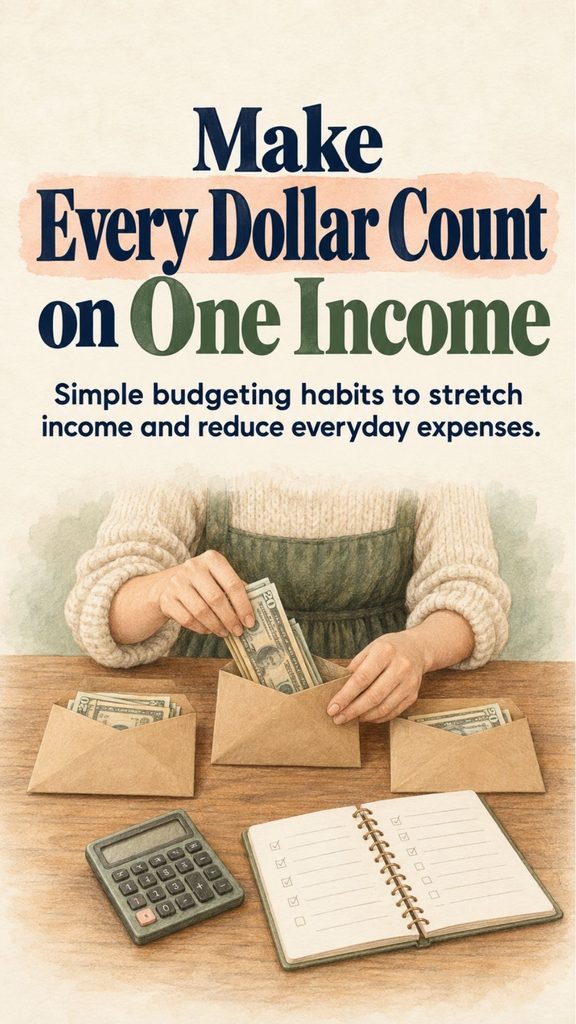
Cash envelopes can still be useful if certain categories consistently run over budget.
You might withdraw a set amount for:
groceries,
restaurants,
personal spending,
entertainment,
or household extras.
When that money is gone, spending in that category stops until the next budget period.
If carrying cash is inconvenient, you can create the same boundary digitally with separate accounts, prepaid cards, or clearly tracked budget categories.
The method matters less than having a limit you can actually see.
This is especially helpful for expenses that feel harmless one transaction at a time.
4. Be Careful About Financing Wants
Credit can be useful for major necessities and planned financial decisions, but borrowing for ordinary wants can make a tight budget even tighter.
Before financing a nonessential purchase, ask:
Can we wait?
Can we buy it used?
Can we save for it?
Is there another item we already own that will work?
A monthly payment can make something expensive appear affordable because the full price disappears from view.
But several “small” monthly payments quickly reduce the amount of income available for everything else.
Patience is often one of the most valuable frugal skills.
5. Build an Emergency Fund
A single-income household can be particularly vulnerable when that one income is interrupted.
Even a modest emergency fund provides protection.
Start with whatever amount is realistic.
Perhaps the first goal is enough to cover a common car repair or insurance deductible.
Then gradually work toward a larger buffer.
Emergency savings should be reserved for genuine financial surprises such as urgent repairs, medical costs, or temporary income disruption.
It is not the Christmas fund.
It is not vacation money.
It is not the “there’s a great sale this weekend” fund.
Keeping that distinction clear protects the money when a real emergency arrives.
6. Use Sinking Funds for Expenses You Know Are Coming
Not every large expense is an emergency.
Christmas happens every year.
Cars need maintenance.
Children need clothes.
Insurance renews.
School costs return.
Homes require repairs.
These expenses may be irregular, but they are predictable.
A sinking fund simply means saving a little toward them every month.
If you expect to spend $600 on Christmas, saving $50 monthly is much easier than trying to find $600 in December.
You can do the same for:
vehicle maintenance,
birthdays,
annual bills,
home repairs,
school expenses,
travel,
and clothing.
The source makes this useful distinction between emergency savings and sinking funds for irregular but foreseeable expenses.
7. Divide Large Bills Across Paychecks
When one large monthly payment falls immediately after a paycheck, the rest of that pay period can feel painfully tight.
One solution is to save part of the bill from each paycheck.
For example, if rent is $1,200 and you are paid twice monthly, set aside $600 from each paycheck.
By the due date, the full amount is ready.
The same approach can work for childcare, insurance, mortgage payments, or other large predictable expenses.
This does not reduce the bill.
It makes cash flow easier to manage.
8. Know What You Already Own
Disorganization can cost money.
You buy batteries because you cannot find the package already in the garage.
You purchase pasta sauce even though six jars are hiding at the back of the pantry.
You buy another black shirt because you forgot about the nearly identical one in the closet.
A basic household inventory prevents many duplicate purchases.
Organize the pantry enough that food is visible.
Keep cleaning products together.
Give tools a home.
Know what is in the freezer.
You do not need a perfectly organized house.
You simply need to be able to find what you already paid for.
9. Sell the Clutter You No Longer Need
Decluttering can sometimes create a little extra money as well.
Furniture, tools, children’s equipment, electronics, hobby supplies, and good clothing may have resale value.
Do not keep something for three years solely because you might eventually sell it.
But if several useful items are already waiting to leave the house, listing them may bring in money that can go directly toward debt, savings, or another household need.
Anything that does not sell within a reasonable period can be donated if appropriate.
The goal is to create usable space, not operate a permanent warehouse of things “worth something.”
10. Buy Secondhand Before Buying New
Some purchases lose value much faster than they lose usefulness.
Children’s bicycles are a perfect example.
So are many pieces of furniture, tools, books, sports equipment, gardening supplies, and clothing.
Before buying new, check thrift stores, local resale listings, community groups, and people you know.
Patience matters.
If you need something tomorrow, you may have little choice.
If you know you will need something in several months, you have time to wait for a good secondhand option.
Avoid buying used simply because the price is low.
A bargain you do not need is still spending.
11. Shop Around for Recurring Bills
Many households carefully compare grocery prices while ignoring recurring bills worth hundreds or thousands per year.
Periodically review:
internet,
mobile-phone plans,
insurance,
streaming services,
bank fees,
and other subscriptions.
Ask whether cheaper plans are available.
Check competitors.
Call current providers and ask what options exist.
Do not assume loyalty automatically produces the best price.
A twenty-minute phone call that reduces a bill by $20 per month saves $240 a year.
That is a much bigger return than clipping dozens of tiny coupons.
12. Know Your Spending Trouble Spots
Everyone has categories where restraint becomes harder.
Maybe it is clothing.
Home decor.
Garden centers.
Technology.
Takeout.
Online shopping.
Craft supplies.
Identifying the problem is useful because you can change the environment instead of depending entirely on willpower.
If a certain store triggers impulse buying, visit only when you have a specific list.
If online browsing causes problems, remove shopping apps.
If promotional emails tempt you, unsubscribe.
If you tend to spend when bored, find another activity before opening a retailer’s website.
Make overspending slightly harder.
13. Watch for Lifestyle Creep
More income can improve your finances—but only if your spending does not automatically rise to consume it.
Lifestyle creep happens when every raise becomes a reason for:
a newer vehicle,
a larger home,
more subscriptions,
more expensive restaurants,
or a generally higher standard of everyday spending.
There is nothing wrong with improving your life when income increases.
The useful approach is deciding beforehand where additional income should go.
Perhaps part increases savings.
Part pays debt.
Part can improve everyday life.
The important thing is not allowing the entire raise to disappear unnoticed.
14. Try a Short No-Spend Challenge
A no-spend period can reveal which purchases are habits rather than genuine needs.
Start with a weekend or one week.
Continue paying necessary expenses such as housing, groceries, medication, transportation, and bills.
The challenge applies to discretionary spending.
No browsing stores for entertainment.
No unnecessary online orders.
No takeout just because cooking feels inconvenient.
The goal is not proving how long you can deprive yourself.
It is discovering how often spending happens automatically.
At the end, look at what you wanted to buy.
Some things may still matter.
Others will already have been forgotten.
15. Shop the Pantry Before the Grocery Store
Before planning meals, look at what you already have.
Check the refrigerator.
Then the freezer.
Then the pantry.
Build several meals around ingredients that need to be used.
This reduces food waste and prevents the strange situation where a household spends heavily on groceries while older food slowly expires at home.
A simple “use-it-up” meal once a week can help.
It may be soup made from vegetables that need using, a casserole built around leftovers, or an improvised dinner from pantry staples.
Use safe storage practices and discard food that is genuinely spoiled.
Frugality should reduce waste, not encourage unsafe eating.
16. Reduce Convenience Food Where It Makes Sense
Convenience has value.
Pre-cut vegetables, ready meals, individually packaged snacks, and meal services can be worth paying for during busy seasons.
But convenience often carries a price premium.
Compare.
Whole fruit may cost less than individual fruit cups.
A large bag of crackers may be cheaper per serving than small packs.
Homemade sandwiches may cost less than prepared lunches.
The smartest approach is not eliminating convenience completely.
It is paying for convenience where it actually saves enough time or effort to justify the extra cost.
17. Buy in Bulk Only When You Will Use It
Bulk pricing can be excellent.
It can also create larger quantities of waste.
Check the unit price first.
Then ask whether your household will realistically finish the product before quality declines.
Dry rice that you regularly eat may be an excellent bulk purchase.
A huge container of a condiment used twice a month may not be.
Storage also matters.
A bargain is less useful when there is nowhere appropriate to keep it.
Buy in bulk based on consumption, not optimism.
18. Build Meals Around Affordable Proteins
Meat can represent a large portion of the grocery bill.
Depending on local prices, you may save by using:
beans,
lentils,
eggs,
chicken thighs,
whole chickens,
less expensive cuts,
or smaller portions of meat combined with vegetables and grains.
Do not assume one particular meat is always cheaper.
Prices vary considerably by region, season, and store.
Compare the cost per unit and build meals around whatever provides good value where you live.
You can also reduce meat quantity in dishes where it is not the main feature.
A chili, soup, pasta sauce, stir-fry, or casserole can often remain satisfying with a smaller amount.
19. Buy Seasonal Produce
Produce prices frequently change with season and local availability.
Instead of deciding that every week must include the same fruits and vegetables, look at what offers good value.
Use strawberries when strawberries are plentiful.
Buy apples during apple season.
Use winter squash when it is inexpensive.
Frozen vegetables are another valuable option.
They are convenient, keep longer, and may prevent the expensive habit of throwing away fresh vegetables that were never used.
Compare fresh, frozen, and canned versions depending on the recipe.
20. Make Water the Default Drink
Beverages can quietly consume a surprising amount of grocery money.
Soft drinks.
Juice.
Energy drinks.
Bottled tea.
Specialty coffees.
Flavored waters.
Where the household water supply is safe, making water the everyday default can reduce spending without affecting the food budget.
Coffee and tea made at home can also be relatively inexpensive pleasures.
You do not need to eliminate every other drink.
Simply notice how much you are spending on beverages compared with how much value they provide.
21. Plan Meals Before Everyone Gets Hungry
Meal planning is one of the most reliable ways to prevent expensive last-minute decisions.
The source identifies grocery spending and eating out as major opportunities for household savings and emphasizes planning meals before shopping.
Keep the plan simple.
Choose five or six dinners.
Include at least one very easy meal for an exhausting day.
Use ingredients already in the house.
Check store specials where helpful.
Build a grocery list from the plan.
Leave room for leftovers.
You do not need seven complicated recipes every week.
Sometimes the best meal plan includes soup, eggs, pasta, leftovers, sandwiches, and one larger meal that provides another dinner later.
22. Double Recipes Strategically
Cooking twice as much does not usually require twice as much effort.
If a meal freezes well, consider preparing two portions.
Eat one.
Freeze one.
A freezer containing a few homemade meals can prevent a $50 takeout order on an exhausting evening.
Label containers with the name and date so they do not become mysterious frozen blocks six months later.
Batch cooking works best with foods your household already enjoys.
There is no saving in freezing six portions nobody wants to eat.
23. Reduce Utility Waste
You do not need extreme measures to lower utility costs.
Start with wasted energy.
Turn off unnecessary lights.
Use LED bulbs as older bulbs need replacement.
Seal obvious drafts around doors and windows.
Use heating and cooling thoughtfully.
If you have a programmable or smart thermostat, scheduling temperatures around normal household routines may reduce unnecessary heating or cooling.
Avoid making major HVAC or electrical changes without understanding the equipment and safety requirements.
Small improvements repeated every day can add up.
24. Check the Water-Heater Temperature Safely
Water heaters are sometimes set hotter than necessary.
But this is an area where safety matters.
Reducing an excessively high setting can lower energy use and reduce scalding risk, but setting stored hot water too low may introduce other concerns, including bacterial growth in some systems.
Follow the water-heater manufacturer’s instructions and local safety guidance rather than choosing an arbitrary temperature from a money-saving article.
If you are unsure, ask a qualified professional.
A small utility saving is not worth creating a household safety problem.
25. Line-Dry Some Laundry
When weather and living arrangements allow, a clothesline or drying rack can reduce dryer use.
You do not have to dry every sock outdoors.
Start with:
sheets,
towels,
shirts,
or lightweight clothing.
Indoor racks can also work if you have adequate ventilation and humidity is not a problem.
Line drying may also reduce some wear created by repeated tumble drying.
If you prefer the dryer for certain items, use it.
Frugality does not need to become an all-or-nothing rule.
26. Skip Questionable Laundry “Hacks”
Not every popular money-saving trick is worth following.
For example, adding essential oil directly to dryer balls is sometimes recommended for scented laundry, but introducing concentrated oils into a heated dryer is not something to improvise casually because oils can be combustible and may also stain fabrics.
Likewise, claims that one particular dryer trick will always reduce drying time by an exact percentage should be treated cautiously because appliance type, load size, fabric, ventilation, and moisture all influence drying.
The reliable ways to improve dryer efficiency are simpler:
do not overload it,
clean the lint filter,
maintain proper venting,
use appropriate cycles,
and dry similar fabrics together.
27. Consider the Cost in Hours of Work
Price is not the only way to measure a purchase.
Translate some discretionary purchases into working time.
If something costs $200 and your take-home earnings work out to roughly $20 per hour, that purchase represents about ten hours of net income.
Then ask:
Is it worth ten hours?
Sometimes the answer is yes.
That can be clarifying too.
Other times, the connection between money and time makes an impulse purchase much easier to leave behind.
28. Protect the Things You Already Paid For
One of the least exciting forms of frugality is maintenance.
Change filters.
Keep vehicles serviced.
Repair small clothing problems before they become large ones.
Clean appliances according to manufacturer instructions.
Store tools properly.
Protect outdoor furniture.
Use phone cases if you tend to drop your phone.
Maintaining possessions extends their useful life and makes replacement less frequent.
There is little benefit in finding the cheapest purchase if neglect forces you to buy it again soon.
29. Decide What Is Actually Important
A tight budget cannot fund every desirable thing.
That means choices are unavoidable.
Maybe your household values travel more than a newer car.
Perhaps one parent staying home matters more than frequent restaurant meals.
Maybe you prefer a small house and more financial margin.
Perhaps children’s activities are a priority while home decor is not.
None of these choices is universal.
The point is to identify what matters enough to protect.
Frugality becomes much easier when you know what the saved money is for.
Saying no to one expense feels different when it allows you to say yes to something you value more.
30. Leave Some Room to Enjoy Life
An extremely restrictive budget can work briefly during a crisis.
It is much harder to maintain indefinitely.
If possible, include a small amount of discretionary money.
It might fund:
coffee with a friend,
an inexpensive family outing,
a hobby,
a meal out,
or something small for the home.
Knowing that some enjoyment is planned can reduce the feeling that every purchase is forbidden.
The amount does not have to be large.
The important thing is that it fits inside the plan.
Make One Income Work Through Systems, Not Perfection
Living well on one income usually does not come from one dramatic money-saving trick.
It comes from dozens of ordinary decisions working together.
You know what is in the pantry.
Dinner has a plan.
Annual expenses have sinking funds.
Emergency money is protected.
Bills are reviewed.
Impulse purchases have boundaries.
Used items are considered.
Food waste is reduced.
Lifestyle creep is noticed.
And the household understands what its biggest financial priorities actually are.
You will not do all of this perfectly every month.
Nor do you need to.
Choose several changes that would make the biggest difference first.
Track spending.
Plan meals.
Set aside money for one predictable future expense.
Review one recurring bill.
Start a small emergency fund.
Then build from there.
A single income may give you less room for financial mistakes, but a thoughtful household system can give every dollar a much clearer purpose—and create far more breathing room than constantly wondering where the money went.