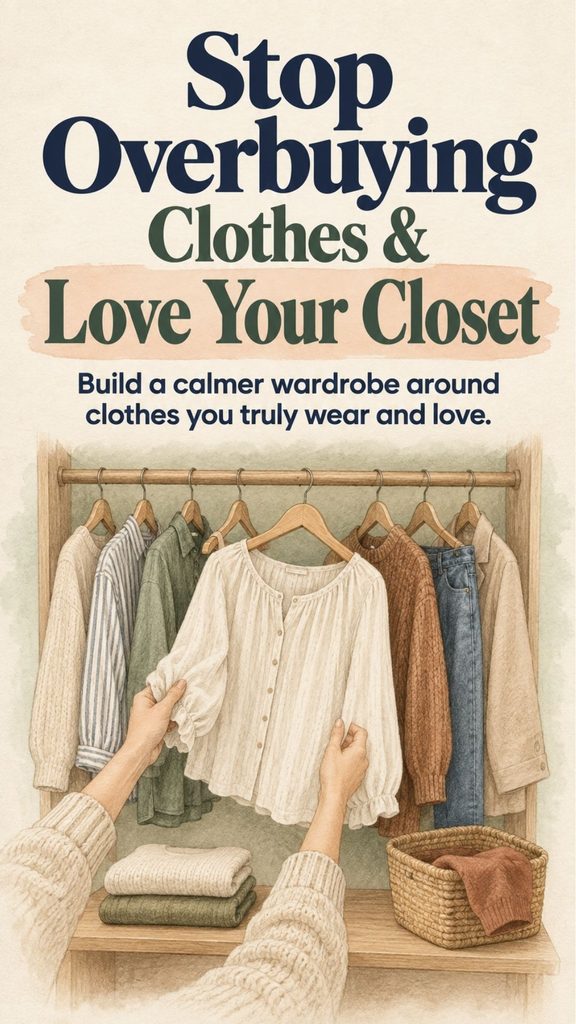
A crowded closet can create a strange problem: you own plenty of clothes, yet getting dressed still feels difficult.
There are shirts you liked in the store but never reach for. Jeans that technically fit but are uncomfortable after an hour. Dresses waiting for occasions that rarely happen. Sale purchases that seemed too good to leave behind. Clothes bought because they looked beautiful on someone else but never quite felt like you.
The original article describes the same disconnect between owning a large amount of clothing and still feeling as though there is “nothing to wear,” then focuses on rebuilding a wardrobe around your real life rather than an imagined one.
You Might Also Like:
- Loading posts...
The answer is not necessarily an ultra-minimal wardrobe or an arbitrary rule about owning exactly 30 pieces.
A useful closet is simply one where most of what you own fits, feels comfortable, works with the rest of your wardrobe, and suits the life you actually live.
Getting there requires two different skills:
learning to let go of clothes that no longer serve you, and learning to stop replacing them with more mistakes.
Here is how to do both.
1. Start With a Real Closet Reset
You cannot shop intelligently until you understand what you already own.
Take everything out of the closet—or, if your wardrobe is large, work one category at a time.
Start with shirts.
Then trousers.
Then dresses.
Then jackets.
Then shoes.
For each piece, ask a few practical questions:
Does it fit comfortably now?
Have I worn it within the last year or appropriate season?
Does it work with my current lifestyle?
Would I choose it again today?
Do I have something else that does the same job better?
Do not keep an item simply because you paid money for it.
The money has already been spent.
Keeping an unwanted garment does not recover the cost; it only continues to use space.
2. Dress the Life You Actually Have
One of the biggest causes of an impractical wardrobe is shopping for an imaginary schedule.
You own twelve formal outfits but attend two formal events a year.
You have expensive office clothes even though you now work from home.
You keep buying gym clothes despite exercising mainly by walking.
Or half the closet is delicate clothing when your days involve gardening, children, cooking, cleaning, and errands.
Look at an ordinary week.
What do you actually do?
If most days involve casual work, home life, shopping, school runs, gardening, or walking, most of your wardrobe should support those activities.
Special-event clothing deserves some space.
It simply should not dominate a closet when special events represent a tiny part of your life.
3. Find the Clothes You Already Love
Before creating a style board or shopping list, study your favorite clothes.
Pull out the pieces you repeatedly wear.
Lay them together.
What do they have in common?
Maybe you prefer straight trousers rather than skinny ones.
Perhaps you consistently choose relaxed cotton shirts.
Maybe almost everything you love is black, cream, denim, olive, or navy.
Perhaps you prefer dresses because they make getting dressed easy.
Maybe you avoid anything that needs ironing.
These patterns are more useful than a trend report.
Your current favorites provide evidence about what you actually enjoy wearing.
4. Identify Your Shopping Mistakes
Now look at the clothes you rarely wear.
The patterns here matter too.
Maybe you repeatedly buy shoes that look beautiful but hurt your feet.
Perhaps you buy brightly colored tops even though you always choose neutrals in the morning.
Maybe clearance racks convince you to overlook poor fit.
Perhaps you keep ordering clothes online without checking fabric, measurements, or return policies.
Write down your three most common mistakes.
For example:
I buy things because they are discounted.
I buy for occasions that rarely happen.
I buy clothes that require special care I never want to do.
Knowing your patterns makes them easier to interrupt.
5. Stop Treating a Sale as a Reason to Buy
A discounted item is only a bargain if you already needed it.
A $100 jacket marked down to $40 does not save you $60 if you never wear it.
You spent $40.
This sounds obvious, yet sale pricing creates urgency.
The thought changes from:
Do I need this?
to:
Will I regret missing this price?
Reverse the question.
Ask:
Would I still want this if it were not on sale?
If the answer is no, put it back.
6. Let Go of Most “Someday” Clothes
Many closets contain clothes for a future version of life.
Someday I’ll wear this.
Someday I’ll attend the right party.
Someday I’ll get it altered.
Someday this style will come back.
Someday I’ll start wearing heels again.
It is reasonable to keep a small number of genuinely useful future items, especially expensive formalwear, maternity items you know you will reuse, or clothing temporarily unsuitable because of a short-term circumstance.
But an entire closet should not be a storage unit for possible future identities.
Give most of the space to the person getting dressed today.
7. Make Fit the First Requirement
If a garment is uncomfortable, you probably will not reach for it consistently.
Watch for clothing that:
pinches,
slides,
rides up,
falls down,
requires constant adjusting,
restricts movement,
or only feels comfortable when you stand perfectly still.
Some favorite garments are worth altering.
A tailor may be able to shorten trousers, adjust a waistband, change a hem, or improve the fit of a jacket for far less than replacing a good-quality item.
But do not build a giant “alter someday” pile.
Set a deadline.
Either alter the item or let it go.
8. Pay Attention to Fabric
Fabric has a huge influence on whether something becomes a favorite.
Notice what feels comfortable against your skin and works in your climate.
Cotton, linen, wool, silk, and other natural fibers have different strengths and care requirements. Materials such as lyocell and modal are manufactured cellulose fibers and can also feel soft and comfortable. Synthetic fibers such as polyester or nylon may be useful for durability, stretch, sportswear, wrinkle resistance, or specific weather conditions.
No single fiber is automatically best.
Read the care label.
Ask whether you are willing to care for the garment properly.
A beautiful piece that requires dry cleaning after every wear may not suit your everyday life.
9. Build Around a Small Color Family
You do not need to wear only beige.
But having some color consistency makes a wardrobe dramatically easier to combine.
Choose several base colors you naturally wear.
For example:
navy,
cream,
denim,
brown,
black,
or gray.
Then add a few colors you genuinely enjoy.
Perhaps sage, burgundy, rust, pale blue, or red.
The exact palette is personal.
The point is that when most garments relate to one another, you need fewer pieces to create more outfits.
10. Build Strong Everyday Foundations
Before buying another statement piece, make sure everyday clothing is covered.
Depending on your lifestyle, useful foundations might include:
a comfortable pair of trousers or jeans,
several tops that work with them,
a cardigan or jacket,
comfortable everyday shoes,
one versatile dress,
and practical layers for your climate.
Your essentials may look completely different.
A gardener, office worker, parent at home, teacher, and restaurant worker need different wardrobes.
There is no universal checklist.
Build around your week.
11. Create Outfit Formulas
You do not need a brand-new combination every morning.
Most people naturally repeat certain silhouettes.
Turn those into formulas.
For example:
Jeans + shirt + cardigan + flats
Wide-leg trousers + tucked tee + sandals
Dress + cardigan + sneakers
Skirt + knit top + boots
Linen trousers + tank + overshirt
An outfit formula makes shopping easier because you can immediately see whether a new item fits into combinations you already wear.
Repetition is useful.
It means you have figured out what works.
12. Take Photos of Successful Outfits
When you put together an outfit that feels especially good, photograph it.
Create a simple album on your phone called Outfits.
After a few months, you will have your own personal lookbook.
This is more useful than copying someone else’s wardrobe because every photograph contains clothing you already own and know fits.
On busy mornings, open the album and choose one.
These pictures also reveal patterns.
You may discover that your favorite outfits repeatedly use the same three pairs of trousers or that a particular jacket makes almost everything work.
That tells you where future spending is most valuable.
13. Style What You Own Before Shopping
When you feel bored with your wardrobe, do not immediately shop.
Spend an hour experimenting.
Try a shirt tucked instead of untucked.
Roll the sleeves.
Layer a cardigan over a dress.
Add a belt.
Pair a formal piece with something casual.
Try different shoes.
Combine colors you have not previously worn together.
Sometimes the garment you thought you needed is already in your closet; you simply have not tried the right combination.
14. Keep a Clothing Wish List
Impulse shopping becomes harder when purchases have to compete with a written list.
Whenever you think you need something, write it down.
For example:
comfortable brown walking shoes
lightweight summer cardigan
dark jeans that fit properly
winter coat replacement
Review the list before shopping.
You may notice that some “needs” disappear after a few weeks.
Others remain clearly useful.
Buy from the persistent list rather than from whatever happens to be advertised that day.
15. Use a Waiting Period
For nonessential clothing, wait before purchasing.
Forty-eight hours can be enough for small purchases.
For expensive pieces, wait longer.
The purpose is not punishment.
It simply gives the initial excitement time to fade.
During the waiting period, ask:
Do I already own something similar?
What will I wear it with?
Where will I wear it?
Would I pay full price?
Can I afford it without disrupting a more important goal?
If you still want it after answering those questions, the purchase is much more likely to be intentional.
16. Use the Three-Outfit Test
Before buying a new garment, imagine at least three outfits using clothes you already own.
If you cannot do that, the item may require additional purchases before it becomes useful.
That $30 skirt can quietly turn into a $150 purchase when you discover you also “need” new shoes, a different top, and another jacket to make it work.
Versatility does not mean every piece must match everything.
It simply means most everyday purchases should cooperate with the wardrobe you already have.
17. Shop for Gaps, Not Entertainment
Shopping can easily become something to do when bored.
Browse the store.
Open the app.
Check what is new.
Look through the sale.
Eventually something seems appealing.
Try changing the order.
Identify the gap first.
Then shop specifically for it.
If you need black trousers, look at black trousers.
Do not browse seventy dresses, handbags, and jackets on the way there.
This makes shopping faster and reduces the chance that advertising will decide what comes home.
18. Unsubscribe From Clothing Temptation
Retailers spend enormous effort making you feel that something is always missing.
A new collection.
A weekend sale.
A limited-time code.
A trend you have not tried.
If promotional emails and shopping apps repeatedly trigger unnecessary purchases, remove some of them.
Unsubscribe from marketing emails.
Turn off retailer notifications.
Delete shopping apps you browse automatically.
Unfollow accounts that make you dissatisfied with clothes you previously liked.
Reducing exposure removes many buying decisions before you ever have to make them.
19. Recognize Emotional Shopping
Shopping is sometimes connected to emotion.
A difficult day may create a desire for a treat.
Boredom can turn into online browsing.
A new outfit may feel like a fresh start.
Celebration can trigger spending too.
There is nothing inherently wrong with occasionally buying something for pleasure.
The useful question is whether shopping has become your automatic response to certain feelings.
When the urge arrives unexpectedly, wait.
Ask what you actually want.
Maybe you need rest.
Company.
A walk.
A change of scenery.
A creative project.
Or perhaps you simply want a new shirt—and after thinking about it, you still decide to buy it.
The pause is what makes the choice intentional.
20. Buy Secondhand Strategically
Secondhand shopping can reduce costs and extend the useful life of clothing.
But thrift stores can create the same overbuying problem as regular shops if low prices encourage you to bring home things you do not need.
Go with a list.
Check garments carefully for:
stains,
damaged zippers,
worn elastic,
missing buttons,
pilling,
tears,
and alterations that may be difficult to reverse.
A cheap secondhand mistake is still a mistake.
21. Repair Before Replacing
A loose button does not require a new shirt.
Neither does a small open seam.
Learn several basic repairs:
sewing on buttons,
closing simple seams,
hemming,
patching small holes,
and removing minor pilling appropriately.
Shoes may sometimes be repairable too.
Clothing that is cared for lasts longer, and keeping garments longer naturally reduces how often replacements are needed.
22. Do a Seasonal Closet Check
At the beginning or end of each season, spend a little time reviewing the wardrobe.
Do not perform another enormous declutter.
Just ask:
What did I wear constantly?
What did I never wear?
What needs repair?
What is worn out?
What genuine gap appeared?
What did I think I needed but never missed?
These observations improve the next season’s purchases.
The source article also encourages regular seasonal and monthly check-ins rather than treating wardrobe organization as a one-time project.
23. Stop Being Afraid to Repeat Clothes
You are allowed to wear your favorite clothes repeatedly.
In fact, that is exactly what good clothes are for.
A wardrobe does not need enough variety to convince strangers that you never repeat an outfit.
If one dress looks good and feels comfortable, wear it often.
If you love the same jeans every week, that information is useful.
It tells you what kind of jeans to buy when those eventually need replacing.
The source makes the same point directly: repeating successful outfits is part of building a consistent personal style, not something that needs to be avoided.
24. Keep Sentimental Clothes Separate
Some garments are worth keeping even when they are no longer wearable.
A wedding dress.
A grandparent’s cardigan.
A child’s first outfit.
A concert shirt tied to an important memory.
Those pieces do not need to justify themselves as everyday wardrobe items.
But they also do not need to occupy prime closet space.
Create a small sentimental clothing box.
Keep the truly meaningful pieces there.
This separates memory storage from getting-dressed storage.
25. Don’t Replace Everything After Decluttering
This is one of the biggest mistakes people make.
They remove half their wardrobe.
The closet suddenly looks empty.
Then they immediately go shopping to “finish” it.
Wait.
Live with the smaller wardrobe for several weeks.
You may discover that you do not miss most of what left.
Actual gaps will reveal themselves naturally.
Perhaps you really do need another pair of work trousers.
Maybe you need nothing at all.
Let experience create the shopping list.
A Simple Rule Before Every Clothing Purchase
Before buying, ask five questions:
Does it fit comfortably right now?
Does it suit my actual life?
Can I wear it with several things I already own?
Would I still want it if it were not discounted?
Can I picture myself wearing it repeatedly?
If several answers are no, leave it.
There will always be another shirt.
Another sale.
Another collection.
Another trend.
A Smaller Closet Can Give You More Options
This sounds contradictory, but closets often become easier to use as unnecessary pieces disappear.
Imagine having 100 garments but only liking 25 of them.
Every morning you sort through the other 75 to reach the 25 you actually want.
Now imagine having 40 pieces and genuinely liking 35.
Technically, you own less.
Practically, you have more usable choices.
That is why the goal is not simply fewer clothes.
It is a higher percentage of wearable clothes.
The Best Wardrobe Is Not the Biggest One
You do not need a perfect capsule wardrobe.
You do not need to follow a strict number.
You do not need to adopt a specific aesthetic.
And you certainly do not need to throw everything away and rebuild your wardrobe from scratch.
Instead, aim for something much simpler.
Open the closet and mostly see clothes that fit.
Clothes you recognize as yours.
Clothes suited to the days you actually live.
Clothes that combine easily.
Clothes comfortable enough to wear repeatedly.
Then protect that progress by shopping more slowly.
Use what you own.
Repair what is worth repairing.
Repeat outfits without embarrassment.
Keep a wish list instead of impulse buying.
Wait before purchasing.
And let genuine wardrobe gaps—not advertisements, sales, boredom, or trends—decide what comes through the door next.
That is how overbuying gradually stops.
Not through a rigid closet rule, but by learning what earns a place in your wardrobe and becoming much more comfortable leaving everything else at the store.