There is something wonderfully familiar about an old-fashioned meatloaf dinner.
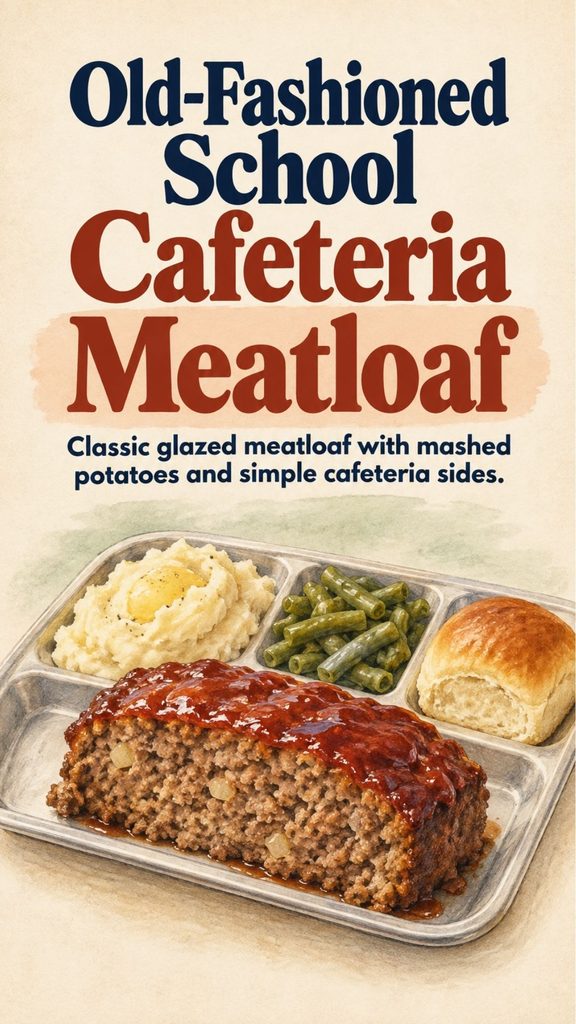
A thick slice of tender beef meatloaf covered in a sweet-and-tangy ketchup glaze, served beside mashed potatoes, green beans, corn, and a warm dinner roll feels like the kind of meal that belongs on a classic cafeteria tray or family dinner table.
This school cafeteria-style meatloaf keeps things simple. Ground beef is combined with breadcrumbs, milk, eggs, onion, and basic pantry seasonings, then shaped into a loaf and finished with a ketchup, brown sugar, and mustard topping.
You Might Also Like:
- Loading posts...
It is not fancy food.
It is filling, practical, easy to portion, and made from ingredients you can find in an ordinary grocery store.
Why This Meatloaf Works
A good meatloaf needs more than ground beef.
Breadcrumbs and milk help create a softer texture, while eggs help hold everything together. Onion provides flavor and moisture, and Worcestershire sauce adds savory depth.
Then there is the glaze.
Plain meatloaf can taste heavy, so the combination of ketchup, brown sugar, and yellow mustard brings acidity and sweetness to the top.
The result is a familiar sweet-savory meatloaf that pairs naturally with simple side dishes.
Ingredients
For the meatloaf, you will need:
2 pounds ground beef, preferably around 80/20
1 cup milk
2 cups breadcrumbs or finely crushed crackers
2 large eggs, lightly beaten
1 small onion, finely diced
1 teaspoon salt
½ teaspoon black pepper
1 teaspoon garlic powder
1 teaspoon onion powder
1 teaspoon paprika
2 tablespoons Worcestershire sauce
For the Topping
¾ cup ketchup
2 tablespoons brown sugar
1 tablespoon yellow mustard
Choosing the Ground Beef
The recipe uses 80/20 ground beef, meaning roughly 80 percent lean meat and 20 percent fat.
That amount of fat helps keep meatloaf moist while it cooks.
Very lean ground beef can also be used, but the finished loaf may be firmer and less juicy.
Whatever beef you choose, avoid aggressively squeezing or kneading the mixture.
Overworking ground meat can make the finished meatloaf dense.
Step 1: Preheat the Oven
Preheat the oven to 350°F (175°C).
Lightly grease a baking dish large enough to hold the loaf.
A 9-by-13-inch baking dish works well because it gives the loaf room around the sides rather than squeezing it tightly into a small loaf pan.
This also makes it easier to lift slices out for serving.
Step 2: Combine the Milk and Breadcrumbs
Place the breadcrumbs or finely crushed crackers in a large mixing bowl.
Pour in the milk.
Stir gently and let the mixture stand for about 1–2 minutes.
The crumbs will begin absorbing the milk.
This mixture helps distribute moisture throughout the meatloaf rather than leaving dry crumbs scattered through the beef.
If using crackers, crush them reasonably fine so they mix evenly into the loaf.
Step 3: Add the Remaining Meatloaf Ingredients
Add the ground beef to the bowl.
Then add:
the beaten eggs,
diced onion,
salt,
black pepper,
garlic powder,
onion powder,
paprika,
and Worcestershire sauce.
Using clean hands or a sturdy spoon, mix everything together just until the ingredients are evenly distributed.
Do not keep mixing after everything has come together.
The goal is a cohesive mixture, not a paste.
Step 4: Shape the Meatloaf
Transfer the mixture to the prepared baking dish.
Shape it into a thick, even loaf.
Try to make the thickness reasonably consistent from one end to the other.
If one end is much thinner, it may cook considerably faster than the center.
A free-form loaf also gives more surface area for the glaze.
Do not pack the meat too tightly while shaping.
Firm it enough to hold together, but keep the mixture relatively light.
Step 5: Make the Classic Meatloaf Glaze
In a small bowl, combine:
¾ cup ketchup
2 tablespoons brown sugar
and
1 tablespoon yellow mustard.
Stir until smooth.
Taste a tiny amount if you like.
If you prefer a less-sweet glaze, you can reduce the brown sugar slightly.
If you enjoy more tang, add a little more mustard.
The classic combination should taste sweet, tomato-rich, and slightly sharp.
Step 6: Glaze the Meatloaf
Spread the ketchup mixture evenly across the top of the shaped meatloaf.
You can cover just the top or let a small amount travel down the sides.
As the meatloaf bakes, the topping thickens and becomes glossy.
For people who love extra sauce, you can make a little additional glaze separately and warm it for serving. Do not reuse sauce that has touched raw meat.
Step 7: Bake Until Safely Cooked
Bake the meatloaf at 350°F for approximately 60–75 minutes.
Cooking time is only an estimate.
The thickness and shape of the loaf, the starting temperature of the ingredients, and differences between ovens can all affect how quickly it cooks.
The reliable way to determine doneness is with a food thermometer.
For ground beef, cook until the center of the meatloaf reaches at least 160°F (71°C).
Insert the thermometer into the thickest central portion of the loaf without touching the bottom of the pan.
If it has not reached the safe temperature yet, return it to the oven and check again after several minutes.
Step 8: Let It Rest
Once cooked, remove the meatloaf from the oven and let it rest for approximately 10 minutes before slicing.
This short resting period makes the loaf easier to cut.
If you slice it immediately, the meatloaf is more likely to break apart and release more juices onto the pan.
Use a sharp knife and cut thick slices.
The Classic Cafeteria-Style Meal
The meatloaf itself is filling, but the full nostalgic experience comes from the sides.
Serve it with:
Mashed potatoes and gravy
Green beans
Buttered corn
A soft dinner roll
It creates exactly the sort of simple meat-and-potatoes dinner associated with traditional cafeterias and home kitchens.
You certainly do not need all four sides every time.
For an easier weeknight dinner, meatloaf with mashed potatoes and one vegetable is plenty.
How to Make Creamy Mashed Potatoes for the Side
Peel and cut potatoes into similar-sized pieces.
Boil them in lightly salted water until easily pierced with a fork.
Drain well.
Mash with butter and enough warm milk to reach the consistency you like.
Season with salt and pepper.
If you are serving gravy, keep the potatoes relatively simple so they do not compete with the meatloaf and sauce.
Don’t Overmix the Meat
This is one of the most important meatloaf tips.
Once ground beef is mixed aggressively, the proteins become more tightly worked together.
The result can be a firm, compact meatloaf.
Mix only until you no longer see obvious separate pockets of ingredients.
The mixture does not need to be perfectly uniform.
Dice the Onion Finely
Large raw onion chunks can remain relatively firm inside a meatloaf.
A small dice distributes the onion flavor more evenly.
If you prefer very soft onions, you can sauté the diced onion briefly in a small amount of oil before adding it.
Let cooked onion cool slightly before mixing it with the raw beef.
This is optional, but it is useful for people who dislike noticeable onion pieces.
Breadcrumbs or Crackers?
Either can work.
Plain breadcrumbs provide a neutral base.
Crushed crackers may add a little more flavor depending on the type you use.
If your crackers are heavily salted, remember that Worcestershire sauce and ketchup also contain sodium, so you may want to be cautious about adding extra salt.
Finely crush crackers before measuring so large pieces do not create uneven pockets inside the loaf.
Can You Prepare Meatloaf Ahead of Time?
Yes.
You can assemble the meatloaf earlier in the day, cover it, and refrigerate it until you are ready to bake.
Because a refrigerated loaf starts colder than one assembled immediately before baking, it may require additional cooking time.
Do not rely entirely on the clock.
Use the internal temperature to determine when it is finished.
For food safety, keep the uncooked meat mixture refrigerated rather than leaving it at room temperature.
How to Store Leftover Meatloaf
Allow leftovers to cool promptly and refrigerate them in a covered container.
Use refrigerated leftovers within a few days according to safe leftover-storage practices.
Individual slices are particularly convenient because they can be reheated as needed.
If you made a large meatloaf specifically for future meals, freeze portions in airtight freezer-safe packaging.
Label them with the date.
Thaw frozen leftovers safely in the refrigerator before reheating, or use an appropriate reheating method from frozen.
Reheating Without Drying It Out
Meatloaf can become dry when reheated too aggressively.
For oven reheating, place slices in a covered baking dish with a spoonful of water, broth, gravy, or additional sauce to provide moisture.
Heat until properly warmed through.
For smaller portions, the microwave is convenient.
Cover the slice loosely and use shorter heating intervals so the edges do not become tough before the center is hot.
The Next-Day Meatloaf Sandwich
Leftover meatloaf makes an excellent sandwich.
Place a slice between sturdy bread with a little ketchup or mustard.
It can be eaten cold if it has been stored safely, or warmed first.
For a hot version, toast the bread and add cheese if desired.
A lettuce leaf, sliced pickle, or onion can provide some crunch.
It is one of the easiest ways to turn leftovers into a completely different lunch.
Can You Add Vegetables to the Meatloaf?
Yes, but keep the moisture content in mind.
Finely diced bell pepper, carrot, or celery can be added in modest amounts.
Cooking firmer vegetables before mixing them into the beef helps soften them.
Avoid adding large quantities of watery vegetables without adjusting the recipe, as they can affect the loaf’s texture.
For the classic cafeteria-style version, onion alone keeps things simple.
What If the Meatloaf Falls Apart?
Several things can cause a meatloaf to crumble.
It may have been sliced immediately after baking.
There may not have been enough binder.
The loaf may have been shaped too loosely.
Or there may have been too much moisture in the mixture.
Letting it rest is especially important.
The loaf becomes easier to slice after sitting for about ten minutes.
Even if a slice breaks, it will still taste the same.
Homemade meatloaf does not need perfectly square edges.
What If the Meatloaf Seems Greasy?
Ground beef with more fat naturally releases some grease while baking.
If a large amount collects in the pan, carefully spoon or drain excess fat away before serving.
Do this cautiously because both the pan and rendered fat will be extremely hot.
Do not pour cooking fat down the sink, where it can harden and contribute to plumbing problems.
Let it cool in an appropriate disposable container instead.
Adjust the Glaze to Your Taste
The ketchup topping is part of what gives this recipe its old-fashioned character.
But it is easy to personalize.
For more tang, use additional mustard.
For less sweetness, reduce the brown sugar.
For a deeper savory flavor, add a small splash of Worcestershire sauce to the glaze.
You can also reserve some plain ketchup for anyone who prefers extra sauce at the table.
A Reliable Old-Fashioned Dinner
School cafeteria-style meatloaf is not about complicated cooking techniques or unusual ingredients.
That is part of its appeal.
Mix breadcrumbs with milk.
Add beef, eggs, onion, seasonings, and Worcestershire sauce.
Shape the loaf.
Cover it with the ketchup glaze.
Bake until the center reaches 160°F.
Rest for ten minutes.
Then serve thick slices beside mashed potatoes, green beans, corn, or a dinner roll.
It is simple comfort food built from inexpensive, familiar ingredients—the kind of dinner that works just as well for a regular weeknight as it does when you are craving an old-fashioned meal from years gone by.