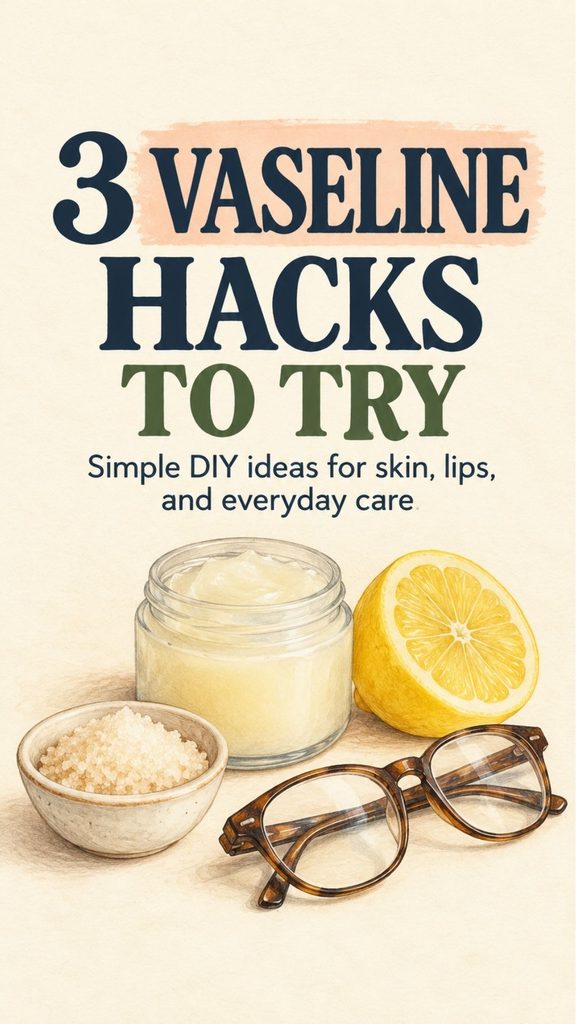
A popular DIY beauty tip recommends mixing petroleum jelly with fresh lemon juice and using it as an anti-aging face mask. Similar versions suggest combining petroleum jelly with sugar for the lips or mixing it with toothpaste to remove scratches from eyeglasses.
The appeal is understandable. Petroleum jelly is inexpensive, widely available, and genuinely useful for protecting dry skin. Lemon is also associated with vitamin C, so combining the two can sound like an easy homemade skincare treatment.
But these ingredients do not automatically become safer or more effective simply because they are familiar household products. Some parts of the idea have a reasonable basis, while others can irritate skin or damage the item you are trying to fix.
You Might Also Like:
- Loading posts...
Here is what is actually worth knowing before trying these popular Vaseline-based hacks.
What Petroleum Jelly Actually Does for Skin
Petroleum jelly is an occlusive moisturizer. Instead of adding a large amount of water to the skin itself, it forms a protective layer over the surface that slows water loss.
That can make it useful for very dry areas such as:
- Lips
- Hands
- Elbows
- Heels
- Dry patches of skin
- Skin exposed to cold or dry weather
Applying a thin layer over slightly damp skin or over a regular moisturizer can help keep moisture from evaporating as quickly.
This is why petroleum jelly can make dry skin look smoother and softer.
However, that temporary plumping and improved hydration should not be confused with reversing skin aging. Petroleum jelly does not erase wrinkles, rebuild lost facial volume, or permanently tighten skin.
Well-hydrated skin can simply make fine lines appear less noticeable for a while.
Should You Mix Petroleum Jelly With Lemon Juice?
This is where the viral recipe becomes questionable.
Fresh lemon juice is highly acidic. Putting it directly on facial skin can cause:
- Stinging
- Redness
- Dryness
- Irritation
- Damage to the skin barrier
The concentration and acidity of a fresh lemon are also inconsistent, which makes it very different from a properly formulated skincare product.
Lemon contains vitamin C, but that does not mean squeezing lemon juice onto the face provides the same benefits as using a professionally formulated vitamin C serum.
Skincare products are designed with controlled concentrations, appropriate pH levels, stability, and ingredients that make the formula suitable for skin. Fresh fruit juice provides none of that control.
Citrus exposure on skin can also become particularly problematic when followed by sunlight. Certain compounds naturally present in citrus can contribute to a reaction known as phytophotodermatitis, which may cause redness, blistering, or dark pigmentation after UV exposure.
For those reasons, adding lemon juice to petroleum jelly is unnecessary.
If your goal is simply softer, better-hydrated skin, petroleum jelly can do that without the lemon.
A Safer Way to Use Petroleum Jelly on the Face
If your skin tolerates petroleum jelly, the simplest method is usually the best.
Begin with clean skin.
Apply your usual gentle moisturizer while the skin is slightly damp.
Then spread a very thin layer of plain petroleum jelly over areas that tend to become especially dry.
You do not need a thick coating.
This technique is sometimes called “slugging,” although the idea itself is simply using an occlusive layer to reduce moisture loss.
It may be especially helpful for dry skin, but it is not ideal for everyone. People using strong acne treatments or certain exfoliating products should be cautious about sealing potentially irritating ingredients beneath an occlusive layer.
If a product causes burning, itching, swelling, or persistent redness, stop using it.
Does Petroleum Jelly Have Anti-Aging Benefits?
Petroleum jelly is better described as a skin-protecting moisturizer than an anti-aging treatment.
Keeping skin hydrated is valuable. Dry skin tends to make fine surface lines look more pronounced, while moisturized skin often appears smoother.
But preventing or treating visible signs of aging generally involves more than moisture.
Useful habits include:
Protecting Skin From the Sun
Regular sun protection is one of the most important steps for limiting premature visible skin aging.
Use broad-spectrum sunscreen on exposed skin and combine it with shade, protective clothing, and sensible sun habits when appropriate.
Using a Gentle Moisturizer
Maintaining the skin barrier helps reduce dryness, flaking, and irritation.
Choosing Proven Skincare Ingredients
Depending on your skin and goals, ingredients such as retinoids or properly formulated vitamin C products may be more appropriate than homemade acidic mixtures.
Start slowly with active ingredients, especially if you have sensitive skin.
What About the Petroleum Jelly Lip Scrub?
The second common hack combines petroleum jelly, sugar, and sometimes almond oil to create a homemade lip scrub.
This idea is somewhat more reasonable, but it still needs a gentle approach.
Petroleum jelly can help protect dry lips, and an oil can add lubrication. The questionable part is aggressive physical exfoliation.
Lip skin is delicate.
Large sugar crystals or vigorous rubbing can create tiny abrasions and make already cracked lips more irritated.
If your lips are simply dry, you often do not need to scrub them at all.
A better routine is to apply a plain lip balm or petroleum jelly regularly and allow loose skin to soften naturally.
If you choose to exfoliate, use very light pressure and stop immediately if the lips sting, bleed, or become irritated.
Never scrub severely cracked or inflamed lips.
A Simple Routine for Very Dry Lips
For most people, a complicated homemade recipe is unnecessary.
At night:
- Gently clean away lipstick, food residue, or other products.
- Leave the lips slightly damp.
- Apply a thin layer of plain petroleum jelly or a fragrance-free lip balm.
- Reapply during the day when necessary.
Frequent lip licking can make dryness worse because moisture evaporates and leaves the lips feeling even drier.
Protecting lips from strong sun and harsh weather can also help prevent repeated irritation.
Can Vaseline and Toothpaste Remove Scratches From Glasses?
Another version of this viral hack recommends mixing petroleum jelly with toothpaste and rubbing the mixture over scratched eyeglass lenses.
This is not a good idea.
Toothpaste often contains mild abrasives intended to clean teeth. Those particles can potentially make lens damage worse, particularly on modern glasses with specialized coatings.
Eyeglass lenses may have:
- Anti-reflective coatings
- Scratch-resistant coatings
- UV coatings
- Blue-light filtering treatments
- Tints or other surface treatments
Rubbing an abrasive household product across those surfaces can damage the coating instead of repairing it.
Petroleum jelly may temporarily fill a scratch and make it appear slightly less noticeable under certain lighting, but it does not restore damaged lens material.
Once a lens is genuinely scratched, there is no reliable household mixture that rebuilds the missing surface.
The Better Way to Handle Scratched Glasses
First clean the glasses properly.
Rinse away loose dust or debris before wiping them, since rubbing dry particles across a lens can create additional scratches.
Use a cleaner that is appropriate for your lenses and a clean microfiber cloth.
If a mark remains and appears to be a genuine scratch, ask an optician whether the damage affects only a coating or the actual lens.
Minor cosmetic marks may be tolerable, but scratches directly in your field of vision can cause distracting glare or reduced clarity.
Replacement is often the only dependable solution for significantly scratched lenses.
Be Careful With DIY Beauty Claims
Household skincare recipes often sound convincing because each ingredient has a familiar reputation.
Lemon contains vitamin C.
Petroleum jelly moisturizes.
Sugar exfoliates.
Toothpaste polishes.
But combining those facts does not prove that every homemade recipe using them is effective or safe.
Formulation matters.
Concentration matters.
Skin sensitivity matters.
And something designed for teeth or food preparation may behave very differently when applied repeatedly to facial skin.
What Is Worth Keeping From This Trend?
Petroleum jelly itself remains a useful and inexpensive product.
It can help protect dry lips, reduce moisture loss from dry skin, and provide a protective barrier over areas prone to chapping.
There is usually no need to make it more complicated.
Skip the lemon on facial skin, be cautious with abrasive lip scrubs, and keep toothpaste away from coated eyeglass lenses.
For dry skin, plain petroleum jelly paired with a gentle moisturizer is generally the more sensible option. For concerns such as wrinkles, discoloration, persistent irritation, or severe dryness, choose skincare products formulated specifically for those concerns rather than relying on acidic kitchen ingredients.
Simple does not have to mean ineffective. Sometimes the safest version of a viral home remedy is using the useful ingredient by itself.