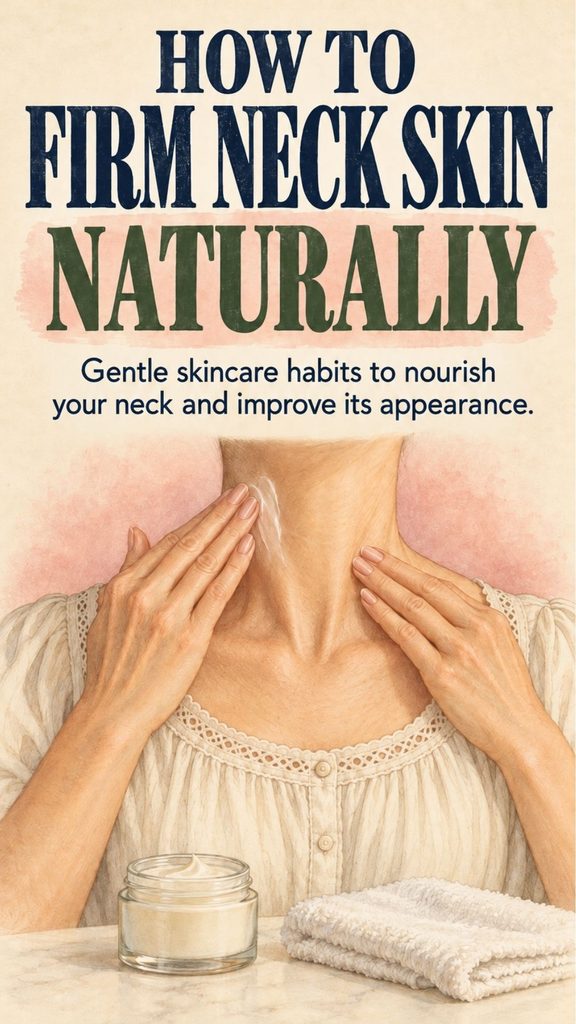
The neck is one of those areas that often gets overlooked during a daily skincare routine. You may carefully cleanse, moisturize, and protect your face while forgetting that the skin just below your jawline needs attention, too.
Over time, the neck can develop fine lines, crepey texture, and loose skin. Some people notice horizontal wrinkles, while others become concerned about sagging beneath the chin or more visible vertical neck bands.
These changes are a natural part of aging, but sun exposure, genetics, smoking, weight changes, and everyday skincare habits can influence how noticeable they become.
You Might Also Like:
- Loading posts...
If you’re wondering how to tighten neck skin naturally, the first thing to understand is that no homemade mask, facial massage, or exercise can reliably remove significant excess skin.
However, several evidence-based habits can improve hydration, support the skin barrier, reduce the appearance of fine lines, and help prevent additional premature aging.
The best results usually come from a consistent routine rather than expensive products or aggressive treatments.
Here are ten practical approaches to caring for aging neck skin, including which popular home remedies are worth trying and which ones are unlikely to deliver the results they promise.
Why Does Neck Skin Become Loose and Wrinkled?
The skin on your neck undergoes many of the same biological changes as the skin on your face.
As you age, the production and organization of collagen and elastin change.
Collagen contributes to the skin’s structure, while elastin helps it stretch and return toward its original shape.
Over time, these supporting structures become less effective, and the skin may begin to appear thinner, looser, or more wrinkled.
The neck is particularly noticeable because its skin is relatively delicate, frequently exposed to sunlight, and constantly moving.
Several factors can contribute to these changes.
Natural Aging
As skin ages, it gradually loses some firmness, elasticity, and moisture-retaining ability.
The underlying fat, connective tissue, and neck muscles also change.
This can produce loose skin, horizontal lines, or more prominent vertical bands.
Sun Exposure
Ultraviolet radiation damages collagen and other skin structures.
Repeated sun exposure contributes to wrinkles, discoloration, rough texture, and loss of elasticity.
People who consistently protect their faces but forget their necks may notice a difference between the two areas over time.
Weight Changes
Weight gain can stretch the skin.
After weight loss, the skin may not completely return to its previous shape, particularly when natural elasticity has already declined.
The amount of remaining looseness varies according to age, genetics, weight history, and other factors.
Genetics and Hormonal Changes
Some people naturally develop neck wrinkles or loose skin earlier than others.
Hormonal changes, including those associated with menopause, may also influence skin thickness, dryness, and elasticity.
These factors explain why two people of the same age can have noticeably different neck appearances.
1. Apply Sunscreen to Your Neck Every Day
If you make only one change to protect your neck from premature aging, daily sun protection is an excellent place to start.
Ultraviolet radiation is a major contributor to visible skin aging.
It can damage collagen and elastin, increasing the appearance of wrinkles and uneven pigmentation.
The American Academy of Dermatology recommends using broad-spectrum sunscreen with SPF 30 or higher on exposed skin.
How to Protect Your Neck Properly
Apply sunscreen to the front, sides, and back of your neck wherever the skin isn’t covered by clothing.
Don’t forget the area beneath the chin and the upper chest when exposed.
Use enough sunscreen to cover the skin evenly.
When spending time outdoors, reapply approximately every two hours and after swimming or sweating, according to the product’s directions.
A wide-brimmed hat, shade, and appropriate sun-protective clothing can provide additional protection.
Can Sunscreen Tighten Existing Sagging Skin?
Sunscreen won’t remove excess skin or produce an immediate lifting effect.
Its main benefit is helping prevent further sun-related damage.
Consistent protection can support healthier-looking skin over the long term and reduce additional premature aging.
Best for: Preventing sun-related wrinkles, discoloration, and further loss of skin quality.
2. Moisturize Your Neck Morning and Night
Dry skin often makes fine lines and crepey texture more noticeable.
A good moisturizer helps retain water in the outer layers of skin, making the surface appear smoother and more supple.
Although moisturizer doesn’t physically lift significant sagging skin, it can improve the appearance and comfort of dry, aging skin.
Ingredients Worth Looking For
Choose a moisturizer containing suitable hydrating and barrier-supporting ingredients.
Good options include:
- Glycerin: Helps attract and retain moisture.
- Hyaluronic acid: Supports surface hydration.
- Ceramides: Help maintain the skin’s protective barrier.
- Dimethicone: Helps reduce moisture loss and improve skin smoothness.
- Petrolatum: Forms a protective barrier that limits water loss.
You don’t necessarily need a special neck cream.
A gentle facial moisturizer can often be used on both the face and neck, provided your skin tolerates it.
How to Apply Moisturizer
After cleansing, gently pat your skin until it is slightly damp.
Apply a small amount of moisturizer to your neck using comfortable, light movements.
Spread the product over the front and sides of your neck without pulling or stretching the skin aggressively.
Allow the moisturizer to absorb before applying additional products.
Repeat in the evening.
Best for: Dryness, temporary plumping of fine lines, and improving skin comfort.
3. Use a Gentle Retinol Product for Fine Lines
Retinol is one of the better-studied skincare ingredients for improving signs of photoaging.
It belongs to a group of vitamin A derivatives called retinoids.
Retinoids can encourage skin-cell turnover and influence collagen production, potentially improving fine lines and skin texture over time.
However, results are generally modest, and retinol is not a substitute for a procedure that removes excess skin.
Why the Neck Requires Extra Caution
Neck skin can be more sensitive to certain active skincare ingredients than facial skin.
Applying a strong retinoid too frequently may cause redness, peeling, burning, or irritation.
For that reason, begin cautiously.
How to Introduce Retinol
Choose a gentle, low-strength product appropriate for your skin.
Follow the manufacturer’s instructions and consider starting with infrequent nighttime application.
Use moisturizer to reduce dryness, and don’t combine several strong exfoliating or anti-aging products at once.
Apply sunscreen regularly during the day.
If the skin becomes irritated, stop using the product and seek advice if the reaction persists.
Retinoids should be avoided during pregnancy, including over-the-counter retinol products. People who are pregnant or planning pregnancy should discuss skincare choices with their healthcare professional.
Best for: Mild fine lines, uneven texture, and certain signs of sun-related aging.
4. Try Gentle Neck Massage for Comfort and Moisturizer Application
Facial and neck massage has become popular in beauty routines, often accompanied by claims that it stimulates collagen or lifts loose skin.
The scientific evidence for meaningful, lasting skin tightening from ordinary massage is limited.
Nevertheless, gentle massage may feel relaxing and help distribute moisturizer across the skin.
A Simple Neck Massage Routine
- Begin with clean hands and freshly cleansed skin.
- Apply a suitable moisturizer to provide slip.
- Use light fingertip movements along the sides of your neck.
- Avoid pulling, pinching, or aggressively stretching the skin.
- Keep the session brief and comfortable.
- Stop if you notice pain, redness, or irritation.
Avoid pressing firmly over the front of the neck, where important blood vessels and other delicate structures are located.
What About Hot Stone Massage?
Some traditional beauty advice recommends using heated stones to massage the neck.
There is no convincing evidence that hot stones repair wrinkles or produce lasting tightening.
Excessive heat may also cause burns, particularly on delicate skin.
A gentle massage with clean hands is a simpler, lower-risk option.
Best for: Relaxation and applying skincare products, not correcting significant sagging.
5. Eat a Balanced Diet That Supports Skin Health
Skin depends on adequate nutrition for normal repair and maintenance.
Protein supplies amino acids needed to build and maintain body tissues, including collagen.
Vitamin C plays an important role in normal collagen synthesis.
Other nutrients contribute to general skin and cellular health.
However, eating a particular food won’t specifically tighten loose neck skin.
Foods Worth Including
A balanced diet can provide the nutrients your skin needs.
Useful choices include:
- Citrus fruits, strawberries, and bell peppers for vitamin C
- Eggs, fish, poultry, beans, and lentils for protein
- Nuts and seeds for healthy fats and other nutrients
- Leafy vegetables for a variety of vitamins and minerals
- Whole grains and legumes for fiber and overall nutritional balance
There’s no need to follow a restrictive anti-aging diet.
Instead, aim for enough food, adequate protein, and a varied selection of nutritious ingredients.
Do Collagen Supplements Tighten Neck Skin?
Collagen powders and drinks are frequently marketed as treatments for wrinkles and sagging.
Some studies have reported improvements in skin hydration or elasticity.
However, research quality and industry funding are important limitations.
A 2025 systematic review and meta-analysis published in The American Journal of Medicine examined 23 randomized controlled trials involving 1,474 participants.
Although some pooled results suggested benefits, analyses restricted to higher-quality studies or studies without pharmaceutical-industry funding did not find significant improvements.
The authors concluded that convincing clinical evidence supporting collagen supplements for treating skin aging remains insufficient.
Collagen supplements should therefore not be presented as a proven way to lift loose neck skin.
Best for: Supporting normal skin health through adequate nutrition rather than promising targeted tightening.
6. Maintain a Stable, Healthy Weight
Significant fluctuations in body weight can influence the appearance of the neck.
When body fat increases, the skin may stretch.
After substantial weight loss, excess skin can remain, especially when the skin has lost some of its natural elasticity.
Maintaining a relatively stable weight may help reduce repeated stretching over time.
Focus on Sustainable Habits
Choose a balanced eating pattern and regular physical activity suited to your health and abilities.
Avoid extreme diets and rapid weight-loss methods.
If you’re pursuing weight loss for medical reasons, work toward a realistic and sustainable plan.
For someone who already has loose skin after substantial weight loss, exercise and skincare may improve general health and skin appearance, but they are unlikely to remove large amounts of excess tissue.
It’s also worth remembering that neck fullness and loose skin are not the same thing.
Fullness beneath the chin may involve subcutaneous fat, while wrinkling and sagging may result more from changes in skin and supporting tissues.
Different concerns may require different approaches.
Best for: Supporting long-term health and avoiding unnecessary weight fluctuations.
7. Use Vitamin C Skincare for Sun-Related Skin Changes
Vitamin C is involved in collagen production and helps protect against certain forms of oxidative damage.
Topical vitamin C products are commonly used to address uneven skin tone and signs of sun-related aging.
Some formulations may help improve the appearance of fine lines and discoloration over time.
However, a vitamin C serum won’t physically lift substantial loose skin.
How to Use Vitamin C
Choose a commercially formulated vitamin C product suitable for your skin type.
Introduce it gradually and follow the manufacturer’s directions.
Some vitamin C formulations can sting, especially on sensitive skin.
If your neck becomes irritated, discontinue the product.
Use moisturizer as needed and maintain daily sun protection.
Vitamin C is an optional addition to a skincare routine, not a requirement.
If your skin is already sensitive, sunscreen and moisturizer are more important starting points.
Best for: Uneven tone, mild photoaging, and supporting a simple anti-aging skincare routine.
8. Be Careful With Homemade Neck Masks
Homemade cucumber, yogurt, banana, and honey masks are often recommended for loose neck skin.
These recipes are appealing because the ingredients are familiar and inexpensive.
But their benefits need to be understood realistically.
Cucumber Masks
Cucumber contains a high percentage of water.
A cool cucumber-based preparation may temporarily feel soothing and refreshing.
However, there’s little evidence that applying cucumber to the skin stimulates enough collagen to tighten sagging tissue.
The same applies to cucumber mixed with yogurt or almond oil.
Banana and Honey Masks
Banana and honey are also popular in homemade beauty treatments.
Honey has moisture-retaining properties and is used in certain skincare formulations.
Nevertheless, a homemade banana-and-honey mask has not been established as an effective treatment for neck laxity.
The temporary softness someone notices after washing off a mask may result from moisture or the removal of surface residue rather than a structural change in the skin.
Are Homemade Masks Safe?
Not necessarily for everyone.
Food ingredients can cause irritation or allergic reactions, and homemade water-rich mixtures can become contaminated if stored improperly.
If you enjoy a simple mask as a relaxation ritual, use fresh, clean ingredients, avoid applying it to damaged skin, and rinse promptly if discomfort occurs.
Don’t rely on daily homemade masks to produce lifting or tightening.
A properly formulated moisturizer is generally a more predictable way to care for dry neck skin.
Best for: Optional short-term comfort, not proven skin tightening.
9. Practice Gentle Movement and Good Neck Posture
Some people try facial yoga, chin lifts, exaggerated chewing movements, or neck exercises to firm loose skin.
These exercises are often promoted as ways to strengthen muscles and stimulate collagen.
However, evidence that they meaningfully reduce sagging neck skin is limited.
Building muscle strength does not automatically tighten the skin lying over that muscle.
What About Neck Posture?
Spending long periods looking downward at a phone or computer may contribute to temporary folding of the neck skin and discomfort in the neck muscles.
Horizontal neck lines are also influenced by anatomy, aging, and genetics.
Improving posture won’t erase those lines, but it may reduce unnecessary muscular strain.
A Simple Posture Routine
Keep screens at a comfortable height.
Avoid holding the head in a sharply downward position for extended periods.
Take regular breaks from sitting.
Gently move your neck through comfortable ranges of motion without forcing stretches.
If you have persistent neck pain, dizziness, nerve symptoms, or a previous neck injury, seek professional guidance before beginning exercises.
Aggressive stretching, resistance against the jaw, and prolonged gum chewing are not proven skin-tightening treatments and may aggravate jaw or neck discomfort.
Best for: Neck comfort, mobility, and posture rather than lifting loose skin.
10. Avoid Habits That Accelerate Premature Skin Aging
Sometimes the most effective approach to maintaining skin appearance is reducing exposure to factors that cause additional damage.
Smoking is a well-established contributor to premature skin aging.
Tobacco smoke affects collagen and other skin structures and can contribute to wrinkles and reduced skin firmness.
Quitting smoking benefits skin health as well as cardiovascular and respiratory health.
Other Habits Worth Reviewing
Excessive sun exposure: Protect exposed skin and avoid tanning beds.
Frequent irritation: Harsh scrubs, aggressive exfoliation, and irritating skincare combinations can damage the skin barrier.
Strong fragrances: Perfume applied directly to sensitive neck skin may cause irritation or allergic contact dermatitis.
Inadequate sleep: Good sleep supports general health, although no particular sleeping position can reliably prevent neck sagging.
Excessive alcohol consumption: Alcohol can affect hydration and overall health, and limiting intake supports general well-being.
The most practical strategy is to build consistent protective habits rather than searching for a single miracle treatment.
Best for: Reducing avoidable environmental and lifestyle contributions to premature skin aging.
A Simple Morning and Evening Neck Skincare Routine
You don’t need a dozen products to care for the skin on your neck.
A basic routine can be both affordable and effective.
Morning Routine
- Gently wash the neck with lukewarm water and a mild cleanser if needed.
- Apply an optional vitamin C product if your skin tolerates it.
- Use a suitable moisturizer.
- Finish with broad-spectrum SPF 30 or higher sunscreen over exposed areas.
Evening Routine
- Remove sunscreen and accumulated dirt using a gentle cleanser.
- Apply an appropriate retinol product on scheduled nights if suitable for you.
- Follow with moisturizer.
- Apply a richer cream to particularly dry areas if necessary.
Avoid introducing several active ingredients simultaneously.
Start with sunscreen and moisturizer, then add one optional product at a time.
This makes it easier to identify anything that causes irritation.
How Long Does It Take to See Results?
The timeline depends on which concern you’re addressing.
Moisturizer may improve the appearance of dry, fine lines quickly because it increases surface hydration.
Improvements in texture from retinoids and other skincare ingredients generally require several weeks or months of consistent use.
The American Academy of Dermatology advises that many anti-aging products need at least six weeks, and sometimes up to three months, before their effects become apparent.
But meaningful removal of excess neck skin shouldn’t be expected from topical products.
Someone with loose skin caused by substantial weight loss or advanced aging may notice improvements in dryness and texture without seeing much change in actual sagging.
Realistic expectations can prevent unnecessary spending and frustration.
What About Professional Neck-Tightening Treatments?
If loose neck skin is a significant concern, a dermatologist or qualified plastic surgeon can explain which treatments may provide meaningful improvement.
Professional options vary according to the amount of laxity, skin quality, anatomy, and treatment goals.
Ultrasound Skin Tightening
Certain devices use focused ultrasound energy to heat deeper tissues and stimulate a wound-healing response that includes collagen remodeling.
Results are usually gradual and may provide modest improvement in suitable candidates.
Not everyone responds equally.
Radiofrequency Treatments
Radiofrequency devices use controlled energy to heat tissue beneath the skin.
Some treatments can produce mild to moderate improvements in skin firmness, although results vary.
Certain approaches involve needles or other minimally invasive techniques and carry additional risks.
Potential complications can include burns, pigment changes, scarring, and other unwanted effects.
These procedures should be performed by appropriately trained professionals.
Surgical Neck Lift
For more significant skin laxity, surgery may provide a more noticeable and predictable lifting effect.
A neck lift may address excess skin and underlying structural changes.
However, surgery involves anesthesia, recovery time, expense, and potential complications.
It’s an elective option, not a necessity.
Professional treatments should be considered according to individual goals rather than the assumption that normal skin aging must be corrected.
Common Mistakes to Avoid When Trying to Firm Neck Skin
Some popular techniques promise dramatic results without strong supporting evidence.
Using hot stones on the neck: Heat can cause burns, and massage has not been proven to eliminate loose skin.
Applying strong homemade acids: Lemon juice, vinegar, and other acidic mixtures can irritate or damage the skin.
Exfoliating every day: Over-exfoliation may create dryness, inflammation, and increased sensitivity.
Expecting collagen powders to produce a neck lift: Evidence for meaningful structural tightening is insufficient.
Overdoing facial exercises: Aggressive movement isn’t a proven way to remove wrinkles or sagging skin.
Applying strong retinol too frequently: Neck skin may react more intensely than facial skin.
Forgetting sunscreen: Sun-related damage can continue even when you’re using expensive anti-aging creams.
Believing that all sagging can be reversed naturally: Significant excess skin usually cannot be corrected with ordinary skincare.
The safest routine is generally gentle, consistent, and realistic about what each treatment can accomplish.
When Should You See a Dermatologist?
Gradual skin loosening is often a normal part of aging.
However, not every visible change in the neck is cosmetic.
Seek medical evaluation for a new or enlarging lump, persistent swelling, unexplained pain, a changing skin lesion, or other unusual symptoms.
A lump beneath the jaw or along the neck may involve lymph nodes, thyroid tissue, salivary glands, or other structures rather than ordinary skin aging.
If your main concern is cosmetic, a dermatologist can assess whether the issue involves skin texture, pigmentation, fat distribution, muscle bands, or excess skin.
Understanding the underlying cause can help you avoid purchasing treatments unlikely to address it.
Final Thoughts: Healthier Neck Skin Starts With Simple, Consistent Care
Loose neck skin and wrinkles are common changes that can occur with age, sun exposure, genetics, and shifts in body weight.
Although homemade masks, facial massage, and neck exercises are frequently advertised as natural tightening solutions, there is limited evidence that they can produce a meaningful lift.
The most dependable everyday habits are simpler.
Protect your neck from ultraviolet radiation, moisturize consistently, choose gentle skincare products, eat a balanced diet, avoid smoking, and maintain healthy routines that work for your lifestyle.
Retinoids and certain other skincare ingredients may improve mild wrinkles and texture, while professional treatments can offer additional options for people seeking more noticeable results.
The most important thing is to distinguish between improving the appearance and quality of the skin and actually removing or tightening excess tissue.
You don’t need an expensive collection of products to care for your neck. A gentle routine, daily sun protection, and realistic expectations are the best foundation for keeping your skin comfortable, healthy, and well cared for as you age.