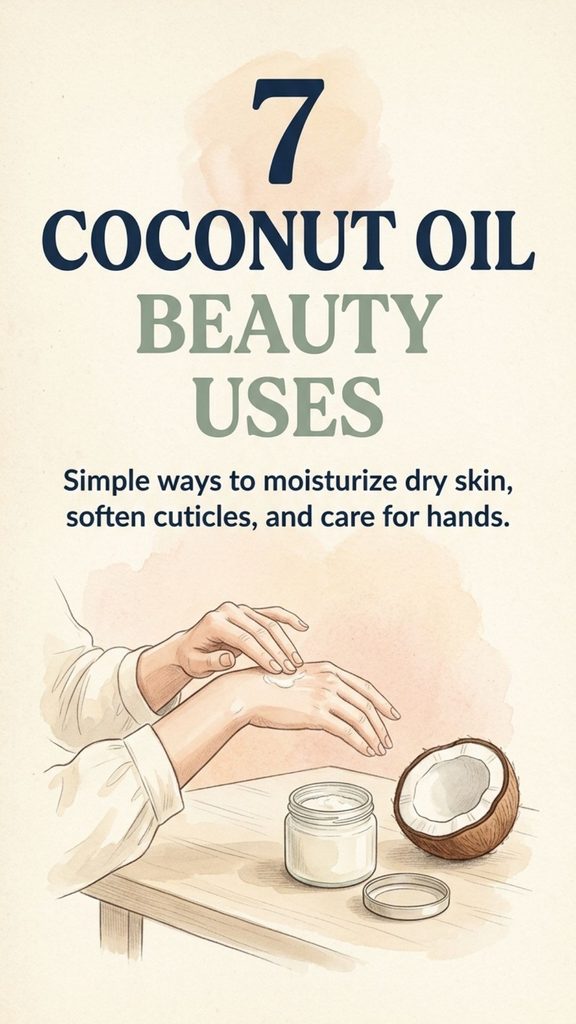
Coconut oil has been used in beauty routines for generations, and it’s easy to understand why. It’s affordable, widely available, and surprisingly versatile. From moisturizing dry hands to softening rough heels, a small amount can be useful in several everyday skincare routines.
But can coconut oil really make you look 10 years younger in just two weeks?
That’s a popular claim circulating online, but there’s no reliable scientific evidence that coconut oil can reverse a decade of skin aging in 14 days.
You Might Also Like:
- Loading posts...
What coconut oil can do is help reduce moisture loss from the skin, improve the feeling of dryness, and make certain rough areas feel softer and smoother. Well-hydrated skin may also make fine lines caused by dryness appear less noticeable.
Those benefits are worthwhile, even if they aren’t the dramatic transformation promised by viral beauty remedies.
The important thing is knowing when coconut oil can help, when it might cause problems, and how to incorporate it into a routine that actually suits your skin.
Here are nine practical ways to use coconut oil for beauty, along with its limitations and a gentle two-week skincare plan.
Why Is Coconut Oil Popular in Skincare?
Coconut oil is extracted from the flesh of mature coconuts and contains a mixture of fatty acids, including a high proportion of saturated fats.
In skincare, its main advantage is its ability to act as an emollient and occlusive moisturizer.
An emollient helps skin feel softer and smoother, while an occlusive ingredient reduces the amount of water escaping from the skin’s surface.
This makes coconut oil particularly useful for some people with dry skin.
It can also leave a temporary protective film that reduces the feeling of tightness after washing.
However, coconut oil doesn’t contain every component needed for a complete skincare routine.
It cannot replace sunscreen, treat every skin condition, or restore the deeper structural changes associated with aging.
And despite its natural origin, it isn’t suitable for everyone’s skin.
1. Use Coconut Oil to Moisturize Dry Skin Overnight
One of coconut oil’s simplest uses is as a moisturizer for dry areas of the body.
If your elbows, knees, or lower legs feel rough after bathing, applying a small amount of coconut oil may help reduce moisture loss.
How to Use It
- Take a warm shower or wash the area gently.
- Pat the skin dry, leaving it slightly damp.
- Warm a pea-sized amount of coconut oil between clean palms.
- Massage a thin layer over the dry area.
- Allow it to absorb as much as possible before putting on clothing.
You don’t need a thick coating.
Using too much can leave the skin greasy and may transfer oil onto pajamas or bedding.
For particularly dry skin, a fragrance-free cream containing glycerin or ceramides may provide more complete hydration. A small amount of coconut oil can sometimes be used over a compatible moisturizer to help seal in moisture.
If you’re prone to acne, avoid assuming coconut oil will be suitable for your face. It may contribute to clogged pores or breakouts in some people.
2. Soften Dry Hands and Rough Cuticles
Frequent handwashing, dishwashing, household chores, and cold weather can leave hands feeling dry.
Coconut oil may help soften the skin around the fingernails and reduce the rough feeling of dry cuticles.
A Simple Hand Care Routine
Before bed, wash your hands with a gentle cleanser and pat them dry.
Apply a small amount of coconut oil to the backs of your hands and around the nail folds.
Massage gently, paying attention to dry areas.
If your hands are very dry, a thick fragrance-free hand cream or plain petrolatum may provide more dependable protection.
You can also wear clean cotton gloves over a suitable moisturizer at night if comfortable.
Avoid cutting or aggressively pushing back cuticles, which help protect the area around the nails.
Coconut oil cannot repair nail infections or treat persistent inflammation. Pain, swelling, or redness around a nail deserves appropriate medical attention.
3. Make Dry Heels Feel Softer
Rough heels are common, particularly when you spend time barefoot or wear open-backed shoes.
Coconut oil can help soften dry skin, although it won’t remove significant calluses on its own.
How to Use It
Wash your feet and dry them thoroughly, especially between the toes.
Apply a small amount of coconut oil to dry heel areas, avoiding excessive application to the soles if it makes them slippery.
Put on clean cotton socks before walking around.
For thick, cracked heels, a foot cream containing urea may be more effective than coconut oil alone.
Deep cracks, bleeding, or signs of infection require extra care.
People with diabetes, reduced foot sensation, or circulation problems should seek appropriate guidance rather than trying aggressive home treatments.
4. Use Coconut Oil as a Pre-Wash Hair Treatment
Coconut oil is also popular for caring for dry hair.
Some research suggests that coconut oil may reduce protein loss from certain types of hair when used appropriately.
That doesn’t mean it causes hair to grow faster or repairs every form of hair damage.
But it may help some hair feel smoother and reduce friction during washing and styling.
How to Try It
Apply a small amount to the mid-lengths and ends of dry hair before washing.
Leave it on for approximately 20–30 minutes, then shampoo thoroughly.
Depending on your hair type, you may need to shampoo twice to remove residue.
Start with a small amount because heavy application can leave fine hair looking greasy.
Avoid applying it directly to the scalp if it worsens itching, flaking, or other scalp conditions.
If your hair feels stiff or coated afterward, coconut oil may not be a good match for your routine.
5. Remove Certain Types of Makeup
Oil-based products can help dissolve some makeup, sunscreen, and other products that are difficult to remove with water alone.
Coconut oil may work as a first cleansing step for some people, but it shouldn’t automatically replace a properly formulated makeup remover.
How to Use It Carefully
With clean hands, apply a very small amount to a suitable area of dry skin.
Massage gently to loosen makeup, avoiding direct contact with the eyes.
Remove the residue with a soft, damp cloth.
Follow with a gentle facial cleanser to remove remaining oil and cosmetics.
Stop using it if you notice irritation, clogged pores, or breakouts.
For eye makeup, a tested product specifically intended for the eye area is generally preferable.
Coconut oil can blur vision or cause discomfort if it enters the eyes, and it isn’t a treatment for eye irritation.
6. Try Coconut Oil for Shaving Dry Areas
Coconut oil is sometimes used as a substitute for shaving cream because it provides lubrication.
A thin layer may allow a razor to glide over some areas of the skin.
However, coconut oil isn’t necessarily better than a shaving product designed for sensitive skin.
It may also clog razors, make surfaces slippery, or contribute to breakouts and follicle irritation in some users.
If You Want to Try It
Begin with a small test area rather than using it over your entire body.
Use a clean, sharp razor and shave gently in the direction of hair growth.
Rinse the blade frequently.
Wash away the remaining oil carefully when finished.
Keep oil away from shower floors, where slippery residue could increase the risk of falls.
If you’re prone to shaving bumps or irritation, a fragrance-free shaving gel may be a more suitable option.
7. Reduce the Appearance of Dry, Flaky Skin
Sometimes the skin’s surface looks dull because dry flakes make it appear uneven.
Moisturizing can improve the appearance of this dryness, making skin temporarily look smoother.
Coconut oil may help some areas retain moisture, but it doesn’t exfoliate skin in the same way a carefully formulated exfoliating product does.
Avoid homemade scrubs using coarse sugar, salt, or harsh rubbing techniques on delicate facial skin.
If you have flaking around your nose, eyebrows, or scalp, the cause may be something other than simple dryness.
Persistent flaking can result from conditions that require specific treatment.
For ordinary dry body skin, use a gentle cleanser, avoid excessively hot water, and apply a suitable moisturizer after bathing.
These habits are often more important than any single oil.
8. Condition Your Nails Between Manicures
Nails and the surrounding skin can become dry after repeated washing or exposure to certain nail products.
A small amount of coconut oil may help condition the nail folds and cuticle area.
Apply a thin layer after washing your hands or before bedtime.
Massage gently and allow time for absorption.
This can improve the feel of dry skin around the nails, but it won’t make damaged nails instantly strong or guarantee faster nail growth.
If your nails are persistently brittle, separating, discolored, or painful, the issue may require more than moisturizing.
Regular gentle care and avoiding unnecessary trauma are good starting points.
9. Help Seal Moisture Into Dry Elbows and Knees
Elbows and knees often become rough because they’re exposed to friction, frequent movement, and environmental conditions.
Coconut oil can be useful as an extra layer of moisture protection on these areas.
After bathing, apply a fragrance-free moisturizer while the skin is still slightly damp.
Then use a thin layer of coconut oil over particularly dry patches if your skin tolerates it.
This approach combines ingredients that provide hydration with an oil that helps reduce moisture loss.
Don’t expect coconut oil to erase discoloration, deep creases, or thickened skin caused by other conditions.
If rough patches become painful, unusually dark, itchy, or persistent, seek professional advice.
Can Coconut Oil Remove Cellulite?
One widely shared homemade beauty tip recommends mixing coconut oil with honey and massaging it onto areas affected by cellulite.
Cellulite is extremely common and develops from the interaction of connective tissue, subcutaneous fat, and skin structure.
It isn’t simply caused by dry skin or poor skincare habits.
Applying coconut oil may make the surface feel softer, and massage can sometimes create a temporary change in appearance.
However, there is no convincing clinical evidence that coconut oil and honey eliminate cellulite.
A homemade mixture cannot reliably change the underlying tissue structures responsible for cellulite.
If you enjoy moisturizing your legs, coconut oil may be suitable for dry skin.
Just don’t expect it to permanently remove dimpling.
Does Coconut Oil Help Varicose Veins?
Another popular claim suggests that massaging coconut oil onto the legs can make varicose veins disappear.
This is misleading.
Varicose veins develop when valves within the veins don’t function properly, allowing blood to pool and the veins to enlarge.
Coconut oil cannot repair those valves or eliminate enlarged veins.
Moisturizing may improve skin comfort, but it doesn’t treat the underlying circulation problem.
For people experiencing troublesome varicose veins, professional assessment may be appropriate.
Depending on the situation, management can involve movement, leg elevation, properly selected compression stockings, or medical procedures.
Avoid vigorous massage directly over painful, swollen, inflamed, or suspicious veins.
Sudden one-sided leg swelling, redness, warmth, or pain should receive prompt medical assessment.
Can Coconut Oil Make Eyelashes Longer?
Applying coconut oil to eyelashes is sometimes recommended as a way to prevent lash breakage or encourage growth.
However, there is insufficient clinical evidence that coconut oil makes eyelashes grow longer, thicker, or faster.
Applying oil near the eyelids can also cause discomfort, irritation, or blurred vision if it enters the eyes.
People with sensitive eyes, contact lenses, or recurring eyelid inflammation should be particularly cautious.
Rather than applying kitchen oil directly to your eyelashes, choose eye-area products specifically designed and tested for their intended use.
If you’re experiencing unusual eyelash loss, consult a qualified healthcare professional to investigate the cause.
A Gentle 14-Day Coconut Oil Beauty Routine
If you’d like to see whether coconut oil improves the feel of your dry skin, a two-week trial can help you evaluate how well you tolerate it.
This routine focuses on simple moisturizing uses rather than unproven anti-aging treatments.
Days 1–3: Test a Small Area
Apply a small amount of plain, cosmetic-grade coconut oil to a small area of intact skin.
Observe the area for redness, itching, bumps, or other signs of irritation over the next several days.
Stop if you experience a reaction.
People with known coconut allergies should avoid using it.
Days 4–7: Focus on Dry Hands and Cuticles
If the initial test causes no problems, use a thin layer on dry hands and cuticles after evening washing.
Compare how your skin feels before and after several days.
Pay attention to comfort rather than expecting dramatic visual changes.
Days 8–10: Add Dry Elbows or Heels
Try coconut oil on a small dry area of your elbows or heels.
Use a modest amount, avoiding slippery residue on walking surfaces.
Continue your regular moisturizer if needed.
Days 11–14: Evaluate the Results
After approximately two weeks, consider whether the treated areas feel softer or less dry.
If coconut oil leaves your skin comfortable and doesn’t cause irritation, it may be a useful occasional moisturizer.
If you notice breakouts, itching, redness, or a heavy greasy feeling, stop using it.
The purpose of the trial is to discover whether this simple ingredient suits your skin.
It’s not a scientifically established method for reversing skin aging.
Coconut Oil vs. Regular Moisturizer: Which Is Better?
Coconut oil and moisturizing creams work differently.
Coconut oil mainly helps soften skin and reduce moisture loss.
Many commercially formulated moisturizers combine several kinds of ingredients to support hydration and the skin barrier.
| Feature | Coconut Oil | Formulated Moisturizing Cream |
|---|---|---|
| Reduces moisture loss | Yes | Often |
| Adds water-attracting humectants | Not inherently | Often |
| Contains barrier-supporting ingredients | Limited range | Depends on formulation |
| Suitable for acne-prone skin | May cause problems for some | Noncomedogenic options available |
| Texture | Oily | Varies from light to rich |
| Proven wrinkle reversal | No | No ordinary moisturizer reverses aging |
For many people, a fragrance-free moisturizer containing glycerin, ceramides, or other suitable ingredients is a more versatile daily skincare choice.
Coconut oil may still be useful for dry body areas when tolerated.
What About Eating Coconut Oil for Better Skin?
Coconut oil is also promoted as a food that can transform skin health from the inside.
But eating extra coconut oil has not been established as a way to make skin look younger.
Coconut oil is high in saturated fat, and replacing unsaturated fats with large amounts of saturated fat can raise LDL cholesterol in many people.
For general heart health, dietary guidance typically recommends emphasizing unsaturated fat sources, such as olive oil, nuts, seeds, and certain other plant oils.
You don’t need to eliminate coconut oil entirely if you enjoy cooking with it, but there’s no reason to consume large amounts for cosmetic benefits.
A varied diet that provides adequate protein, essential fats, vitamins, and minerals is more important for overall health than any single ingredient.
The Best Proven Habits for Younger-Looking Skin
If your goal is to keep your skin looking healthy as you age, several strategies have stronger evidence than applying coconut oil.
Use Sunscreen Consistently
Ultraviolet radiation contributes to premature skin aging, including wrinkles, changes in pigmentation, and loss of skin elasticity.
Broad-spectrum sunscreen with SPF 30 or higher is one of the most important preventive skincare products.
Reapply as directed, especially during extended outdoor exposure.
Moisturize Regularly
Keeping skin adequately hydrated can improve comfort and temporarily soften the appearance of fine lines caused by dryness.
Choose products appropriate for your skin type.
Consider Evidence-Based Anti-Aging Ingredients
Certain retinoids can gradually improve some signs of photoaging.
However, they may cause irritation and aren’t appropriate during pregnancy.
A dermatologist can help determine which options are suitable for your skin.
Avoid Smoking
Smoking is associated with premature skin aging as well as numerous other health problems.
Avoiding tobacco supports both skin and overall health.
Maintain Realistic Expectations
Skin naturally changes with age.
No oil, mask, or homemade cream can stop every part of that process.
A good skincare routine helps protect and support your skin rather than promising impossible transformations.
Common Coconut Oil Skincare Mistakes
Coconut oil can be useful, but careless application may create problems.
Using too much: A thick coating can feel greasy, stain fabrics, and leave unnecessary residue.
Applying it to acne-prone facial skin: Coconut oil may contribute to clogged pores or breakouts in some people.
Using it as sunscreen: Coconut oil does not provide reliable, adequate sun protection.
Applying it near the eyes: Oil can cause irritation and blurred vision.
Using it on infected or damaged skin: Broken or infected skin may need specific medical treatment rather than homemade remedies.
Assuming it treats medical conditions: Coconut oil cannot eliminate varicose veins, reliably remove cellulite, or cure skin disease.
Using it with latex barrier contraceptives: Oil-based products can weaken latex and should not be used as lubricants with latex condoms.
Assuming natural means allergy-free: Natural ingredients can still cause irritation or allergic reactions.
As with any skincare product, the best results come from choosing something suitable for your individual needs.
Frequently Asked Questions About Coconut Oil for Skin
Can Coconut Oil Make You Look 10 Years Younger in Two Weeks?
No reliable scientific evidence supports this claim. Coconut oil may improve the appearance of dry skin by reducing moisture loss, but it cannot reverse a decade of aging.
Is Coconut Oil Good for Wrinkles?
It may temporarily soften the appearance of fine lines related to dryness. It doesn’t remove deep wrinkles or restore lost collagen.
Can I Leave Coconut Oil on My Skin Overnight?
Some people tolerate a thin layer on dry body skin overnight. Avoid using it on areas where it causes irritation, clogged pores, or other problems.
Is Virgin Coconut Oil Better for Your Face?
Virgin coconut oil may differ from refined coconut oil in processing and composition, but neither is guaranteed to be suitable for facial skin. Skin type and individual tolerance matter more than marketing claims.
Does Coconut Oil Tighten Loose Skin?
There is no good evidence that applying coconut oil significantly tightens loose or sagging skin.
How Long Does It Take to Notice Softer Skin?
Moisturizing effects may be noticeable relatively quickly, but individual experiences vary. Softer skin does not necessarily mean structural changes in collagen or elasticity.
Final Thoughts: Enjoy Coconut Oil for What It Can Actually Do
Coconut oil deserves a place in some simple beauty routines, especially when used to soften dry hands, condition cuticles, and reduce moisture loss from rough areas of the body.
Its biggest advantage is simplicity.
You don’t need elaborate recipes or expensive preparations to use it as a moisturizer.
But claims that coconut oil can erase cellulite, cure varicose veins, grow eyelashes, or make someone look ten years younger in two weeks go far beyond what scientific evidence supports.
For the best results, use it sparingly, pay attention to how your skin responds, and combine suitable moisturizing practices with daily sun protection and gentle skincare.
Healthy, beautiful skin doesn’t require impossible age-reversal promises. Consistent care, realistic expectations, and choosing products that work for your skin are much more valuable.