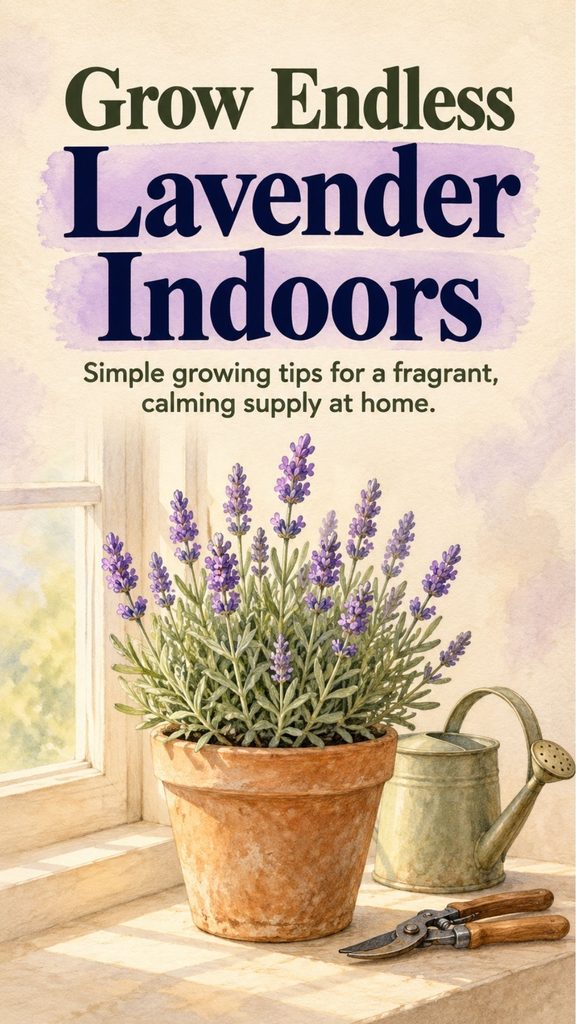
Lavender is one of those plants that seems almost designed for a sunny windowsill.
Its silvery-green foliage is attractive even when the plant is not flowering, its purple blooms are beautiful, and brushing against the leaves releases the familiar herbal fragrance that has made lavender popular in perfumes, bath products, sachets, and aromatherapy.
It is also frequently promoted as a natural treatment for headaches, anxiety, stress, poor sleep, and practically anything else associated with tension.
You Might Also Like:
- Loading posts...
That is where expectations need to become more realistic.
Lavender has been studied for several health-related uses, particularly lavender essential oil and standardized oral preparations. Some research is promising, but the evidence varies considerably depending on the product and how it is used. The National Center for Complementary and Integrative Health says it remains unclear whether lavender aromatherapy reliably improves anxiety, stress, sleep, depression symptoms, or pain, even though some studies have reported benefits.
A lavender plant growing beside your window is therefore best viewed as a beautiful, fragrant herb—not a medical treatment.
The good news is that growing lavender indoors is rewarding enough without exaggerated promises.
With strong light, excellent drainage, restrained watering, and a little attention to airflow, you can maintain lavender in containers and propagate additional plants from cuttings. The Royal Horticultural Society describes lavender as a sun-loving shrub that thrives in free-draining conditions and is readily propagated from cuttings.
Here is how to do it successfully.
Can You Really Grow an “Endless Supply” of Lavender Indoors?
Not literally.
No individual lavender plant produces an infinite supply of leaves and flowers, and indoor growing is often more challenging than outdoor cultivation because lavender evolved for bright, relatively dry conditions.
But a healthy plant can provide repeated harvests, and cuttings can be used to produce additional plants.
That is the practical meaning of an “endless supply.”
Instead of repeatedly buying cut lavender, you can maintain a parent plant, take modest harvests, propagate healthy shoots, and gradually build a small collection.
Lavender is a woody perennial rather than a fast-growing leafy herb such as basil, so patience helps.
Indoor Lavender Needs a Lot of Light
Light is usually the biggest challenge.
Lavender is not a low-light houseplant.
The original growing guide correctly emphasizes strong sunlight, and the RHS likewise recommends full sun for lavender.
Place your plant in the brightest window available.
A south-facing window is often ideal in the Northern Hemisphere, although actual light depends on buildings, trees, curtains, latitude, season, and window design.
A plant sitting several feet away from a bright window receives dramatically less light than one sitting directly beside it.
Watch the plant.
Healthy lavender should remain reasonably compact.
If stems become long, weak, and stretched toward the window, insufficient light is a likely problem.
A proper grow light can help when natural sunlight is inadequate, especially during winter.
Choose the Right Lavender
Several lavender species can be grown in containers, but their growth habits differ.
English lavender, Lavandula angustifolia, is one of the most familiar options. Compact cultivars such as ‘Munstead’ and ‘Hidcote’ are particularly appealing where space is limited.
French lavender, including forms sold as Lavandula dentata, can also make attractive container plants and may appreciate warmer conditions.
Lavandin, Lavandula × intermedia, is vigorous and highly fragrant but tends to become larger. That can make it less convenient for a narrow windowsill unless you have enough space and a sufficiently large container.
Do not worry excessively about finding one supposedly perfect “indoor lavender.”
Light and watering usually matter more than the label on the pot.
Start With a Healthy Nursery Plant
Lavender can be grown from seed, but starting with a small nursery plant is much easier if your goal is to have a usable plant soon.
Seeds can germinate unevenly, and seedlings take time to become established.
Choose a plant with compact growth, healthy foliage, and no obvious signs of rot or pest damage.
Avoid specimens sitting in completely saturated soil.
Also inspect the lower stems.
A plant that already has substantial dieback at the base may be harder to recover than a vigorous young specimen.
Choose a Pot With Excellent Drainage
Lavender roots dislike remaining waterlogged.
Your container therefore needs drainage holes.
Terracotta is often a good choice because the porous material allows the growing medium to lose moisture more readily than many glazed or plastic containers. Plastic can work perfectly well too, provided drainage is good and watering is adjusted accordingly.
Do not choose an enormous pot for a small plant.
A very large volume of wet potting mix can remain damp around a small root system for too long.
Repot gradually as the plant grows.
A decorative pot without drainage can still be used as an outer cover, but keep the lavender in a drainage pot inside it and empty any water that collects at the bottom.
Use a Fast-Draining Potting Mix
Garden soil dug directly from the yard is generally not ideal for indoor containers.
It can compact, drain poorly, and introduce pests or pathogens.
Instead, use a quality container mix amended to improve drainage. Perlite, pumice, horticultural grit, or another suitable coarse material can help create an airier root zone.
The original article suggests automatically adding crushed eggshells or garden lime to make the soil more alkaline.
That is not necessary for every plant.
Lavender can tolerate alkaline conditions, but adding lime blindly can push the pH farther than needed. If you are using a commercial potting medium, focus first on drainage rather than trying to manipulate pH without knowing the starting conditions.
Water According to the Soil, Not the Calendar
One of the fastest ways to lose indoor lavender is to love it with too much water.
Lavender tolerates dry periods much better than constantly wet roots.
Allow the growing medium to dry noticeably between waterings.
Then water thoroughly enough that excess runs through the drainage holes and discard water left in the saucer or outer pot.
Do not follow a rigid rule such as “water every seven days” or “every two weeks.”
A plant may dry quickly during a hot sunny week and slowly during a cool cloudy one. Pot size, material, root development, indoor temperature, and season all affect water use.
Touch the potting mix and observe the plant.
Those signals are more useful than the calendar.
Humidity Is Not Lavender’s Best Friend
This is one place where lavender differs from many popular houseplants.
Lavender comes from Mediterranean-type conditions and generally prefers good airflow and relatively dry surroundings.
A steamy bathroom is usually not the best place for it, despite the current popularity of putting almost every plant in bathrooms.
Keep lavender somewhere bright and reasonably well ventilated.
Avoid crowding the foliage tightly among other plants if air circulation is poor.
Good airflow combined with good drainage helps reduce the wet conditions that encourage root and stem problems.
Give It Reasonable Indoor Temperatures
Ordinary household temperatures are usually acceptable, but lavender does not need tropical heat.
It can appreciate somewhat cooler conditions, particularly when growth slows in winter.
Keep it away from extreme temperature sources such as heating vents, radiators, and blasts of very hot air.
Cold windows can also create problems if foliage is pressed directly against freezing glass.
The most important goal is a bright location without prolonged wetness or extreme fluctuations.
Feed Lightly
Lavender is not a heavy feeder.
Too much fertilizer—particularly high-nitrogen fertilizer—can produce soft leafy growth at the expense of the compact, aromatic growth gardeners generally want.
A container plant may eventually need nutrients because repeated watering gradually removes them from potting mix, but that does not mean feeding heavily every month regardless of season or condition.
If you fertilize, use a suitable product conservatively during active growth and follow its label.
Do not keep adding fertilizer to a weak plant that actually needs more light or drier soil.
Fertilizer cannot correct poor growing conditions.
Prune Without Cutting Too Far Into Old Wood
Pruning helps lavender remain compact rather than becoming increasingly woody and open in the center.
After flowering, remove spent flower stems and lightly shape the plant.
You can also pinch or trim soft green growth periodically.
Be more cautious with old woody stems.
Lavender does not always regenerate reliably when cut severely into bare old wood.
The goal is regular light shaping rather than allowing the plant to become enormous and then attempting one drastic rescue pruning.
How to Harvest Lavender
For fragrance and drying, harvest flower stems when the blooms are opening but before they are completely faded.
Use clean scissors or pruners.
Take individual stems rather than cutting away a huge portion of the plant at once.
Bundle a small number loosely and dry them somewhere shaded, dry, and ventilated.
Once thoroughly dried, the flowers can be used for decorative sachets, crafts, or culinary purposes if the lavender is an edible species and has not been treated with chemicals unsuitable for food.
Fresh foliage can also be fragrant, but harvesting should remain moderate enough that the plant retains plenty of healthy growth.
Propagating Lavender From Cuttings
Propagation is the closest thing to creating your own continuing lavender supply.
Take a healthy non-flowering shoot and remove the leaves from its lower portion. Insert the bare section into a light, well-draining propagation medium and keep it gently moist while roots develop.
Some gardeners use rooting hormone, although it is not always essential.
The source suggests covering cuttings with plastic for humidity and expects roots within two to three weeks.
Those numbers should not be treated as guarantees.
Rooting time varies with the type of cutting, temperature, cultivar, light, and growing conditions. Excessive humidity around lavender cuttings can also encourage rot, so if you use a cover, provide ventilation rather than sealing them into continually wet conditions.
Once a cutting is well rooted, move it gradually into its own pot.
That new plant can eventually produce cuttings of its own.
Why Your Lavender Is Becoming Leggy
Long stems with large gaps between leaves usually suggest inadequate light.
Moving the plant to a brighter location may help new growth become more compact.
Do not expect already stretched stems to magically shorten.
Once lighting improves, lightly pruning appropriate green growth can encourage a better shape.
If natural light remains insufficient, a grow light is likely to produce a bigger improvement than fertilizer.
Why Lavender Leaves Turn Yellow
Yellowing can have several causes, but overly wet growing conditions are an important possibility with lavender.
Check whether the pot drains properly.
Smell the soil.
See whether it remains wet for many days.
Look at the roots if the plant continues declining.
Reducing water without correcting compacted soil or a container without drainage may not solve the problem.
Occasional older leaves can yellow naturally, so judge the whole plant rather than panicking over a single leaf.
Why Your Lavender Won’t Flower
Light is again the first thing to consider.
Lavender grown indoors beside a mediocre window may remain alive without receiving enough energy to flower well.
Excessive nitrogen can also encourage leaves rather than blooms.
Plant age and season matter too.
A newly propagated plant should be given time to establish rather than being expected to produce abundant flowers immediately.
Indoor lavender may simply bloom less heavily than a plant growing outdoors in strong sun.
Can Lavender Really Reduce Stress or Anxiety?
Lavender has been studied far more seriously than many herbal wellness claims might suggest, but the answer still requires nuance.
Research has examined essential-oil inhalation, massage, tea, and standardized oral lavender-oil preparations. Some trials and systematic reviews have reported reductions in anxiety, but study quality, methods, products, doses, and populations vary considerably. NCCIH therefore states that reliable conclusions about lavender aromatherapy for anxiety and stress remain difficult to make.
This distinction matters because smelling the leaves of a windowsill lavender plant is not equivalent to taking a standardized oral lavender preparation used in a clinical trial.
If you enjoy lavender fragrance and find it relaxing, there is nothing wrong with making it part of a calming routine.
Brush a leaf gently.
Keep dried lavender in a sachet.
Sit beside the plant while reading.
Enjoy the fragrance while winding down in the evening.
Just describe the experience accurately: lavender may be pleasant and relaxing for you, but an indoor plant should not be presented as a treatment for an anxiety disorder.
What About Lavender for Headaches?
The evidence is mixed.
A small 2012 placebo-controlled trial involving 47 people with migraine found greater improvement after inhaling lavender essential oil than after inhaling a placebo.
That sounds promising, but broader evidence is less convincing. A later systematic review and meta-analysis of essential oils for migraine found no significant overall difference compared with placebo for the major migraine outcomes it assessed.
So it would be an overstatement to say lavender “relieves headaches” as though the result were established.
Headaches also have many causes, and fragrance can actually trigger headaches in some people. NCCIH notes that lavender aromatherapy itself may occasionally cause headache or coughing.
If lavender scent feels pleasant during an ordinary tension-filled day, enjoy it.
If you have recurrent, severe, or changing headaches, investigate the cause rather than relying on lavender.
Don’t Rub Undiluted Lavender Essential Oil on Your Temples
Fresh lavender and lavender essential oil are not the same thing.
Essential oil is highly concentrated.
The original article appropriately mentions dilution when applying lavender essential oil to the temples, but topical essential oils can still cause irritation or allergic reactions.
Avoid getting essential oils near the eyes.
Do not assume that because a product is plant-derived it can be applied anywhere on the body without risk.
If you choose to use a topical lavender product, a professionally formulated product with clear instructions is easier to use safely than improvising concentrated oil mixtures.
Lavender Tea Requires More Care Than Picking Any Flower
Lavender is used as a culinary herb, and NCCIH considers amounts normally used in foods likely safe for most adults. However, oral lavender preparations can cause effects such as nausea, headache, diarrhea, or burping, and there may be interactions with sedating medicines. Safety during pregnancy and breastfeeding is not well established.
If you want to prepare lavender tea, use lavender sold or grown specifically for culinary purposes.
Do not make tea from an ornamental plant if you do not know what pesticides or systemic treatments were used on it.
And do not treat homemade lavender tea as a substitute for medical care for anxiety, insomnia, or another condition.
Fresh Lavender Can Make a Lovely Sachet
One of the simplest uses for your harvest requires no medical claims at all.
Dry the flowers completely.
Then place them in a small breathable cloth bag.
Keep the sachet in a drawer, linen cupboard, or another dry place where you enjoy the fragrance.
The aroma will gradually weaken with time.
Gently crushing or rubbing the dried flowers may temporarily release more scent.
Replace them when they no longer smell pleasant.
Use Lavender in the Home Because You Enjoy It
Dried lavender can be added to decorative arrangements, wreaths, homemade crafts, and potpourri.
Fresh flowers look beautiful in a small vase.
Culinary-grade lavender can be used sparingly in suitable recipes.
The plant itself brings texture and color to a sunny room.
None of these uses requires claiming that lavender purifies indoor air or medically treats stress.
In fact, “air purification” is another benefit that is routinely exaggerated for houseplants.
Keep lavender because it smells wonderful and looks beautiful.
Those are perfectly legitimate reasons.
Lavender Is Not a Substitute for Anxiety Treatment
Feeling stressed before a busy week and living with an anxiety disorder are not the same thing.
A pleasant scent, quiet routine, gardening, time outdoors, sleep habits, exercise, or relaxation practices may all contribute to general well-being.
But persistent anxiety that interferes with work, relationships, sleep, or ordinary life deserves appropriate support.
Lavender can be something you enjoy alongside evidence-based care.
It should not be used to persuade someone to stop prescribed treatment or avoid seeking help.
Be Cautious If Fragrance Bothers You
Lavender is often described as universally soothing, but scent preferences are highly individual.
Some people love it.
Others find it overpowering.
People with fragrance sensitivity, asthma, migraine triggers, or certain allergies may not enjoy concentrated lavender fragrance at all.
Your home does not become healthier simply because it smells strongly of herbs.
If lavender makes you feel worse, there is no benefit in forcing yourself to use it because wellness culture calls the scent “calming.”
Growing Lavender Is Itself Part of the Pleasure
One of the most believable benefits of indoor lavender has nothing to do with pharmacology.
Growing something can create a small daily ritual.
You check the soil.
Turn the pot.
Notice new shoots.
Watch buds form.
Harvest flowers.
Take cuttings.
That process gives you something living to care for and observe.
The pleasure of gardening does not need to be converted into a medical claim to matter.
The Simplest Indoor Lavender Routine
If you remember only a few rules, make them these:
Give lavender the brightest light you can.
Use a container with drainage.
Keep the potting mix fast-draining.
Allow the soil to dry noticeably between waterings.
Avoid excessively humid, stagnant locations.
Feed lightly.
Prune green growth regularly enough to maintain a compact shape.
Harvest modestly.
Take cuttings when you want additional plants.
Those habits will do more for your lavender than complicated homemade tonics or rigid watering schedules.
A Calming Plant Without the Miracle Claims
Indoor lavender can be slightly demanding, particularly in homes without strong sunlight.
But when its basic needs are met, it can be an exceptionally satisfying plant to grow.
You get silvery foliage, purple flowers, a familiar fragrance, material for dried arrangements and sachets, and the possibility of creating new plants from cuttings.
What you do not get is a guaranteed cure for headaches, anxiety, stress, or insomnia.
Research on lavender products is interesting, and certain preparations have shown potential, but the evidence does not justify treating a potted lavender plant as medicine.
Grow lavender because you love lavender.
Give it sunlight.
Give its roots air.
Do not drown it.
Take cuttings as it grows.
Harvest the flowers carefully.
And if its fragrance makes your home feel a little more peaceful at the end of a long day, enjoy that too.
That is already a pretty wonderful reason to keep a pot on the windowsill.