Finding a small hole in an apple can be the first obvious sign of codling moth trouble, but by that point the larva may already be feeding inside the fruit. Codling moth larvae bore into apples soon after hatching, which makes prevention and good timing much more useful than trying to deal with damaged fruit after the fact.
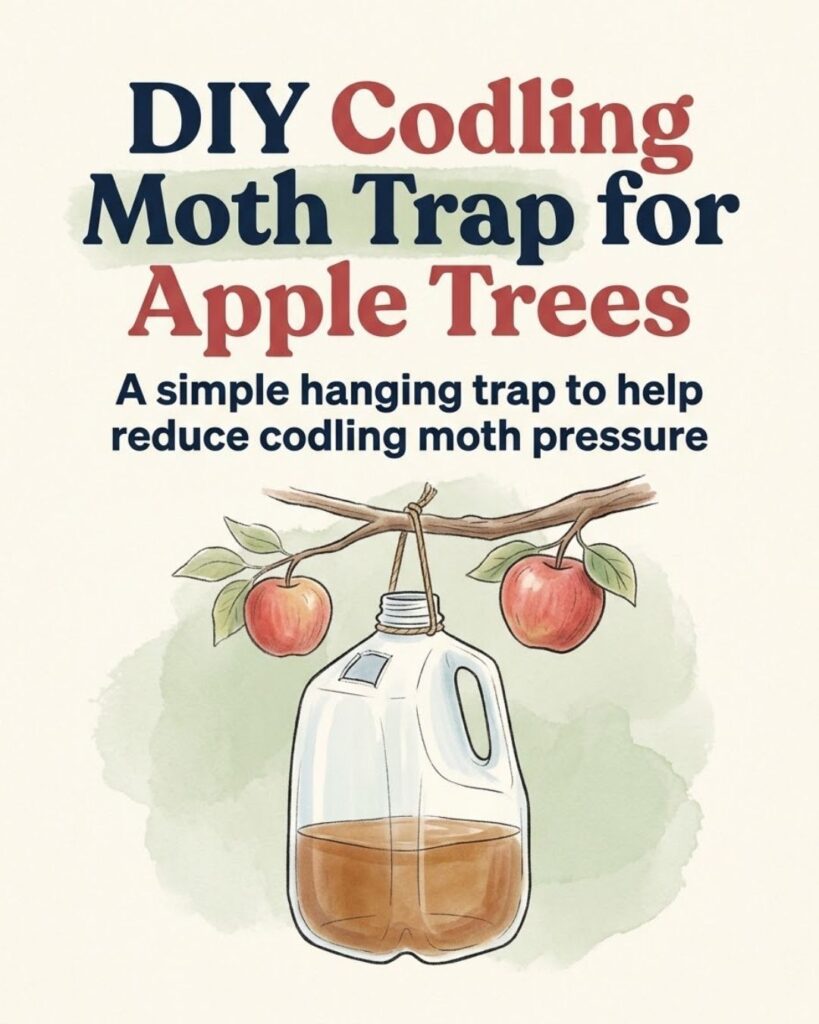
For backyard growers, a homemade baited jug trap can be an inexpensive experiment for catching moths and other insects around an apple tree. A traditional mixture of apple cider vinegar, molasses, water, and a small amount of household ammonia is sometimes used for this purpose.
There is an important limitation, however: homemade food-bait traps are not a proven stand-alone solution for codling moth control, and they should not be treated as a replacement for established monitoring and management methods. University Extension guidance generally recommends pheromone traps for monitoring codling moth flights because those traps use a lure specifically designed to attract adult male codling moths.
You Might Also Like:
- Loading posts...
If you want to try a jug trap, think of it as one small part of a broader orchard routine that also includes sanitation, checking fruit regularly, removing infested apples, and using other control measures when necessary.
Why Codling Moth Is So Difficult to Manage
Codling moth, Cydia pomonella, is one of the familiar causes of “wormy” apples and pears.
The adult moth itself does not eat the apple. The damaging stage is the caterpillar. After an egg hatches, the young larva enters the fruit and begins feeding internally. Once it is protected inside an apple, controlling it becomes much more difficult.
Typical damage can include a small entry hole and reddish-brown material called frass around the opening. Larvae commonly work toward the center of the fruit and may feed around the seeds.
Codling moths may also produce more than one generation during a growing season, depending on climate and seasonal temperatures. That is one reason a single trap hung for a few days is unlikely to solve an established problem.
Successful management is more about interrupting the pest at several points in its life cycle.
What a Homemade Jug Trap Can—and Cannot—Do
A baited jug contains a sweet, fermenting-smelling liquid intended to attract flying insects. Once an insect enters through the opening, it may become trapped in the liquid.
The appeal of this approach is obvious. Nothing is sprayed directly onto the apples, and the trap can be made from an empty container that would otherwise be discarded.
But there is a major difference between catching insects and controlling a specific pest.
A homemade vinegar-and-molasses bait is not specific to codling moth. It can attract various insects, and catches can therefore be difficult to interpret. A few moths in the container do not tell you exactly how much codling moth pressure exists in the tree.
For accurate codling moth monitoring, Extension recommendations favor commercially available pheromone traps. These traps contain synthetic sex pheromone lures and sticky surfaces that attract male codling moths. They are particularly useful for detecting when adult moth flights begin and helping gardeners determine when further action may be necessary.
A homemade jug can still be used experimentally, but it is better regarded as a supplemental trapping method rather than the centerpiece of a control program.
What You Need for a Traditional Jug Trap
For one homemade trap, you can use:
- 1 clean 1-gallon plastic milk jug
- 1 cup apple cider vinegar
- 1/3 cup dark molasses
- 1/2 teaspoon plain household ammonia
- Enough water to bring the mixture to roughly 1½ quarts
- A funnel
- A strip of sturdy cloth, cord, or strong string
- Scissors or a utility knife
Use only ordinary household ammonia for this recipe.
Never mix ammonia with chlorine bleach or products containing bleach. Mixing them can release dangerous chloramine gases.
Keep the bait ingredients, finished trap, and any leftover solution away from children and pets.
How to Make the Jug Trap
1. Clean the Container
Rinse an empty gallon milk jug thoroughly.
Remove milk residue because you want the bait mixture—not spoiled dairy—to provide the trap’s odor.
Leave the cap intact because you will put it back onto the jug after filling.
2. Cut an Entrance Hole
Cut a hole in the upper portion of the jug, just beneath the shoulder.
An opening roughly comparable to the size of a small egg provides insects with access while leaving enough of the jug intact to contain the liquid.
Avoid making the opening extremely large. A larger opening also makes it easier for rainwater to dilute the mixture.
Be careful while cutting thin plastic because knives can slip easily.
3. Prepare the Bait
Mix together:
- 1 cup apple cider vinegar
- 1/3 cup dark molasses
- 1/2 teaspoon household ammonia
Then add enough water to produce approximately 1½ quarts of total liquid.
Stir carefully until the molasses is distributed through the water.
A funnel makes it much easier to transfer the mixture without coating the outside of the jug.
4. Fill and Cap the Jug
Pour the liquid into the jug and screw the original cap on securely.
The liquid should remain well below the entrance opening.
If bait has spilled over the outside, rinse the jug before hanging it so insects are encouraged to enter rather than simply feed from residue on the exterior.
Where and When to Hang the Trap
Timing matters with codling moth because the adults become active around the blooming period and larvae become a threat after fruit begins developing. Oregon State University Extension recommends putting pheromone monitoring traps out around bloom so gardeners can detect the beginning of adult flight.
For a homemade jug, hanging it around the end of bloom is a reasonable traditional approach, but do not rely on flowering stage alone to predict codling moth activity. The pest develops according to temperature, so exact timing varies substantially among climates and years.
Hang the jug from a sturdy branch where you can reach it easily for inspection.
Position the entrance so it points slightly downward. This may reduce the amount of rain that enters the trap.
Make sure the jug cannot rub heavily against young branches during windy weather.
Check the Trap Regularly
Inspect the trap approximately once a week.
Look for:
- insects accumulating in the liquid
- evaporation
- excessive rainwater
- mold or heavy contamination
- loss of the bait’s odor
- damage to the jug or hanging cord
Replace the bait when it has become badly diluted, dried out, excessively dirty, or filled with insects.
Be aware that many insects caught in a general food-bait trap may not be codling moths. That is one reason it is difficult to use this type of trap to make precise pest-control decisions.
If accurate monitoring is important, add a true codling moth pheromone trap rather than trying to identify every insect floating in the homemade bait.
Sanitation Is One of the Most Useful Things You Can Do
Trapping works better when the orchard itself is not providing codling moth larvae with easy opportunities to complete their life cycle.
Regularly inspect developing fruit and remove obviously infested apples.
Do not allow wormy fruit to remain under the tree indefinitely. Codling moth larvae can continue developing inside fallen fruit, so prompt removal is part of useful orchard sanitation. Oregon State University Extension specifically recommends removing infested fruit during the season and cleaning up dropped fruit beneath trees.
Old fruit remaining on trees should also be removed as part of general orchard cleanup.
For a backyard tree, this can mean making a short inspection every few days during periods of heavy pest activity rather than waiting until harvest.
Consider Bagging Individual Apples
Gardeners with one or two small trees have another non-spray option that can be surprisingly practical: protecting individual fruit with bags.
Oregon State University Extension recommends mesh fruit bags as a physical barrier against codling moth and notes that fruit can be bagged shortly after petal fall.
This approach requires more hands-on work than hanging a trap, but it directly prevents moths from reaching protected fruit.
It is especially practical if you have a manageable number of apples and care more about producing a smaller amount of clean fruit than maximizing the entire crop.
Pheromone Traps Are Better for Knowing When Moths Are Flying
If you consistently lose apples to codling moth, a pheromone trap is worth considering even if you continue using a homemade jug.
These traps are valuable primarily because they provide information.
Adult male moths are attracted to the lure, become stuck on the trap insert, and can then be counted. Oregon State recommends checking traps weekly and using catches to identify the start and peaks of moth flight.
Knowing when moths are active is valuable because treatments aimed at eggs or newly hatching larvae must be timed before the caterpillars disappear inside the fruit.
Simply spraying an apple tree according to a fixed calendar is less precise than basing treatment on pest activity and local conditions.
If You Need an Insecticide, Timing Matters More Than Quantity
A severe codling moth problem may require more than sanitation and traps.
If monitoring shows significant activity, use only a pesticide specifically labeled for codling moth on apples or the fruit crop you are growing.
Depending on location and current registration, home-orchard products may contain active ingredients such as spinosad or other materials labeled for codling moth. Product registrations and approved uses can change, so the pesticide label and current local Extension recommendations should always determine what you use.
Never assume that applying extra product will improve control.
Codling moth management depends heavily on hitting the vulnerable stage before larvae enter the apple.
Also avoid applying insecticides that can harm bees while trees are in bloom or while pollinators are actively visiting flowers.
Other Non-Spray Tools Can Strengthen the Routine
A few additional measures can help reduce pest pressure.
Corrugated cardboard bands wrapped around trunks can provide places for wandering mature larvae to hide while preparing to pupate. The bands can then be removed and destroyed before the moths emerge. Oregon State includes trunk banding among its nonchemical codling moth management options.
Keeping excessive weeds and thick debris away from the tree base may also eliminate some sheltered pupation sites.
None of these methods is perfect by itself. Their value comes from stacking several modest advantages together.
A Better Codling Moth Routine for Backyard Apples
If wormy apples have become a recurring problem, think beyond the trap itself.
A practical routine might look like this:
- Put out a codling moth pheromone monitoring trap around bloom.
- Check the trap weekly for adult activity.
- Try a homemade jug bait trap as an additional trapping tool if desired.
- Thin and inspect developing apples.
- Remove damaged or infested fruit promptly.
- Pick up fallen apples regularly.
- Consider mesh bags for individual fruit on smaller trees.
- Use cardboard trunk bands if appropriate.
- If pest pressure remains high, choose a properly labeled treatment and time it according to monitoring and local Extension guidance.
This approach is more realistic than expecting one homemade mixture to eliminate codling moth.
The Jug Trap Is a Tool, Not a Cure
The best thing about a homemade jug trap is its simplicity. An old milk container, vinegar, molasses, water, and a tiny amount of household ammonia can produce an inexpensive trap that hangs near the tree without coating the fruit in a spray.
What it should not produce is false confidence.
Codling moth is difficult precisely because the vulnerable larvae quickly enter the fruit. Once they are inside, a trap hanging nearby cannot rescue that apple.
Use a jug trap if you enjoy inexpensive garden experiments, but pair it with methods that have stronger evidence behind them: pheromone monitoring, prompt removal of infested and fallen fruit, physical fruit protection, and properly timed treatments where they are genuinely needed.
For backyard apple trees, consistent observation usually matters more than any single clever hack.