Winter grocery shopping can feel expensive. Heating bills rise, fresh produce can look less exciting than it does in summer, and out-of-season fruits and vegetables may carry noticeably higher prices. But winter is also one of the easiest seasons for building filling meals around sturdy, affordable ingredients.
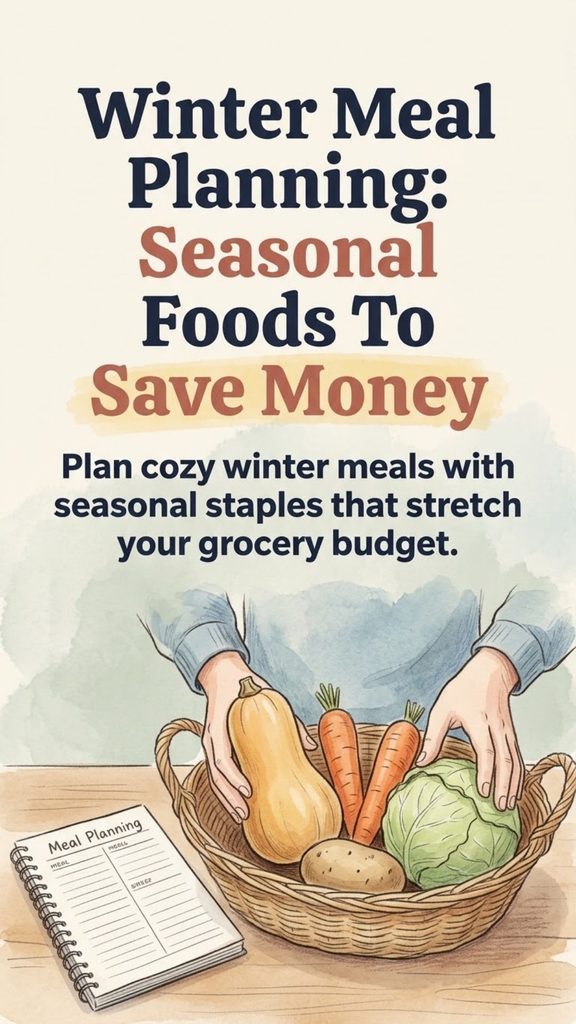
Instead of trying to cook as though it were July, winter meal planning works best when you lean into foods that naturally suit colder weather: potatoes, cabbage, carrots, onions, winter squash, beans, lentils, oats, citrus, apples, hearty greens, and frozen vegetables.
Many of these foods are inexpensive, versatile, and able to stay fresh longer than delicate summer produce. That makes them particularly useful for households trying to reduce grocery spending without relying on repetitive or nutritionally poor meals.
You Might Also Like:
- Loading posts...
The goal is not to buy every food labeled “seasonal.” It is to build meals around whatever is affordable where you live and use those ingredients in several different ways before they spoil.
Why Winter Foods Can Be Good for a Grocery Budget
Seasonal eating can save money, but there is an important qualification: seasonal does not automatically mean cheapest.
Prices depend on location, weather, transportation, grocery competition, local agriculture, and weekly promotions. A vegetable that is inexpensive in one area may be costly somewhere else.
That is why the best winter meal plan combines seasonality with actual store prices.
Winter does have several advantages.
Many cold-weather vegetables are dense, filling, and reasonably long-lasting. Cabbage, carrots, potatoes, onions, and winter squash are less fragile than berries, tender greens, or ripe summer fruit. When stored correctly, you have more time to use them before they spoil.
That matters because food waste is expensive. Saving 50 cents on an ingredient is not much of a bargain if half of it eventually ends up in the trash.
Winter ingredients also lend themselves well to soups, stews, casseroles, curries, roasted meals, and other dishes that make inexpensive ingredients feel substantial.
Start With the Most Useful Winter Vegetables
You do not need a refrigerator packed with ten varieties of produce. A few versatile vegetables can support an entire week of meals.
Potatoes
Potatoes are one of the most flexible winter staples. They can be baked, mashed, roasted, added to soup, turned into hash, or used to bulk out casseroles and curries.
Keep them in a cool, dark, dry, well-ventilated place rather than beside onions. Check them occasionally and remove any that are spoiling.
Sweet potatoes offer similar flexibility and work well in breakfast bowls, soups, curries, roasted vegetable dishes, and sheet-pan dinners.
Cabbage
Cabbage deserves more attention in budget meal planning.
One head can stretch across several meals and can be eaten raw or cooked. Shred it for slaw, sauté it as a side dish, add it to soup, stir it into noodles, or use it in a cabbage-and-rice casserole.
Because cabbage is sturdy, it generally keeps much longer than delicate salad greens when refrigerated properly.
Carrots and Other Root Vegetables
Carrots are inexpensive in many areas and fit into almost every style of winter cooking.
They work in:
- Soups
- Stews
- Roasted vegetable trays
- Curries
- Pasta sauces
- Grain bowls
- Side dishes
Parsnips, turnips, rutabagas, and beets can also be worthwhile when prices are good, but there is no reason to buy them solely because they are considered winter vegetables. Compare the price with more familiar alternatives.
Onions and Garlic
Onions and garlic are less exciting than trendy ingredients, but they are some of the most useful foods for making inexpensive cooking taste better.
A pot of beans, lentils, rice, soup, or potatoes becomes far more satisfying when it begins with properly cooked onions and a few good seasonings.
Building flavor from inexpensive basics can reduce the temptation to rely on costly sauces, pre-seasoned meal kits, or takeout.
Winter Squash
Butternut, acorn, kabocha, and other hard-skinned winter squashes can be excellent buys when reasonably priced.
They work well roasted, blended into soup, added to curries, mashed, or combined with grains and beans.
Whole winter squash can keep for quite a while under suitable cool, dry storage conditions, although exact storage life varies by variety and condition.
Use Hearty Greens When the Price Makes Sense
Kale, collards, and Swiss chard are better suited to longer cooking than tender lettuce.
They can be stirred into soups, beans, pasta, casseroles, or egg dishes. Because they tolerate cooking well, slightly wilted leaves may still be usable after trimming any damaged areas.
Do not assume fresh is always the best value, though. Frozen spinach or other frozen greens may be less expensive and eliminate nearly all waste.
Choose Winter Fruits Strategically
Winter fruit can still fit comfortably into a frugal meal plan.
Citrus
Oranges, mandarins, clementines, and grapefruit are often widely available during winter.
Compare bagged fruit with individually priced fruit because the larger package is not always cheaper per pound. Buy only an amount your household can reasonably finish.
Refrigeration can help many citrus fruits last longer.
Apples and Pears
Apples are useful because they work as snacks, breakfast additions, baked desserts, and ingredients in savory dishes.
Pears can be another good option when prices are favorable, although they often ripen quickly once brought to room temperature.
Bananas
Bananas are not a winter crop in most temperate regions, but they remain one of the more affordable fruits in many supermarkets throughout the year.
Very ripe bananas do not need to be wasted. Peel and freeze them for smoothies, oatmeal, baking, or blended frozen desserts.
Frozen Fruit
Fresh berries can be costly during winter. Frozen berries are often a more practical alternative for oatmeal, yogurt, smoothies, sauces, and baking.
Since frozen fruit is already prepared and does not have to be eaten within a few days, it can also reduce waste.
Build Meals Around Low-Cost Staples
Seasonal vegetables become much more useful when paired with inexpensive pantry basics.
Keep a small selection of staples you actually use, such as:
- Dried or canned beans
- Lentils
- Rice
- Oats
- Barley
- Pasta
- Canned tomatoes
- Tomato paste
- Broth or bouillon
- Frozen vegetables
- Flour
- Basic herbs and spices
You do not need an enormous stockpile.
A well-used pantry is more valuable than shelves filled with food purchased simply because it was on sale.
Make Soup and Stew Work Harder for You
Cold weather naturally favors meals that are excellent for stretching a grocery budget.
Soups and stews allow you to combine modest amounts of meat with larger quantities of beans, grains, and vegetables.
For example, instead of making a beef stew dominated by meat, you might use a smaller amount of beef with potatoes, carrots, onions, peas, and barley.
The same principle works with chicken.
Cook chicken with vegetables for dinner, then use leftover meat in soup, sandwiches, rice dishes, or casseroles. If you cook a whole chicken, the remaining cooked meat can be divided among several meals depending on the size of the bird and your household.
The goal is not to make portions feel skimpy. It is to let several affordable ingredients share the job of making the meal satisfying.
Plan Meals That Share Ingredients
One of the easiest ways to spend too much on groceries is to plan seven completely unrelated dinners.
A better winter meal plan deliberately overlaps ingredients.
Imagine buying cabbage, carrots, onions, potatoes, apples, beans, rice, chicken, oats, and yogurt.
Those ingredients could become:
- Chicken with roasted potatoes and carrots
- Cabbage and white bean soup
- Vegetable fried rice
- Potato and onion hash
- Apple-cinnamon oatmeal
- Cabbage slaw
- Rice bowls with roasted vegetables
- Chicken and vegetable soup
Nothing needs to taste identical, yet the same groceries continue appearing in different combinations.
This makes it much easier to finish what you buy.
Try a Few Reliable Winter Breakfasts
Breakfast is an easy place to keep costs controlled.
Apple-Cinnamon Oatmeal
Cook oats with chopped apple and cinnamon. Add milk, yogurt, nuts, seeds, or a little sweetener according to your budget and preferences.
A large container of oats usually provides many servings and can be used in baking as well.
Sweet Potato Breakfast Bowls
Use leftover roasted sweet potato with yogurt, sliced banana, cinnamon, or a small amount of nuts.
This is especially useful when dinner leaves you with one or two cooked sweet potatoes.
Yogurt With Frozen Fruit
Thaw a small amount of frozen berries and serve them over plain yogurt with oats or homemade granola.
Using frozen berries means you can take only what you need and return the rest to the freezer.
Affordable Winter Lunch Ideas
Lunch is often where leftovers can save the most money.
Cabbage and Bean Soup
Combine cabbage, beans, carrots, onion, broth, herbs, and canned tomatoes if desired.
Serve with bread, rice, or potatoes for a more substantial meal.
Roasted Vegetable Bowls
Roast extra vegetables at dinner and use them the next day over rice, barley, or another grain.
Add beans, leftover meat, cheese, or a simple dressing if available.
Potato Soup
Potatoes, onions, broth, and seasonings can form the base of a simple soup.
Leeks are delicious but not always inexpensive. If they cost significantly more than onions in your area, ordinary onions are a perfectly practical substitute.
Frugal Winter Dinner Ideas
Bean and Vegetable Chili
Beans can provide most of the substance in chili. If your family enjoys meat, use a modest amount for flavor rather than making it the main ingredient.
Add canned tomatoes, onions, peppers when affordable, corn, carrots, or other vegetables you already have.
Chicken and Root Vegetables
Roasting chicken with potatoes, carrots, and onions creates a simple meal with very little active preparation.
Cook extra vegetables at the same time for another meal.
Cabbage and Rice Casserole
Cabbage, rice, tomatoes, seasonings, and ground meat or beans can become an inexpensive casserole.
This is particularly useful when you need to use the rest of a large cabbage.
Winter Vegetable Curry
Potatoes, squash, cauliflower, chickpeas, or lentils all work well in curries.
Serve the curry over rice to make a relatively small amount of sauce and vegetables stretch further.
Use Your Oven Efficiently
If you are already heating the oven, it makes sense to cook more than one thing when practical.
While dinner is roasting, you might also bake potatoes, roast a tray of vegetables, or cook a squash for tomorrow’s soup.
The energy savings from this strategy depend on your oven, energy prices, and cooking times, so it should not be treated as a guaranteed large reduction in utility costs.
The bigger advantage is efficiency.
Preparing several foods at once reduces the amount of cooking you need to do later in the week.
Slow Cookers and Pressure Cookers Can Help, but They Are Not Essential
Slow cookers are convenient for beans, soups, stews, and braised meats. Electric pressure cookers can prepare dried beans and tough cuts of meat relatively quickly.
However, you do not need special equipment to eat cheaply.
A heavy pot on the stove or a covered casserole in the oven can produce many of the same meals.
Use whatever equipment you already own rather than buying another appliance in the name of saving money.
Shop the Freezer Aisle Without Guilt
Frozen vegetables are among the most useful tools for reducing winter food costs.
They are washed, prepared, easy to portion, and usually create very little waste.
Peas, corn, spinach, broccoli, mixed vegetables, and green beans can be added directly to soups, casseroles, pasta dishes, curries, and fried rice.
Nutritionally, frozen vegetables can be an excellent option. Freezing preserves many nutrients well, and they can be a practical alternative when fresh vegetables are expensive, poor quality, or likely to spoil before you use them.
Be Careful With Reduced Produce
Discounted produce can offer excellent value, but only if you can use it quickly.
A slightly bruised apple can become oatmeal or applesauce. Soft carrots may still be suitable for soup once trimmed. A ripe banana is perfect for baking.
However, avoid produce with visible mold, leaking areas, strong unpleasant odors, or extensive decay.
A cheap ingredient is not a bargain if most of it has to be discarded.
Store Winter Foods Properly
Good storage is one of the simplest ways to protect your grocery budget.
Keep potatoes in a cool, dark, ventilated location.
Refrigerate cabbage and many other sturdy vegetables.
Keep onions and garlic dry and ventilated.
Store apples in the refrigerator if you want them to last longer.
Freeze food that you will not use before it spoils.
Even simple habits such as keeping older produce at the front of the refrigerator can reduce waste.
Freeze Small Extras Instead of Throwing Them Away
Winter cooking often creates small leftovers that are easy to save.
Extra broth can be frozen.
Cooked beans can be portioned and frozen.
Bread can go into the freezer before it becomes stale.
Overripe bananas can be frozen for smoothies or baking.
Citrus juice and zest can also be frozen in small portions for later cooking.
Freezing works best when food is labeled with the contents and date. Otherwise, a freezer can quickly become another place where forgotten food accumulates.
Do Not Chase Sales Without a Plan
Buying discounted groceries only saves money when you eventually use them.
Before stocking up, ask:
- Do we regularly eat this?
- Do I have room to store it?
- Will it last long enough?
- Is the sale price actually better than the usual price?
- Can I use it in more than one meal?
A $20 bulk purchase that saves $3 is not helpful if half of it is wasted.
Let Prices Guide Your Winter Menu
Seasonal lists are useful, but your grocery receipt is more useful.
Check the weekly sales, compare unit prices, and remain flexible.
If butternut squash is expensive but sweet potatoes are cheap, buy sweet potatoes.
If fresh broccoli costs much more than frozen, choose frozen.
If chicken is on sale and beef is expensive, adjust your plan.
Frugal meal planning works best when the menu follows good prices rather than forcing the grocery list to match a rigid menu.
A Simple Winter Meal-Planning Routine
Before your next grocery trip, take ten minutes to plan.
First, check your refrigerator, freezer, and pantry.
Choose the foods that need to be used soon.
Then look at local grocery prices and choose two or three affordable vegetables, one or two fruits, a few pantry staples, and the proteins that fit your budget.
Plan several meals around those ingredients rather than buying a completely different set of groceries for every recipe.
Cook enough for leftovers when appropriate, and decide in advance which meal will use them.
This simple system is often more effective than hunting for elaborate “budget recipes” that require a dozen ingredients you do not already own.
Make Winter Food Work for You
Saving money on winter meals does not require surviving on bland soup or giving up fresh food.
It comes from using sturdy seasonal ingredients, comparing actual prices, relying on affordable staples, planning overlapping meals, freezing extras, and wasting as little as possible.
Potatoes, cabbage, carrots, onions, beans, lentils, oats, rice, winter squash, apples, citrus, and frozen vegetables may not look glamorous in a shopping cart, but they can produce weeks of satisfying meals when used creatively.
Start with what is affordable in your area rather than trying to follow a perfect seasonal-food list. Build several meals around the same ingredients, use leftovers deliberately, and keep enough flexibility to take advantage of good prices.
A thoughtful winter kitchen does not need an enormous grocery budget. It needs ingredients that work hard, a practical plan, and a willingness to make the most of what you already have.