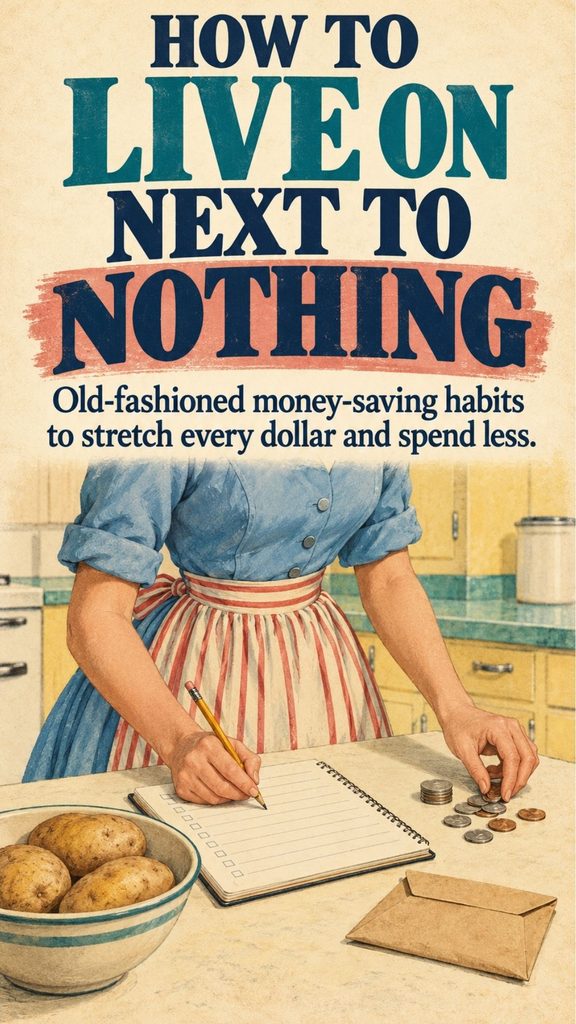
There was a time when wasting food was considered one of the worst habits a household could develop. Every potato, slice of bread, spoonful of vegetables, and leftover piece of meat had a purpose. A careful homemaker knew how to turn modest ingredients into nourishing meals without constantly returning to the grocery store.
During the 1940s, particularly throughout World War II, food conservation became an important part of everyday household management. Rationing affected access to certain foods, families were encouraged to reduce waste, and home cooks learned to make the best possible use of what they had.
Those lessons remain surprisingly relevant.
You Might Also Like:
- Loading posts...
Although most modern households aren’t dealing with wartime ration books, rising grocery prices and limited household budgets make practical kitchen thrift just as useful.
The best part is that many of these old-fashioned techniques don’t require special equipment, unusual ingredients, or complicated recipes. They simply involve shopping thoughtfully, preparing food carefully, cooking efficiently, and finding useful ways to serve leftovers.
Here are 15 practical food-saving habits inspired by traditional 1940s homemaking that can help you waste less and get more value from every grocery purchase.
1. Plan Several Days of Meals Before Shopping
One of the most useful habits in an old-fashioned kitchen was preparing a shopping list before visiting the market.
During the 1940s, families sometimes had to consider not only their grocery money but also ration coupons or points when purchasing restricted foods.
Today, the same planning principle works without the ration books.
Before grocery shopping, decide what your family will eat over the next several days.
Begin with simple meals that use ingredients you already own.
For example, if your pantry contains rice, canned tomatoes, and dried beans, plan meals around those ingredients rather than purchasing an entirely new collection of groceries.
Try planning three or four main dinners instead of preparing a complicated menu for every day.
Leave room for leftovers and flexible meals.
A short, realistic plan is often more useful than an elaborate schedule that becomes impossible to follow.
2. Check the Cupboards Before Writing Your Shopping List
Buying food you already have is an easy way to waste money.
Before heading to the store, take a few minutes to inspect the pantry, refrigerator, and freezer.
Look for duplicate ingredients, half-used packages, and foods that should be eaten soon.
You may discover enough ingredients to prepare several meals without making another purchase.
Keep a small inventory of frequently used staples such as flour, oats, rice, pasta, dried beans, cooking oil, and canned vegetables.
An inventory doesn’t need to be complicated. A handwritten list attached to a cupboard door can work perfectly well.
The goal is to know what you have before spending money on more.
This also helps prevent forgotten packages from sitting in the back of a cabinet until they become stale or unusable.
3. Buy Enough Food, but Avoid Buying Too Much
Bulk shopping can be economical, but only when the food will actually be used.
Traditional homemaking advice often emphasized purchasing appropriate quantities rather than filling the kitchen with more than a family could reasonably consume.
That principle still makes sense.
A large bag of potatoes might be a bargain for a household that regularly eats potatoes.
For someone living alone, however, buying more than can be used before spoilage may create unnecessary waste.
Before purchasing a large package, consider how quickly you’ll use it and whether you have suitable storage space.
Compare unit prices, but don’t ignore the risk of spoilage.
The least expensive food is not necessarily the best value if half of it ends up in the trash.
4. Use Perishable Fruits and Vegetables First
A thrifty kitchen doesn’t treat every ingredient as equally urgent.
Fresh berries, delicate greens, ripe tomatoes, and other highly perishable foods often need attention sooner than carrots, onions, or properly stored winter squash.
When planning meals, arrange them according to which ingredients need to be used first.
For example:
- Early in the week: Use spinach, mushrooms, berries, and other delicate produce.
- Middle of the week: Prepare meals with broccoli, peppers, and remaining fresh vegetables.
- Later in the week: Rely on suitable longer-keeping produce, frozen vegetables, and pantry staples.
Actual storage life varies with freshness and storage conditions, so inspect produce regularly rather than following a fixed schedule.
If something is approaching the end of its usable life, consider cooking or freezing it while it’s still safe and in good condition.
This simple habit can prevent a surprising amount of food waste.
5. Peel Vegetables Thinly, or Leave the Skins On
Older kitchen advice frequently reminded home cooks not to remove more food than necessary when peeling vegetables.
Thick potato peels can take a noticeable amount of edible potato with them.
The same problem occurs with carrots, cucumbers, apples, and other produce.
Many vegetables can be eaten with their skins intact when thoroughly washed and appropriately prepared.
Potatoes can be scrubbed and roasted with their skins, while carrots may only need washing and a light trim.
If peeling is necessary, use a vegetable peeler rather than removing thick strips with a knife.
There are exceptions.
Discard moldy or rotten produce, and remove green portions and sprouts from potatoes. Severely green or bitter potatoes are best discarded because of potentially harmful glycoalkaloids.
The goal is to save wholesome edible portions, not use food that may be unsafe.
6. Measure Ingredients Instead of Guessing
Old-fashioned cooks understood the importance of making ingredients last.
One practical way to do that is to measure quantities before beginning a recipe.
This is particularly helpful with expensive ingredients such as meat, cheese, nuts, butter, and cooking oils.
Instead of pouring ingredients directly from a large package, measure what the recipe requires.
Portioning can also make meals more predictable.
For example, if you are preparing rice for four people, measure the dry rice according to the number of servings you actually need.
Cooking excessive quantities may create leftovers that your family won’t eat.
You don’t need to measure every ingredient forever. After preparing familiar recipes several times, you’ll develop a better sense of appropriate quantities.
That knowledge makes everyday cooking more efficient.
7. Make One Ingredient Work in Several Meals
A skilled home cook knows how to use the same basic ingredients in different ways.
This reduces grocery costs and prevents half-used packages from going to waste.
Suppose you purchase a bag of carrots, several onions, and a head of cabbage.
You could use them to prepare vegetable soup, a simple stir-fry, roasted vegetables, and homemade coleslaw.
The same principle works with cooked beans, potatoes, chicken, rice, and pasta.
Instead of choosing seven unrelated recipes that each require specialized ingredients, plan meals around a small group of versatile staples.
This doesn’t mean eating exactly the same dinner every night.
It means changing the seasonings, cooking methods, and combinations to create variety without constantly buying more food.
8. Cook Vegetables With Only as Much Water as Needed
Traditional kitchen thrift often emphasized using less water when cooking vegetables.
For vegetables that can be steamed or cooked in a small amount of liquid, this can be a useful approach.
Boiling vegetables in a large pot of water may cause some water-soluble nutrients to move into the cooking liquid.
Steaming or cooking with a smaller quantity of water can help retain more of those nutrients, although the result depends on the vegetable and cooking method.
It may also reduce the amount of water that needs to be heated.
Use a suitable covered saucepan or steamer and monitor the food so the pan doesn’t boil dry.
Remember that certain foods, including dried kidney beans, require specific cooking methods for safety and should not be treated like ordinary vegetables.
The general lesson is to choose the cooking method that suits the food rather than automatically using a large pot of boiling water.
9. Save Suitable Vegetable Cooking Water
One old-fashioned kitchen trick was saving vegetable cooking liquid for another dish.
Water used to cook clean vegetables can contain some flavor and water-soluble nutrients.
Instead of pouring it down the drain, you may be able to use it in soup, stew, or a suitable sauce.
For example, liquid from cooking carrots or potatoes can sometimes provide a flavorful addition to vegetable soup.
However, not every cooking liquid is worth saving.
Avoid reusing liquid from spoiled or contaminated food, and be cautious with strongly flavored or excessively salty water.
If you’re saving cooking liquid for later, cool and refrigerate it promptly, just as you would other cooked foods.
Use it within a suitable refrigerated storage period or freeze it.
This is a small practice, but it reflects a valuable old-fashioned principle: look for safe, useful ways to use an ingredient before discarding it.
10. Use Moderate Heat and Avoid Overcooking
Cooking food longer than necessary can waste energy and reduce quality.
Many vegetables become mushy when boiled excessively.
Meat can become dry or tough when cooked beyond the temperature or tenderness appropriate for the cut.
Traditional homemakers often emphasized controlling the heat rather than leaving every burner on its highest setting.
Once a pot of water reaches a boil, you can often reduce the heat to maintain the required simmer.
For roasting, choose an oven temperature suited to the food and recipe.
Lower temperatures aren’t automatically more economical, because a longer cooking time may offset any energy savings.
The important point is to cook efficiently and avoid unnecessary cooking time.
For food safety, use a food thermometer when preparing meat and poultry.
Poultry should reach 165°F (74°C), while whole cuts of beef, pork, lamb, and veal generally require at least 145°F (63°C) followed by a three-minute rest under USDA guidance.
Ground meats have different recommended temperatures.
Proper doneness matters more than appearance alone.
11. Turn Leftover Meat Into Another Meal
In a thrifty household, leftover roast meat wasn’t automatically discarded simply because there wasn’t enough for another full dinner.
Small portions could become ingredients in an entirely different dish.
Leftover cooked chicken, for example, can be added to vegetable soup, sandwiches, casseroles, or rice dishes.
Cooked beef may work in a vegetable hash, while leftover turkey can be used in a simple pasta bake.
The key is to use the meat as part of a larger meal rather than expecting it to remain the main ingredient.
A modest quantity combined with vegetables, beans, potatoes, or grains can help feed several people.
Store cooked meat safely and use refrigerated leftovers within three to four days, or freeze them for longer storage.
When reheating leftovers, heat them thoroughly to 165°F (74°C).
This approach stretches expensive ingredients without compromising food safety.
12. Never Underestimate the Value of Stale Bread
Bread was an important everyday food in many twentieth-century households, and practical home cooks found numerous ways to use loaves that were no longer perfectly fresh.
Bread that has become dry or stale but remains safe to eat can still be useful.
Try turning it into:
- Homemade breadcrumbs
- Croutons for soup or salad
- Bread pudding
- French toast
- Savory breakfast bakes
- Bread stuffing prepared and cooked safely
Homemade breadcrumbs are particularly versatile.
Dry bread thoroughly, process it into crumbs, and store it appropriately.
Use breadcrumbs to coat chicken, bind meatballs, or add texture to casseroles.
However, stale bread and moldy bread are not the same thing.
If bread develops mold, discard it rather than cutting away the visible mold. Mold can spread into porous foods beyond the portion you can see.
13. Learn to Make Soup From Small Amounts of Food
Soup is one of the most useful dishes in a budget-conscious kitchen.
It can turn a modest assortment of ingredients into a filling meal.
A basic vegetable soup might begin with onions, carrots, potatoes, beans, broth, and seasonings.
Add a small quantity of cooked meat if you have some available.
You can change the flavor with tomatoes, herbs, garlic, or other pantry ingredients.
The same general method works for many combinations.
Begin by cooking suitable vegetables, add liquid and other ingredients, and simmer until everything is properly cooked.
Serve with bread, rice, or another affordable accompaniment if desired.
Soup is particularly useful for vegetables that are no longer at their freshest but are still wholesome and safe to cook.
Never use spoiled ingredients simply because they’ll be boiled.
Cooking does not reliably make every type of spoiled or contaminated food safe.
14. Store Leftovers Promptly and Keep Them Visible
Older homemaking advice often encouraged families to save even small portions of food.
The idea remains useful, but modern food-safety knowledge helps us do it properly.
Refrigerate perishable leftovers within two hours of cooking or serving, or within one hour when the surrounding temperature is above 90°F (32°C).
Use shallow containers to help large quantities cool more quickly.
Keep the refrigerator at 40°F (4°C) or below.
Most cooked leftovers should be eaten within three to four days or frozen for longer storage.
Create an Eat-First Area
Choose one visible section of your refrigerator for food that should be eaten soon.
Label containers with their contents and preparation dates.
This prevents useful leftovers from becoming forgotten behind newer groceries.
A clear container can also help you see what’s available.
Before preparing a completely new meal, check the refrigerator to see if anything can be used first.
Small leftovers can be incorporated into another suitable dish, provided they have been stored safely.
15. Make a Weekly Use-It-Up Meal
One of the easiest ways to practice old-fashioned food thrift is to plan a regular meal around ingredients already available.
You might call it a leftover dinner, pantry meal, or use-it-up night.
The name doesn’t matter.
The purpose is to avoid purchasing new ingredients when perfectly good food is waiting to be used.
Possible meals include:
Vegetable fried rice: Use safely stored cooked rice, leftover vegetables, and eggs or another suitable protein.
Potato hash: Combine cooked potatoes with onions, vegetables, and small amounts of leftover meat.
Homemade soup: Use suitable vegetables, beans, broth, and other ingredients.
Pasta bake: Combine cooked pasta with sauce, vegetables, and a little cheese.
Breakfast for dinner: Prepare eggs, toast, fruit, and other breakfast staples.
Baked potatoes: Top with beans, vegetables, cheese, or other available ingredients.
These flexible meals help prevent waste while reducing grocery spending.
They also encourage creativity without requiring elaborate recipes.
What Modern Families Can Learn From 1940s Food Rationing
Food rationing during World War II shaped shopping and cooking habits in many countries, including the United States and Britain.
Certain products were restricted or subject to purchase limits and ration systems, encouraging households to think carefully about available supplies.
Families were encouraged to conserve resources, grow food where practical, and avoid unnecessary waste.
Many of those habits were responses to difficult circumstances rather than ideal lifestyle choices.
Today, there is no need to recreate wartime deprivation to benefit from the useful lessons.
Instead, focus on the practical principles:
- Plan purchases rather than shopping impulsively.
- Use ingredients before they spoil.
- Prepare sensible portions.
- Choose versatile foods.
- Save safe, usable leftovers.
- Maintain an organized pantry.
- Learn simple cooking techniques.
It’s also worth recognizing that not every historical kitchen practice meets modern food-safety standards.
Contemporary refrigeration, safe food-handling practices, and updated nutrition guidance should take priority over outdated recommendations.
The best approach combines traditional resourcefulness with reliable modern knowledge.
Create a Simple Old-Fashioned Kitchen Routine
A thrifty kitchen becomes easier to manage when food-saving habits are part of the regular household schedule.
You don’t need to reorganize everything at once.
Try this simple weekly routine.
Before Grocery Shopping
Check what you already have.
Look for food that needs to be used soon and plan several meals around it.
Write a shopping list based on actual household needs.
After Grocery Shopping
Put refrigerated and frozen foods away promptly.
Store produce according to its requirements.
Move older pantry items forward so they’re used before newer purchases.
Before Cooking
Check the recipe and measure ingredients.
Think about how much food the household will realistically eat.
Prepare only what you need, unless you’re intentionally making safe leftovers for another meal.
After Dinner
Package and refrigerate leftovers promptly.
Label anything you plan to save.
Decide whether it can be incorporated into a meal within the next few days.
At the End of the Week
Review the refrigerator.
Use suitable remaining ingredients in a flexible meal.
Freeze food that can safely be preserved for later.
Then begin planning the following week’s meals using what remains.
This routine takes a little attention, but it can prevent repeated shopping mistakes and make food management more predictable.
Does Old-Fashioned Cooking Really Save Money?
Traditional home cooking can help reduce expenses, but the savings depend on how the household uses the methods.
Preparing meals from inexpensive ingredients, reducing spoilage, and using leftovers are often effective ways to lower food costs.
However, not every homemade product is cheaper than its store-bought equivalent.
Some recipes require expensive ingredients, specialized equipment, or substantial preparation time.
Likewise, spending hours trying to save a tiny amount of food may not make sense for a busy household.
The most valuable old-fashioned habits are generally the simplest ones.
Planning meals, buying appropriate quantities, keeping ingredients organized, and learning versatile recipes can provide consistent benefits without demanding excessive effort.
The goal is to get greater value from the food you purchase, not to make every kitchen task unnecessarily difficult.
Final Thoughts: Waste Less, Cook Wisely, and Appreciate What You Have
The resourceful homemaking traditions of the 1940s offer a useful reminder that good household management often begins with small everyday decisions.
A thoughtful shopping list prevents unnecessary purchases. Careful preparation reduces discarded food. Sensible cooking methods help preserve quality, and well-managed leftovers make expensive ingredients go further.
You don’t need a wartime ration book, a perfectly organized pantry, or advanced cooking skills to practice these habits.
Start with one simple change.
Check the refrigerator before shopping. Save suitable stale bread for breadcrumbs. Plan a soup around vegetables that need to be used. Measure ingredients before cooking, and make a habit of storing leftovers safely.
Over time, those ordinary actions can add up to less waste, more efficient meals, and a grocery budget that’s easier to manage.
The most enduring lesson from old-fashioned kitchen wisdom is simple: buy thoughtfully, cook carefully, and make the best possible use of the good food you already have.