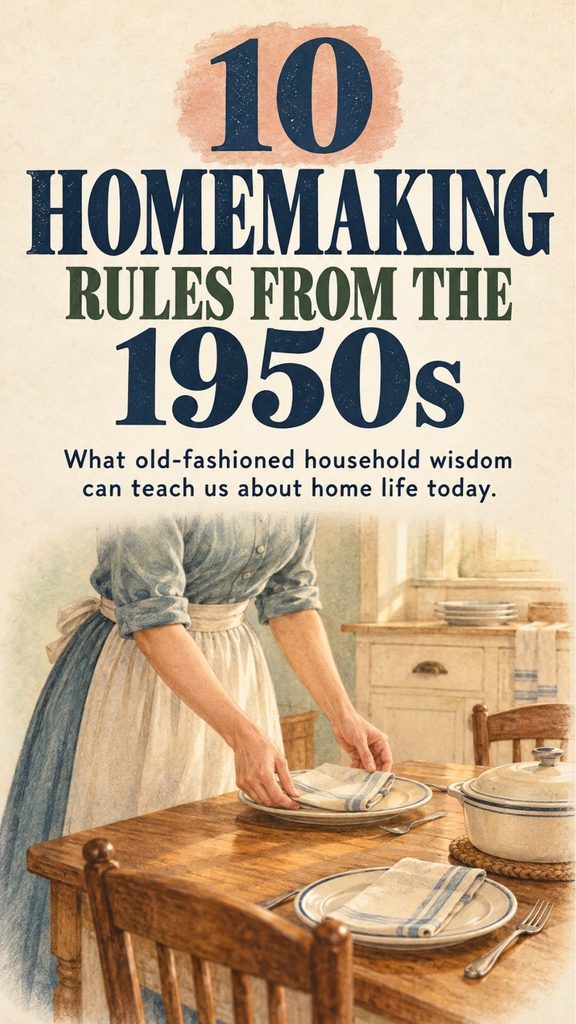
Picture a typical American kitchen in a 1950s homemaking magazine. Dinner is nearly ready, the dining table is carefully set, the children have been tidied up, and a smiling housewife is preparing to welcome her husband home from work.
That picture of domestic life became one of the most recognizable images of the decade. Advertisements, television programs, and household advice columns often presented the ideal home as cheerful, orderly, comfortable, and effortlessly maintained.
But behind the polished kitchen counters and neatly pressed dresses was a considerable amount of work.
You Might Also Like:
- Loading posts...
One of the most widely shared examples of this domestic ideal is a document called The Good Wife’s Guide, supposedly published in Housekeeping Monthly on May 13, 1955.
The guide describes a wife whose daily responsibilities revolve around preparing meals, maintaining a peaceful home, caring for her appearance, and making her husband’s return from work as pleasant as possible.
There’s an important historical detail, however: the circulating magazine page is not an authentic, verified 1955 article. Investigations have traced its design to a later fabrication that incorporates an illustration from a 1957 magazine cover. The publication to which it is attributed has not been verified.
Even so, many of the expectations described in the guide resemble attitudes found in genuine mid-century domestic advice.
Looking at these ideas today provides an interesting opportunity to explore how household routines, marriage expectations, and traditional homemaking have changed.
Some of the practical habits are still useful. Others reflect unequal expectations that deserve to remain in the past.
Here are ten recognizable rules from the old-fashioned homemaking ideal, what they meant, and how their practical lessons can be adapted to modern family life.
1. Have Dinner Ready Before Everyone Comes Home
A central expectation of traditional homemaking was that the evening meal should be ready when the working husband returned.
Dinner wasn’t treated as an afterthought. It was often presented as one of the most important parts of running a comfortable household.
Many mid-century cookbooks encouraged planning meals ahead, organizing ingredients, and following familiar recipes.
A typical family dinner might include a main dish, cooked vegetables, potatoes or another starch, and occasionally a homemade dessert.
The practical value of meal planning is easy to understand.
Knowing what you’re going to cook reduces last-minute decisions and unnecessary grocery trips.
The Modern Homemaking Lesson
Prepare meals around your household’s actual schedule instead of assuming one person must handle every dinner.
A simple weekly menu can make evenings easier.
Try planning four or five dependable meals and leaving a little room for leftovers or changes.
You can also prepare vegetables in advance, cook suitable ingredients ahead of time, or make freezer-friendly meals for busy evenings.
Share shopping, cooking, and cleanup responsibilities according to each person’s availability and abilities.
The lasting lesson is that a little preparation makes family meals easier, not that dinner is one person’s responsibility.
2. Take a Few Minutes to Refresh Yourself
Another memorable instruction from the circulating guide suggests that a wife should rest briefly, adjust her makeup, and make herself presentable before her husband arrives.
The idea reflects an era when women’s appearance was frequently treated as part of their domestic responsibilities.
Fashion magazines and advertisements often promoted carefully styled hair, pressed clothing, cosmetics, and a polished appearance even during ordinary household routines.
But there is a useful idea hidden beneath those expectations: taking a little time to recover after a busy day.
A Better Way to Practice It
Set aside 10–15 minutes for yourself when your schedule allows.
Change into comfortable clothing, wash your face, enjoy a cup of tea, or sit quietly before beginning evening activities.
If you enjoy wearing makeup or dressing up at home, there’s nothing wrong with that.
But personal appearance should be a choice rather than a requirement for earning someone’s approval.
Rest is valuable even when you haven’t finished every household chore.
A person who has spent the day working, caregiving, cooking, cleaning, or managing responsibilities deserves time to recharge.
3. Keep the Main Living Areas Tidy
The old-fashioned homemaking ideal placed considerable emphasis on maintaining an orderly home.
The living room was supposed to be welcoming, tables free from clutter, and household items returned to their proper places.
In many homes, keeping the public areas tidy was particularly important because unexpected visitors were more common before modern communication made arranging visits so convenient.
A well-kept home was also frequently presented as evidence of a woman’s competence as a homemaker.
Today, it’s more useful to think of tidiness as a practical household system rather than a measure of personal worth.
Try a 10-Minute Evening Reset
Choose a short period each evening to restore order in frequently used rooms.
Put shoes away, return items to their storage places, wipe kitchen counters, and clear unnecessary clutter from the dining table.
Encourage everyone in the household to participate.
Children can put away toys, while adults can share kitchen and living-room responsibilities.
A short daily routine may prevent smaller messes from developing into larger cleaning projects.
The goal isn’t a spotless show home. It’s a comfortable space that works for the people living there.
4. Make the Home Comfortable and Welcoming
Traditional homemaking advice often described the house as a peaceful retreat from the demands of work.
Comfortable furniture, a tidy entrance, pleasant lighting, and a warm meal were all associated with creating that atmosphere.
These ideas still have practical value.
A home doesn’t need expensive furniture or elaborate decorations to feel inviting.
Small details can make a difference.
A clean dining table, comfortable seating, fresh air when appropriate, and uncluttered surfaces can help a room feel pleasant.
Create Comfort Without Spending Much Money
Begin with the areas your family uses most.
Arrange furniture so people can move comfortably.
Keep frequently used belongings within reach.
Use lamps to provide softer lighting in the evening.
Wash blankets and cushion covers as needed.
Open windows when outdoor conditions and air quality permit.
A simple vase of flowers or a favorite family photograph can add character without requiring major purchases.
Comfort also includes the emotional atmosphere of the household.
People should feel able to relax, communicate, and be themselves without worrying that every room or conversation must be perfect.
5. Reduce Unnecessary Household Noise
One particularly old-fashioned expectation was that a home should become quiet when the husband returned from work.
The guide even suggested limiting the noise from household appliances and encouraging children to remain quiet.
That advice reflects a one-sided understanding of whose comfort mattered most.
Still, the practical idea of creating calmer periods during the day can benefit an entire household.
After busy schedules, school activities, and daily responsibilities, many people appreciate a little quiet time.
Establish a Family Wind-Down Routine
Consider choosing a short period each evening when unnecessary noise is reduced.
Turn off televisions that nobody is watching.
Lower background music.
Create a quiet reading area or another comfortable place for anyone who needs a break.
If household members have different schedules, discuss how to accommodate their needs.
Young children naturally make noise, and no family home should require constant silence.
The aim is to help everyone unwind, not to make children or other family members feel unwelcome in their own space.
6. Greet Family Members With Warmth
The old-fashioned guide emphasized welcoming the husband with a smile and showing enthusiasm when he came home.
Warm greetings are still a lovely household habit.
A genuine welcome communicates affection and reminds someone that their presence matters.
But warmth works best when it goes both ways.
A person returning from paid employment deserves consideration, and so does someone who has spent the day caring for children, managing the home, studying, or working remotely.
Make Greetings a Small Family Tradition
When possible, take a moment to acknowledge one another.
Put down your phone, say hello, and ask how the day went.
Some people enjoy a hug and immediate conversation.
Others need a little quiet time before talking.
Respect those differences.
For children, a predictable greeting after school can also create a comforting routine.
It’s a simple habit that doesn’t cost anything or require a perfectly organized home.
7. Listen Carefully and Make Room for Conversation
The circulating guide encourages attentive listening, but it also claims that a husband’s subjects of conversation should take priority over his wife’s.
That second idea is one of the clearest examples of the unequal expectations embedded in the document.
Listening is valuable in any relationship.
However, healthy communication requires both people to have the opportunity to speak, express concerns, share experiences, and feel understood.
Practice Balanced Communication
Instead of deciding whose day was more important, allow time for both perspectives.
One person may be dealing with difficulties at work.
Another may be exhausted by childcare, household management, or other responsibilities.
Both experiences matter.
A useful evening habit is to set aside a few minutes for conversation without unnecessary distractions.
Ask about the day’s challenges and enjoyable moments.
Listen without immediately interrupting or trying to solve every problem.
Sometimes people want advice. Other times they simply want to be heard.
The most useful part of traditional advice about listening is the reminder to give loved ones genuine attention.
The outdated part is suggesting that one person’s voice should carry greater importance because of their gender.
8. Recognize That Household Work Is Real Work
The idealized 1950s housewife was often portrayed as someone who maintained a beautiful home almost effortlessly.
In reality, cooking, cleaning, laundry, shopping, childcare, budgeting, and household organization required substantial time and energy.
The Smithsonian’s National Museum of American History has examined this history through its exhibition All Work, No Pay, highlighting the unpaid labor traditionally expected of women.
That work has always had economic and practical value, even when it wasn’t accompanied by a paycheck.
The idea that all American wives remained at home is also inaccurate.
According to the U.S. Bureau of Labor Statistics, approximately 35.7% of American women participated in the labor force in 1955.
Family experiences differed according to income, occupation, community, and other circumstances.
The Modern Lesson: Share the Work Fairly
Household responsibilities should be discussed openly.
Rather than assuming one person will automatically remember every appointment, plan every meal, or replace every empty household product, divide responsibilities in a way that works for everyone.
A shared household calendar and simple chore schedule can help.
For example, one person might handle grocery shopping while another cooks.
Children can participate in age-appropriate tasks.
Responsibilities can change when schedules, health needs, or family circumstances change.
A successful household isn’t necessarily one where every task is divided exactly in half.
It’s one where the work is recognized, responsibilities are manageable, and nobody’s contribution is automatically taken for granted.
9. Treat Disagreements With Respect
One of the most troubling aspects of the old-fashioned guide is its suggestion that a wife should avoid questioning her husband’s decisions or complaining about his behavior.
It portrays disagreement as something to suppress rather than discuss.
That kind of advice should not be mistaken for a universal description of how marriages actually functioned in the 1950s.
Families had different relationships, personalities, expectations, and ways of handling disagreements.
Nevertheless, the image does reflect an ideal of male authority that appeared in some historical domestic advice.
What Healthy Household Communication Looks Like
Respect doesn’t mean agreeing about everything.
Partners should be able to discuss finances, parenting, schedules, personal boundaries, and important decisions.
Disagreements can be handled constructively by choosing an appropriate time to talk, avoiding personal insults, and listening to each other’s concerns.
It may help to discuss difficult subjects when both people have had time to settle after a demanding day.
But serious problems should not be ignored indefinitely simply to keep the household peaceful.
A genuinely comfortable home is one where people can raise concerns without fear or humiliation.
That kind of peace requires mutual respect rather than silence.
10. Take Pride in Your Home Without Demanding Perfection
The final message of many traditional homemaking ideals was that a woman’s success could be measured by how well she maintained her household and pleased her family.
Today, it’s possible to appreciate the skills involved in homemaking without treating them as requirements attached to a particular gender.
Cooking nourishing meals, keeping an organized kitchen, growing flowers, decorating a comfortable living room, and welcoming friends are worthwhile activities for anyone who enjoys them.
Homemaking can be creative, practical, satisfying, and deeply personal.
But it doesn’t have to be performed perfectly.
Some evenings dinner will be homemade.
Other nights it may be leftovers or a quick meal.
Sometimes the living room will be tidy. At other times, laundry baskets, school projects, and everyday belongings will be visible.
A lived-in home doesn’t need to resemble a vintage magazine advertisement.
Focus on What Matters Most
Choose household routines that improve daily life.
Keep essential spaces reasonably clean and safe.
Prepare meals that fit your time and budget.
Make room for rest, relationships, hobbies, and family traditions.
Spend less time measuring your home against an imaginary ideal.
The purpose of homemaking is to support the people who live in the home, including the person doing the work.
Was The Good Wife’s Guide Really Published in 1955?
The famous image deserves a closer look because its supposed historical origin is frequently repeated as fact.
The page claims to come from the May 13, 1955 edition of Housekeeping Monthly.
However, historical investigations have found no verified copy of such an article in that publication.
The widely circulated image was assembled using a picture associated with a 1957 cover of the British magazine John Bull, combined with text that had circulated separately.
Researchers, including those writing for the sociology publication Sociological Images, have discussed the fabricated nature of the image.
This doesn’t mean that restrictive expectations for wives were imaginary.
Authentic mid-century advertising, homemaking literature, and popular entertainment frequently promoted traditional gender roles.
But one fabricated document should not be presented as an original magazine page or as proof of how every household functioned.
History is more interesting, and more accurate, when we distinguish genuine sources from later recreations.
What Was Everyday Homemaking Really Like in the 1950s?
The popular image of 1950s domestic life includes cheerful kitchens, neatly organized cupboards, homemade meals, and carefully dressed housewives.
For some families, parts of that picture reflected real aspirations and routines.
But everyday life was considerably more varied.
Many women worked outside the home, managed family businesses, raised children while handling financial difficulties, or combined paid employment with extensive domestic responsibilities.
Household technology also differed greatly between homes.
Electric washing machines, refrigerators, vacuum cleaners, and other appliances made certain tasks easier, but availability and affordability varied.
Even with modern appliances, housework continued to demand significant time.
A refrigerator didn’t plan dinner. A washing machine didn’t fold clothing. And a vacuum cleaner didn’t remove the responsibility of maintaining the house.
Family budgets, shopping arrangements, cooking habits, and childcare needs shaped daily routines as much as social expectations did.
The polished homemaking ideal shown in magazines was only one part of a much larger story.
Old-Fashioned Homemaking Habits Worth Keeping
Despite the problems with certain traditional expectations, several practical homemaking habits remain useful.
A simple routine can help a household run smoothly without requiring elaborate systems.
Consider this modern interpretation of a traditional homemaking schedule.
| Time | Simple household habit |
|---|---|
| Morning | Make beds, tidy the kitchen, review the day’s schedule |
| Late morning | Complete one necessary cleaning or laundry task |
| Afternoon | Prepare ingredients for dinner and handle errands |
| Early evening | Share meal preparation and tidy common spaces |
| Dinner | Sit together when schedules allow |
| After dinner | Divide cleanup responsibilities |
| Before bed | Spend ten minutes preparing for the following day |
This is an example, not a required daily schedule.
Different households may follow completely different routines.
The important part is choosing habits that make everyday responsibilities more manageable.
Meal planning can reduce last-minute stress.
Keeping an updated grocery list can prevent unnecessary purchases.
Regular cleaning can make a home easier to maintain.
Taking time to sit together can encourage meaningful conversation.
And building rest into the day helps prevent household work from becoming overwhelming.
These are useful lessons regardless of who handles each task.
The Difference Between Vintage Homemaking and Modern Homemaking
There is no reason to abandon every traditional household habit simply because some historical expectations were unfair.
Likewise, appreciating vintage homemaking doesn’t require accepting outdated ideas about marriage or personal freedom.
The distinction becomes clearer when we compare the underlying attitudes.
| Traditional ideal promoted in the image | A modern, practical approach |
|---|---|
| Dinner should be waiting for the husband | Meal preparation is planned around everyone’s needs |
| A wife should always look attractive | Personal grooming is an individual choice |
| The house should remain spotless | Cleanliness and comfort matter more than perfection |
| Children should remain quiet for the father | Everyone’s needs for activity and rest deserve consideration |
| The husband speaks first | Both partners deserve to be heard |
| A wife should avoid questioning decisions | Important choices are discussed respectfully |
| Maintaining the home is the wife’s duty | Household responsibilities are shared or agreed upon fairly |
| The husband’s comfort comes first | Everyone’s well-being deserves attention |
The practical skills haven’t disappeared.
People still need to shop, cook, clean, organize, budget, care for children, and maintain their homes.
What’s changed is the understanding that those responsibilities don’t belong to one person simply because of their role or gender.
The Real Secret to a Happy, Well-Kept Home
It’s easy to feel nostalgic for the attractive kitchens, homemade dinners, and carefully arranged dining rooms shown in old magazines.
Those images can inspire lovely decorating ideas, practical cleaning routines, and a renewed appreciation for traditional home cooking.
But a happy home has always required more than polished furniture and perfectly timed meals.
It requires attention, cooperation, consideration, and room for the people living there to be themselves.
A freshly cooked dinner is a thoughtful gesture when it’s prepared willingly.
A clean living room is comforting when maintaining it doesn’t leave someone exhausted and unappreciated.
A warm greeting is meaningful when affection flows in both directions.
And listening is valuable when everyone has the opportunity to speak.
The best household traditions are the ones that strengthen family relationships rather than placing unnecessary demands on a single person.
Final Thoughts: What The Good Wife’s Guide Can Teach Us Today
The famous Good Wife’s Guide may not be an authentic 1955 magazine article, but its popularity reveals how strongly people associate the decade with traditional domestic expectations.
Looking beyond the fabricated page allows us to appreciate a more complete picture of mid-century homemaking.
There were useful skills, memorable family traditions, practical household routines, and considerable unpaid labor.
There were also restrictive expectations that treated a woman’s appearance, behavior, and household performance as obligations rather than personal choices.
We can preserve what was useful without recreating everything that came with it.
Plan meals thoughtfully. Keep your home comfortable. Welcome loved ones warmly. Listen with care. Share responsibilities and recognize the work required to maintain a household.
And above all, remember that an attractive home should serve the well-being of everyone who lives there.
The best old-fashioned homemaking wisdom isn’t about knowing your place. It’s about creating a place where everyone feels valued, respected, and genuinely at home.