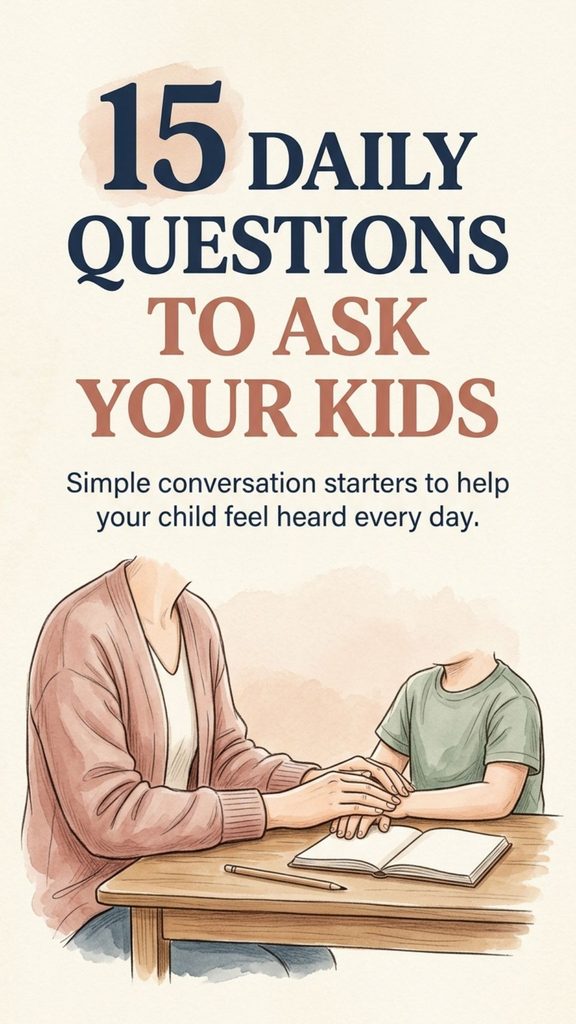
A child can spend an entire day at school, play with friends, learn something new, experience disappointment, and worry about a problem without mentioning any of it at home. When a parent asks, “How was your day?” the answer might be a simple “Good,” even when much more happened.
Children don’t always know how to begin conversations about their feelings. Sometimes they need a little encouragement, a thoughtful question, or simply a quiet moment with someone willing to listen.
Regular conversations give parents opportunities to understand their children’s experiences, notice concerns, celebrate small successes, and build stronger relationships.
You Might Also Like:
- Loading posts...
The American Academy of Pediatrics and the Centers for Disease Control and Prevention both emphasize the value of attentive listening and supportive communication between parents and children. These interactions help children feel heard while giving adults opportunities to understand what their children need.
You don’t need an elaborate parenting routine to make these conversations happen. A few minutes during dinner, a car ride, or bedtime can provide a natural opportunity to connect.
Here are 15 thoughtful questions that can encourage meaningful conversations with your children, along with practical ways to respond to their answers.
Why Asking Your Child Thoughtful Questions Matters
Children experience many emotions throughout the day, but they may not have the vocabulary or confidence to explain everything they’re feeling.
A question that invites more than a yes-or-no answer gives a child room to describe an experience in their own words.
For example, asking about something difficult that happened at school may reveal a disagreement with a friend, confusion about an assignment, or frustration over an activity.
Parents can then respond with understanding, offer guidance when appropriate, or simply acknowledge what the child experienced.
These conversations offer opportunities to practice several valuable skills:
- Emotional awareness: Recognizing and describing different feelings.
- Communication: Explaining thoughts, experiences, and needs.
- Problem-solving: Considering what could be done differently.
- Self-reflection: Recognizing personal progress and challenges.
- Empathy: Thinking about relationships and other people’s experiences.
- Trust: Learning that difficult subjects can be discussed without immediate judgment.
These skills develop over time. Asking questions alone won’t guarantee confidence or emotional resilience, but warm, consistent communication can support healthy development.
The most important part isn’t having the perfect question. It’s what happens after your child answers.
15 Meaningful Questions to Ask Your Child
1. What Made You Smile Today?
Starting with something positive can make a conversation feel welcoming rather than demanding.
Your child might mention a funny classroom moment, a kind friend, a favorite activity, or something unexpectedly enjoyable.
Ask what made the experience special if they seem interested in talking more.
For example, if they enjoyed playing with a friend, you might ask what game they played or what made them laugh.
This question encourages children to notice pleasant moments without suggesting that every day must be happy.
If your child had a difficult day and can’t think of anything that made them smile, that’s okay too.
2. Was Anything Difficult for You Today?
Children encounter challenges that adults may not immediately recognize.
Something as ordinary as understanding homework, joining a playground game, or speaking in front of classmates can feel difficult.
Instead of immediately offering a solution, let your child explain what happened.
You might respond with:
“That sounds frustrating. What was the hardest part?”
This gives them an opportunity to describe their experience.
When appropriate, encourage them to think about possible next steps. If the problem requires adult intervention, make it clear that they don’t have to handle it alone.
Children benefit from learning how to approach manageable difficulties while knowing support is available.
3. Who Did You Enjoy Talking With Today?
Friendships and social interactions are an important part of childhood.
This question helps you learn about the people your child enjoys spending time with and the relationships that matter to them.
Rather than asking only who they played with, explore what made the interaction enjoyable.
Did someone tell an interesting story? Did a classmate help them? Did they meet someone new?
These conversations can also create natural opportunities to discuss kindness, cooperation, and respectful friendships.
Avoid turning every answer into an investigation about your child’s social life. Genuine curiosity usually makes conversations more comfortable.
4. Did Anything Surprise You Today?
Unexpected moments often make interesting conversation starters.
Your child might describe something they discovered in science class, an unusual event at school, or something funny a sibling did.
Ask what they thought when it happened.
Questions about surprises encourage children to describe events, share observations, and explain their reactions.
They’re also useful when your child doesn’t feel like talking about emotions directly.
A simple conversation about something surprising may naturally lead to a deeper discussion.
5. What’s on Your Mind Right Now?
Not every important conversation needs to focus on school or something that happened earlier.
Sometimes your child may be thinking about an upcoming test, a disagreement, a favorite hobby, or something completely unexpected.
An open question gives them permission to choose the subject.
If they say “nothing,” don’t insist on an answer.
You can simply let them know you’re available whenever they want to talk.
The goal is to create an environment where sharing thoughts feels welcome, not compulsory.
6. Is Anything Bothering You?
Children sometimes keep worries to themselves because they’re embarrassed, uncertain, or afraid of disappointing an adult.
Asking this question gently creates an opportunity to discuss concerns.
Your child might reveal something minor, such as losing a favorite toy, or something more serious, such as repeated teasing at school.
Try to remain calm, even if the answer surprises you.
Avoid immediately dismissing the concern with phrases such as “That’s nothing to worry about.”
A problem that seems small to an adult can feel significant to a child.
Instead, acknowledge the feeling and ask what kind of support would help.
If your child describes bullying, threats, or another safety concern, take the situation seriously and help them access appropriate support.
7. What Did You Learn Today?
Learning happens far beyond classroom lessons.
Your child may have discovered a new word, learned how to solve a problem, figured out a game, or noticed something interesting about nature.
This question shows that curiosity and discovery matter.
Try asking your child to explain what they learned as if they were teaching you.
Listen with interest, even when the subject seems simple.
You might discover a new interest or identify something they’d like to explore further.
Avoid making the conversation feel like a test. The purpose is to encourage sharing, not evaluate academic performance.
8. When Did You Feel Proud of Yourself Today?
Children often hear praise from adults, but it’s also valuable to help them recognize their own progress.
Ask your child to identify something they feel good about.
It might be:
- Finishing a challenging assignment
- Helping someone
- Trying a new activity
- Practicing a skill
- Managing frustration
- Speaking up when something felt unfair
Their answer doesn’t have to involve winning or being the best.
If your child says they were proud of trying something difficult, acknowledge the effort and courage involved.
This helps keep the focus on growth, persistence, and meaningful accomplishments rather than comparison with others.
9. Did Anything Make You Feel Left Out?
Feeling excluded can be painful, especially when friendships are becoming increasingly important.
Children may experience exclusion during games, group activities, conversations, or social events.
Some may hesitate to mention these experiences because they’re embarrassed or unsure how adults will respond.
This question opens the door without assuming that something bad happened.
If your child describes feeling excluded, listen carefully before deciding what should happen next.
Ask whether it was a one-time misunderstanding or something that happens repeatedly.
You can discuss possible responses, such as inviting another child to join an activity, asking to participate, or seeking help from a trusted adult.
Persistent exclusion, harassment, or bullying may require communication with school staff or another appropriate adult.
10. What Helped You Feel Calm Today?
Children experience stress and frustration, just like adults, although their coping skills are still developing.
This question encourages them to recognize activities and situations that help them settle.
Their answers might include:
- Reading a favorite book
- Spending time outdoors
- Drawing or coloring
- Listening to music
- Playing quietly
- Taking a break
- Talking with someone they trust
- Sitting somewhere comfortable
Discussing these experiences can help children identify coping strategies they may want to try again.
Remember that different children find different activities calming.
Some need quiet time, while others feel better after movement or conversation.
The goal is to help your child understand their own needs.
11. What Do You Wish Had Gone Differently Today?
This question creates room for reflection without focusing on blame.
Perhaps your child argued with a friend, made a mistake, forgot something important, or didn’t achieve a goal.
Ask what they would change if they had another opportunity.
A useful follow-up is:
“What might you try next time?”
Try not to turn the conversation into a lecture.
Children are more likely to consider their own choices when they feel safe discussing mistakes.
If their behavior hurt someone else, you can still explain expectations and encourage them to think about how to make things right.
Supporting reflection doesn’t mean removing responsibility.
12. Is There Anything You’re Excited About Tomorrow?
Looking ahead can be a pleasant way to end the day.
Your child might be excited about visiting a friend, attending an activity, working on a project, or enjoying a favorite meal.
Talking about upcoming events also helps you learn what motivates and interests them.
If they seem worried rather than excited, gently acknowledge that feeling.
For example:
“Is there anything about tomorrow that you’re not looking forward to?”
This gives children room to discuss both anticipation and anxiety.
Not every day includes an exciting event, and there’s no need to invent one.
Sometimes looking forward to an ordinary comfort is enough.
13. What Helps You Feel Better When You’re Upset?
This question encourages children to think about what kind of comfort and support works best for them.
Some children want a hug. Others prefer space, reassurance, a quiet conversation, or help solving the problem.
You might ask:
“When you’re sad, would you rather I sit with you, listen, or help you think of a solution?”
Let your child’s answer guide your response when it’s safe and practical to do so.
Their preferences may change depending on the situation.
A child who wants to talk about disappointment one day might need quiet time after an argument the next.
Learning these preferences can help parents respond more thoughtfully.
14. What Could I Do to Be a Better Parent for You?
This can be one of the most revealing questions on the list, but it requires a willingness to hear honest feedback.
Your child might ask you to spend more time together, listen without interrupting, explain rules more clearly, or become less distracted during conversations.
Try not to become defensive.
You don’t need to agree with every request, and some boundaries will still be necessary.
However, you can acknowledge what your child is telling you.
For example:
“I didn’t realize you felt that way. Thank you for telling me.”
If your child asks for something reasonable, consider making a specific change.
Younger children may respond better to simpler wording, such as:
“Is there something you wish we did together more often?”
The purpose isn’t to make children responsible for their parents’ behavior. It’s to show that their experiences and opinions matter.
15. What’s Something Fun We Could Do Together?
Connection grows through shared experiences as well as conversation.
Ask your child what activity they would enjoy doing with you.
Their ideas might include:
- Baking cookies
- Taking a walk
- Playing a board game
- Building something
- Gardening
- Reading together
- Visiting a playground
- Making a simple craft
- Watching a favorite movie
You don’t need expensive outings or elaborate plans.
Ordinary activities can provide opportunities to talk, laugh, cooperate, and enjoy each other’s company.
Whenever possible, choose an idea you can realistically follow through on.
Keeping small promises helps show your child that their suggestions are taken seriously.
How to Make Daily Conversations Feel Natural
Having a list of meaningful questions is helpful, but asking all 15 every evening could quickly feel like an interview.
A more comfortable approach is to choose one or two questions that suit your child’s mood and the situation.
Find a Relaxed Moment
Some children enjoy talking at bedtime. Others open up while walking, cooking, drawing, or riding in the car.
Choose times when you’re not rushing to complete another task.
A child who has just arrived home exhausted may need a snack, playtime, or rest before discussing their day.
Pay attention to when your child naturally becomes talkative.
Listen Without Interrupting
When your child begins sharing something, give them time to finish.
Avoid correcting every detail or immediately offering advice.
The CDC recommends active listening techniques such as paying attention, reflecting what a child says, and checking that you’ve understood their feelings.
For example, if your child describes an upsetting disagreement, you might respond:
“It sounds like you were hurt because your friend wouldn’t include you.”
Your child may agree, correct you, or explain further.
That exchange helps you understand the situation more accurately.
Ask Follow-Up Questions Carefully
Thoughtful follow-up questions can encourage children to explain their experiences.
Useful examples include:
- “What happened next?”
- “How did that make you feel?”
- “What did you think about it?”
- “What would you like to do?”
- “Would you like my help?”
However, too many questions in a row can feel overwhelming.
Sometimes a simple acknowledgment or a comfortable silence is more helpful.
Don’t Force Children to Share
Children need some personal space and privacy as they grow.
If your child doesn’t want to talk, respect that unless there’s an immediate safety concern.
You might say:
“That’s okay. I’m here if you want to tell me later.”
Avoid making openness a test of trust or affection.
A supportive relationship includes the freedom to choose when and how to discuss personal experiences.
Adapt the Questions to Your Child’s Age
The same conversation starters won’t work equally well for every child.
Preschoolers
Young children often respond better to short, concrete questions.
Instead of asking what made them proud, try:
“What was something you did all by yourself today?”
Instead of asking what helped them feel calm, ask:
“What helped when you felt sad?”
Playing with toys, drawing pictures, or reading stories together can also create opportunities to talk about feelings.
Elementary School Children
School-age children can often describe more detailed experiences involving friendships, challenges, accomplishments, and worries.
Give them time to explain situations in their own words.
Encourage them to consider possible solutions without expecting them to handle serious problems independently.
Preteens and Teenagers
Older children may prefer conversations that feel less structured.
They may be more willing to talk during shared activities than during a formal sit-down discussion.
Respect their developing independence while maintaining clear expectations about safety and behavior.
Instead of asking several direct questions, you might begin by sharing something ordinary about your own day.
Leave room for them to respond naturally.
What If Your Child Always Says “I Don’t Know”?
Short answers don’t necessarily mean your child is hiding something or unwilling to connect.
They may be tired, distracted, uncertain about their feelings, or simply uninterested in talking at that moment.
Try changing your approach.
Instead of asking a broad question, offer something more specific:
“Was recess fun today?”
“Did anything funny happen at lunch?”
“What was your favorite part of that activity?”
You can also invite your child to ask you a question.
Making conversations a two-way exchange helps them feel less like they’re being examined.
If your child consistently avoids discussing a particular topic, pay attention without pressuring them.
Persistent changes in mood, behavior, sleep, friendships, or daily functioning deserve a supportive conversation. If you’re concerned about your child’s emotional well-being, a pediatrician or qualified child mental health professional can help you decide what support may be appropriate.
The Biggest Mistake Parents Make With Daily Questions
One common mistake is focusing so much on getting an answer that the conversation becomes less important than the question.
Imagine asking your child what upset them at school.
They explain that a classmate laughed when they made a mistake.
If your immediate response is to tell them to ignore it, work harder, or stop being sensitive, they may feel that their experience wasn’t understood.
A more supportive response begins with listening.
You can acknowledge that the situation sounds upsetting, ask how they handled it, and find out whether they want help.
Advice may still be necessary, but understanding the problem first makes that advice more relevant.
Another mistake is expecting every conversation to produce an important revelation.
Some days your child will share deep worries. Other days they’ll spend ten minutes describing a funny game.
Both kinds of conversations matter.
The ordinary, lighthearted exchanges help make communication familiar and comfortable.
Build a Simple Five-Minute Connection Routine
If you’d like to make these questions part of family life, start with a routine that’s easy to maintain.
For example:
Minute 1: Put your phone aside and give your child your attention.
Minute 2: Ask about one enjoyable moment from their day.
Minute 3: Give them an opportunity to mention something difficult or frustrating.
Minute 4: Listen, acknowledge their feelings, and ask whether they need support.
Minute 5: Talk about something you’re both looking forward to or would enjoy doing together.
This is only a flexible example, not a schedule that needs to be followed precisely.
Some conversations will last less than five minutes. Others may continue much longer.
The value comes from showing genuine interest, not completing a routine.
If you have several children, try to create occasional opportunities for individual conversations as well as family discussions.
Different children may need different kinds of attention.
Raising Emotionally Strong Kids Starts With Everyday Connection
Children don’t need parents who always know exactly what to say. They benefit from adults who take their experiences seriously, acknowledge their feelings, provide appropriate guidance, and remain available when challenges arise.
The 15 questions in this article can help start those conversations, but they aren’t a checklist to complete every day.
Choose the questions that fit your child’s age, personality, and circumstances. Let the discussion unfold naturally, and pay attention to what your child is trying to communicate.
Sometimes the most meaningful part of a conversation isn’t the question you asked. It’s the moment your child realizes they can tell you something difficult without being immediately criticized or dismissed.
Start with one simple question tonight, give your child time to answer, and let listening be the most important part of the conversation.