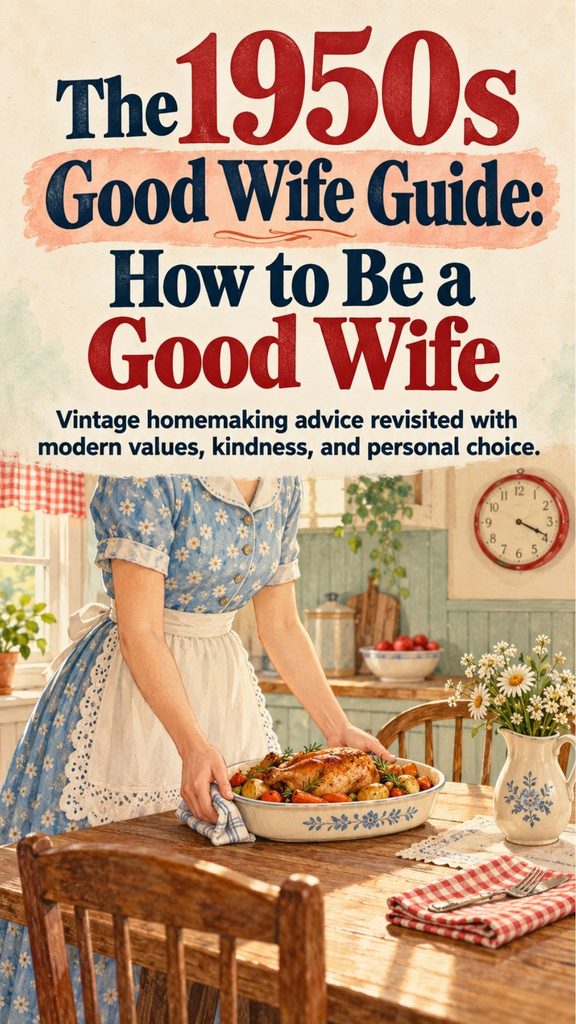
The image of a 1950s housewife is instantly recognizable: a pretty dress, carefully styled hair, dinner simmering on the stove, children looking presentable, and a spotless home waiting for the husband to return from work.
Vintage advertisements and television programs helped establish this picture of domestic perfection. The wife was often portrayed as the person responsible for maintaining a peaceful household, supporting her husband, raising the children, and ensuring everyone else’s needs were met.
One particularly famous piece of internet nostalgia, commonly known as The Good Wife’s Guide, takes these expectations to an entirely different level.
You Might Also Like:
- Loading posts...
Its instructions include preparing dinner before a husband’s arrival, making yourself look attractive, keeping children quiet, avoiding complaints, and treating the husband as the unquestioned authority of the household.
Although the viral guide is frequently attributed to a 1950s housekeeping magazine, its precise origins have not been reliably established. It should not be treated as an authenticated historical document or evidence that every marriage during that period followed the same rules.
Still, the ideas associated with it provide an interesting opportunity to examine traditional homemaking and how our understanding of a good marriage has changed.
Some old-fashioned habits, such as planning meals, creating a welcoming home, practicing kindness, and maintaining household routines, can remain valuable today. Others, particularly those that discourage women from expressing their opinions or questioning their partners, belong firmly in the past.
The challenge is separating useful domestic wisdom from unrealistic expectations.
What Did Being a Good Wife Mean in the 1950s?
Marriage and household responsibilities looked different across families, social classes, cultures, and communities during the 1950s.
However, the idealized American housewife portrayed in popular media was frequently expected to prioritize her husband’s career, manage domestic responsibilities, care for children, and maintain an attractive appearance.
A successful household was often presented as a reflection of the wife’s abilities.
If dinner was late, the children were noisy, or the house looked untidy, the responsibility was generally placed on her rather than viewed as something the entire family could address together.
This traditional model may appeal to people who enjoy homemaking, but it also illustrates why the perfect housewife image can create unnecessary pressure.
A home is shared by the people who live in it. Its comfort and functionality should not depend entirely on one person’s willingness to work without rest or recognition.
Modern homemaking can preserve traditional skills while allowing couples to establish responsibilities through discussion, personal circumstances, and mutual agreement.
1. Plan Dinner Without Making It a Daily Performance
One of the most recognizable recommendations associated with vintage marriage advice is having dinner prepared when the husband returns home.
There is a practical idea underneath that expectation: planning meals ahead can make evenings considerably less stressful.
Knowing what your household will eat prevents the familiar last-minute problem of searching through the refrigerator while everyone is hungry.
A simple weekly meal plan can help you use ingredients efficiently, reduce unnecessary grocery purchases, and coordinate family schedules.
You might prepare vegetables earlier in the day, keep convenient ingredients in the freezer, or use a slow cooker when appropriate.
However, dinner should not become a daily demonstration of devotion.
Some evenings call for a homemade meal. Others call for leftovers, sandwiches, a simple omelet, or something prepared by another family member.
The goal is feeding your household in a manageable way, not proving your worth through an elaborate dinner.
2. Take Time to Feel Good About Yourself
Vintage marriage advice often encouraged women to freshen their appearance before their husbands arrived home.
The implication was that a wife should always look pleasant and attractive for her partner, regardless of how demanding her own day had been.
A healthier version of this idea begins with personal care rather than performance.
If you enjoy putting on a comfortable dress, brushing your hair, applying a little makeup, or changing out of your work clothes, make time for those things because they help you feel good.
Equally important, allow yourself to rest.
Homemaking involves physical and mental work. Cooking, cleaning, childcare, laundry, household administration, and managing family schedules can occupy an entire day.
Taking fifteen or twenty minutes to sit quietly, enjoy a cup of tea, read, or simply do nothing is not something that needs to be earned.
Personal care should help restore your energy rather than create another expectation you feel pressured to meet.
3. Create a Welcoming Home, Not a Perfect One
There is something genuinely comforting about returning to a home that feels peaceful and familiar.
A clear kitchen counter, a comfortable place to sit, fresh air, and a reasonably tidy living room can all contribute to that feeling.
But a welcoming home does not need to resemble a vintage advertisement.
Children’s toys, unfinished laundry, schoolbooks, and evidence of everyday life are normal.
Instead of attempting to clean every room before your partner arrives, establish a manageable household reset.
Spend ten or fifteen minutes returning frequently used items to their places, clearing food preparation surfaces, or preparing the space for the evening.
Encourage other family members to participate.
Maintaining a home should be a shared responsibility appropriate to each person’s circumstances, rather than an endless task assigned to one individual.
4. Teach Children Useful Household Habits
Traditional family routines often emphasized cleanliness, manners, and presenting children neatly when their father returned from work.
While children should not be expected to remain silent or behave like decorative additions to a perfect home, practical household habits are worth teaching.
Encourage children to wash their hands before meals, put toys away, place dirty clothing in the laundry, and participate in age-appropriate chores.
These small responsibilities help them develop useful life skills.
A family home can remain comfortable without requiring children to suppress normal excitement, play, or conversation.
The aim is to create an environment where everyone contributes and everyone feels welcome.
5. Greet Each Other With Kindness
One vintage expectation that translates well into modern relationships is offering a warm welcome when someone comes home.
It feels good to be acknowledged by someone who is genuinely pleased to see you.
A smile, hug, friendly greeting, or simple question about the day can establish a positive atmosphere.
This consideration should work in both directions.
A partner who has been working outside the home may be tired, but someone who has spent the day managing children, household responsibilities, or working remotely may be equally exhausted.
Neither person’s contributions should automatically be considered more important.
A little everyday affection and appreciation can make the transition from separate daytime responsibilities to shared evening life more pleasant.
6. Give Each Other Time to Unwind
The old Good Wife’s Guide suggests avoiding complaints and allowing the husband to relax before discussing household difficulties.
Although its one-sided approach is outdated, the underlying idea of respecting someone’s need to decompress can be useful.
Some people prefer talking immediately when they arrive home. Others need a brief period of quiet before discussing practical matters.
Talk about what works for both of you.
Perhaps one partner appreciates fifteen minutes alone after work, while the other needs help with the children before dinner.
Both needs deserve consideration.
Important conversations should not be permanently postponed merely to preserve a peaceful atmosphere. Finding an appropriate moment to discuss them, however, can make communication easier.
7. Communicate Instead of Keeping Quiet to Avoid Conflict
One of the least useful messages associated with the traditional Good Wife’s Guide is the suggestion that a woman should not challenge her husband’s decisions or question his judgment.
A healthy marriage requires room for two people to express their thoughts, concerns, and preferences.
Disagreements are not automatically signs of a failing relationship.
They are often part of making decisions together.
If you are unhappy with a household arrangement, worried about spending, or frustrated by an uneven distribution of responsibilities, discuss the problem clearly.
Avoid expecting your partner to understand hints, silent resentment, or passive-aggressive comments.
Similarly, listen when your partner raises an issue.
A peaceful home is not one where difficult conversations never occur. It is one where people can address problems respectfully without fear of being dismissed.
8. Share Decisions About Money, Parenting, and Household Goals
Traditional household arrangements frequently positioned the husband as the primary decision-maker.
Modern couples have considerably more freedom to establish arrangements that suit their values and circumstances.
One person might manage the household budget because they enjoy working with numbers. Another might handle most meal planning, home maintenance, or school administration.
There is nothing inherently wrong with dividing responsibilities according to personal strengths.
What matters is that significant decisions are discussed and both partners have meaningful input.
Regularly revisit important household priorities, including finances, parenting, employment, savings, and future plans.
Responsibilities may also need to change during different stages of life.
An arrangement that worked before children arrived may require adjustment later. Illness, employment changes, relocation, or caring for relatives can also affect what is practical.
A successful household routine should be flexible enough to evolve.
9. Allow Each Other to Have Independent Interests
Some traditional marriage advice presents the husband’s personal interests as important while suggesting the wife’s life should revolve almost entirely around supporting him.
A strong partnership should leave space for both people to maintain their individuality.
Friendships, hobbies, creative activities, personal projects, and occasional time apart can all contribute to a fulfilling life.
A homemaker might enjoy gardening, sewing, volunteering, reading, running a small business, or meeting friends.
Their partner should have similar opportunities to pursue meaningful interests.
Being married does not mean that every spare moment must be spent together.
The important consideration is remaining thoughtful about shared responsibilities, communicating plans, and ensuring that one person’s leisure is not consistently made possible through the other’s unpaid work.
10. Make Your Home Comfortable for Everyone
The traditional housewife was often instructed to maintain a home where her husband could escape the demands of the outside world.
Creating a relaxing home is a worthwhile goal, but its benefits should extend to every household member.
Think about what makes your family comfortable.
For some people, it may be a tidy living room with warm lighting and soft blankets. Others may value a practical kitchen, quiet reading corner, organised entryway, or comfortable outdoor seating area.
A pleasant home does not require expensive decorations.
Small changes, such as maintaining clear walkways, keeping everyday supplies accessible, opening windows when appropriate, and putting belongings away regularly, can make a meaningful difference.
The best home environment is one that supports the real people living there rather than an imagined standard of domestic perfection.
11. Keep Hospitality and Thoughtful Gestures Alive
One of the charming aspects of old-fashioned domestic life is the attention often given to hospitality.
Preparing a favorite meal, offering a warm drink, remembering someone’s preferences, or creating a comfortable place for a visitor are simple ways of expressing care.
These gestures can also strengthen everyday relationships.
You might occasionally surprise your partner with breakfast, prepare something they particularly enjoy, or offer to take over a task when they have had a difficult day.
The same kindness should be returned.
Thoughtfulness becomes much more meaningful when it is freely given rather than expected as a permanent obligation.
12. Remember That Homemaking Is a Choice
There is nothing wrong with enjoying traditional domestic responsibilities.
Some people genuinely love cooking, decorating, raising children at home, planning family routines, sewing, gardening, and creating a comfortable household.
Those interests deserve respect.
However, a person should not be considered less capable, loving, or committed to their family because they prefer working outside the home or sharing domestic responsibilities differently.
Likewise, choosing to be a full-time homemaker should not mean surrendering personal independence, access to household resources, or involvement in important family decisions.
Every household has different needs.
The most practical arrangement is one that both partners understand, agree upon, and can reconsider as circumstances change.
What Should We Keep From the 1950s Good Wife Ideal?
Vintage homemaking offers several habits that can still fit comfortably into modern domestic life.
Planning meals, maintaining useful routines, caring for the home, dressing in ways that make you feel good, practicing hospitality, and showing appreciation for loved ones are all worthwhile activities.
But these habits should not require one partner to neglect their own needs.
The expectation that a wife must remain constantly cheerful, attractive, agreeable, and available while placing her husband’s preferences above her own is neither necessary nor realistic.
A meaningful marriage involves two individuals, each bringing different strengths, responsibilities, needs, and ambitions into a shared life.
Old-fashioned homemaking skills can support that partnership without determining who holds authority within it.
A Modern Good Wife’s Guide
If the famous vintage guide were written around the practical needs of a modern household, its central ideas could look something like this:
- Plan meals in a way that works with your family’s schedule and budget.
- Care for your appearance and well-being because you deserve to feel comfortable and confident.
- Maintain realistic household routines rather than chasing constant perfection.
- Encourage everyone to contribute to domestic responsibilities.
- Greet your partner with affection and appreciation.
- Respect each other’s need for rest and personal space.
- Discuss important concerns openly instead of allowing resentment to build.
- Make financial and family decisions together.
- Support each other’s hobbies, friendships, and personal goals.
- Create a welcoming home where every family member feels comfortable.
- Offer thoughtful gestures without treating kindness as an obligation.
- Remember that your opinions, needs, and ambitions matter within the marriage.
These principles do not need to be exclusive to wives. They describe habits that either partner can practice.
Bringing the Best of Vintage Marriage Into Modern Life
It is possible to love the charm of 1950s homemaking without accepting every social expectation associated with that period.
You can enjoy vintage dresses, family dinners, handwritten household schedules, traditional recipes, carefully decorated rooms, and old-fashioned hospitality while still expecting equality, communication, and mutual respect in your marriage.
A comfortable home is valuable. So is a loving partnership.
Neither requires one person to remain silent, overlook their own exhaustion, or dedicate every moment to meeting someone else’s needs.
Perhaps the most useful modern interpretation of the Good Wife’s Guide is that a good marriage is not created by a flawless wife.
It is built through shared effort, kindness, consideration, practical cooperation, and two people who continue choosing to care for one another.