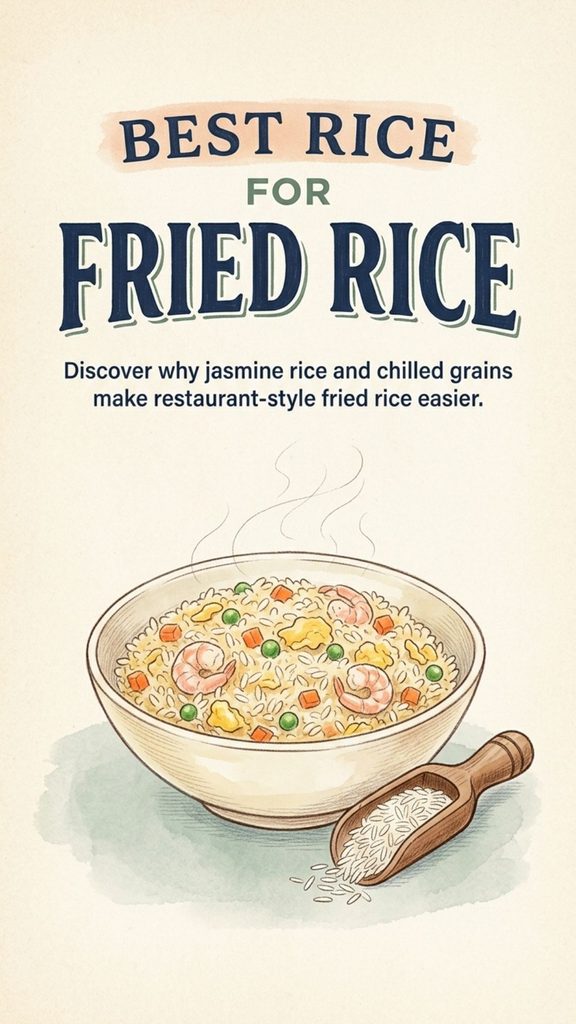
Have you ever wondered why fried rice from your favorite Asian restaurant tastes so much better than the version you make at home?
The rice is fluffy but not dry. Every grain is coated with flavor, the vegetables are perfectly cooked, and everything has that delicious savory taste that makes you want another serving.
Then you try making it yourself, and something goes wrong.
You Might Also Like:
- Loading posts...
Maybe the rice turns sticky. Perhaps it clumps together, becomes mushy, or tastes bland even after adding plenty of soy sauce.
The good news is that making delicious fried rice doesn’t require professional cooking equipment or years of experience.
One of the biggest secrets is choosing the right rice and preparing it correctly before it ever reaches the frying pan.
The type of rice you use affects the texture, aroma, and overall flavor of the finished dish. But preparation matters just as much.
With the right variety, properly cooled rice, a hot pan, and a few simple cooking techniques, you can make fried rice at home that’s beautifully separated, flavorful, and satisfying.
Here’s everything you need to know, including the best rice varieties, common mistakes to avoid, and an easy restaurant-style fried rice recipe.
Why the Type of Rice Matters for Fried Rice
Rice is the foundation of fried rice, not simply an ingredient added to make the meal more filling.
Different varieties contain different proportions and structures of starch, which influence how the grains behave during cooking.
Some rice varieties become soft and sticky. Others remain firmer and more separate.
That difference matters when you’re stir-frying rice with vegetables, eggs, sauces, and other ingredients.
For many restaurant-style fried rice recipes, the goal is to produce individual grains that remain tender while moving freely in the pan.
However, not every type of fried rice is supposed to have the same texture.
Some Japanese-style fried rice dishes use medium- or short-grain rice and have a slightly more cohesive texture than fried rice made with long-grain varieties.
The best choice depends on the style you’re preparing and the texture you enjoy.
1. Jasmine Rice: A Great Choice for Classic Fried Rice
<text>For fragrant, fluffy fried rice with reasonably separate grains, jasmine rice is one of the best options.</text>
<AsyncImage query=”uncooked white jasmine rice grains in simple small ceramic bowl on wooden kitchen countertop natural food photography close up” aspectRatio=”5:3″/>
Jasmine rice is a long-grain variety commonly associated with Thai cuisine and widely used in many Asian-inspired rice dishes.
It has a naturally delicate aroma and a soft, slightly tender texture when cooked.
When properly prepared and cooled, it works beautifully for stir-frying.
Why Jasmine Rice Works So Well
Pleasant aroma: Jasmine rice has a subtle fragrant quality that complements garlic, vegetables, eggs, and savory sauces.
Tender texture: It cooks into soft grains without requiring a heavy or overly creamy consistency.
Good separation: When the rice is prepared with an appropriate amount of water and allowed to cool, the grains can separate well during frying.
Versatility: Jasmine rice works with chicken, shrimp, beef, tofu, eggs, and vegetables.
How to Prepare Jasmine Rice for Fried Rice
Rinse the uncooked rice if recommended for the variety and product you’re using.
Cook according to the package instructions, taking care not to add excessive water.
Once cooked, fluff gently and spread the rice in a shallow container to allow it to cool quickly.
Refrigerate promptly.
Chilled rice is generally easier to stir-fry because it is less steamy and wet than freshly cooked rice.
Jasmine rice is an excellent all-around choice for homemade fried rice, although it isn’t the only suitable option.
2. Basmati Rice: Best for Light, Separate Grains
<AsyncImage query=”long slender white basmati rice grains uncooked in wooden bowl rustic kitchen close up photography” aspectRatio=”5:3″/>
Basmati rice is another aromatic long-grain variety that can produce delicious fried rice.
Compared with jasmine rice, cooked basmati often has a firmer, more separate texture.
This makes it particularly useful if you dislike sticky rice.
Its long grains also create an attractive appearance in the finished dish.
Why Choose Basmati Rice?
Basmati works well when you want fried rice with a lighter texture.
It pairs especially nicely with vegetables, spices, and grilled or roasted proteins.
However, its distinctive aroma differs from jasmine rice, so the finished dish may taste somewhat different from familiar Chinese takeout-style fried rice.
That isn’t necessarily a disadvantage.
If basmati is what you regularly keep in your pantry, there’s no reason you can’t use it.
Simply cook it properly, cool it safely, and avoid adding too much liquid during stir-frying.
3. Medium-Grain Rice: Best for a Softer, Slightly Sticky Texture
<AsyncImage query=”medium grain white Calrose rice grains in white ceramic bowl close up simple kitchen food photography” aspectRatio=”5:3″/>
Medium-grain rice, including Calrose, can be a good choice for certain fried rice styles.
It tends to cook into shorter, softer grains that cling together more readily than many long-grain varieties.
This texture is especially familiar in Japanese-inspired fried rice.
Because the grains are more cohesive, medium-grain fried rice may feel different from versions made with jasmine or basmati rice.
When to Use Medium-Grain Rice
Choose it when you prefer:
- Slightly softer rice.
- A more cohesive texture.
- Japanese-style fried rice.
- Rice that’s convenient to eat with chopsticks.
To avoid excessive clumping, start with properly cooked rice and break apart large clusters before frying.
Using medium-grain rice isn’t a mistake.
It’s simply a different style of fried rice.
4. Long-Grain White Rice: The Affordable Everyday Option
Ordinary long-grain white rice is another reliable option, particularly when you’re cooking on a budget.
It usually produces relatively separate grains when cooked correctly.
It’s also widely available and often less expensive than specialty aromatic varieties.
If your family enjoys simple chicken fried rice or vegetable fried rice, regular long-grain rice can produce excellent results.
The biggest advantage is that you probably won’t need to buy anything special.
Focus on avoiding overcooking and excessive moisture.
Proper technique can make an inexpensive bag of ordinary rice perform beautifully.
5. Brown Rice: A Heartier Alternative
Brown rice is sometimes dismissed as unsuitable for fried rice, but it can work very well.
It has a firmer, chewier texture and a nuttier flavor than white rice.
Because brown rice retains its bran layer, it also provides more fiber than comparable refined white rice.
The result is a heartier dish that may appeal to people who prefer whole grains.
Tips for Making Brown Rice Fried Rice
Cook the rice until tender according to the package instructions.
Cool it promptly and refrigerate it before frying.
Use a sufficiently hot pan and avoid adding excessive sauce.
Brown rice doesn’t have to absorb flavors in exactly the same way as white rice to produce a delicious dish.
A combination of garlic, green onions, vegetables, and savory seasonings works particularly well.
Which Rice Is Best for Fried Rice?
Here’s a simple comparison to help you choose.
| Rice Variety | Finished Texture | Best Use |
|---|---|---|
| Jasmine | Fragrant, tender, separate grains | Classic restaurant-style fried rice |
| Basmati | Light, long, relatively firm grains | Fluffy fried rice |
| Regular long-grain white | Tender, separate grains | Budget-friendly everyday fried rice |
| Calrose or medium-grain | Softer, slightly cohesive | Japanese-inspired fried rice |
| Brown rice | Nutty, firm, chewy | Whole-grain fried rice |
For classic homemade fried rice, jasmine rice is an excellent starting point.
But the most important rule is to prepare whichever rice you choose so that it isn’t excessively wet or overcooked.
The Real Secret: Properly Cooled Rice
You’ll often hear cooks say that day-old rice is the secret to great fried rice.
There’s a good reason for this advice.
Freshly cooked rice contains substantial moisture and releases steam.
When added directly to a hot skillet, that moisture can make the grains stick together.
Instead of frying efficiently, the rice may steam and turn soft.
Cooling the rice allows some surface moisture to dissipate and changes its texture, making the grains easier to separate.
Does the Rice Have to Be a Day Old?
No.
Refrigerated rice from the previous day is convenient, but you don’t have to wait overnight.
You can cook rice specifically for fried rice on the same day.
The key is to cool it quickly and refrigerate it until chilled.
Spread the freshly cooked rice into a thin layer in a shallow container, then place it in the refrigerator promptly.
Don’t leave cooked rice sitting at room temperature for hours.
Important Rice Food-Safety Tip
Cooked rice can contain Bacillus cereus spores that survive ordinary cooking.
If rice sits too long at unsafe temperatures, the bacteria can multiply and potentially produce toxins.
Reheating does not reliably eliminate all toxins that may have formed.
For safety, refrigerate cooked rice promptly, ideally within one hour when practical and never beyond standard safe food-holding limits.
Keep it at 40°F (4°C) or below.
Use properly refrigerated leftovers within recommended storage periods and reheat thoroughly.
Rice that has been left out overnight should be discarded rather than used for fried rice.
How to Make Restaurant-Style Fried Rice at Home
This easy fried rice recipe uses chilled jasmine rice, eggs, vegetables, garlic, and a simple savory sauce.
You can add cooked shrimp, chicken, beef, or tofu to make it a more substantial meal.
<AsyncImage query=”authentic restaurant style egg fried rice with peas carrots scallions fluffy separate golden grains served in dark ceramic bowl beautiful natural food photography” aspectRatio=”5:3″/>
<box gap={1}> <row align=”center” gap={2}> <badge>Easy dinner</badge> <text color=”secondary” size=”xs”>One-pan recipe</text> </row> <grid columns={3} gap={2}> {#each [{label:”Prep”,value:”10 min”},{label:”Cook”,value:”15 min”},{label:”Servings”,value:”4″}] as item} <grid-item> <box background=”surface-secondary” radius=”lg” padding={2} gap={1} align=”center”> <caption>{item.label}</caption> **{item.value}** </box> </grid-item> {/each} </grid> </box>
Ingredients
{@body const ingredients = [“4 cups cooked, chilled jasmine rice”,”3 large eggs, lightly beaten”,”2 tablespoons neutral cooking oil, divided”,”1 small carrot, finely diced”,”½ cup frozen peas”,”3 green onions, sliced (white and green parts separated)”,”2 garlic cloves, minced”,”2 tablespoons soy sauce”,”1 tablespoon oyster sauce (optional)”,”1 teaspoon toasted sesame oil”,”¼ teaspoon white or black pepper”,”1 cup cooked shrimp, chicken, or diced tofu (optional)”]}
{@body const [checked,setChecked] = DIL.useState([])}
<box gap={2}>
{#each ingredients as ing,i}
<checkbox key={i} checked={checked.includes(i)} onChange={v=>setChecked(s=>v?[…s,i].filter(x=>x!==i))}>{ing}</checkbox>
{/each}
<row justify=”end”>
<button variant=”outline” color=”secondary” size=”sm” onClick={()=>GenUI.copy(ingredients.join(“\n”))}><icon name=”copy” size=”xs”/> Copy ingredients</button>
</row>
</box>
Instructions
Step 1: Prepare the Rice
Remove the chilled rice from the refrigerator.
Using clean hands or a fork, gently break apart large clumps.
The grains should be reasonably separate before you begin cooking.
If the rice seems particularly wet, blot the surface lightly with a clean paper towel.
Prepare all the vegetables, eggs, and sauces before heating the pan.
Fried rice cooks quickly, so having everything ready makes the process much easier.
Step 2: Scramble the Eggs
Heat a large skillet or wok over medium-high heat.
Add a small amount of the cooking oil.
Pour in the beaten eggs and stir until just cooked through.
Transfer the scrambled eggs to a clean plate.
Cooking the eggs separately makes it easier to control their texture and prevents them from disappearing into the rice.
Step 3: Cook the Vegetables
Add the remaining oil to the pan.
Stir-fry the diced carrots for approximately two minutes.
Add the white parts of the green onions and cook briefly.
Stir in the peas and minced garlic.
Continue cooking until the vegetables are tender and the garlic is fragrant.
Be careful not to burn the garlic, which can develop a bitter flavor.
Step 4: Add the Cold Rice
Increase the heat if necessary, keeping it within a range your pan and stove can handle safely.
Add the chilled rice.
Spread it across the pan and allow it to heat briefly before stirring.
Use a spatula to lift and turn the grains.
Continue stir-frying for several minutes until the rice is hot and some grains begin to develop light golden spots.
If the pan is crowded, it’s better to cook the rice in two batches.
Too much food in the skillet traps steam and can produce a soggy texture.
Step 5: Add the Sauce
Mix the soy sauce and optional oyster sauce in a small bowl.
Pour the mixture over the rice and toss thoroughly.
Continue cooking until the seasoning is evenly distributed.
Add black or white pepper to taste.
If you’re using cooked shrimp, chicken, or tofu, add it now.
Make sure the protein has been handled safely and that the finished dish is heated thoroughly.
Step 6: Finish With Eggs and Sesame Oil
Return the scrambled eggs to the pan.
Add the green parts of the onions.
Drizzle the toasted sesame oil over the rice and toss everything together.
The sesame oil is best added near the end because its distinctive aroma can be diminished by prolonged high-heat cooking.
Taste before adding extra salt, since soy sauce and oyster sauce already contribute considerable sodium.
Serve immediately.
For a dish made with previously cooked rice and other leftovers, reheat to 165°F (74°C).
8 Restaurant Techniques That Make Fried Rice Taste Better
Knowing which rice to use is only part of the process.
The following techniques can improve texture and flavor.
1. Use a Large Pan
A wide skillet or wok provides enough room to move the rice around.
A small, crowded pan makes it difficult for moisture to evaporate.
2. Prepare Everything Before Cooking
Fried rice is a quick-cooking dish.
Chop the vegetables, measure the seasonings, and beat the eggs before turning on the heat.
3. Avoid Excessive Water When Cooking Rice
Overcooked, waterlogged rice is difficult to fix during stir-frying.
Start with correctly measured water and follow the instructions for your chosen variety.
4. Don’t Add Too Much Sauce
A common mistake is pouring in large amounts of soy sauce to create more flavor.
Too much liquid can make fried rice wet and overly salty.
Start with a modest amount and adjust gradually.
5. Cook in Batches
If you’re doubling the recipe, don’t force all the ingredients into one small skillet.
Cooking in batches allows the rice to heat efficiently.
6. Use Enough Heat
A sufficiently hot pan helps moisture evaporate and promotes light browning.
However, very high heat isn’t necessary if your pan cannot handle it.
Avoid overheating nonstick cookware and follow the manufacturer’s temperature guidance.
7. Keep the Vegetables Small
Finely diced carrots, onions, and other vegetables cook quickly and distribute evenly.
Large vegetable pieces may remain undercooked while the rice becomes overdone.
8. Taste Before Adding More Seasoning
Soy sauce, oyster sauce, and other condiments can be quite salty.
Taste the finished dish before reaching for additional salt.
Why Restaurant Fried Rice Sometimes Has a Smoky Flavor
Some restaurant fried rice has a distinctive toasted or smoky quality that’s difficult to duplicate at home.
One reason is a cooking effect often called wok hei, sometimes translated as the breath of the wok.
In certain styles of wok cooking, very high heat, rapid movement, and contact with hot surfaces create complex aromas and flavors.
Professional burners can produce considerably more heat than ordinary residential stoves.
However, you can still make excellent fried rice without recreating restaurant burner conditions.
Use a wide pan, work in manageable batches, and allow some of the grains to develop light browning.
Don’t attempt to imitate professional techniques by overheating an unsuitable pan or creating dangerous flames in a home kitchen.
Can You Make Fried Rice With Freshly Cooked Rice?
Yes, although the texture may be different.
If you haven’t prepared rice ahead of time, cook it using an appropriate amount of water.
Spread it in a thin layer in a shallow container and refrigerate it promptly until the rice is cool.
Avoid letting it sit at room temperature for an extended period.
When cooled sufficiently, gently break up the grains and proceed with your recipe.
This approach works particularly well when you’re using long-grain white rice.
It may not produce exactly the same texture as overnight-refrigerated rice, but it can still result in a very satisfying dish.
Why Does Homemade Fried Rice Turn Out Mushy?
Mushy fried rice usually comes down to one or more common problems.
The rice was overcooked: Too much water or an excessively long cooking time can make the grains unusually soft.
The rice was too hot or wet: Freshly cooked, steaming rice can release moisture into the pan.
The skillet was overcrowded: A crowded pan traps moisture and encourages steaming.
Too much sauce was added: Excess liquid can soften the grains and create a sticky consistency.
The rice was stirred too aggressively: Repeatedly pressing or mashing the grains can damage their texture.
If your fried rice turns out mushy, it’s usually better to adjust the preparation method next time rather than attempt to dry it out with prolonged cooking.
Popular Fried Rice Variations to Try
Once you’ve mastered the basic recipe, there are endless ways to change it.
Chicken Fried Rice
Add diced, fully cooked chicken to the rice along with peas, carrots, and green onions.
This is a convenient way to use properly refrigerated leftover chicken.
Shrimp Fried Rice
Use peeled, cooked shrimp and add it near the end so it doesn’t become rubbery.
Shrimp pairs nicely with garlic, ginger, and a little sesame oil.
Vegetable Fried Rice
Skip the meat and add extra vegetables such as mushrooms, broccoli, cabbage, or bell peppers.
Use a vegetarian mushroom sauce or simply soy sauce instead of oyster sauce.
Egg Fried Rice
Keep the recipe simple with rice, eggs, green onions, and seasoning.
This is an easy option when the refrigerator is nearly empty.
Spicy Fried Rice
Add a modest amount of chili sauce, chili crisp, or another preferred spicy condiment.
Be mindful of the additional salt and oil these ingredients may contribute.
Pineapple Fried Rice
Add small pieces of pineapple, vegetables, and a suitable protein.
The sweetness of pineapple creates a pleasant contrast with savory seasonings.
For the best texture, drain canned pineapple thoroughly before adding it.
How to Store and Reheat Leftover Fried Rice
Fried rice is convenient for meal preparation, but safe storage is important.
Refrigerate leftovers promptly in shallow, covered containers.
Keep the refrigerator at 40°F (4°C) or colder.
General USDA guidance recommends using properly refrigerated cooked leftovers within three to four days. Some food-safety authorities recommend a shorter storage period specifically for cooked rice, so following the stricter guidance applicable in your location is sensible.
Don’t leave cooked rice sitting out overnight.
For reheating, use a skillet or microwave and heat the rice thoroughly to 165°F (74°C).
If reheating in a skillet, add a small splash of water only if needed to prevent excessive dryness.
Avoid repeatedly cooling and reheating the same batch.
If rice has been improperly stored, reheating cannot necessarily make it safe.
Frequently Asked Questions About Fried Rice
Is Jasmine or Basmati Better for Fried Rice?
Both can work well.
Jasmine rice is an excellent choice for tender, fragrant fried rice, while basmati generally produces longer, firmer, more separate grains.
Choose according to your preferred texture.
Can You Use Brown Rice for Fried Rice?
Yes. Brown rice can produce delicious fried rice with a nutty flavor and chewier texture.
Cook it properly and refrigerate it safely before frying.
What Rice Do Chinese Restaurants Use?
There isn’t one universal answer.
Different restaurants use different rice varieties depending on their cuisine, location, recipes, and suppliers.
Jasmine and other long-grain rice varieties are common choices for certain styles, while medium- and short-grain rice appear in others.
Why Is Day-Old Rice Better for Fried Rice?
Chilled rice is usually less steamy and wet than freshly cooked rice.
This makes the grains easier to separate and stir-fry without becoming mushy.
The important point is to cool and refrigerate cooked rice safely.
Should You Rinse Rice Before Making Fried Rice?
Rinsing can remove some loose surface starch and is often useful for many white rice varieties.
However, follow the package guidance, especially for enriched rice products where washing may remove added nutrients.
Which Oil Is Best for Fried Rice?
Neutral cooking oils that are appropriate for stir-frying work well.
Examples include canola, peanut, or other suitable vegetable oils.
Toasted sesame oil is usually added in small amounts for flavor rather than used as the primary frying oil.
Can I Make Fried Rice Without a Wok?
Absolutely.
A large skillet works well for homemade fried rice.
The most important factors are adequate cooking space, proper rice preparation, and good temperature control.
Final Thoughts: Great Fried Rice Starts Before the Pan Gets Hot
The secret to delicious homemade fried rice isn’t one mysterious restaurant ingredient.
It starts with choosing rice that matches the texture you want and preparing it properly.
Jasmine rice is an excellent choice for classic, fragrant fried rice. Basmati offers longer, firmer grains, while medium-grain rice provides a softer texture for different styles.
Even ordinary long-grain white rice can produce wonderful results.
The real difference comes from avoiding excess moisture, cooling cooked rice safely, using a sufficiently hot pan, and adding seasonings in the right amounts.
Once you understand those simple techniques, fried rice becomes one of the easiest and most flexible meals you can make at home.
It’s affordable, adaptable, and a delicious way to combine rice, vegetables, eggs, and your favorite proteins.
Start with well-prepared rice, keep the ingredients simple, and let good cooking technique do the rest.