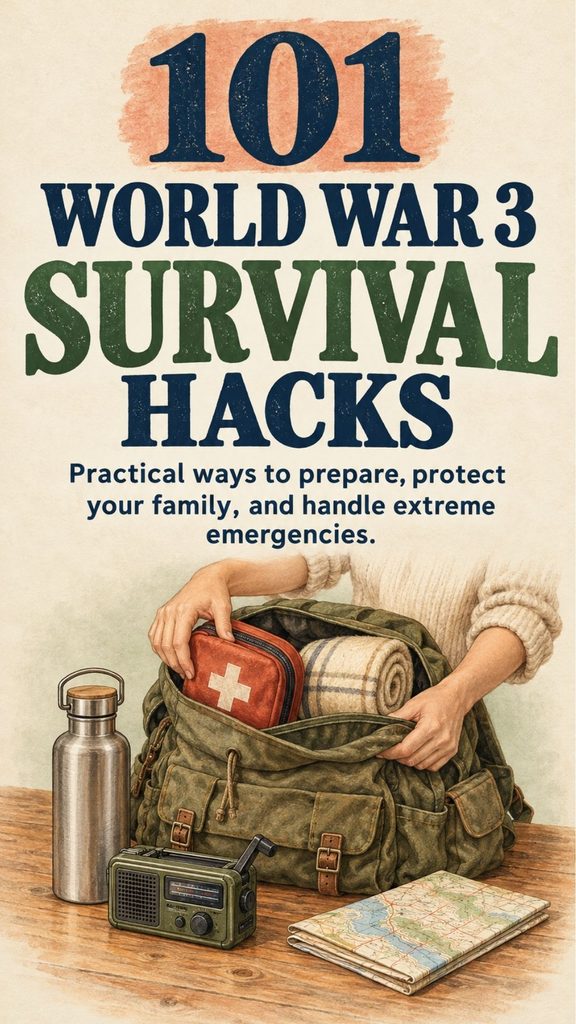
A third world war would not affect every country or community in the same way. Some areas might experience direct fighting, while others could face power outages, food shortages, disrupted transportation, cyberattacks, or difficulties accessing essential services.
If a major global conflict were to happen, ordinary families would need to make important decisions under uncertain circumstances. Knowing how to store safe drinking water, prepare emergency supplies, communicate without internet access, and respond to evacuation warnings could make those decisions easier.
Preparing for such a possibility does not mean expecting the worst or living in constant fear. It means developing useful skills and keeping sensible supplies that can also help during natural disasters, severe storms, and extended power failures.
You Might Also Like:
- Loading posts...
No single survival technique can guarantee safety during a war. Your location, the specific threats, available resources, and instructions from emergency authorities will all influence what you should do.
The most useful preparations begin with protecting your basic needs: water, food, shelter, medical care, reliable information, and a plan for keeping your household together.
1. Build an Emergency Bag Before You Need One
If fighting, dangerous conditions, or an evacuation order forces you to leave home, you may have little time to gather your belongings.
An emergency bag, sometimes called a go-bag, should contain the essentials you would need during the first few days away from home.
Choose a comfortable backpack that you can carry without difficulty. Avoid filling it with unnecessary equipment that makes movement harder.
Useful items include:
- Bottled water and lightweight, ready-to-eat food
- A flashlight or headlamp with spare batteries
- A battery-powered or hand-crank radio
- A basic first-aid kit
- Essential medications and copies of prescriptions
- Identification documents and emergency contact information
- A portable phone charger and charging cables
- A whistle for attracting attention
- Weather-appropriate clothing and extra socks
- Personal hygiene supplies
- A paper map of your area
- Small amounts of cash in local currency
Include supplies for children, older adults, people with disabilities, and pets when applicable.
Check the bag periodically to replace expired items, charge electronics, and update documents.
Store it somewhere accessible, but remember that your household may also need a separate supply kit for emergencies that require staying indoors.
2. Store Enough Drinking Water for an Emergency
Access to safe drinking water can become difficult when water-treatment facilities, pumping stations, or electricity supplies are disrupted.
A practical starting point is to store at least one gallon of water per person per day for drinking and basic sanitation.
Build a supply for several days first. If storage space and your budget allow, gradually work toward a longer reserve.
Households with infants, pregnant or breastfeeding family members, certain medical needs, or pets may require additional water.
Store Water Correctly
Use commercially sealed bottled water or clean, food-grade water containers designed for storage.
Keep containers away from direct sunlight, excessive heat, fuels, pesticides, and other chemicals.
Label containers and follow appropriate storage and replacement guidance.
Learn Safe Water Treatment
If your regular supply becomes unsafe because of microbial contamination, boiling clear water at a rolling boil for one minute can kill disease-causing germs. At elevations above 6,500 feet, boil for three minutes.
Water-treatment tablets can also be useful when used according to their instructions.
However, not every portable filter removes viruses, and no ordinary boiling or disinfection method makes water contaminated with fuel, toxic chemicals, or radioactive material safe to drink.
During a chemical or radiation emergency, follow public-health instructions about which water sources are safe.
Do not deliberately dehydrate yourself to make supplies last longer. Preventing dehydration remains essential.
3. Create a Reliable Emergency Food Supply
If an international conflict were to disrupt transportation or supply chains, certain grocery products could become difficult to obtain.
Keeping a reasonable supply of familiar, shelf-stable food helps your household manage temporary shortages without depending entirely on last-minute shopping.
Choose foods that are nutritious, affordable, and simple to prepare.
Good options include:
- Canned beans and lentils
- Canned vegetables and fruit
- Canned fish or meat
- Peanut butter or other shelf-stable spreads
- Oats and breakfast cereals
- Rice and pasta
- Crackers and crispbread
- Nuts and dried fruit
- Shelf-stable milk
- Ready-to-eat soups and meals
Consider foods that can be eaten without cooking in case electricity or gas service becomes unavailable.
Keep a manual can opener with your supplies.
Rotate Food Instead of Forgetting About It
Store food in a cool, dry place and use older products before newer purchases.
Choose items your household already eats so that emergency supplies can become part of your regular grocery routine.
Follow food-storage instructions and discard products showing signs of spoilage or damaged packaging.
If refrigeration fails, follow established food-safety guidance rather than assuming food is safe because it smells normal.
A practical emergency pantry is more valuable than a large collection of unfamiliar products that nobody knows how to prepare.
4. Make a Family Emergency Communication Plan
One of the most frightening possibilities during a crisis is losing contact with family members.
Mobile networks may become overloaded, electricity could fail, and internet service might be interrupted.
Prepare a communication plan before an emergency occurs.
Choose an emergency contact who lives outside your immediate area. Give every family member the person’s phone number and other contact details.
Agree on two meeting locations:
- A nearby meeting place for emergencies affecting your home.
- A second location outside your neighborhood if returning home becomes impossible.
Children should know who to contact if they cannot reach their parents or caregivers.
Keep important phone numbers written on paper as well as saved digitally.
Text messages may sometimes get through when voice calls fail, although neither service is guaranteed.
A battery-powered radio is also useful for receiving official broadcasts when internet connections are unavailable.
5. Know When to Shelter and When to Evacuate
During a conflict, the safest decision is not always to leave immediately.
Some hazards require people to move away from danger, while others make remaining inside a suitable building safer.
The correct response depends on the incident and instructions from local authorities.
Preparing Your Home as a Temporary Shelter
Identify a room or area that offers reasonable protection from the hazards most likely in your region.
For threats involving blasts or flying glass, staying away from windows and exterior openings can reduce certain risks.
Keep emergency supplies, sturdy footwear, drinking water, a flashlight, and communication equipment accessible.
If authorities direct residents to shelter indoors, follow their instructions about ventilation, windows, doors, and when it is safe to leave.
A basement may be useful for some emergencies but unsuitable for others, such as flooding or certain chemical releases.
No room provides reliable protection from every possible wartime hazard.
Prepare for Evacuation Too
Identify several potential destinations, such as officially designated shelters or relatives living in a safer area.
Keep paper and offline digital maps available.
If evacuation becomes necessary, use routes identified as safe by responsible authorities whenever possible.
Do not assume remote forests, abandoned buildings, or unfamiliar back roads are safer than established evacuation routes.
Conflict areas may contain unexploded ammunition, mines, damaged bridges, or other hidden dangers.
Moving without reliable information can expose you to additional risks.
6. Protect Yourself During a Nuclear or Radiation Emergency
A possible nuclear incident is one of the most serious concerns associated with a large-scale conflict.
Fortunately, there are established protective actions that can reduce radiation exposure in certain circumstances.
The central principles are reducing exposure time, increasing distance from radioactive material, and using suitable shielding.
If a Nuclear Explosion or Radiation Emergency Occurs
If you are outside, get inside a substantial building as soon as you safely can.
A basement or central area of a large brick or concrete building generally offers better protection against radioactive fallout than an exposed outdoor location.
Move away from windows, outside walls, and the roof.
If you were exposed to falling radioactive dust, carefully remove your outer layer of clothing without shaking it. Place the clothing in a sealed bag away from others.
Wash exposed skin and hair gently with soap and water, and change into clean clothes if available.
Follow official broadcasts for instructions.
Emergency guidance commonly recommends remaining sheltered for at least 24 hours after certain radiation incidents, but the actual duration depends on conditions and official advice.
Do not leave a protective shelter merely because a fixed amount of time has passed.
What About Potassium Iodide Tablets?
Potassium iodide, often called KI, can protect the thyroid against radioactive iodine under specific circumstances.
It does not protect the rest of the body from radiation and is not a universal treatment for nuclear exposure.
Only take potassium iodide when public-health officials or a qualified medical professional instruct you to do so.
Ordinary table salt and iodine supplements are not suitable substitutes.
Most importantly, seeking potassium iodide must not take priority over getting into an appropriate shelter.
7. Prepare for Smoke, Dust, and Chemical Hazards
Large fires, damaged industrial facilities, and chemical releases can make outdoor air dangerous.
The correct protective action depends on the substance involved, wind conditions, and the location of the release.
Follow official directions about whether to evacuate or shelter indoors.
If instructed to shelter from an outdoor chemical release, authorities may advise closing windows and doors and stopping ventilation systems that bring outside air into the building.
For ordinary airborne particles, a properly fitted particulate respirator may offer some protection.
However, an N95 respirator does not protect against toxic gases or oxygen-deficient air.
Homemade filters made from cloth, charcoal, or wet towels should not be relied upon during chemical attacks or serious smoke exposure.
Improvised protection may create a false sense of security and delay reaching a safer location.
8. Learn Basic First Aid Before Medical Services Are Disrupted
Medical facilities may experience shortages, transportation difficulties, or increased demand during a large emergency.
Basic first-aid knowledge can help you respond to common injuries while waiting for professional assistance.
Consider taking a recognized first-aid and CPR course.
Useful skills include:
- Recognizing severe bleeding
- Applying direct pressure to wounds
- Cleaning and dressing minor injuries
- Responding to burns
- Recognizing dehydration and heat exhaustion
- Identifying signs of hypothermia
- Helping someone who is choking
- Performing CPR when appropriate
For severe bleeding, proper training in tourniquet use can be particularly valuable.
Organize Essential Medical Supplies
Maintain a first-aid kit with sterile dressings, adhesive bandages, gauze, medical tape, disposable gloves, and other appropriate supplies.
People who depend on prescription medications should discuss emergency refill planning with their healthcare provider or pharmacist.
Keep medication lists and relevant medical information with important documents.
If you use glasses, hearing aids, mobility equipment, or medical devices requiring electricity, include those needs in your emergency plan.
Do not rely on unverified herbal remedies or improvised treatments for serious wounds or infections.
9. Prepare for Extended Power Outages
Electrical infrastructure can be damaged during conflict, and outages may affect lighting, refrigeration, communication, heating, and water supplies.
A few practical preparations can make life at home more manageable.
Keep flashlights in accessible places and store replacement batteries appropriately.
Recharge power banks regularly and consider whether a portable solar charger would be useful in your climate.
Choose a radio that does not depend entirely on household electricity.
Think About Cooking and Heating Safety
Never operate charcoal grills, camp stoves, fuel-burning heaters not approved for indoor use, or generators inside a home, garage, or enclosed space.
These devices can produce deadly carbon monoxide.
Generators must be operated outdoors, well away from doors, windows, and vents, according to their safety instructions.
Battery-powered lighting is generally preferable to candles because it avoids an open flame.
For colder weather, prepare warm clothing, blankets, sleeping bags, and an appropriate method of maintaining safe indoor temperatures.
Do not attempt improvised indoor fires or ventilation systems.
10. Keep Important Documents and Emergency Cash Accessible
Displacement becomes more complicated when important identification and records are missing.
Prepare a waterproof document pouch containing copies of essential paperwork.
Depending on your circumstances, this may include passports, identification cards, birth certificates, insurance details, medical information, property records, and emergency contact numbers.
Securely stored digital copies can provide an additional backup.
Use encryption or another suitable security method for sensitive documents, especially on portable drives.
Keeping some emergency cash in small denominations may be useful if electronic payment systems or ATMs become unavailable.
The amount should reflect your circumstances and financial capacity.
Avoid keeping your entire savings in cash at home, and never advertise where valuables are stored.
11. Protect Your Household’s Hygiene and Sanitation
Safe sanitation can become difficult when plumbing, sewage systems, or clean water supplies are interrupted.
Poor hygiene increases the risk of gastrointestinal illness and other infections.
Maintain supplies such as soap, toilet paper, hygiene products, disposable gloves, sturdy garbage bags, and household cleaning products.
Handwashing with soap and safe water should remain a priority, especially before preparing food and after using the toilet.
If indoor plumbing stops working, follow local public-health guidance about temporary sanitation arrangements and waste disposal.
Avoid placing human waste near drinking-water sources.
Keep waste contained and away from food-preparation areas.
A sanitation plan does not need to be complicated, but it should protect people from unnecessary exposure to waste and contaminated water.
12. Prepare Clothing and Footwear for Difficult Conditions
If you need to evacuate on foot, appropriate clothing can make a substantial difference to comfort and safety.
Keep sturdy, broken-in walking shoes accessible.
Pack several pairs of dry socks, comfortable trousers, weather-resistant outerwear, and suitable head coverings.
For cold conditions, dress in layers that can be adjusted as activity levels and temperatures change.
Wet clothing can increase heat loss, particularly in cold or windy weather.
A waterproof outer layer can help protect against rain, while dry insulating layers help retain warmth.
Avoid carrying clothing that is heavy, impractical, or unsuitable for your local climate.
A small sewing kit, strong thread, and basic repair supplies may also help extend the usefulness of clothing and equipment.
13. Learn Navigation Without Depending Entirely on GPS
Satellite navigation is useful, but electronic devices can fail because of power shortages, damaged equipment, or interrupted services.
Download offline maps of your area and keep a paper map available.
Learn how to identify main roads, nearby medical facilities, official shelters, and alternative routes.
A basic compass can help with orientation, provided you understand how to use it alongside a map.
Do not rely on unreliable navigation folklore, such as the idea that moss always grows on the north side of trees.
Natural indicators are affected by local conditions and are not dependable substitutes for proper navigation tools.
If you are in an area affected by fighting, avoid unexplored paths, abandoned military positions, and suspicious objects.
Never touch unexploded ammunition or unfamiliar military debris. Move away from the hazard and report it to the appropriate authorities when safe.
14. Build a Support Network in Your Community
Emergency preparedness is not simply a matter of collecting equipment.
Neighbors, relatives, and community organizations can provide practical support when ordinary services become unavailable.
Consider identifying trusted people who could help with transportation, childcare, medical needs, or sharing reliable information.
Different people have useful skills.
Someone may understand first aid, while another can repair equipment, assist an older neighbor, or organize supplies.
A cooperative neighborhood can make it easier to identify vulnerable residents and coordinate help.
Keep personal safety and privacy in mind, and avoid unnecessary confrontation.
Strong community relationships are usually more useful than treating every unfamiliar person as a potential threat.
15. Develop Practical Skills That Remain Useful During Shortages
Some emergency skills require practice rather than expensive equipment.
Cooking simple meals from pantry ingredients is a good example.
Learn how to prepare inexpensive dishes using beans, rice, oats, canned vegetables, and other familiar staples.
Basic sewing, bicycle maintenance, simple household repairs, and safe food storage can also reduce dependence on outside services.
Gardening may support household food supplies over time, although growing substantial amounts of food requires suitable space, water, sunlight, seasonal planning, and consistent work.
Container gardening can provide herbs and some vegetables, but it will not immediately replace a household’s normal food supply.
Similarly, fishing and foraging should not be treated as guaranteed emergency food sources.
Wild plants and mushrooms can be dangerously misidentified, and hunting or fishing may be unsafe or prohibited in affected areas.
Focus first on dependable supplies and skills you can practice safely before any emergency.
16. Protect Your Mental Health and Maintain a Routine
Prolonged uncertainty can affect concentration, sleep, mood, and decision-making.
Fear is a normal response to dangerous circumstances. The objective is not to eliminate fear, but to make decisions based on reliable information rather than panic or rumors.
Simple daily routines can provide structure.
Set reasonable times for meals, rest, hygiene, essential tasks, and checking official information.
Avoid spending every waking hour following alarming social media reports.
For children, familiar activities such as reading, drawing, or playing quiet games can provide comfort during disruptions.
Explain events in age-appropriate language without making promises you cannot guarantee.
People may react differently to the same situation, so patience and practical emotional support matter.
If distress becomes overwhelming, seek qualified medical or mental-health support when services are available.
17. Learn to Recognize Reliable Information
During a major conflict, false reports may spread quickly.
Misleading evacuation messages, fabricated videos, inaccurate maps, and rumors about shortages can lead people into unnecessary danger.
Prioritize information from emergency management authorities, recognized humanitarian organizations, and other trustworthy sources.
Compare reports when possible and look for clear details about the location, time, and issuing organization.
Be cautious about forwarding unverified warnings.
An old photograph or video may be presented as evidence of a new event, and a message shared widely online is not necessarily accurate.
Keep more than one way to receive official updates, including radio broadcasts when available.
Good information helps you decide whether to stay, move, seek assistance, or wait for further instructions.
18. Prepare for the Needs of Children, Older Adults, and Pets
A standard emergency checklist rarely covers every household’s needs.
Families with infants may require diapers, suitable food, feeding supplies, and additional clean water.
Older adults may need help with mobility, transportation, or medication management.
People with disabilities may depend on accessible transportation, communication devices, or powered medical equipment.
Pets need food, drinking water, carriers, leashes, and identifying information.
Review these needs individually instead of assuming that one emergency bag is sufficient for everyone.
If a family member uses equipment that requires electricity, identify realistic backup arrangements and discuss contingency planning with the relevant healthcare provider.
19. Avoid Dangerous Survival Myths
Extreme survival advice often includes dramatic techniques that sound useful but may create more danger than protection.
Several common assumptions deserve particular caution.
Myth: Moving to an isolated rural location is always safest.
Remote areas can lack medical care, safe water, transportation, and reliable communication. Safety depends on local circumstances, not simply distance from a city.
Myth: Any homemade water filter makes contaminated water drinkable.
Sand, charcoal, and improvised filters cannot reliably remove all disease-causing organisms or chemical and radioactive contaminants.
Myth: You should severely restrict drinking water to make it last.
Deliberate dehydration can impair your ability to function and threaten your health. Plan adequate storage and safe water sources instead.
Myth: Potassium iodide protects against every kind of radiation.
It only helps protect the thyroid against radioactive iodine under specific conditions.
Myth: A homemade cloth mask protects against toxic gases.
Ordinary cloth and particulate masks do not provide reliable protection against many dangerous gases.
Myth: Traveling at night or using unfamiliar shortcuts always reduces danger.
Unknown routes can contain hazards that are difficult to identify, especially where landmines or unexploded weapons may be present.
A useful emergency preparation should reduce risk, not introduce another problem.
20. Make a Realistic Emergency Preparation Plan
Preparing for a possible large-scale conflict becomes easier when you divide the work into manageable priorities.
You do not need to purchase every supply at once.
Start with the essentials and expand your preparations according to your household’s circumstances.
First Priority: The Next 24 Hours
Review emergency contact information, locate identification documents, charge essential devices, and identify safe places to shelter.
Check the food, drinking water, medication, and lighting supplies already available at home.
Second Priority: The Next Few Days
Prepare a portable emergency bag for each person who can carry one.
Build a basic supply of drinking water and shelf-stable food.
Discuss household communication, meeting locations, evacuation arrangements, and medical needs.
Third Priority: Longer-Term Resilience
Gradually expand emergency food and water storage where practical.
Learn first aid, improve your ability to navigate without internet access, and review safe alternatives for lighting and cooking.
Establish relationships with trusted neighbors and identify local emergency assistance resources.
Review your plan periodically and adapt it to changes in your household.
The most useful preparations are affordable, practical, and easy to maintain.
What Should You Do First if a Major War Actually Begins?
If an international conflict escalates into a wider war, avoid assuming that every location faces the same immediate danger.
Begin by checking reliable information about conditions where you live.
If there is no immediate local threat, concentrate on reviewing supplies, communicating with family members, and following official updates rather than making rushed decisions.
If your area faces direct danger, prioritize protective shelter and the instructions of relevant emergency authorities.
If you are ordered to evacuate, follow the specified directions as safely as circumstances allow.
If the incident involves potential radioactive fallout, getting inside an appropriate building and remaining there as instructed may be safer than attempting immediate travel.
Keep essential medications, water, identification, and communication equipment accessible.
Remember that an emergency plan should change when new, credible information becomes available.
Final Thoughts: Prepare for Uncertainty Without Living in Fear
If World War 3 were ever to happen, there would be no universal survival plan capable of addressing every possible situation.
A family’s safest choices would depend on geography, the nature of the conflict, available infrastructure, public-health conditions, and access to reliable emergency guidance.
However, preparing for disruptions to water, food, electricity, transportation, medical care, and communication is worthwhile regardless of whether a global conflict occurs.
Start with a household emergency plan. Store safe drinking water and familiar food. Keep essential documents accessible. Learn basic first aid, maintain backup communication methods, and understand the difference between sheltering and evacuating.
Most importantly, avoid treating dramatic survival tricks as substitutes for established safety guidance.
Preparation cannot eliminate every danger, but practical knowledge, dependable supplies, and a flexible plan can help you protect yourself and the people who depend on you if a serious emergency occurs.