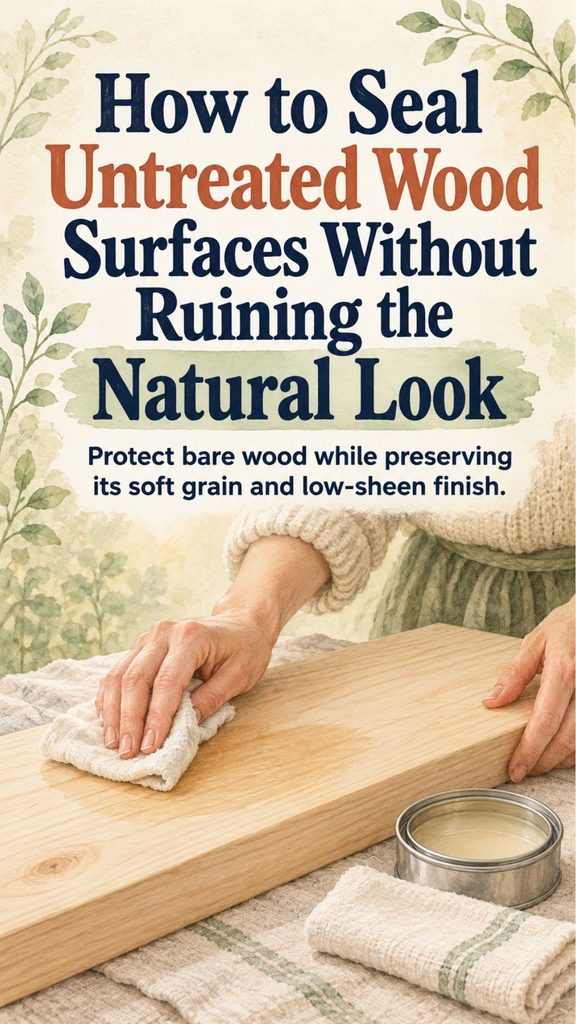
Untreated wood has a beauty that is easy to lose under the wrong finish. Pale pine can suddenly turn amber, delicate grain can become overly glossy, and a poorly chosen oil may leave the surface greasy instead of protected.
That is why homemade recipes promising to “seal wood naturally” can be tempting. One commonly shared version combines vinegar with canola oil and instructs you to rub the mixture into bare wood.
There is a problem with that approach: canola oil is not a good permanent wood finish.
You Might Also Like:
- Loading posts...
Wood-finishing oils work best when they are capable of curing through oxidation and forming a stable finish. Tung oil and linseed oil are classic examples of drying oils. Canola oil is considered a non-drying oil and does not form the same durable cured film. Woodworking references specifically distinguish canola and similar cooking oils from proper drying oils used for finishing wood.
If you want to protect unfinished wood while keeping its natural appearance, choosing the right finish matters much more than finding the simplest kitchen recipe.
Why Bare Wood Needs Protection
Unfinished wood can remain beautiful indoors, but it is also vulnerable.
Depending on where the item is used, bare wood can absorb:
- water
- cooking oils
- fingerprints
- dirt
- food stains
- spills
- humidity
Repeated wetting and drying may also cause some wood to swell, roughen, warp, or crack.
A finish reduces direct contact between the wood fibers and whatever lands on the surface. Different finishes provide different levels of protection, however.
An oil finish that penetrates into the wood behaves very differently from polyurethane, shellac, varnish, wax, or a water-based clear coat.
Before choosing anything, decide what you actually need the wood to withstand.
Why Canola Oil Isn’t a Good Wood Sealer
Canola oil is convenient because many people already have it in the kitchen.
That does not make it a suitable furniture finish.
Unlike tung and linseed oils, which can cure through oxidation, canola oil is generally classified among oils that do not form a reliable hard finish on wood. Traditional wood-finishing sources specifically warn against using non-drying cooking oils such as canola or olive oil as substitutes for true finishing oils.
Instead of forming a durable protective layer, cooking oil may remain oily for a long time and can eventually develop unpleasant odors as it deteriorates.
That is especially undesirable on furniture, shelves, decorative woodwork, or other items you hope to keep for years.
A surface may initially look richer after cooking oil is applied, but making wood darker or shinier is not the same as properly finishing it.
What About Mixing Vinegar With Oil?
Vinegar is useful for many household cleaning jobs, but adding it to cooking oil does not transform the oil into a durable wood finish.
Oil and vinegar naturally separate. Shaking them may temporarily disperse one through the other, but without an appropriate emulsifying system they will separate again.
More importantly, vinegar does not solve the main problem: canola oil still does not behave like a true drying finish.
If you are preparing unfinished wood for finishing, the better approach is to clean and prepare the surface properly and then apply a product designed for wood.
Choose the Finish Based on the Project
There is no single best finish for every untreated wooden surface.
A decorative shelf, dining table, cutting board, garden bench, and wooden spoon all have different requirements.
For Indoor Furniture With a Natural Appearance
If you want the wood to retain a hand-rubbed, low-sheen appearance, a true drying oil can be attractive.
Two traditional options are:
Pure tung oil. Tung oil cures through oxidation and can provide a water-resistant finish after appropriate application and curing. Research into natural oil finishes has found tung oil capable of producing hydrophobic wood surfaces as it cures.
Linseed-based finishes. Linseed oil is another traditional drying oil. It penetrates the wood and enhances the grain, although it generally adds warmth or an amber tone. Commercial “boiled linseed oil” often contains drying agents, so always read the label rather than assuming all linseed-oil products are identical.
Both change the appearance of bare wood to some degree.
If maintaining a very pale raw-wood appearance is your priority, an oil may not be the best choice.
What If You Don’t Want the Wood to Darken?
Nearly every finish changes bare wood at least slightly.
Oil finishes tend to deepen the grain and give wood a richer or “wet” appearance. Linseed oil in particular can add an amber tone.
For pale woods where minimal color change is important, a clear water-based wood finish is often a better direction than an oil.
Look for a product specifically described by the manufacturer as non-yellowing or designed to preserve a natural appearance.
Test it first on an offcut or an inconspicuous part of the project.
This simple test is one of the most useful steps in wood finishing because different species react differently. A finish that looks nearly invisible on maple may noticeably deepen pine, oak, or walnut.
How to Prepare Untreated Wood Before Finishing
A good finish cannot compensate for poor surface preparation.
Start with wood that is clean and completely dry.
If necessary, sand the surface progressively until it feels smooth and even. The exact grit depends on the wood and finish, so follow the finish manufacturer’s instructions rather than automatically sanding as finely as possible.
After sanding, remove the dust thoroughly.
Do not coat over:
- grease
- wax
- old cooking oil
- damp wood
- heavy dust
- unknown residues
Anything trapped beneath the finish can interfere with absorption, adhesion, or appearance.
If the wood has previously been coated with vegetable oil, additional cleaning or sanding may be needed before applying a proper finish.
How to Apply a Penetrating Oil Finish
Application varies by product, so the label should always take priority.
For many pure penetrating oils, the general process is straightforward.
Apply a thin, even coat to clean bare wood with an appropriate cloth or brush.
Allow the finish to penetrate for the period recommended by the manufacturer.
Then wipe away all excess rather than leaving puddles sitting on the surface.
Allow the coat to cure before adding another.
Several thin applications generally produce a better result than flooding the surface with one extremely heavy coat.
Pure oil finishes can require multiple applications and substantial curing time. They are not necessarily the quickest option, but they can produce a natural-looking finish that is easy to renew.
Do Not Confuse Drying With Curing
A surface can feel dry before the finish underneath has fully cured.
This matters particularly with oils.
Drying oils cure through reactions with oxygen. Tung and linseed oils gradually polymerize rather than simply having their liquid portion evaporate.
Give each coat adequate ventilation and follow the manufacturer’s specified drying and curing schedule.
Putting objects onto a finish too soon can cause sticking, marks, or uneven curing.
What Should You Use on Cutting Boards and Wooden Utensils?
Food-contact wood requires more careful product selection.
Do not assume a finish is appropriate for a cutting board simply because the ingredients sound natural.
Choose a product specifically intended or labeled for the intended food-contact application and follow its curing instructions.
Food-grade mineral oil is commonly used to maintain cutting boards and wooden utensils. Unlike a drying oil, however, mineral oil does not cure into a hard permanent film, so it needs periodic reapplication.
Some products combine mineral oil with beeswax to give the surface additional water repellency.
Certain pure drying-oil products may also be suitable for food-contact surfaces, but formulations differ. Check the manufacturer’s labeling rather than substituting an ordinary furniture finish.
And avoid simply reaching for olive, canola, or other everyday cooking oils. Woodworking guidance warns that vegetable cooking oils may become rancid when left in wood over time.
What About Outdoor Untreated Wood?
Outdoor wood faces a much harsher environment than indoor furniture.
Rain, sunlight, repeated moisture changes, temperature swings, and biological growth all put stress on the material.
A simple homemade oil treatment should not be expected to provide the same protection as an exterior product designed for those conditions.
For outdoor furniture, fences, planters, and similar projects, choose a finish specifically rated for exterior wood.
Pay attention to:
- moisture resistance
- UV protection
- suitability for the particular wood species
- reapplication requirements
- whether the product is appropriate around food or plants, when relevant
Outdoor finishes require maintenance. Even a good exterior coating will eventually need inspection and renewal.
A Critical Safety Rule for Oil-Soaked Rags
Drying oils introduce one important safety issue that should never be ignored.
Rags containing linseed oil and some other oil-based finishes can generate heat as the oil oxidizes. If oily rags are crumpled together, that heat can accumulate and cause spontaneous combustion.
This is a real fire hazard, not an exaggerated warning. The U.S. National Park Service has documented fires caused by linseed-oil-soaked rags and advises preventing heat from accumulating in piles.
Follow the disposal instructions printed on your finishing product.
Never casually throw wet finishing rags into a pile, laundry basket, cardboard box, or ordinary trash where heat can build.
The Simplest Way to Protect Untreated Wood
There is no need to invent a complicated homemade mixture.
For most projects, the better process is:
- Identify how the wooden item will be used.
- Clean and sand the surface appropriately.
- Choose a finish designed for that purpose.
- Test it on an inconspicuous area.
- Apply thin coats according to the manufacturer’s directions.
- Allow adequate drying and curing time.
- Maintain or recoat the finish when necessary.
If your main goal is a traditional hand-rubbed appearance, a genuine drying oil such as tung or an appropriate linseed-based finish may be suitable.
If keeping pale wood looking as close to unfinished as possible matters most, investigate clear water-based finishes specifically designed to minimize color change.
If the item will touch food, select a finish intended for that application.
And if it will live outside, use a product formulated for exterior exposure.
Keep the Natural Beauty Without Using the Wrong Oil
Untreated wood does not need to be smothered under a thick glossy coating, but it does deserve a finish suited to its job.
The tempting vinegar-and-canola-oil shortcut is not a reliable substitute for a real wood finish. Canola oil does not cure like traditional drying oils, and vinegar does not change that fundamental limitation.
A better result comes from understanding what the surface needs.
Choose the right finish, apply it carefully, and let it cure properly. You can protect the wood while still preserving the grain, texture, and simple natural character that made you want to leave it looking unfinished in the first place.