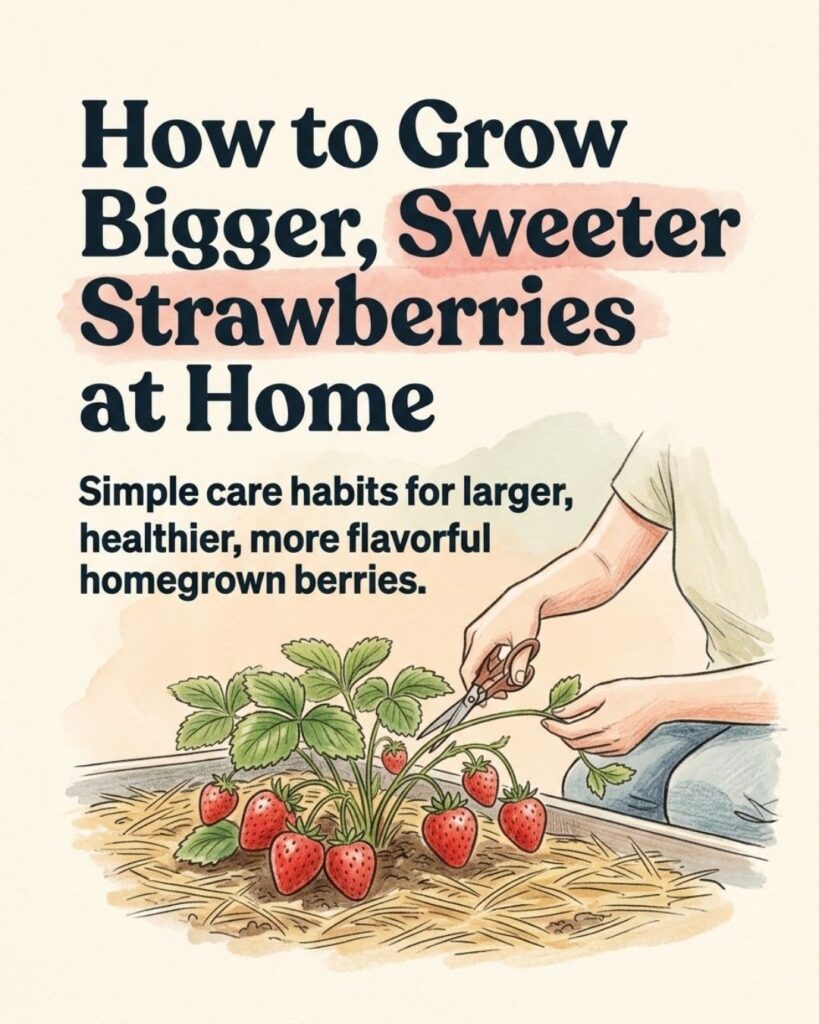
Growing large strawberries is less about finding one secret trick and more about helping each plant put its energy into healthy roots, leaves, flowers, and fruit. Variety matters, but so do sunlight, soil fertility, moisture, plant spacing, runner management, pollination, and the age of the planting.
A neglected strawberry bed can become crowded surprisingly quickly. Runners root wherever they find open soil, older plants compete with younger ones, weeds take moisture and nutrients, and fruit becomes harder to harvest before slugs, birds, or rot reach it. A well-managed patch, on the other hand, can produce larger, cleaner berries for several seasons.
The good news is that strawberries do not require complicated care. Give them the right growing conditions, control overcrowding, and renew the planting regularly, and you have already addressed most of the factors that influence fruit size and quality.
You Might Also Like:
- Loading posts...
Start With a Variety Known for Good Fruit Size
Before changing fertilizer, pruning flowers, or removing runners, remember that genetics puts a limit on how large a strawberry can become.
Some cultivars naturally produce large berries, while others are valued more for intense flavor, cold tolerance, disease resistance, or a long harvest season. A perfectly maintained small-fruited cultivar will not suddenly produce supermarket-sized berries.
Choose a variety suited to your climate and your priorities. Local nurseries, extension recommendations, and regional growers are often better guides than choosing a plant solely because a label shows enormous fruit.
Strawberries are commonly grouped into several fruiting types.
June-Bearing Strawberries
June-bearing strawberries typically produce one concentrated crop over a few weeks, although the actual harvest date depends heavily on climate and cultivar. In warmer areas, harvest may occur well before June.
These plants often produce numerous runners and are commonly grown in matted-row systems, where selected daughter plants are allowed to root and fill part of the bed.
Everbearing Strawberries
Traditional everbearing varieties usually produce more than one flush of fruit during the growing season rather than one large crop.
They should not be confused with all day-neutral varieties, even though the terms are sometimes used loosely by gardeners and plant sellers.
Day-Neutral Strawberries
Day-neutral strawberries can flower and fruit repeatedly while temperatures remain suitable. They are especially useful for gardeners who prefer a longer harvest instead of one concentrated crop.
Whichever type you choose, good care has more influence on fruit quality than the label alone.
Give Strawberries Plenty of Sun
Strawberries can survive with some shade, but strong fruit production generally requires abundant sunlight.
Choose a location receiving at least six hours of direct sun on most days, with more sun often being beneficial where summer heat is not extreme.
Insufficient light can result in weaker plants, fewer flowers, slower ripening, and less flavorful fruit.
Avoid placing the bed beside aggressive trees or shrubs whose roots compete heavily for moisture and nutrients.
Good air movement is helpful as well. Dense, constantly damp foliage creates favorable conditions for several fungal diseases, so avoid squeezing plants into an enclosed corner simply because the space is available.
Prepare Loose, Well-Drained Soil
Strawberries dislike sitting in waterlogged ground.
Their roots need moisture, but they also need oxygen. Heavy soil that remains saturated after rainfall can contribute to root problems and poor growth.
Before planting, improve the bed with well-decomposed compost if the soil is low in organic matter. Compost can improve soil structure and water-holding capacity while supplying modest amounts of nutrients.
Raised beds can be useful in locations where drainage is poor, but they are not essential if the existing soil drains adequately.
Strawberries generally perform best in slightly acidic soil. If you are establishing a permanent bed and want to manage fertility precisely, a soil test is much more useful than guessing how much fertilizer or manure to add.
Avoid assuming that more fertility always produces larger berries. Excessive nitrogen can encourage abundant leafy growth without providing a corresponding improvement in fruit production.
Plant the Crown at the Correct Depth
One of the easiest ways to weaken a strawberry plant is to bury it incorrectly.
The crown is the short central portion of the plant where the leaves emerge above the roots.
After planting:
- The roots should be fully covered with soil.
- The crown should sit roughly at soil level.
- The growing point should remain above the soil.
- Roots should not be left exposed.
Planting too deeply can bury the crown and encourage rot. Planting too high can expose roots, allowing them to dry out.
Spread the roots naturally in the planting hole rather than forcing them into a tight ball. Firm the soil gently around the roots and water after planting to settle the soil.
Container-grown strawberries should be planted at approximately the same depth at which they were growing in their nursery pots.
Avoid Crowding the Plants
Crowding is one of the biggest problems in older strawberry beds.
Strawberry plants reproduce through runners, also known as stolons. A runner extends from the parent plant and forms a daughter plant that can root into nearby soil.
This is useful for propagation, but uncontrolled runners can eventually create a dense mat of plants.
Once the patch becomes crowded, plants compete for:
- sunlight
- root space
- water
- nutrients
Air circulation also declines, and harvesting becomes more difficult.
If your priority is large fruit rather than producing as many new plants as possible, remove unwanted runners during the growing season.
Cut them rather than pulling them forcefully from the mother plant, which can disturb the roots.
Should You Remove Strawberry Flowers to Get Bigger Fruit?
This is an area where gardening advice often becomes oversimplified.
Reducing the number of fruits on a plant can sometimes allow the remaining fruit to receive a greater share of the plant’s resources. However, routinely removing half the flowers from every established strawberry plant is not a universal requirement for growing large berries.
For most home gardeners, improving light, moisture, nutrition, plant spacing, cultivar selection, and pollination is a better first strategy.
Flower removal is particularly useful during establishment.
Newly planted strawberries need to develop roots and foliage as well as fruit. Depending on the strawberry type, planting date, and production system, removing some or all early flowers may help young plants establish before they carry a substantial crop.
After plants are established, aggressively thinning flowers can reduce the total harvest and is not normally necessary for ordinary backyard strawberry production.
If you want exceptionally large exhibition-style fruit, deliberately reducing crop load is something you can experiment with. Just understand the tradeoff: fewer flowers mean fewer potential strawberries.
Remove Runners When Fruit Is the Priority
Runner production requires energy.
If you want established plants to concentrate primarily on fruit production, regularly cutting unwanted runners is a practical management step.
Check the bed every week or two during periods of rapid growth. Snip runners near the parent plant with clean scissors or pruners.
Do not assume that removing runners alone guarantees enormous strawberries. It simply reduces one source of competition for the plant’s resources.
You can also use the healthiest runners to create replacement plants.
Use Runners to Renew Your Strawberry Patch
Buying new strawberry plants every few years is not always necessary.
Healthy daughter plants produced by vigorous parent plants can be rooted and moved into a new section of the garden.
A simple propagation method is:
- Select a healthy runner connected to a vigorous plant.
- Allow the first strong daughter plant to rest on the soil or in a small pot filled with growing mix.
- Pin it gently in place if necessary.
- Keep the rooting area moist.
- Wait until the daughter plant has developed its own roots.
- Cut the runner connecting it to the parent.
- Transplant it if needed.
Do not cut a runner immediately and expect an unrooted daughter plant to establish as reliably as one that has already formed a useful root system.
Keeping young replacement plants in a clearly marked section can make bed renewal easier.
Water Consistently While Fruit Is Developing
Strawberries contain a great deal of water, so irregular moisture can have a noticeable effect on fruit development.
Long dry periods can reduce berry size, while suddenly saturating dry soil creates another set of problems.
Aim for consistently moist soil without keeping the root zone soggy.
Drip irrigation or soaker hoses can work particularly well because they deliver water near the roots while keeping much of the foliage and fruit dry.
If you use overhead irrigation, watering earlier in the day is preferable to repeatedly soaking the foliage late in the evening. Leaves that remain wet for extended periods can be more vulnerable to disease.
Do not automatically water every morning regardless of conditions. How often strawberries need irrigation depends on:
- temperature
- rainfall
- soil type
- container size
- wind
- plant size
- stage of fruit development
Check the soil rather than relying solely on the calendar.
Container-grown strawberries require closer attention because their growing medium can dry much faster than garden soil.
Mulch the Bed
A layer of mulch can solve several strawberry-growing problems at once.
Straw is commonly used because it helps suppress weeds, conserve moisture, and keep developing berries from resting directly on wet soil.
Other suitable mulching materials may work as well, depending on your garden and climate.
Keep mulch from being piled thickly over the crowns themselves.
Mulch provides several benefits:
- fewer weeds competing with strawberries
- more even soil moisture
- cleaner fruit after rain
- reduced contact between berries and soil
- easier harvesting
If you use wood-based materials such as sawdust, be thoughtful about how they are managed. Fresh woody material incorporated into the soil can temporarily tie up available nitrogen as it decomposes. Using appropriate mulch on the surface is different from mixing large quantities of fresh sawdust directly into the root zone.
Feed Strawberries Without Overdoing It
Compost can be valuable in a strawberry bed, but more fertilizer is not always better.
Excessive nitrogen may create lush foliage at the expense of balanced fruit production and can leave dense plants more difficult to manage.
If growth is weak or leaves suggest a nutritional problem, test the soil before repeatedly adding fertilizer.
Established June-bearing beds are often fertilized differently from continuously fruiting day-neutral plantings, so a single feeding schedule does not fit every strawberry system.
The safest approach is to follow recommendations for your strawberry type and local soil conditions.
Help Flowers Get Fully Pollinated
A berry that develops unevenly or remains misshapen may not always be suffering from poor nutrition.
Strawberry flowers require good pollination for the fruit to develop evenly. Each successfully fertilized structure on the flower helps stimulate growth in the surrounding fruit tissue.
Poor pollination can contribute to oddly shaped berries.
Encourage pollinating insects by maintaining a garden with flowering plants and minimizing unnecessary insecticide use, particularly while strawberries are blooming.
Weather also matters. Cold, wet, or windy conditions during flowering can reduce pollinator activity even in a well-designed garden.
Keep Weeds Under Control
Weeds may seem like a cosmetic problem, but they compete directly with strawberries.
A strawberry bed should not have to share its water, sunlight, and nutrients with aggressive weeds.
Pull young weeds before they become established, taking care not to disturb shallow strawberry roots.
Mulching makes this job far easier.
Perennial weeds are particularly troublesome once they become woven through a mature strawberry bed. If an old planting is badly infested, starting a clean replacement bed may be easier than endlessly trying to rescue the original patch.
Protect Ripening Berries From Slugs and Snails
Few things are more frustrating than watching a large strawberry ripen only to discover a hole in it the day before harvest.
Slugs and snails tend to be particularly troublesome where conditions remain damp and there are plenty of hiding places.
Start with basic habitat management:
- remove excessive decaying debris
- avoid unnecessarily wetting the entire bed
- keep fruit off bare soil with mulch
- harvest ripe fruit promptly
- inspect beneath boards, pots, and dense vegetation
Copper barriers may help in certain container or raised-bed situations if they create a continuous barrier that pests must cross.
Be cautious with claims that crushed eggshells reliably control slugs. They are frequently recommended as a home remedy, but they should not be relied on as the main defense.
Diatomaceous earth also loses much of its usefulness once it becomes wet, making it difficult to depend on in a regularly irrigated strawberry bed.
Protect Strawberries From Birds
Birds can learn exactly when strawberries are nearly ripe.
Physical exclusion is generally the most dependable way to protect fruit, but poorly installed loose netting can trap wildlife.
If using bird netting, choose and install it carefully. Keep it taut, secure the edges, and inspect the structure regularly so birds cannot easily crawl underneath or become entangled.
A rigid frame supporting the barrier above the plants is generally easier to manage than throwing loose netting directly over the foliage.
Painted strawberry-shaped stones are sometimes used as a garden deterrent. Gardeners may enjoy experimenting with them, but they should not be treated as a guaranteed substitute for a well-installed physical barrier.
Replace Declining Plants Rather Than Keeping Them Forever
A strawberry plant does not necessarily become useless the moment it reaches a particular birthday. There is no universal rule that every plant must be thrown away at exactly three years old.
However, strawberry plantings commonly decline over time.
Older beds tend to become crowded, accumulate disease pressure, fill with weeds, and produce smaller or less consistent crops if they are not renovated.
That is why regular renewal is so useful.
Instead of trying to preserve every original plant indefinitely, establish healthy young plants periodically and remove sections that are clearly declining.
A two-bed system can make this easy.
For example, one area can contain established fruiting plants while another contains newer daughter plants. As the older bed loses productivity, the younger planting can take its place.
This also prevents the common problem of looking at an overcrowded strawberry patch after several years and having no idea which plants are young and which belong to the original planting.
Growing Large Strawberries in Containers
You do not need a traditional garden bed.
Strawberries can perform well in:
- large pots
- raised planters
- hanging containers
- grow bags
- vertical growing systems
Containers are especially useful where garden soil drains poorly or where space is limited.
The tradeoff is that containers dry out more rapidly and have a smaller reserve of nutrients.
Choose a container with drainage holes and enough growing volume to keep the roots from drying excessively between waterings.
Crowding ten strawberry plants into a container designed for three will not produce a better harvest. Give each plant enough light and root space.
During hot weather, check container moisture frequently.
A Better Strategy for Growing Jumbo Strawberries
If your goal is bigger berries, focus first on the factors that make the greatest difference.
Start with a vigorous, large-fruited cultivar suited to your climate. Plant it at the correct depth in fertile, well-drained soil and give it plenty of sunlight.
Then keep the bed productive by controlling runners, preventing overcrowding, maintaining steady moisture, removing weeds, supporting pollination, and replacing declining plants.
Flower thinning can be used selectively, especially if your goal is fewer but exceptionally large berries, but it should not be treated as the single secret to strawberry size.
Large strawberries are usually the result of several favorable conditions working together.
A Simple Strawberry Maintenance Routine
For an established home strawberry patch, the routine can remain surprisingly manageable.
During active growth, check moisture regularly and remove weeds before they become established. Cut runners you do not need. Inspect developing berries for pest damage and harvest ripe fruit promptly.
After the main harvest of appropriate June-bearing plantings, renovate the bed according to the needs of your particular growing system rather than allowing every runner to root wherever it lands.
Keep a few vigorous daughter plants when you need replacements.
Each year, evaluate the bed instead of automatically maintaining every plant. Remove weak, diseased, severely crowded, or poorly producing sections and replace them with healthy young plants as needed.
With good sunlight, proper planting, consistent moisture, sensible fertility, good pollination, and enough room for each plant to grow, strawberries have what they need to reach their natural potential. You may harvest fewer giant berries than a crowded bed produces small ones, but a healthy, well-managed patch gives you something more useful: dependable crops of large, flavorful strawberries season after season.