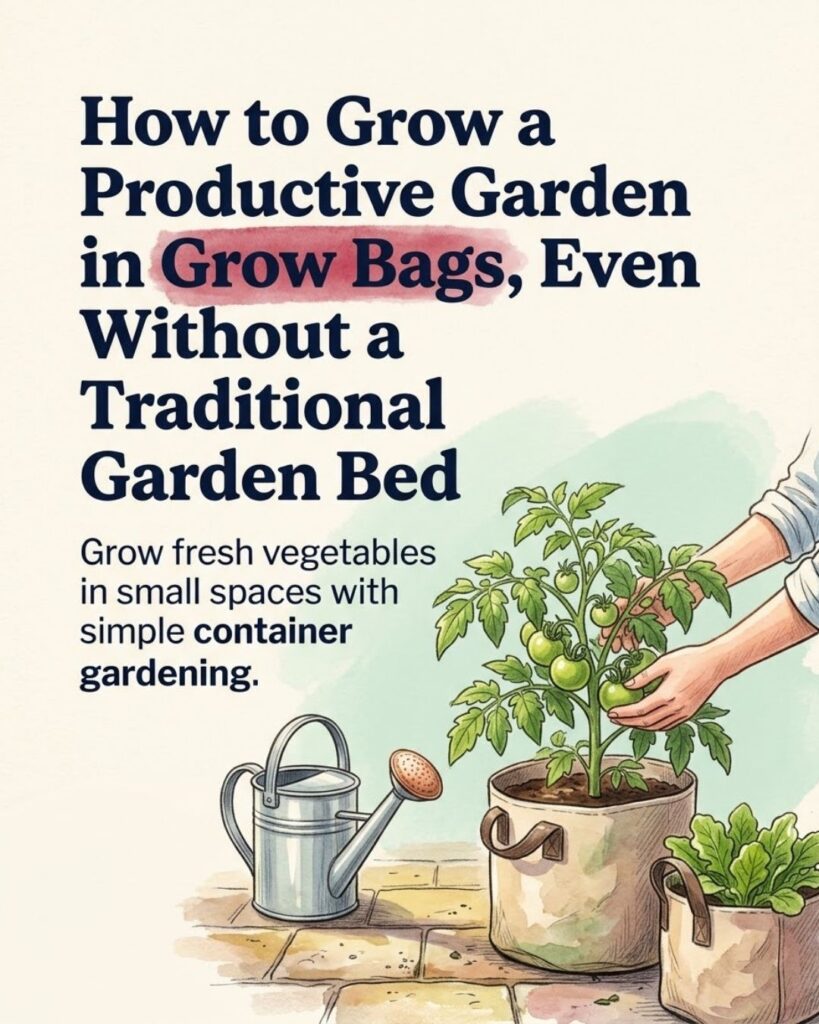
You do not need a backyard full of soil to grow fresh vegetables. A sunny patio, driveway edge, balcony, side yard, or small urban space can be enough to produce herbs, leafy greens, peppers, tomatoes, potatoes, and other crops when you use grow bags.
Fabric grow bags are especially useful when digging into the ground is not practical. They are portable, relatively inexpensive, and easy to arrange around the space you have. They can also make it possible for renters, apartment dwellers, and gardeners with poor native soil to grow food without building permanent beds.
The trick is not simply filling a bag with dirt and planting something in it. Container-grown plants have different needs from plants growing directly in the ground. Drainage, soil volume, watering, nutrition, spacing, and sunlight all become more important because the plants have a limited root environment.
You Might Also Like:
- Loading posts...
With a little planning before you plant, a grow-bag garden can be surprisingly productive.
Start With Sunlight, Not the Bags
Before buying soil or seedlings, look at your growing area during the day.
Most vegetables need several hours of direct sunlight to grow well, although exact requirements vary by crop. Fruiting vegetables such as tomatoes, peppers, cucumbers, beans, and squash generally perform best in a sunny location.
Leafy crops such as lettuce and some herbs can tolerate less direct sun than tomatoes, but they still need adequate light.
Watch the area at different times of day rather than judging it from one quick glance. A location that looks sunny in the morning might become shaded by a building, fence, tree, or neighboring structure in the afternoon.
Once you know where the strongest light is, arrange the bags there whenever possible.
Sunlight is difficult to compensate for later. If a tomato plant spends most of the day in deep shade, adding more fertilizer will not solve the underlying problem.
Choose the Right Grow Bag
Grow bags come in many sizes, depths, and materials. The best size depends on what you want to grow.
Small containers can work well for crops with modest root systems, including:
- Lettuce
- Radishes
- Many herbs
- Green onions
- Some compact flowers
Medium-sized bags can accommodate crops such as peppers, bush beans, kale, and strawberries.
Larger bags provide the root space needed by bigger plants such as tomatoes, potatoes, cucumbers, and some varieties of squash.
Do not choose a container solely because the plant fits above the soil. The root system needs adequate volume as well.
Check the mature size of the variety you are planting before deciding how many plants belong in one bag. A small seedling can make an enormous plant later in the season.
Drainage Is Essential
One of the biggest advantages of fabric grow bags is their ability to drain excess water through the sides and bottom.
That is useful because roots need both water and air. Permanently saturated growing media can reduce the amount of oxygen available around the roots and create conditions that encourage root problems.
Never use a planting bag that has no reliable drainage.
At the same time, good drainage does not mean you should let the plants become bone-dry. Grow bags can lose moisture relatively quickly, particularly during hot, dry weather.
The goal is consistent moisture without keeping the root zone saturated.
Place the bags somewhere water can drain freely. A grow bag sitting on a completely impermeable surface may still create drainage problems if water has nowhere to go.
Use a Quality Container Growing Mix
Ordinary garden soil is usually a poor choice for containers when used by itself.
Garden soil can become dense inside a container, restricting drainage and making it harder for roots to grow through the growing medium. It can also become surprisingly heavy.
A quality potting or container mix is generally a better starting point.
You can incorporate compost to provide organic matter and nutrients, but avoid assuming that more compost is always better. Plants still need an appropriate balance of air, water, and nutrients around their roots.
The finished mix should be loose enough to allow water to move through it while retaining enough moisture to support the plant between waterings.
Fill the Bags Properly
Fill the grow bags with the selected growing mix while leaving some space at the top.
A small gap gives you room to water without immediately washing soil over the edge.
Do not pack the mix down hard to make it fit. Lightly settling the material is fine, but aggressively compressing it defeats one of the reasons for using a loose container mix in the first place.
As the season progresses, the growing medium may settle. Add more suitable mix if necessary rather than allowing plant roots to become exposed.
Match the Plant to the Container
Not every crop belongs in every size of bag.
This is where many first-time container gardeners run into trouble. A tomato seedling might look perfectly comfortable in a small bag in May, but its roots and foliage will demand much more space as the plant matures.
Think about the plant you are going to have, not the tiny plant you are buying.
Small Bags
Use smaller bags for compact crops such as:
- Lettuce
- Radishes
- Herbs
- Green onions
- Small flowers
Medium Bags
Medium containers are suitable for many:
- Peppers
- Bush beans
- Kale
- Strawberries
- Compact greens
Large Bags
Larger bags are better suited to plants with substantial root systems, including:
- Tomatoes
- Potatoes
- Cucumbers
- Zucchini
- Larger squash varieties
Always check the recommended spacing and container requirements for the specific variety. “Tomato” or “cucumber” is not one single plant size; varieties can differ dramatically.
Give Vining Plants Support Early
If you are growing climbing tomatoes, cucumbers, peas, or beans, install their support before the plant becomes large.
A stake, cage, trellis, or other appropriate support can prevent sprawling and make harvesting easier.
Installing support early also reduces the chance of disturbing the plant’s roots later.
For tomatoes, choose a support appropriate for the variety. A small determinate tomato and a vigorous indeterminate variety can have very different support requirements.
Cucumbers and beans may climb readily once they reach a trellis, but young plants sometimes need gentle guidance.
Use soft ties rather than tightly wrapping stems with thin wire or rigid material.
Expect to Water More Often
This is one of the biggest differences between grow bags and an in-ground garden.
The soil in the ground is surrounded by a much larger volume of soil. A container has a limited amount of growing medium, and fabric bags allow moisture to escape from more than just the surface.
During hot or windy weather, a grow bag can dry surprisingly quickly.
Rather than relying on a fixed watering schedule, check the plants and growing medium regularly. A finger test near the surface can provide a quick indication of whether the mix is becoming dry, although the surface alone does not always tell you what is happening deeper in a large container.
Large plants may require more frequent watering than young seedlings.
When you water, apply enough to moisten the root zone thoroughly, while allowing excess water to drain away. Avoid repeatedly giving a large plant only a tiny splash of water if the deeper roots remain dry.
In very hot weather, checking containers daily is often sensible.
Mulch Can Help Reduce Moisture Loss
A layer of suitable organic mulch can help protect the surface of the growing medium from direct sun and reduce evaporation.
Straw, shredded leaves, or other appropriate mulch materials can be useful.
Keep mulch from being piled directly against plant stems. A little space around the base reduces the chance of keeping the stem excessively damp.
Mulch also helps reduce weeds that might otherwise compete with container plants for water and nutrients.
The layer does not need to be enormous. The purpose is to cover the soil surface without creating a thick, soggy layer around the plant.
Container Plants Need Regular Nutrition
A grow bag contains a limited amount of growing medium, and nutrients can be removed when water drains through the container.
Plants also continuously take nutrients from the growing medium as they grow.
That means container vegetables may need supplemental feeding during a long growing season.
Start with a quality growing medium that contains appropriate nutrients, then follow the instructions for any fertilizer you choose. A balanced vegetable fertilizer can be useful, but the correct product and application rate depend on the crop, growing medium, and fertilizer formulation.
More fertilizer is not necessarily better.
Excess nutrients can damage plants and may encourage excessive leafy growth at the expense of the harvest for certain crops. Follow the product label rather than applying fertilizer by guesswork.
Compost can contribute organic matter and nutrients, but it should not automatically be treated as a complete replacement for crop-specific fertilization.
Give the Bags Enough Space
It can be tempting to squeeze as many grow bags as possible into a small area.
Resist that temptation.
Plants need room for their leaves to develop, and gardeners need room to water, inspect, prune, and harvest.
Crowded foliage can also reduce air movement around plants. Good spacing will not prevent every plant disease, but it can make the growing area easier to manage and can help foliage dry more quickly after watering or rain.
Think about the mature size of each plant when arranging the bags, not just the size of the seedlings on planting day.
Place Tall Crops Carefully
Container gardens can become surprisingly tall.
A tomato plant, cucumber trellis, or climbing bean can eventually block light from shorter plants behind it.
Arrange taller crops so they do not unnecessarily shade sun-loving plants.
If your space is narrow, you may need to use the available sunlight more deliberately. Put shorter crops where they can still receive adequate light and reserve the strongest vertical structures for the crops that need them.
This simple planning step can make a noticeable difference in a small garden.
Keep an Eye on Wind
Grow bags can be portable, but portability can become a disadvantage in exposed locations.
A large bag filled with wet growing medium is heavy, but a lightweight bag containing a tall plant can still become unstable, especially when the foliage catches strong wind.
This matters particularly for tomatoes, peppers and plants growing on trellises.
If your garden is exposed, place bags against a protected wall or use appropriate supports. Tall plants should be secured before strong winds arrive rather than after they have already tipped over.
Do not put a tall, heavily planted container somewhere simply because it gets good sunlight if the location is routinely exposed to damaging wind.
Make the Garden Work for Your Space
One of the best features of grow bags is flexibility.
You can begin with two or three containers instead of committing to an entire garden. If you discover that lettuce grows well in one corner but tomatoes struggle there, you can adjust your setup.
They can also be useful for renters or gardeners dealing with compact yards, patios, balconies, or areas where the existing soil is unsuitable for food production.
Another advantage is that you can dedicate different bags to different crops. Instead of preparing one large garden bed, you can experiment with individual varieties and growing methods.
That makes grow bags a particularly approachable way to learn.
Common Grow-Bag Mistakes to Avoid
A few problems appear repeatedly in container gardens.
Using a container that is too small: The plant may survive, but restricted root space can make watering and nutrient management more difficult.
Using heavy garden soil: It can compact and drain poorly inside a container.
Ignoring drainage: Waterlogged roots can quickly become a serious problem.
Planting too densely: A crowded bag can become difficult to water, harvest, and maintain.
Waiting too long to install supports: Once roots and stems are established, adding a trellis can be much more disruptive.
Following a rigid watering schedule: Weather and plant demand change. Check the growing medium instead.
Overfertilizing: More fertilizer does not automatically produce more vegetables.
Ignoring the mature plant size: A seedling may fit perfectly today while being completely unsuitable for the same container later.
A Small Garden Can Still Produce a Useful Harvest
Grow bags are not a replacement for every type of garden, but they solve a real problem: they allow plants to be grown where traditional beds are impractical.
The most important decisions happen before the first seed goes into the soil. Choose a sunny location, use containers with adequate volume and drainage, select a suitable growing mix, and match each crop to the space it actually needs.
From there, pay attention to watering, nutrition, support, spacing, and weather.
Start small rather than filling every available corner with bags. A few healthy containers can teach you more than a crowded garden that becomes difficult to manage.
With the right setup, even a patio, driveway edge, side yard, or other small space can become a productive place to grow fresh herbs and vegetables.