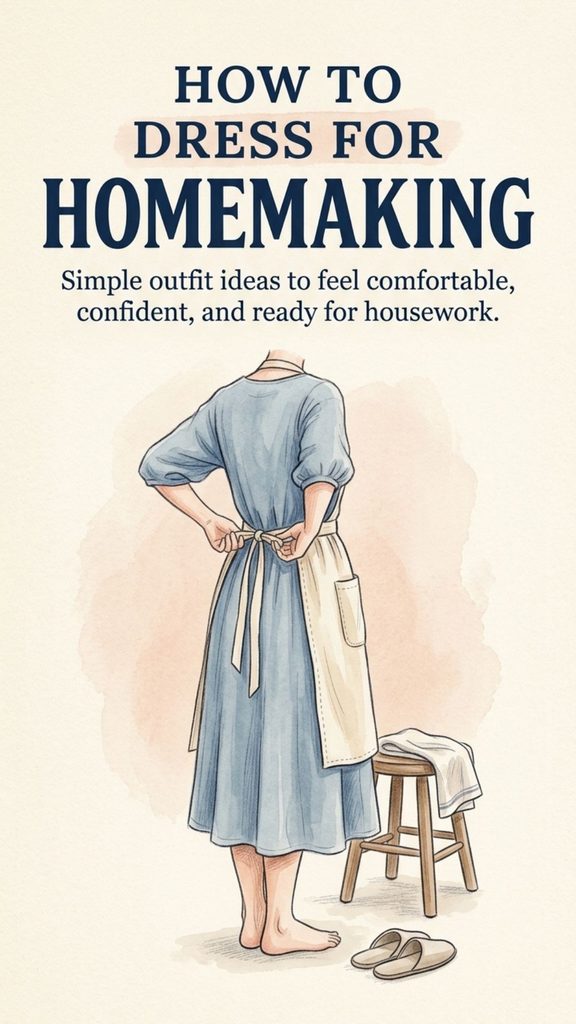
There’s something lovely about getting dressed for an ordinary day at home. Not because anyone is coming over, not because you have somewhere important to go, but simply because you want to feel comfortable, confident, and prepared for whatever the day brings.
Homemaking involves so much more than sitting around the house. There are meals to prepare, rooms to tidy, laundry to wash, errands to run, and sometimes children, pets, or garden projects to care for. Your clothing needs to work with you through all those activities.
Yet it’s easy to fall into the habit of wearing whatever happens to be closest, even when it doesn’t make you feel particularly good.
You Might Also Like:
- Loading posts...
That’s where the idea of an intentional homemaker outfit comes in.
Instead of saving your favorite comfortable clothes for special occasions, you create a simple everyday wardrobe that combines practicality with personal style.
For some homemakers, that means cotton dresses and vintage-inspired aprons. For others, it’s comfortable trousers, soft blouses, or a dependable pair of jeans.
There’s no single correct way to dress at home.
The secret is finding clothes that make everyday homemaking easier while helping you feel like yourself.
Why Your Everyday Homemaker Outfit Matters
What we wear can influence how we approach the day, although clothing alone doesn’t determine motivation, happiness, or productivity.
Think about the difference between wearing uncomfortable clothes and putting on an outfit that fits properly, feels pleasant, and suits your activities.
When you don’t have to constantly adjust your clothing or worry about ruining something delicate, household tasks can become easier to manage.
Getting dressed can also create a helpful transition between rest and daytime activities.
For someone who spends much of the day at home, a small morning routine may provide structure when there isn’t a commute or workplace schedule.
That doesn’t mean pajamas, leggings, or sweatpants are signs of laziness. Comfortable casual clothing can be entirely appropriate, especially during busy seasons of life, illness, recovery, or days spent resting.
The purpose of intentional dressing isn’t to look presentable for other people.
It’s to choose clothing that supports your comfort, confidence, and practical needs.
The Vintage House Dress: A Classic Homemaking Favorite
<text>One of the most recognizable pieces of traditional homemaking clothing is the house dress.</text>
House dresses were designed for everyday wear around the home. Many styles were relatively simple, washable, comfortable, and easy to move in.
They often featured practical details such as front buttons, roomy skirts, short sleeves, and pockets.
Today, a house dress can be a beautiful alternative to ordinary loungewear, especially if you enjoy cottagecore, vintage-inspired, or simple feminine clothing.
What Makes a Good House Dress?
The best house dress isn’t necessarily the prettiest one on the hanger.
Look for a dress that suits the work you actually do.
Useful features include:
- Soft, breathable fabric
- A relaxed but secure fit
- Pockets for small everyday items
- Sleeves that stay out of the way
- A comfortable neckline
- A length that allows safe movement
- Machine-washable construction
Cotton and linen are popular choices because they can feel comfortable in warm weather, although their care requirements and durability depend on the fabric and construction.
A cotton-blend dress may require less ironing and be easier to maintain.
For active household work, avoid extremely long hems that can catch underfoot and loose sleeves that might come near stovetop flames or equipment.
The ideal house dress feels comfortable enough for ordinary chores but presentable enough that you can answer the door or run a quick errand without changing.
7 Easy Homemaker Outfits for Everyday Life
You don’t need a large wardrobe to create attractive outfits for staying home.
A few versatile combinations can cover most household activities.
1. The Cotton House Dress and Apron
This is a classic choice for anyone who enjoys traditional homemaking style.
Choose a comfortable cotton dress in a simple color or small floral print.
Add a washable apron while cooking or completing messy household tasks.
A dress with pockets makes it easier to carry small items as you move around the house.
For cooler mornings, add a cardigan.
This outfit works especially well for meal preparation, light cleaning, and general household activities.
2. Comfortable Jeans and a Soft Blouse
If dresses aren’t your preference, a pair of comfortable jeans and a soft blouse can look polished without feeling formal.
Choose jeans with enough flexibility for bending, sitting, and walking.
Pair them with a cotton top, a simple knit shirt, or a casual button-down blouse.
This outfit can easily transition from home to grocery shopping, school pickup, or appointments.
For gardening or outdoor work, choose older, durable clothing that can tolerate dirt and wear.
3. A Midi Dress With a Cardigan
A midi dress is a versatile option for homemakers who want one easy outfit without coordinating multiple pieces.
Look for a design that allows comfortable movement and has a secure, practical hem.
Add a lightweight cardigan when the weather is cooler.
This combination works particularly well for less messy days, visiting friends, or taking care of household errands.
If you’ll be doing heavy cleaning or cooking, change into suitable workwear or use an apron where appropriate.
4. Linen Trousers and a Simple Top
Loose-fitting linen or linen-blend trousers can be comfortable during warmer months.
Pair them with a breathable cotton shirt or lightweight knit top.
The outfit feels relaxed while still looking intentional.
Choose trousers with a waistband that doesn’t dig in when you sit or bend.
Since linen wrinkles naturally, consider whether you’re comfortable with its lived-in appearance or would prefer an easier-care blend.
5. A Simple T-Shirt Dress
A soft T-shirt dress is an easy alternative to traditional loungewear.
It requires little styling and can be comfortable for many everyday activities.
Look for a fabric that isn’t overly thin and a fit that allows you to move freely.
Add leggings underneath if you prefer more coverage or warmth.
A washable cardigan and comfortable shoes complete the outfit.
6. A Practical Gardening Outfit
Garden work often requires different clothing from indoor homemaking.
Choose durable trousers, a breathable long-sleeved shirt when sun or scratch protection is needed, and suitable closed-toe footwear.
Gardening gloves can help protect your hands from dirt and minor abrasions.
A wide-brimmed hat and sun protection may also be useful for outdoor work.
Save delicate dresses and lightweight indoor clothing for less demanding activities.
7. A Cozy Cold-Weather Homemaker Outfit
During winter, comfort and warmth become priorities.
Try soft trousers, a long-sleeved cotton shirt, a warm cardigan, and supportive indoor shoes.
A sweater dress with leggings may also work for lighter household tasks.
Layering is particularly useful because kitchens, laundry rooms, and other areas of the home may have different temperatures.
Choose clothing that provides warmth without restricting movement.
Why Every Homemaker Could Benefit From a Good Apron
An apron is one of the most practical accessories in a homemaking wardrobe.
It can protect clothing from ordinary splashes, flour, food residue, and other messes.
Instead of worrying about staining your favorite dress or blouse, you can put on an apron before preparing meals or completing suitable household tasks.
Choosing the Right Apron
A useful everyday apron should have a comfortable fit, adjustable ties, and fabric that’s easy to wash.
Large pockets can be handy for holding a small notebook, a clean cloth, or other lightweight items.
Cotton and sturdy cotton blends are common choices.
A full bib apron provides more coverage than a waist apron, making it particularly suitable for cooking and baking.
For gardening, a heavier utility apron with appropriate pockets may be more practical.
Remember that an ordinary fabric apron isn’t protective equipment for hazardous chemicals, sharp tools, or high heat.
Never use your apron as a substitute for proper oven mitts or heat-resistant potholders.
Keep loose ties and fabric away from open flames and moving appliances.
Consider Having Two Aprons
Keeping separate aprons for cooking and cleaning can help prevent transferring dirt or cleaning-product residue into food preparation areas.
Wash aprons regularly according to their care labels, especially after handling raw meat or completing particularly messy tasks.
How to Build a Small Homemaking Capsule Wardrobe
A practical homemaking wardrobe doesn’t require an overflowing closet.
In fact, fewer carefully chosen clothes can make mornings easier.
A small capsule wardrobe focuses on versatile pieces that work well together.
Here’s an example:
| Clothing Item | Suggested Quantity |
|---|---|
| Everyday house dresses | 2–3 |
| Comfortable trousers or jeans | 2–3 |
| Simple tops or blouses | 4–5 |
| Cardigans or light sweaters | 2 |
| Washable aprons | 2 |
| Comfortable indoor shoes | 1 pair |
| Durable gardening or messy-work outfit | 1–2 sets |
These quantities are suggestions, not requirements. Your laundry schedule, climate, budget, and personal style will determine what makes sense.
Choose a few coordinating colors so outfits are easy to assemble.
For example, cream, navy, sage green, soft brown, and muted florals can create a cozy vintage-inspired wardrobe.
If you prefer brighter colors or modern styles, use those instead.
The goal is to create combinations that feel natural and require very little planning.
The Best Fabrics for Everyday Homemaking Clothes
Fabric choice matters because homemaking involves movement, occasional spills, frequent washing, and changing temperatures.
Cotton
Cotton is popular for everyday dresses, shirts, and aprons.
It’s generally comfortable, breathable, and available in many weights.
Check the care label because some cotton fabrics shrink or require ironing.
Linen
Linen can be comfortable in warm weather and has a relaxed, natural appearance.
It’s particularly attractive for simple dresses and trousers.
However, it wrinkles easily and may require additional care depending on the garment.
Cotton Blends
Cotton blended with other fibers can offer a useful balance of comfort, durability, stretch, and easier maintenance.
These fabrics are often practical for everyday trousers and casual tops.
Knit Fabrics
Soft knits allow movement and can be comfortable for long days at home.
Choose fabrics that maintain their shape after washing and don’t become excessively thin.
For cooking near open flames, avoid loose, dangling garments and select clothing that is appropriate for the activity.
How to Get Dressed for Homemaking in Just 10 Minutes
Getting ready in the morning doesn’t have to involve a lengthy beauty routine.
A straightforward routine can make the process feel manageable.
Minute 1–3: Freshen Up
Wash your face if needed, brush your teeth, and complete your basic personal care routine.
Minute 4–5: Choose Your Outfit
Select an outfit based on the day’s activities.
If you’re cooking or doing household cleaning, choose durable, washable clothing.
If you’re running errands, choose something comfortable for leaving the house.
Minute 6–7: Fix Your Hair
Choose a simple hairstyle that keeps your hair comfortable and away from food, flames, and equipment.
A low bun, braid, ponytail, or simple hair clip may work well.
Minute 8–9: Add Personal Touches
Apply moisturizer, sunscreen if appropriate, or other familiar personal care products.
Makeup is entirely optional.
You might enjoy wearing a little lip color or another cosmetic, but it isn’t necessary to be a capable or confident homemaker.
Minute 10: Put on Suitable Footwear
Choose shoes or slippers that fit securely and have appropriate traction.
Loose, slippery slippers can be hazardous on wet kitchen and bathroom floors.
Now you’re ready to begin your day without spending half the morning getting dressed.
Should You Wear Shoes While Doing Housework?
Footwear is often overlooked when planning an everyday homemaker outfit.
However, standing for long periods, carrying laundry, and moving around hard floors can become uncomfortable.
Bare feet, socks, slippers, and indoor shoes all have different advantages depending on the activity and flooring.
For cooking, cleaning, and other active tasks, supportive closed-toe shoes with slip-resistant soles may be a sensible choice.
They can also provide some protection against minor bumps and dropped objects.
Choose footwear that’s comfortable and suitable for your household.
Avoid slippery soles, unstable heels, and loose shoes that could catch while walking.
How to Dress for Homemaking on a Budget
Creating a beautiful everyday wardrobe doesn’t mean purchasing everything new.
Start by looking through the clothes you already own.
You may have several dresses, blouses, or comfortable trousers that could easily become part of your homemaking wardrobe.
Try different combinations before buying anything.
Secondhand shops can be useful for finding cotton dresses, cardigans, aprons, and vintage-inspired clothing at lower prices.
Always inspect garments for stains, damaged seams, missing buttons, and care requirements.
If you sew, consider making a simple apron or repairing clothes you already have.
You might also repurpose an older dress as dedicated household workwear.
Prioritize pieces you’ll wear often rather than buying clothes purely because they look attractive in a photograph.
Dressing for Different Seasons
Your homemaking wardrobe should change with the weather and conditions in your home.
Spring: Lightweight cardigans, cotton dresses, and comfortable trousers are useful for changing temperatures.
Summer: Breathable fabrics, relaxed fits, and practical short sleeves can help you stay comfortable while working indoors. Choose additional sun protection for outdoor activities.
Autumn: Long-sleeved dresses, soft trousers, cozy cardigans, and comfortable socks are easy to layer.
Winter: Warmer knitwear, comfortable trousers, leggings beneath suitable dresses, and secure indoor footwear can make colder days more pleasant.
You don’t need an entirely different wardrobe each season.
A few adaptable layers can help you use favorite pieces throughout much of the year.
What About Hair and Makeup?
Vintage homemaking images often feature styled hair and carefully applied makeup.
Those details can be enjoyable if they match your personal preferences, but they aren’t requirements.
For everyday homemaking, practicality is often more important.
Long hair may need to be tied back during cooking or messy work.
If you enjoy makeup, a simple routine using familiar products may be convenient.
If you prefer not to wear makeup, there’s no reason to change that.
Being well groomed doesn’t have to mean spending money or time on elaborate beauty routines.
Basic hygiene, comfortable clothing, and habits that make you feel good are enough.
Personal style should serve you, not become another household responsibility.
Avoid These Common Homemaker Wardrobe Mistakes
Saving Every Nice Outfit for Special Occasions
It’s reasonable to protect delicate or expensive clothes, but ordinary attractive clothing doesn’t need to remain unworn indefinitely.
Choose durable pieces you enjoy and make them part of your everyday rotation.
Choosing Appearance Over Practicality
An outfit might look beautiful but become uncomfortable when bending, cooking, or cleaning.
Always consider the activities you’ll be doing.
Buying Too Many New Clothes at Once
You may discover that your preferred homemaking style changes after wearing it for a few weeks.
Begin with a small number of outfits and expand only when needed.
Wearing Unsafe Shoes
Slippery soles or poorly fitting footwear can increase the risk of falls, especially around wet floors.
Choose footwear appropriate to the task.
Expecting to Look Perfect Every Day
Some days will be busy, tiring, or unpredictable.
You may spend a morning in comfortable loungewear or change clothes several times because of spills.
That’s ordinary life.
A practical wardrobe should make those days easier, not create pressure to meet unrealistic expectations.
Finding Your Own Homemaking Style
The most satisfying homemaker wardrobe reflects your personality and lifestyle.
You might prefer old-fashioned cotton dresses with floral patterns and practical aprons.
You might enjoy minimalist clothing in neutral colors.
Or perhaps your favorite outfit is a comfortable pair of jeans, a soft shirt, and a cozy cardigan.
All of these can be good homemaking outfits.
Try asking yourself three simple questions when choosing what to wear:
- Can I comfortably complete today’s household activities in these clothes?
- Are these garments appropriate for the weather and tasks I’m planning?
- Do I genuinely enjoy wearing this outfit?
If the answer to all three is yes, you’ve probably found something worth keeping in your wardrobe.
Making Everyday Homemaking Feel More Enjoyable
One of the nicest things about intentional homemaker clothing is that it can turn getting ready into a small, enjoyable daily ritual.
You don’t need a special event to wear a favorite dress.
You don’t have to wait for visitors before choosing an outfit you like.
And you certainly don’t need to imitate a vintage magazine to appreciate traditional homemaking style.
A comfortable dress, a favorite apron, and practical shoes can be enough to make an ordinary day feel a little more put together.
But remember that clothing is only one small part of home life.
A well-run household depends on realistic routines, shared responsibilities, useful skills, rest, and the care people show one another.
A beautiful outfit won’t wash the dishes or fold the laundry for you, and it shouldn’t determine how much value you place on your work.
The best approach is to combine the charm of old-fashioned homemaking with the freedom and practicality of modern life.
Dress in a way that helps you feel comfortable, capable, and happy in your own home. Whether that’s a vintage house dress or your favorite soft trousers, the perfect homemaker outfit is the one that works for you.