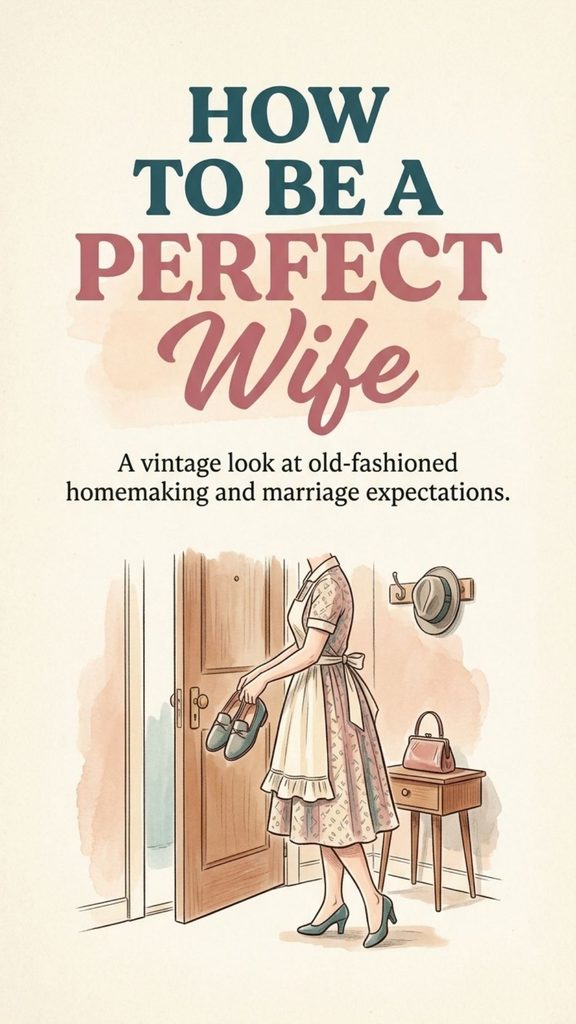
If you’ve ever come across one of those vintage housewife guides from the 1950s, you probably know exactly what to expect.
Have dinner ready when your husband gets home. Make sure the house is spotless. Look beautiful, speak softly, keep the children quiet, and never complain about your day.
And apparently, if you have his slippers and favorite drink waiting at the door, you’ve achieved the ultimate level of homemaking success!
You Might Also Like:
- Loading posts...
Looking back, some of these old-fashioned expectations seem almost comical. Others contain surprisingly practical ideas about creating a comfortable home, being thoughtful toward your partner, and appreciating the little things in everyday married life.
But here’s the important distinction: A happy marriage isn’t built by one person trying to be perfect. It’s built by two people taking care of each other.
You can appreciate vintage homemaking, enjoy traditional routines, and create a welcoming home without believing that a woman’s needs should always come last.
Let’s revisit 16 classic “perfect wife” rules and see which ideas are worth keeping, which need a modern update, and which deserve to stay in the past.
1. Have Dinner Ready When He Gets Home
One of the most famous old-fashioned housewife expectations was that dinner should be ready and waiting when the husband returned from work.
The idea was that a good meal helped create a peaceful evening.
There is something lovely about a home-cooked dinner, especially after a long day. But cooking shouldn’t automatically become one person’s responsibility simply because they’re the wife.
The modern approach:
Plan meals together based on your schedules, skills, and available time.
If one partner gets home earlier and enjoys cooking, preparing dinner can be a thoughtful gesture.
If both have busy schedules, sharing the cooking makes much more sense.
You can also make evenings easier with:
- Weekly meal planning
- Slow-cooker dinners
- Freezer meals
- Simple one-pan recipes
- Leftovers prepared intentionally
- Shared kitchen responsibilities
A warm meal can be a wonderful expression of care.
It just shouldn’t become a daily test of someone’s worth as a spouse.
2. Always Look Beautiful for Your Husband
Vintage guides often encouraged women to freshen their makeup, change clothes, and fix their hair before their husbands arrived home.
The message was clear: never let him see you looking tired.
Fortunately, marriage doesn’t require looking camera-ready every evening.
There is nothing wrong with enjoying pretty dresses, styled hair, perfume, or a little makeup. Taking pride in your appearance can be a lovely form of self-care.
But it should be something you choose because it makes you feel good.
The modern approach:
Maintain a simple personal-care routine that fits your lifestyle.
Wear clothes that make you feel comfortable and confident.
Some days that might mean a beautiful dress and freshly styled hair.
Other days it might mean leggings, a cozy sweater, and your hair in a messy bun.
Your partner should appreciate you on both kinds of days.
3. Greet Your Husband Like He’s a Celebrity
Old-fashioned advice often emphasized greeting your husband enthusiastically when he came through the door.
Even if you’d spent the day cleaning, cooking, managing children, or dealing with problems, you were expected to smile.
The exaggerated expectations are funny, but the basic idea of a warm greeting is worth keeping.
Think about how different a home can feel when the people living there acknowledge one another.
The modern approach:
Make a habit of greeting each other warmly.
A simple hug, smile, or genuine “How was your day?” can make someone feel appreciated.
This should work both ways.
If you’re the one returning from a long day, you deserve the same warmth and consideration.
Small moments of connection can matter more than elaborate gestures.
4. Have His Favorite Drink Waiting
Some vintage homemaking instructions suggested that a wife should have her husband’s favorite drink ready before he even asked.
The charming part of this tradition isn’t the drink itself.
It’s remembering something small that makes another person happy.
Maybe your partner loves coffee after work.
Perhaps you enjoy tea in the evening.
Maybe one of you appreciates a cold glass of lemonade after gardening.
The modern approach:
Surprise each other occasionally with thoughtful little gestures.
Make a favorite drink.
Prepare a snack.
Pick up something your partner enjoys while shopping.
These small kindnesses can make daily life feel more considerate.
But thoughtful gestures lose their meaning when they become compulsory.
They’re most valuable when given freely.
5. Keep His Slippers Ready
The vintage wife was apparently expected to meet her husband at the door with slippers, take his shoes, and help him settle into his favorite chair.
It’s a rather theatrical picture of married life!
But there’s a useful idea hiding underneath: making home a comfortable place to return to.
The modern approach:
Create an entryway that works for everyone.
A simple setup might include:
- A shoe rack
- Coat hooks
- A basket for everyday accessories
- A place for keys
- Comfortable indoor shoes
- A bench for taking off boots
Instead of one person serving another, organize the home so everyone can settle in comfortably.
The goal is convenience, not ceremony.
6. Keep the House Looking Like a Showroom
Vintage homemaking guides often presented a spotless house as one of the wife’s most important accomplishments.
Not a toy on the floor.
Not a dish in the sink.
Not a cushion out of place.
Real homes rarely look like that, especially when children, pets, jobs, hobbies, and ordinary daily life are involved.
A welcoming home doesn’t have to be immaculate.
It needs to be comfortable, reasonably clean, and functional.
The modern approach:
Build simple housekeeping routines rather than expecting perfection.
A realistic daily reset could include:
- Make the bed.
- Wash or load the dishes.
- Wipe kitchen counters.
- Put obvious clutter away.
- Handle necessary laundry.
- Spend ten minutes tidying shared spaces.
Divide household tasks fairly according to your circumstances.
A home should support the people living there, not become an endless source of pressure.
7. Keep the Children Quiet and Out of Sight
Some old-fashioned advice actually encouraged mothers to make sure children were clean, quiet, and settled before their fathers arrived home.
The reasoning was that the working husband deserved peace.
Of course, children are part of the household, not inconveniences to hide away.
Their laughter, questions, toys, and occasional noise are part of family life.
Still, establishing peaceful evening routines can benefit everyone.
The modern approach:
Create a predictable family routine.
For example:
- Put school bags away.
- Have an afternoon snack.
- Spend time playing outside.
- Tidy toys before dinner.
- Eat together when possible.
- Follow a consistent bedtime routine.
Both parents should participate in caring for children.
And both deserve opportunities to rest.
8. Anticipate His Needs Before He Asks
According to some vintage marriage advice, a wife should practically read her husband’s mind.
If he was tired, she should know.
If he was hungry, she should know.
If something bothered him, she should somehow figure it out without being told.
Unfortunately, mind-reading isn’t a real relationship skill.
Thoughtfulness is valuable, but expecting someone to guess every need usually leads to frustration.
The modern approach:
Communicate clearly.
Instead of expecting your partner to notice you’re exhausted, say:
“I’ve had a difficult day. Could you handle dinner tonight?”
Instead of silently hoping for help around the house, discuss what needs doing.
A considerate spouse pays attention, but a healthy relationship also allows both people to ask directly for what they need.
9. Keep the House Peaceful and Quiet
Vintage guides often told wives to minimize noise and avoid disturbing their husbands.
No loud television.
No complaining.
No household problems.
The expectation was unrealistic, but the desire for a peaceful home makes sense.
Most people appreciate having somewhere they can relax after a demanding day.
The modern approach:
Create quiet moments that everyone can enjoy.
You might:
- Turn off unnecessary background television.
- Play soft music.
- Keep certain spaces clutter-free.
- Establish a relaxing evening routine.
- Use comfortable lighting.
- Spend time reading or talking without phones.
A calm home isn’t one where a particular person must remain silent.
It’s one where everyone feels comfortable and respected.
10. Listen Carefully When He Talks
Old-fashioned advice sometimes suggested that women should listen enthusiastically to everything their husbands said, no matter how uninteresting.
The funny part is the suggestion that you should pretend every story is fascinating.
The useful part is the importance of listening.
Feeling heard matters in marriage.
The modern approach:
Give each other genuine attention.
Put the phone down occasionally.
Ask questions.
Allow your partner to finish speaking.
Try not to turn every conversation into an opportunity to correct, criticize, or compete.
And remember that listening must be mutual.
Your experiences, worries, accomplishments, and opinions deserve just as much attention.
11. Let Him Have the Entire Evening
Some vintage advice suggested that once the husband came home, the evening belonged to him.
His chair.
His television.
His preferred activities.
His relaxation.
Meanwhile, the wife continued managing everything else.
That may sound like a cozy old-fashioned scene in a movie, but it isn’t a balanced arrangement.
The modern approach:
Make room for both individual relaxation and shared time.
Maybe your partner enjoys reading after dinner.
Perhaps you prefer gardening, crafting, watching a show, or taking a walk.
Both people should be able to enjoy hobbies and downtime.
You can also create shared evening traditions, such as:
- Cooking together
- Having tea after dinner
- Watching a favorite program
- Taking a short walk
- Playing cards
- Planning the weekend
A happy home should contain space for everyone’s interests.
12. Never Burden Him With Your Problems
This is one vintage rule that deserves a permanent retirement.
Marriage should not require hiding your stress, worries, sadness, or financial concerns to protect another person’s comfort.
Partners are supposed to support each other through difficult moments.
Of course, timing and communication matter.
Bringing up a complicated household problem the moment someone walks through the door may not always be ideal.
But that doesn’t mean your concerns should go unspoken.
The modern approach:
Choose a reasonable time to discuss important issues.
You might say:
“There’s something I’d like us to talk about tonight. When would be a good time?”
This respects both people’s need for a little breathing room without ignoring the problem.
Healthy relationships make space for difficult conversations.
13. Never Ask for Anything
Some vintage housewife advice suggested that women should avoid asking for expensive clothes, unnecessary purchases, or anything that might inconvenience their husbands.
Financial responsibility is certainly important.
But financial decisions shouldn’t automatically belong to one partner.
The modern approach:
Create a shared understanding of household finances.
Discuss:
- Monthly bills
- Savings goals
- Major purchases
- Personal spending
- Household needs
- Debt repayment
- Future plans
If one partner manages the household budget, the other should still understand the financial situation.
And both should have a voice in decisions that affect their lives.
A healthy financial partnership relies on communication, transparency, and mutual respect.
14. Always Be Thankful
Gratitude is one vintage value worth keeping.
Appreciating the things your partner does can help ordinary efforts feel noticed.
But gratitude shouldn’t mean pretending you’re happy about everything or tolerating unfair treatment.
The modern approach:
Say thank you for everyday contributions.
For example:
“Thanks for making dinner.”
“I appreciate you taking care of that repair.”
“Thank you for handling the kids while I rested.”
These words are simple, but they acknowledge that someone’s effort matters.
Appreciation should move in both directions.
15. Be His Biggest Cheerleader
Old-fashioned marriage advice frequently encouraged wives to support their husbands’ ambitions.
Encouragement is wonderful.
But a wife has her own goals, dreams, talents, and interests too.
The modern approach:
Support each other’s development.
Celebrate promotions, new skills, completed projects, and personal achievements.
Encourage each other during setbacks.
Make room for both partners to pursue meaningful interests.
Maybe one person wants to build a business.
Perhaps the other hopes to return to school, learn a craft, change careers, or spend more time on a creative project.
A supportive marriage should make both people feel capable of growing.
16. Make Home His Favorite Place
This might be the nicest idea from the entire vintage checklist—once the expectations are shared.
There’s something special about a home that feels comfortable after a long day.
It doesn’t need expensive furniture or perfect decorations.
Sometimes the most welcoming homes are filled with ordinary things:
- A clean kitchen table
- Comfortable blankets
- Familiar meals
- Warm lighting
- Favorite books
- Fresh flowers
- Family photographs
- A comfortable place to sit
- People who genuinely enjoy being together
The modern approach:
Make home a place where everyone belongs.
A comfortable home should not require one person to sacrifice their happiness to maintain it.
The best atmosphere comes from a combination of practical routines, kindness, shared effort, and mutual respect.
What the 1950s Got Right About Homemaking
Not every old-fashioned household habit deserves to be forgotten.
There are plenty of practical ideas worth bringing into modern life.
Planning Meals Ahead
Having a basic meal plan can reduce last-minute stress, food waste, and unnecessary spending.
Maintaining a Cleaning Routine
Small daily habits often make household management easier than occasional overwhelming cleaning sessions.
Creating a Welcoming Atmosphere
A tidy entryway, comfortable living room, and pleasant lighting can make home more enjoyable.
Taking Care of Belongings
Repairing clothing, maintaining furniture, and caring for household items can save money and reduce waste.
Practicing Everyday Courtesy
Greeting people warmly, listening attentively, and expressing appreciation never go out of style.
Making Time for Family
Shared meals, simple activities, and regular conversations help create meaningful household traditions.
These habits are valuable because they make daily life better—not because they belong to one gender.
What We Can Leave in the Past
Some vintage expectations were based on an unequal division of responsibilities.
Those are not necessary for a happy marriage.
It’s perfectly reasonable to leave behind the idea that:
- One spouse must always look perfect.
- One person should handle every household responsibility.
- Children must remain invisible or silent.
- One partner’s problems matter more than the other’s.
- A wife should never disagree with her husband.
- Asking for help is a failure.
- Household happiness depends entirely on one person’s efforts.
You can love old-fashioned homemaking without bringing back every old-fashioned expectation.
How to Create a Cozy, Well-Managed Home Together
A practical household system doesn’t need to be complicated.
Start with a few shared habits.
Every morning: Make beds, clear breakfast dishes, and check the day’s schedule.
Every evening: Reset the kitchen, put obvious clutter away, and prepare what you’ll need for tomorrow.
Every week: Plan meals, buy groceries, clean the main rooms, handle laundry, and review upcoming appointments.
Every month: Review household expenses, complete maintenance tasks, declutter one area, and discuss anything that needs improvement.
The responsibilities can be divided according to work schedules, health, skills, preferences, and available time.
The important thing is that the arrangement feels fair and can be discussed when circumstances change.
The Real Secret to a Happy Marriage
A good relationship isn’t measured by how quickly dinner reaches the table or whether the cushions are perfectly arranged.
It isn’t about wearing makeup every evening, remembering someone’s slippers, or pretending never to have a bad day.
And it certainly isn’t about one person always agreeing with the other.
A strong marriage is built through ordinary choices.
Listening.
Helping.
Showing appreciation.
Being dependable.
Communicating honestly.
Making room for rest.
Supporting each other’s goals.
And remembering that both people deserve kindness, comfort, and respect.
You Don’t Have to Be the Perfect Wife
One of the most amusing things about vintage marriage advice is how much work was involved in supposedly making home life effortless.
The house had to be spotless.
Dinner had to be perfect.
The children had to behave beautifully.
The wife had to look lovely.
And nobody was supposed to notice how much effort all of that required.
Fortunately, a modern home can take a more sensible approach.
Enjoy the vintage dresses if you love them.
Cook homemade meals if cooking makes you happy.
Decorate your home with old-fashioned charm.
Use traditional homemaking routines when they make life easier.
But don’t confuse a peaceful home with a home where one person never gets to express a need.
The goal isn’t to become the perfect wife from an old magazine.
It’s to build a happy, comfortable home where both partners feel appreciated—and nobody has to pretend to be perfect.