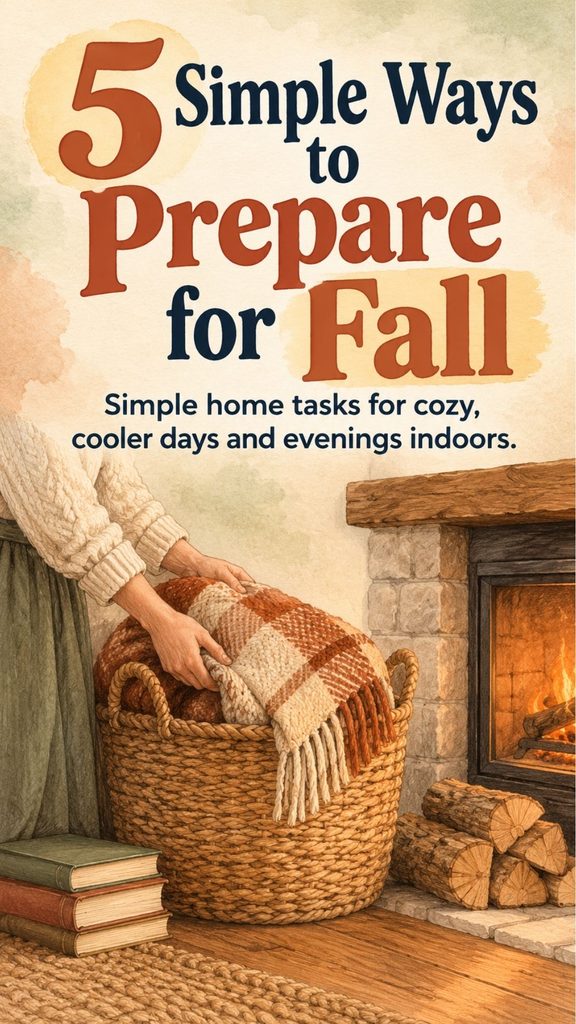
There is a point near the end of summer when the season begins to feel different before it actually looks different.
The afternoons may still be warm, the garden may still be producing, and summer clothes may still be hanging by the door, but something shifts. The evenings begin to shorten. The light changes. Mornings feel a little quieter. You start thinking about soup instead of salads, blankets instead of open windows, and evenings spent indoors instead of outside until dark.
Fall does not need to arrive all at once.
You Might Also Like:
- Loading posts...
One of the nicest ways to welcome it is to prepare the home gradually while summer is still winding down.
There is no need to replace every decoration, purchase an entirely new wardrobe, or turn the house upside down for a seasonal makeover. A few practical preparations can make the transition feel natural: wash the coats, bring out the blankets, organize a shelf of books and games, prepare firewood if you use it, and make sure the pantry contains the ingredients you reach for when cooler weather arrives.
These simple tasks are less about decorating for fall and more about getting the household ready for a different rhythm.
Let the House Change With the Season
Summer homes tend to revolve around keeping things light and easy.
Doors are opening and closing constantly. Shoes collect near the entrance. Garden produce comes through the kitchen. Towels dry outside. Meals are simpler. Evenings stretch later because daylight lasts so long.
Fall changes those patterns.
More time is spent inside. Jackets return to hooks. The oven is used more often. Blankets appear on sofas. Outdoor work gradually shifts toward preparing things for colder weather.
Instead of waiting for the first cold evening to realize nothing is ready, use the final weeks of summer to make small changes.
You do not need an elaborate fall checklist.
Start with the things that will make everyday life more comfortable.
Bring the Throw Blankets Back Out
A basket filled with blankets is one of the easiest ways to make a room feel prepared for cooler weather.
During summer, heavy throws may have been stored away because they were simply taking up space.
Before returning them to the living room, shake them out and wash or refresh them according to their care labels.
Then choose a convenient place to keep them.
A woven basket beside the sofa works well. So does an old wooden chest, bench with storage, or simply a neatly folded stack on a shelf.
Keep blankets where people actually use them.
There is little point in storing every throw in an upstairs closet if the family gathers downstairs each evening.
You also do not need an enormous collection.
A few comfortable blankets that can be washed easily are more useful than a pile of decorative throws nobody wants to touch.
Once the evenings become cool, having one within arm’s reach makes the transition into fall feel almost effortless.
Wash Jackets, Scarves, and Hats Before You Need Them
The first cold morning of the season has a habit of arriving when you are in a hurry.
That is not the ideal time to discover that last year’s jacket has been sitting dusty in storage or that nobody knows where the children’s hats went.
Pull cooler-weather clothing out before temperatures drop significantly.
Check coat pockets.
Look for missing buttons, broken zippers, loose seams, and stains that were forgotten at the end of last winter.
Wash or clean items according to their labels and make any simple repairs while there is still time.
This is also a good opportunity to see what still fits.
Children can outgrow coats surprisingly quickly. Adults may discover that something hasn’t been worn for several seasons and no longer needs to take up closet space.
Sort before buying anything new.
You may find that you already own more than enough.
Once everything is clean and ready, place the most frequently used items where they are easy to reach.
A few hooks near the entrance can make fall mornings considerably smoother.
Create an Indoor Evening Corner
One of the biggest changes between summer and fall is what happens after dinner.
During warm months, people may stay outside until late.
Once darkness arrives earlier, evenings naturally move indoors.
It is very easy for every evening to turn into several hours of scrolling or television simply because there is nothing else readily available.
A small amount of preparation can change that.
Choose one accessible area for books, board games, cards, puzzles, or another quiet activity your household actually enjoys.
It does not need to become a carefully styled reading room.
A basket beside the sofa can hold a few books.
A cupboard can contain board games.
A puzzle table can be set up in a corner that does not need to be cleared immediately after each use.
The important thing is visibility.
Activities hidden in the back of a closet are easy to forget.
Bring out a few favorites and rotate them as the season continues.
For families with children, this can become an especially useful part of the evening routine.
Instead of trying to eliminate screens completely, simply create alternatives that are just as easy to reach.
Make a Small Fall Reading Stack
Fall and reading seem to belong together.
If you already own books you have been meaning to read, collect several and place them somewhere visible.
You might choose a novel, a gardening book, an old cookbook, a craft book, or something related to a skill you want to learn during the colder months.
The point is not to create another ambitious reading challenge.
It is simply to make slower evenings feel intentional.
Libraries are useful here too.
Rather than buying another stack of books, borrow several and return them as your interests change.
A blanket, a lamp, a comfortable chair, and a good book can make an ordinary weeknight feel remarkably cozy without requiring much money at all.
Prepare Firewood Before the Cold Arrives
If your household uses a wood stove, fireplace, or outdoor fire ring, late summer and early fall are good times to make sure your firewood situation is organized.
Gathering wood after cold weather arrives is far less pleasant.
Stack firewood in a dry, ventilated area where it is protected appropriately from prolonged moisture while still receiving airflow.
Keep the pile reasonably organized so older, drier wood is easy to use first.
If you are splitting your own firewood, deal with manageable amounts at a time rather than creating an exhausting weekend project.
And if you use an indoor fireplace or wood-burning stove, the start of the season is also a sensible time to make sure the system is ready for safe use.
A beautiful fire is enjoyable only when the chimney, stove, and surrounding area are properly maintained.
For households that use only an outdoor fire pit, preparing a small supply of appropriate dry wood now means spontaneous autumn evenings around the fire become much easier later.
Check the Porch and Outdoor Sitting Areas
Fall does not mean outdoor living ends immediately.
In many places, the most pleasant porch evenings happen after the intense heat of summer has passed.
Before packing everything away, clean the chairs, shake out outdoor cushions, and consider leaving one comfortable sitting area ready.
A small blanket basket near the door can make cool evenings outside more comfortable.
If summer furniture or garden tools will eventually need storage, begin gradually rather than waiting until a storm or sudden cold snap forces everything to be moved at once.
Wash items before storing them.
Dry them completely.
Repair anything that needs attention.
It is much nicer to unpack clean, usable things next spring.
Stock the Pantry for Cooler-Weather Cooking
The way many households cook changes when the weather cools.
Soups return.
The oven runs more often.
Bread, muffins, pies, casseroles, and slow-cooked meals start sounding appealing again.
Take a little time to look through the pantry before buying seasonal groceries.
Check the dates and condition of ingredients you already have.
Move older foods toward the front.
Make a note of basics that are genuinely running low.
Depending on the way your family cooks, useful fall pantry staples might include flour, oats, rice, pasta, beans, lentils, canned tomatoes, broth ingredients, baking powder, yeast, cocoa, cinnamon, and other familiar baking spices.
Keep the list personal.
There is no reason to buy pumpkin puree, specialty spices, or baking ingredients simply because fall has arrived if your family never uses them.
Stock the foods that fit your actual cooking habits.
Prepare a Few Baking Staples
Cool weather has a way of making baking feel inviting again.
If you enjoy baking, make sure the basics are ready before that first sudden urge to make something warm from the oven.
Check flour, sugar, butter or other fats you normally use, baking soda, baking powder, yeast, vanilla, cocoa, and favorite spices.
This is also a good time to use ingredients that have been sitting around.
Half a bag of oats can become muffins.
Apples that are beginning to soften can become a crisp.
Frozen berries can go into a simple cobbler.
Fall cooking does not need to begin with a large grocery trip.
Some of the best seasonal meals begin by using what is already in the kitchen.
Make Space in the Freezer
If you cook more during fall, freezer space becomes valuable.
Before adding soups, casseroles, baked goods, or garden produce, take inventory.
You may find forgotten containers hiding at the bottom.
Plan meals around older frozen food first.
Label anything that has lost its identification.
Discard food that is no longer safe or whose storage history is uncertain.
Then organize the remaining space so new meals can be frozen in practical portions.
A few homemade freezer meals can be extremely useful once the season becomes busy.
Fall may feel slower than summer, but school schedules, holidays, family gatherings, and shorter days can still make weeknights hectic.
Bring Seasonal Decor Out Slowly
There is no need to transform the house on the first day that feels slightly cool.
One of the nicest parts of seasonal decorating is allowing it to happen gradually.
Begin with what you already own.
A darker tablecloth.
A woven basket.
A favorite fall wreath.
A few candles.
Branches from the yard.
Dried flowers.
A bowl of apples.
An old crock filled with late-season garden clippings.
You may find that very little is needed.
Natural textures and useful household objects often create more warmth than shelves filled with seasonal decorations.
Before purchasing anything new, unpack what you already have.
If a decoration has not been used for several years, consider letting it go rather than buying another storage bin.
A home does not become more autumnal simply because more objects are added to it.
Reset the Entryway
Fall tends to bring more things through the front door.
Jackets.
Boots.
Umbrellas.
Scarves.
School bags.
Wet shoes.
Now is a good time to make the entrance work better.
Remove summer items that are no longer being used.
Give every family member a hook or practical place for outerwear.
Add a mat where muddy shoes can land.
Keep an umbrella somewhere accessible if fall is rainy where you live.
A small amount of organization at the entrance prevents seasonal clutter from spreading through the rest of the house.
Finish a Few Lingering Summer Tasks
The transition into fall is a good opportunity to close out unfinished summer projects.
Wash picnic blankets.
Clean garden tools.
Put away beach or pool equipment.
Sort outdoor toys.
Finish preserving garden produce.
Take care of the pile that has been sitting by the back door since June.
You don’t have to complete everything in one weekend.
Choose one or two lingering tasks each week.
By the time truly cool weather arrives, the house will already feel settled.
Adjust the Evening Routine
Long summer evenings can make bedtime and household routines drift later.
As darkness begins arriving earlier, consider gradually changing the evening rhythm.
Dinner may shift a little earlier.
Children may return to school-night routines.
Outdoor chores may need to happen before supper rather than afterward.
An evening kitchen reset can become helpful again.
Try spending ten or fifteen minutes before bed clearing the table, washing or loading dishes, and preparing anything needed for breakfast.
Waking up to an orderly kitchen feels especially good on dark fall mornings.
Plan for Fall Without Rushing Summer Away
Preparing for a new season does not require wishing the current one away.
There may still be tomatoes ripening in the garden.
Warm afternoons may continue for weeks.
The grill may still be used.
Flowers may still be blooming.
Enjoy them.
Seasonal homemaking works best when the transition is gradual.
Wash one basket of blankets this week.
Clean the coats next week.
Organize the pantry after that.
Stack the firewood when you have an afternoon available.
There is no deadline for making the house look like fall.
The goal is simply to be ready when the cooler days arrive.
Welcome the Slower Rhythm
Perhaps the most appealing thing about fall is not the pumpkins, blankets, or seasonal food.
It is the change of pace.
The evenings become darker.
The garden begins quieting down.
Meals become warmer.
People naturally spend a little more time at home.
That creates an opportunity to reconsider the rhythm of everyday life.
Maybe you read more.
Cook more.
Invite friends over for soup instead of meeting somewhere expensive.
Work on a puzzle.
Learn a traditional skill.
Bake bread on a Saturday afternoon.
Sit around a fire.
Or simply go to bed earlier.
Preparing the house helps create room for those moments.
A basket of clean blankets, a stocked pantry, coats waiting by the door, a shelf of books, and a neat stack of firewood are ordinary things.
But together they send a quiet message:
We are ready for the season ahead.
And perhaps that is the best way to welcome fall—not by rushing toward it, but by gently preparing the home so that when the first truly cool evening arrives, all that remains to do is settle in and enjoy it.