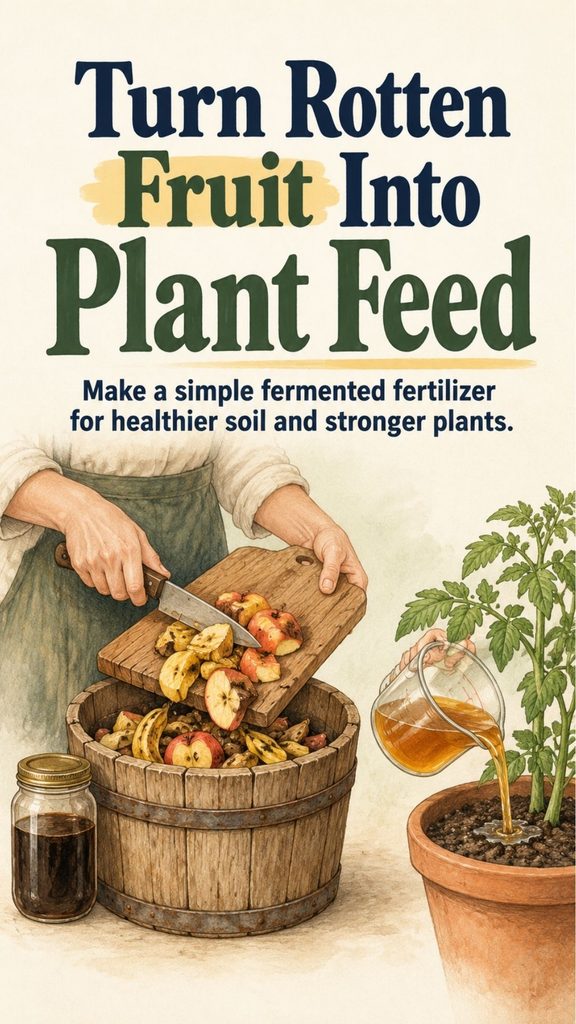
Soft apples, bruised peaches, overripe bananas, split pears, and fruit that has gone past the point of eating often end up in the trash.
But if the fruit is simply overripe or beginning to decompose, it still contains organic matter that can eventually return to the soil.
That does not mean rotten fruit should be buried directly beside every plant or that a sweet fermented fruit liquid is a miracle fertilizer. Fruit contains water, sugars, carbon compounds, and small amounts of plant nutrients, but it is not a complete fertilizer. Used carelessly, decomposing fruit can also attract flies, rodents, wasps, and other pests.
You Might Also Like:
- Loading posts...
The most dependable way to use unwanted fruit is composting it.
A fermented fruit-and-molasses liquid is another method sometimes used by gardeners, but it should be treated as an optional soil amendment—not a replacement for compost, balanced fertilizer, or healthy soil.
Here is how to put unwanted fruit back to work without creating a smelly garden problem.
First, Decide Whether the Fruit Is Suitable
There is an important difference between fruit that is merely overripe and material that should be handled more cautiously.
Fruit that is generally suitable for composting includes:
- bruised fruit
- fruit that has become too soft to eat
- fallen fruit
- damaged fruit without obvious contamination
- peels and cores
- kitchen fruit scraps
Moldy fruit can usually enter a well-managed household compost pile because decomposition is already part of the composting process.
However, avoid using fruit or plant material contaminated with chemicals you would not want in your garden.
Also be more cautious with fruits taken from plants suffering from serious disease, particularly if you do not know whether your composting system becomes hot enough to destroy the pathogen.
When in doubt, dispose of heavily diseased plant material according to local garden-waste recommendations rather than spreading it around the vegetable garden.
The Best Option: Add Rotten Fruit to Compost
For most gardeners, the compost pile is the easiest and safest destination for overripe fruit.
Fruit scraps are considered nitrogen-rich or “green” compost material.
Because fruit contains a great deal of moisture and sugar, however, dumping a bucket of fruit into the pile by itself can create a wet, compacted, smelly area.
Balance it with dry carbon-rich materials.
After adding chopped fruit, cover it with materials such as:
dry leaves,
shredded plain cardboard,
straw,
or other dry compost ingredients.
A useful habit is to bury fruit scraps toward the center of the compost pile rather than leaving them exposed on top.
This helps reduce fruit flies and makes the scraps less accessible to animals.
Chop Large Pieces Before Composting
A whole apple will eventually break down.
A chopped apple breaks down much faster.
Cut larger fruit into a few pieces before adding it to the compost.
There is no need to puree it.
You simply want to increase the surface area available to microorganisms.
Smaller pieces also mix more evenly with leaves, cardboard, and other compost materials.
If you have a large quantity of fallen fruit, add it gradually instead of creating one enormous layer.
Too much fruit at once can make a compost pile excessively wet.
Can You Bury Rotten Fruit Directly in the Garden?
You can bury small amounts of fruit waste, but placement matters.
Do not dig a hole directly beside a young plant and pack it with rotting fruit.
As fresh organic material decomposes, microorganisms become very active. The material can also collapse, produce odors, attract animals, and temporarily create conditions that are not ideal around delicate roots.
If you want to use the trench-composting method, bury small amounts in an unused section of garden well before planting.
Cover the scraps with a generous layer of soil.
Give the material time to decompose before placing sensitive young plants directly over it.
For an established vegetable bed, finished compost is usually easier and more predictable.
What About Fermenting Fruit With Molasses?
You may have seen the method where overripe fruit is chopped, placed in a container, mixed with molasses or brown sugar, left to ferment, strained, and then diluted with water for the garden.
The basic idea is that sugar encourages microbial fermentation while compounds from the fruit move into the liquid.
Gardeners sometimes call preparations like this fermented fruit juice or fermented fruit extract.
There is nothing magical about the process.
The resulting liquid may contain soluble organic compounds and small quantities of plant nutrients, but its nutrient concentration is highly variable.
It should not be treated as a scientifically standardized fertilizer.
One batch made from bananas will not necessarily resemble a batch made from apples, berries, citrus, or mixed fruit.
The amount of nutrients available to plants is also impossible to know without laboratory analysis.
That is why a homemade fermented fruit liquid is better thought of as an experimental soil amendment rather than your garden’s primary fertilizer.
Molasses Is Not Required to Feed Your Plants
Molasses is often added because microorganisms can use its sugars during fermentation.
It is not necessary because garden plants need sugar poured into the soil.
Plants manufacture their own sugars through photosynthesis.
Adding large quantities of sugar or molasses directly to garden soil can encourage unwanted microbial activity and may attract insects.
If you choose to make a fermented fruit preparation, use the sugar as part of the fermentation process—not as something you routinely pour heavily around plants.
More molasses does not mean more plant growth.
A Simple Small-Batch Fermented Fruit Method
If you want to experiment with the technique, start small.
Chop overripe fruit into pieces.
Place it in a clean container, leaving plenty of empty space at the top.
Add a modest amount of molasses or brown sugar and mix.
Do not tightly seal an actively fermenting mixture unless the container is specifically designed to release fermentation gases.
Fermentation can produce gas, and pressure can build inside a sealed container.
Keep the container out of direct sunlight and monitor it.
A pleasantly fermented smell is different from a violently putrid, sewage-like odor.
If the mixture develops an obviously abnormal appearance or smell that makes you question it, adding it to an active compost pile is a safer choice than pouring it around valuable plants.
Strain the Liquid Before Using It
Once the fruit has broken down and the mixture has fermented, strain out the solids.
The remaining fruit pulp does not need to be wasted.
Add it to the compost pile and cover it with dry carbon material.
The liquid can be stored only with caution because homemade fermented products are not standardized or sterile.
For home gardening, it makes more sense to prepare modest amounts and use them rather than keeping large barrels indefinitely.
Always Dilute Homemade Fermented Liquid
Concentrated fermented material should not be poured directly onto plant roots.
The acidity, salts, sugars, and nutrient concentration can vary widely.
Diluting substantially reduces the risk of damaging plants.
Because homemade mixtures vary so much, there is no single scientifically established dilution ratio that applies to every recipe.
That uncertainty is important.
If you experiment, begin with a very weak solution and use it around a small test area before treating an entire garden.
More is not better.
Plants need nutrients within useful ranges. Excessive concentrations can harm roots rather than stimulate growth.
Apply It to the Soil, Not the Leaves
If you decide to use a diluted fermented fruit liquid, apply it to the soil around plants rather than spraying it over leaves or edible produce.
A homemade fermentation can contain a mixture of microorganisms that has not been tested or controlled.
There is little reason to coat lettuce, tomatoes, herbs, or other edible plant surfaces with it.
Soil application is more sensible.
Keep it away from the plant stem itself and water normally afterward if needed.
Don’t Expect Rotten Bananas to Solve a Potassium Problem
Bananas are often promoted online as an instant potassium fertilizer.
Banana fruit and peels do contain potassium, but placing bananas in water or fermenting them does not create a precisely measured potassium fertilizer.
The same is true of other fruits.
Nutrients contained in organic matter become available at different rates as microorganisms break the material down.
If your plants have a genuine nutrient deficiency, a soil test is much more useful than guessing based on homemade fertilizer recipes.
Compost contributes organic matter and a range of nutrients gradually.
A properly selected fertilizer can supply nutrients in known amounts when plants actually require them.
Fermented fruit does neither job with the same predictability.
Too Much Fruit Can Attract Pests
This is the biggest practical problem with simply tossing rotten fruit around plants.
Fruit is attractive to many creatures.
Depending on where you live, exposed scraps may attract:
fruit flies,
ants,
wasps,
rodents,
raccoons,
or other wildlife.
Burying scraps deeply enough or incorporating them into a managed compost system greatly reduces this problem.
A sealed or well-designed composting system is particularly useful in areas where rodents are common.
Do not leave piles of fermenting fruit beside garden plants and assume they will quietly turn into fertilizer.
They may become a feeding station first.
Be Careful With Citrus
Citrus peels can be composted.
Claims that orange or lemon peels must never enter compost are generally exaggerated.
They simply break down more slowly than softer fruits.
Chopping them into smaller pieces helps.
However, dumping huge quantities of citrus into a small compost pile at once is unnecessary.
As with most compost ingredients, variety is better than relying on one material.
Fruit Scraps Work Better as Part of a Bigger Soil-Building Plan
Healthy garden soil is rarely created by one homemade ingredient.
A better approach combines several practices:
add mature compost,
keep soil covered with mulch,
avoid unnecessary compaction,
grow plants suited to the location,
water appropriately,
and replace nutrients according to plant needs.
Rotten fruit can contribute organic matter to this system.
It is one ingredient, not the entire program.
That distinction prevents a lot of disappointment.
What to Do With Large Amounts of Fallen Fruit
A fruit tree can drop far more fruit than one household compost pile can comfortably accept at once.
If you have baskets of spoiled apples, pears, peaches, or plums, avoid piling them into one wet heap.
Mix them with plenty of dry leaves, straw, chipped plant material, or shredded cardboard.
Build the pile so air can move through it.
Turn it occasionally if you use an actively managed compost system.
If municipal green-waste collection or community composting is available, that may also be useful when the quantity is simply too large for your property.
Don’t Waste Food That Is Still Safe to Eat
There is another step before the compost pile.
Not every ugly or very ripe fruit is actually rotten.
Soft bananas can become banana bread.
Bruised apples can sometimes be trimmed and cooked.
Very ripe berries can go into a sauce or baked dish.
Overripe peaches may work in a cooked recipe.
Food safety still comes first.
Fruit showing significant mold, fermentation you did not intend, unpleasant odors, or other spoilage should not be rescued for eating simply to avoid waste.
But checking fruit before automatically discarding it can prevent edible food from being unnecessarily composted.
The Simplest Method Usually Wins
You can certainly experiment with fermented fruit preparations if that kind of gardening interests you.
But you do not need molasses, barrels, fermentation schedules, or special garden tonics to keep fruit waste out of the trash.
The simplest approach is often the best:
Chop the unwanted fruit.
Add it to the compost.
Cover it with dry material.
Let microorganisms break it down.
Use the finished compost in the garden later.
That process is slower than a viral “liquid fertilizer” recipe, but it is also easier to understand and much harder to misuse.
Turn Waste Into Soil, Not a Garden Problem
The useful idea behind the rotten-fruit trick is absolutely worth keeping: food scraps do not always need to become trash.
They can become organic matter.
They can feed a compost pile.
They can eventually return nutrients and carbon to the soil.
And, if you enjoy experimenting, a carefully prepared and heavily diluted fermented fruit liquid can be tried as a supplemental soil amendment.
Just keep the claims realistic.
Rotten fruit is not a complete fertilizer.
Molasses is not a plant-growth secret.
Fermentation does not magically turn kitchen waste into a precisely balanced nutrient solution.
The real value comes from recycling organic material responsibly.
So the next time a few apples collapse in the fruit bowl or bananas become too far gone to eat, don’t automatically send them to the garbage.
Chop them, compost them, balance them with dry material, and let decomposition do what it has always done best:
turn yesterday’s waste into something the garden can use.