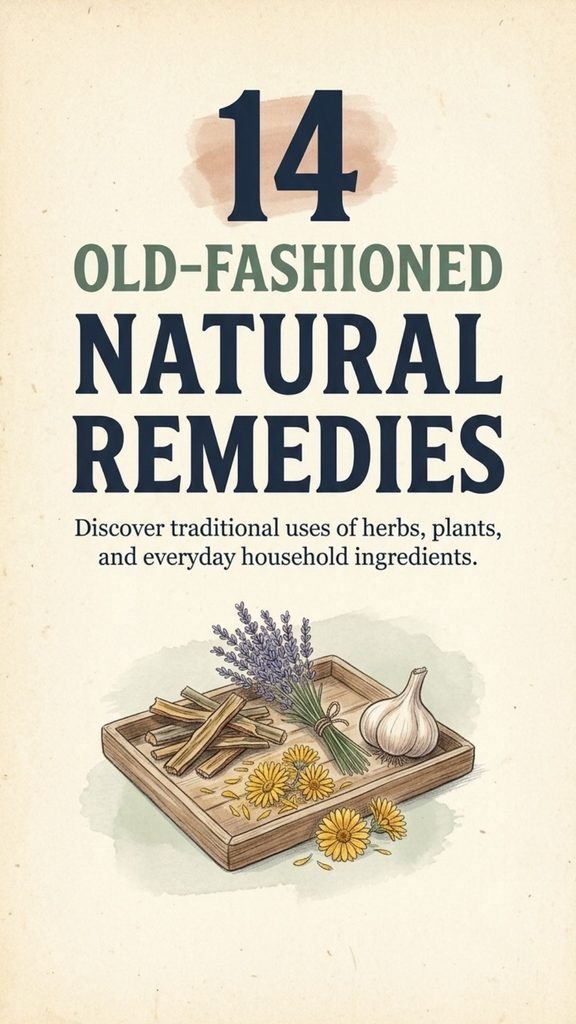
Long before modern pharmacies, people turned to plants, flowers, roots, bark, and fermented foods for everyday health concerns.
Aromatic herbs were used for comfort during colds. Certain leaves were applied to irritated skin. Families prepared soothing teas, herbal oils, and fermented vegetables using ingredients grown in their gardens or gathered from the countryside.
Many of these traditions have been passed down through generations, and some have even influenced modern medicine.
You Might Also Like:
- Loading posts...
But there is an important difference between a plant having a long history of medicinal use and that plant being proven safe and effective for treating a health condition.
Some traditional remedies contain active compounds that scientists continue to study. Others offer modest benefits, while certain preparations can be dangerous when used incorrectly.
Natural doesn’t automatically mean harmless.
Here are 14 fascinating traditional plants and remedies, what people historically used them for, what modern research suggests, and the precautions worth knowing.
1. Willow Bark: The Plant Connected to Aspirin
Before modern pain-relieving medicines became widely available, willow bark was traditionally used for aches, discomfort, and fever.
Willow trees belong to the genus Salix, and their bark contains compounds called salicylates.
One particularly well-known compound is salicin.
After being processed by the body, salicin contributes to the formation of salicylic acid-related compounds.
Traditional Uses
Willow bark was historically associated with:
- Headaches
- Muscle aches
- Joint discomfort
- Fever
- General pain relief
What Modern Science Says
Willow bark has been studied for certain types of pain, including lower-back pain.
Some studies suggest standardized extracts may provide modest relief in particular circumstances.
However, willow bark is not identical to aspirin. Modern aspirin is acetylsalicylic acid, and the amount of active compounds in herbal preparations can vary considerably.
Important Safety Precautions
Willow bark may increase bleeding risk and can interact with medications.
It should be avoided by people with aspirin sensitivity, children, and people who are pregnant or breastfeeding.
Anyone taking anticoagulants, aspirin, or related medications should not use willow bark without professional medical guidance.
The takeaway: Willow bark has a genuine connection to the history of pain-relieving medicines, but it isn’t a risk-free replacement for modern treatments.
2. Elderberry: A Traditional Cold-Season Remedy
Elderberries are small, dark purple berries from elder plants, particularly Sambucus nigra.
For generations, elderberries have been prepared in syrups and other traditional products during cold and flu season.
Their deep color comes partly from plant pigments called anthocyanins.
Traditional Uses
Elderberry preparations have been used for:
- Cold-season comfort
- Cough-related symptoms
- General respiratory complaints
- Traditional seasonal wellness routines
What Modern Science Says
A small number of clinical studies suggest that certain elderberry preparations might reduce the duration or severity of some respiratory symptoms.
However, the evidence remains limited, and larger, better-quality studies are needed.
Elderberry has not been established as a reliable way to prevent or treat serious viral infections.
Important Safety Precautions
Raw or unripe elderberries, along with the leaves, stems, and other parts of the plant, can contain cyanide-producing compounds.
Improperly prepared berries may cause nausea, vomiting, and diarrhea.
Only appropriately processed food products should be consumed.
The takeaway: Elderberry has an interesting history and preliminary research behind it, but it should not replace appropriate medical treatment.
3. Nettle Leaf: A Nutrient-Rich Traditional Green
Stinging nettle, Urtica dioica, is a familiar plant in many temperate regions.
Anyone who has accidentally brushed against fresh nettle leaves knows why the plant earned its name.
The tiny hairs on fresh leaves can irritate the skin.
Yet properly prepared nettle has also been used as a leafy food and traditional herbal ingredient.
Traditional Uses
Nettle has been associated with:
- Herbal teas
- Cooked leafy greens
- Traditional tonics
- Seasonal food preparations
Nutritional Value
Nettle leaves contain various nutrients, including minerals such as iron and calcium, although the actual amounts depend on the plant and preparation.
This makes nettle interesting as a food ingredient.
However, eating nettle cannot reliably replace iron supplements or prescribed treatment for iron-deficiency anemia.
A Safer Way to Appreciate Nettle
Properly identified, safely sourced nettle may be used as a cooked green.
Cooking or appropriate processing neutralizes the stinging hairs.
Avoid gathering wild plants unless you can identify them confidently and know the growing area is free from contamination.
Important Safety Precautions
Nettle supplements may interact with medications, and medicinal doses are not necessarily appropriate for everyone.
The takeaway: Nettle can be a nutritious traditional food, but claims that it directly boosts red blood cells or treats anemia are overstated.
4. Eucalyptus: An Aromatic Plant Associated With Breathing Comfort
Eucalyptus trees are well known for their distinctive fragrance.
Their leaves contain aromatic compounds, including eucalyptol, also known as 1,8-cineole.
Eucalyptus has a long history of use in products intended to provide a cooling sensation during congestion.
Traditional Uses
Eucalyptus has appeared in:
- Aromatic preparations
- Vapor rubs
- Traditional respiratory remedies
- Scented household products
What Modern Science Says
The strong aroma may create a sensation of easier breathing for some people.
However, this does not mean eucalyptus opens blocked airways or treats the underlying cause of a respiratory illness.
Products containing eucalyptus-derived ingredients vary substantially in concentration and safety.
Important Safety Precautions
Concentrated eucalyptus essential oil can be poisonous if swallowed.
It can also irritate the skin or respiratory tract.
Young children are especially vulnerable to essential-oil poisoning.
Do not ingest eucalyptus essential oil, apply it undiluted to the skin, or put it directly near a child’s nose or mouth.
Hot-water steam treatments also carry a burn risk and should not be treated as automatically safe.
The takeaway: Eucalyptus is best understood as an aromatic ingredient, not a treatment that can clear lung disease or replace respiratory medication.
5. Lavender: A Familiar Plant for Relaxing Routines
Lavender is one of the most recognizable fragrant herbs.
Its soft purple flowers have been used in scented sachets, household products, perfumes, and traditional relaxation practices.
The pleasant aroma is one reason lavender remains popular today.
Traditional Uses
Lavender has been associated with:
- Relaxation
- Bedtime routines
- Scented baths
- Fragrant linens
- Aromatherapy
What Modern Science Says
Researchers have studied lavender preparations for stress, anxiety, and sleep.
Some findings are encouraging, particularly for certain standardized oral products studied under controlled conditions.
However, the evidence for lavender aromatherapy as a reliable insomnia treatment remains uncertain.
Different lavender products should not be assumed to have the same effects.
Simple Ways to Enjoy Lavender
You can incorporate its fragrance into everyday life with:
- Dried lavender sachets
- Lavender-scented household products
- Fragrant garden plantings
- Appropriately formulated personal-care products
Important Safety Precautions
Essential oils can irritate skin or cause allergic reactions.
Lavender products may also interact with certain sedating medications.
Never assume concentrated essential oil is safe to swallow.
The takeaway: Lavender can be part of a pleasant evening routine, but it isn’t a guaranteed sleep treatment.
6. Plantain Leaf: The Traditional Wayside Herb
The plantain in traditional herbal references isn’t the banana-like fruit sold in grocery stores.
It usually refers to plants such as Plantago major, commonly known as broadleaf plantain.
This low-growing plant is frequently found in lawns, fields, and pathways.
Its leaves have been used in traditional preparations for skin concerns.
Traditional Uses
Plantain leaves have historically been applied to:
- Minor skin irritation
- Small scrapes
- Insect bites
- Superficial skin complaints
What Modern Science Says
Researchers have investigated plantain extracts for possible wound-healing properties.
Some laboratory and small clinical studies have produced interesting findings.
But this does not establish that placing a fresh leaf on an open wound is safe or effective.
Standardized, professionally prepared extracts are very different from leaves collected outside.
Important Safety Precautions
Wild leaves can carry dirt, microorganisms, pesticides, and other contaminants.
Do not place unclean plant material on broken skin.
For a minor cut, washing with clean running water and covering it with a suitable sterile dressing is a more dependable approach.
Seek medical attention for deep, infected, or poorly healing wounds.
The takeaway: Plantain is an interesting subject of traditional botanical research, but it should not replace appropriate wound care.
7. Wild Cherry Bark: A Historical Ingredient in Cough Preparations
Wild cherry, particularly Prunus serotina, is a North American tree whose bark appeared in traditional cough preparations.
It has a long history in herbal literature.
Traditional Uses
Wild cherry bark was associated with:
- Dry coughs
- Throat irritation
- Cough syrups
- Traditional respiratory preparations
What Modern Science Says
Although wild cherry bark has a long history of use, convincing clinical evidence for its effectiveness as a cough treatment remains limited.
Its traditional reputation does not mean homemade preparations are safe.
The Major Safety Concern
Wild cherry bark contains cyanogenic glycosides, including prunasin.
These compounds can release cyanide under certain conditions.
The amount of these substances may vary depending on plant material and preparation.
For that reason, making homemade bark teas or concentrated extracts is not advisable.
A Better Approach for a Mild Cough
For many uncomplicated coughs, supportive care such as adequate fluids and appropriate over-the-counter treatments may be more predictable.
Honey may soothe some coughs in adults and children older than one year, but it must never be given to infants under 12 months.
Persistent cough, breathing difficulty, chest pain, or other concerning symptoms require medical evaluation.
The takeaway: Wild cherry bark has historical significance, but its toxicity risks make it unsuitable for casual home experimentation.
8. Calendula: The Garden Flower Used in Skin-Care Preparations
Calendula, commonly called pot marigold, is a cheerful flowering plant with bright yellow or orange blooms.
Its scientific name is Calendula officinalis.
The flowers have been used in traditional skin-care preparations for generations.
Traditional Uses
Calendula has appeared in products intended for:
- Dry skin
- Mild skin irritation
- Minor superficial skin concerns
- General skin conditioning
What Modern Science Says
Calendula preparations have a recognized history of traditional topical use.
Some research has explored possible anti-inflammatory and skin-supporting effects.
However, evidence from high-quality clinical studies remains limited.
Calendula should not be presented as a proven cure for eczema or other chronic inflammatory skin conditions.
Practical Uses
Commercially formulated calendula creams and balms may be useful as cosmetic skin-care products for people who tolerate them.
A well-formulated moisturizer may also help protect dry, uncomfortable skin.
Important Safety Precautions
Calendula can cause allergic reactions, particularly in people sensitive to plants in the daisy family.
Patch-test new topical products and avoid applying them to serious wounds or infected skin without medical guidance.
The takeaway: Calendula has a reasonable place in traditional skin-care history, but its benefits should not be exaggerated.
9. Thyme: More Than a Kitchen Herb
Thyme is a fragrant culinary herb commonly used in soups, stews, roasted vegetables, and savory dishes.
The plant also contains aromatic compounds, including thymol.
These compounds have attracted scientific interest because of their antimicrobial properties in laboratory settings.
Traditional Uses
Thyme has been used in:
- Herbal preparations
- Traditional respiratory remedies
- Household aromatic products
- Food preservation practices
- Everyday cooking
What Modern Science Says
Some thyme-derived compounds can inhibit certain microorganisms under laboratory conditions.
But laboratory antimicrobial activity is not the same as proving that thyme tea, thyme oil, or homemade cleaning mixtures will treat infections or disinfect household surfaces reliably.
Why It Isn’t a Replacement for Disinfectant
Proper disinfectants are tested for effectiveness against specific microorganisms under defined conditions.
An essential-oil mixture made at home doesn’t automatically meet those standards.
Important Safety Precautions
Concentrated thyme essential oil can irritate skin and other tissues.
Do not ingest it or apply it undiluted.
For normal household use, culinary thyme is a much simpler and safer way to enjoy this plant.
The takeaway: Thyme contains interesting plant compounds, but it cannot replace medically necessary antibiotics or proven disinfectants.
10. Garlic: A Traditional Food With Scientifically Interesting Compounds
Garlic, Allium sativum, has been valued in kitchens and traditional health practices for centuries.
When garlic is chopped or crushed, chemical reactions help produce sulfur-containing compounds, including allicin.
These compounds contribute to garlic’s distinctive aroma and have been studied for various biological effects.
Traditional Uses
Garlic has been associated with:
- Seasonal wellness
- Traditional food-based remedies
- General health tonics
- Cooking and food preservation
What Modern Science Says
Research suggests that some garlic supplements may modestly affect cholesterol or blood pressure in certain people.
However, evidence for garlic as an immune booster is limited.
And while garlic compounds can demonstrate antimicrobial activity in laboratory experiments, that doesn’t mean eating raw garlic can cure a bacterial infection.
Enjoy Garlic as Food
Garlic is delicious in:
- Roasted vegetables
- Homemade soups
- Pasta sauces
- Bean dishes
- Chicken recipes
- Salad dressings
Adding garlic to meals is a practical way to enjoy its flavor without relying on exaggerated medicinal claims.
Important Safety Precautions
Garlic supplements may increase bleeding risk and interact with certain medicines.
Applying raw garlic directly to the skin can cause serious irritation or chemical burns.
The takeaway: Garlic is a valuable culinary ingredient, but it isn’t a substitute for antibiotics prescribed to treat bacterial infections.
11. Arnica: A Traditional Ingredient in Bruise and Muscle-Care Products
Arnica is a yellow-flowering plant that resembles a daisy.
The best-known medicinal species is Arnica montana.
It has historically been used in topical products for bruising, soreness, and minor physical discomfort.
Traditional Uses
Arnica has appeared in:
- Massage products
- Muscle-care creams
- Bruise-related preparations
- Traditional topical remedies
What Modern Science Says
Some studies have investigated arnica preparations for bruising and discomfort.
The findings are mixed, and reliable clinical evidence is not strong enough to support sweeping claims.
Different formulations also vary substantially.
Important Safety Precautions
Arnica should not be swallowed in ordinary herbal preparations.
The plant and concentrated extracts can cause serious poisoning.
Topical arnica should generally be used only on intact skin, following product directions.
It may also trigger allergic reactions, especially in people sensitive to related flowering plants.
Pregnant or breastfeeding people and those taking blood-thinning medicines should avoid medicinal arnica unless advised otherwise by a qualified clinician.
The takeaway: Arnica has a long history in topical products, but oral use and application to broken skin can be dangerous.
12. Sauerkraut: A Fermented Food With a Long History
Sauerkraut is made by fermenting finely shredded cabbage, traditionally with salt.
Unlike the other items on this list, sauerkraut is primarily a food rather than an herbal medicine.
Fermentation changes the cabbage’s flavor, texture, and chemical composition.
It also helps explain why fermented vegetables have been an important part of traditional food preservation.
Traditional Uses
Sauerkraut has been enjoyed as:
- A preserved vegetable
- A side dish
- A traditional winter food
- Part of meals in many European cultures
What Modern Science Says
Unpasteurized fermented sauerkraut may contain live microorganisms.
However, the presence of live microorganisms doesn’t automatically mean a food contains probiotic strains with clinically proven benefits.
Some commercial sauerkraut is pasteurized, which removes live microbial activity.
Nutritional Benefits
Sauerkraut can contribute:
- Dietary fiber
- Certain vitamins
- Fermentation-derived compounds
- Live microorganisms in some unpasteurized products
Important Considerations
Sauerkraut can be high in sodium.
Check labels if you’re monitoring salt intake.
If you want to make fermented vegetables at home, follow a tested food-safety method with an appropriate salt concentration rather than improvising.
The takeaway: Sauerkraut is a flavorful traditional fermented food that can fit into a balanced diet, but it shouldn’t be described as a guaranteed probiotic treatment.
13. Clove: A Traditional Ingredient Associated With Toothache Relief
Cloves are dried flower buds from the clove tree, Syzygium aromaticum.
They’re commonly used in baking, savory cooking, and spice mixtures.
Clove also contains eugenol, an aromatic compound associated with local numbing effects.
Traditional Uses
Clove preparations have been used for:
- Temporary toothache relief
- Traditional oral-care products
- Aromatic preparations
- Culinary seasoning
What Modern Science Says
Eugenol is used in certain dental products, and appropriately formulated clove-oil products may provide temporary relief from tooth pain.
However, this doesn’t solve the cause of the toothache.
Dental pain may result from decay, infection, a cracked tooth, gum disease, or another problem requiring treatment.
Important Safety Precautions
Concentrated clove oil can irritate or burn gums and other tissues.
Swallowing significant quantities can be toxic.
Do not apply household essential oil indiscriminately inside the mouth.
If using a licensed dental product containing clove oil, follow its instructions carefully.
When to See a Dentist
Seek dental advice for persistent toothache, worsening pain, swelling, fever, or a suspected infection.
Swelling that interferes with breathing or swallowing needs emergency care.
The takeaway: Clove-derived ingredients may temporarily numb tooth pain, but they don’t replace professional dental treatment.
14. Rosehip Oil: A Traditional Botanical Skin-Care Ingredient
Rosehips are the seed-containing fruits that develop on rose plants after flowering.
Rosehip seed oil is used in many modern cosmetic products.
It contains fatty acids that can help soften and condition the skin.
Traditional and Modern Uses
Rosehip oil is commonly used in:
- Facial oils
- Moisturizers
- Body-care products
- Skin-conditioning preparations
- Products marketed for uneven texture or the appearance of scars
What Modern Science Says
Rosehip oil can function as an emollient, helping skin feel softer and more comfortable.
A limited amount of research has explored its possible effects on the appearance of scars.
However, the evidence is not strong enough to conclude that rosehip oil reliably erases scars, removes dark spots, or speeds wound healing.
How to Use It as a Cosmetic Product
For intact skin, a few drops of a properly formulated rosehip oil may be used as part of a moisturizing routine if tolerated.
Patch-test first.
Avoid applying it to open wounds or infected areas unless specifically directed by a clinician.
What Helps Scars More Reliably?
Depending on the scar, approaches such as silicone gel or sheets, sun protection, and dermatology treatments may have better supporting evidence.
The takeaway: Rosehip oil is a useful cosmetic ingredient for some people, but it’s not a miracle scar remover.
Traditional Remedies: Which Claims Hold Up?
The image presents each natural ingredient as though it was the direct predecessor of a modern medicine.
That makes an appealing headline, but the comparison is often too simple.
Here’s a more realistic summary.
| Traditional Ingredient | Historical Association | Important Reality |
|---|---|---|
| Willow bark | Pain relief | Contains salicylates; bleeding and medication-interaction precautions apply |
| Elderberry | Cold-season remedies | Limited clinical evidence; raw or improperly prepared berries can be toxic |
| Nettle leaf | Nutrition and traditional tonics | Can be a leafy food but doesn’t replace iron-deficiency treatment |
| Eucalyptus | Congestion comfort | Aromatic products may feel soothing; concentrated oil is poisonous if swallowed |
| Lavender | Relaxation | Pleasant aroma, but evidence for treating insomnia is uncertain |
| Plantain leaf | Minor skin concerns | Research is developing; raw leaves aren’t a substitute for sterile wound care |
| Wild cherry bark | Cough preparations | Contains cyanide-producing compounds; homemade remedies are risky |
| Calendula | Skin care | Traditionally used for mild irritation; evidence remains limited |
| Thyme | Herbal and household preparations | Lab antimicrobial activity doesn’t prove disinfection or infection treatment |
| Garlic | Food and wellness | Not a replacement for antibiotics |
| Arnica | Bruising and soreness | Mixed evidence; oral use can be poisonous |
| Sauerkraut | Fermented food | Some varieties contain live microbes, but not all are proven probiotics |
| Clove | Toothache relief | May temporarily numb pain; dental care is still necessary |
| Rosehip oil | Skin conditioning | Moisturizing properties; scar-treatment evidence is limited |
Why Traditional Plant Remedies Still Interest Scientists
The relationship between plants and modern medicine is fascinating.
Plants produce thousands of natural compounds for their own survival.
Some help defend against insects.
Others protect against environmental stress.
Certain compounds can affect biological processes in humans, too.
Scientists investigate these substances to understand their properties and determine whether they can be developed into safe, effective products.
However, several important steps separate a promising plant compound from an approved medicine.
Researchers must determine:
- Whether the substance produces a meaningful effect.
- Which doses are effective.
- Which doses may be harmful.
- How the substance behaves in the body.
- Whether it interacts with medications.
- Whether it works in properly designed human studies.
- How to manufacture it consistently and safely.
A plant extract that kills bacteria in a laboratory dish may not be safe or effective inside the human body.
Similarly, a traditional preparation that appears soothing doesn’t necessarily treat the medical cause of a symptom.
This distinction is essential when evaluating natural-remedy claims.
7 Safety Rules Before Trying Herbal Products
Herbal products deserve the same careful consideration as other substances that can affect your health.
1. Never Assume Natural Means Safe
Plants contain active chemicals.
Some can cause poisoning, allergic reactions, organ damage, or medication interactions.
2. Identify the Plant Correctly
Common names can refer to multiple species.
Misidentification can be dangerous, particularly when gathering plants from the wild.
3. Don’t Experiment With Concentrated Essential Oils
Essential oils are much stronger than the plants from which they’re extracted.
Do not swallow them or apply them undiluted unless a qualified professional has specifically directed you to use a medically appropriate product.
4. Check Medication Interactions
Herbal supplements may affect blood clotting, blood pressure, blood sugar, or the way medications are processed.
Ask a pharmacist or healthcare professional before combining herbal supplements with prescription medicines.
5. Be Extra Careful With Children and Pregnancy
A traditional remedy that an adult tolerates may be inappropriate for a child, pregnant person, or breastfeeding parent.
Avoid medicinal herbal preparations in these situations unless their safety has been established for the intended use.
6. Don’t Put Wild Plants on Open Wounds
Fresh leaves collected outdoors are not sterile.
For cuts and wounds, use appropriate cleaning and dressings, and seek professional treatment when needed.
7. Don’t Delay Necessary Medical Care
An herbal tea, oil, or traditional preparation should not replace treatment for bacterial infections, severe breathing problems, significant injuries, or other serious illnesses.
Some conditions worsen when appropriate medical care is delayed.
5 Simple Ways to Appreciate Traditional Plants Without Using Them as Medicine
You don’t need to prepare powerful herbal remedies to appreciate these plants.
There are safer, everyday ways to enjoy many of them.
1. Grow a Culinary Herb Garden
Thyme, garlic, and other familiar edible herbs can add fresh flavor to home cooking.
A small herb garden can be rewarding even in a limited space.
2. Enjoy Lavender as a Fragrant Plant
Lavender looks beautiful in garden beds and containers.
Its flowers can be enjoyed for their scent and appearance without making medical claims.
3. Add Fermented Foods to Your Meals
Sauerkraut can provide interesting flavor and variety.
Choose commercially prepared foods or follow tested fermentation instructions.
4. Use Properly Formulated Skin-Care Products
Calendula and rosehip oil appear in commercially prepared moisturizers and other cosmetic products.
Choose products appropriate for your skin rather than applying unfamiliar homemade extracts.
5. Learn the History of Herbal Medicine
Understanding how people historically used plants can be just as interesting as growing them.
Botanical gardens, historical books, and reliable scientific resources offer opportunities to explore these traditions safely.
Frequently Asked Questions About Traditional Herbal Remedies
Did People Use Plants as Medicine Before Modern Pharmaceuticals?
Yes.
Many cultures developed extensive traditions involving botanical preparations.
But medicine itself existed long before modern pharmaceuticals.
People also developed surgical techniques, wound-care practices, and other approaches to treating illness.
It’s more accurate to say these remedies were used before many modern medicines became available.
Are Herbal Remedies Safer Than Prescription Medications?
Not automatically.
Safety depends on the ingredient, dose, formulation, individual health circumstances, and possible interactions.
Some herbal products have serious risks.
Prescription medicines generally undergo more extensive testing and standardization before approval.
Can Herbal Remedies Replace Antibiotics?
No.
A plant having antimicrobial properties in laboratory research doesn’t establish that it can safely cure bacterial infections in people.
When antibiotics are medically necessary, delaying treatment can be dangerous.
Are Essential Oils the Same as Herbal Tea?
No.
Essential oils are concentrated extracts, while herbal teas generally contain much smaller amounts of certain plant constituents.
They have different properties and safety concerns.
Never assume an essential oil is safe to drink because the plant itself can be used in food.
Can Fermented Foods Improve Gut Health?
Some fermented foods contain live microorganisms and may contribute to dietary variety.
However, not every fermented food contains probiotic strains proven to produce specific health benefits.
The effects vary by product and individual.
Should I Make My Own Herbal Medicines From Wild Plants?
Casual home preparation can be risky.
Plant identity, growing conditions, concentration, contamination, and preparation methods all affect safety.
Some plants, including wild cherry, contain potentially dangerous compounds.
It’s better to appreciate their history without attempting unverified medicinal recipes.
The Bottom Line: Plants Have a Place in History, but Safety Comes First
The natural world has contributed enormously to our understanding of health.
Willow bark helped inform the history of pain-relieving compounds.
Lavender remains popular for its fragrance.
Garlic and thyme are valuable culinary herbs.
Calendula and rosehip oil appear in modern skin-care products.
Sauerkraut preserves a traditional food-making technique that people still enjoy today.
And scientists continue studying numerous plants to understand the compounds they contain.
But appreciating traditional plant knowledge doesn’t require believing every historical claim.
Some remedies have limited evidence.
Others carry significant safety concerns.
A few should never be prepared casually at home.
The smartest approach is to separate historical tradition from proven medical treatment.
Enjoy the plants for their culinary, botanical, and cultural value. Be curious about the science. And never let a natural remedy replace essential medical care.
Traditional knowledge can be fascinating without turning every plant into a supposed cure.
That’s how we can appreciate the past while making informed, safer choices today.