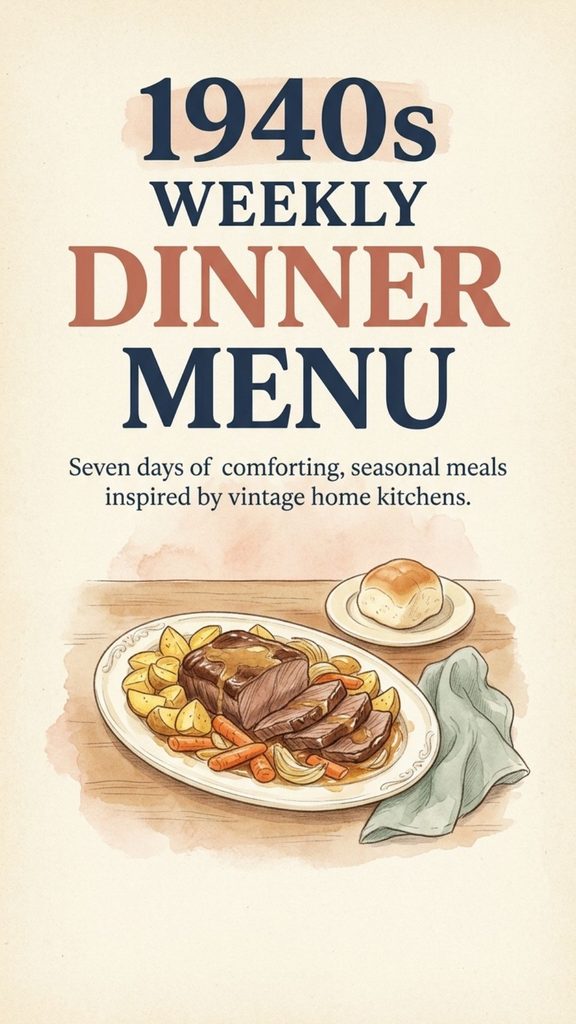
There is something comforting about the way families used to plan their meals. Before food delivery apps, oversized supermarket selections, and endless recipe videos, home cooks relied on seasonal ingredients, familiar recipes, and a little creativity to put dinner on the table.
The 1940s were an especially interesting period in American home cooking. Wartime rationing, household food budgets, Victory Gardens, and the need to avoid waste all influenced what appeared on family dinner tables.
A typical meal might feature a simple main dish, potatoes or another filling starch, cooked vegetables, homemade bread, and a small dessert made with fruit.
You Might Also Like:
- Loading posts...
Of course, not every household ate the same way. Family income, geographic location, food availability, and personal traditions all shaped everyday meals. Magazine menus often reflected an idealized version of homemaking rather than what every family could actually afford.
Still, many of the cooking habits associated with this period remain useful today.
A carefully planned menu can reduce grocery waste, encourage more home cooking, and make mealtimes feel less rushed.
This seven-day 1940s-inspired dinner plan brings back familiar comfort foods, simple side dishes, seasonal vegetables, and old-fashioned desserts. The recipes have been adapted for modern kitchens while keeping their traditional character.
What Made 1940s Family Meals Different?
Many American households during the 1940s were encouraged to use ingredients carefully, reduce food waste, and make the most of what they had.
During World War II, rationing affected products such as sugar, meat, butter, and certain canned goods at different times.
Home cooks learned to stretch ingredients, use leftovers creatively, and substitute available foods when necessary.
Vegetable gardens provided fresh produce for some households, while preserving food through canning and other methods helped extend seasonal harvests.
A well-rounded dinner in a household cookbook or women’s magazine might include several components rather than one large main dish.
For example, dinner could feature roasted meat, potatoes, cooked carrots, bread, and baked fruit.
Portion sizes and food availability varied, so it’s important not to assume these menus reflected every family’s daily experience.
The most useful lesson is the habit of planning meals around available ingredients instead of deciding what to cook at the last minute.
The Complete 7-Day 1940s-Inspired Dinner Menu
| Day | Main Dish | Side Dishes | Dessert |
|---|---|---|---|
| Monday | Old-fashioned beef and vegetable stew | Homemade biscuits, cabbage salad | Cinnamon baked apples |
| Tuesday | Chicken and rice casserole | Buttered green beans, carrot salad | Vanilla rice pudding |
| Wednesday | Stuffed bell peppers | Mashed potatoes, lettuce salad | Baked pears |
| Thursday | Homemade meatloaf | Creamed peas, roasted potatoes | Apple crisp |
| Friday | Crispy homemade fish cakes | Coleslaw, boiled potatoes | Lemon pudding |
| Saturday | Chicken and dumplings | Steamed carrots, cucumber salad | Homemade oatmeal cookies |
| Sunday | Traditional pot roast | Roasted vegetables, dinner rolls | Old-fashioned fruit cobbler |
This is a modern, historically inspired menu rather than a reproduction of one documented family’s meals. It emphasizes recipes commonly associated with traditional American home cooking, along with practical ingredients that can still be found today.
Monday: Old-Fashioned Beef and Vegetable Stew
Monday is a wonderful day for a comforting one-pot meal, especially when the week ahead looks busy.
Beef and vegetable stew is filling, economical when prepared with suitable cuts, and easy to adapt to ingredients already in the kitchen.
Ingredients
- 1½ pounds beef chuck, cut into cubes
- 3 medium potatoes, peeled and chopped
- 3 carrots, sliced
- 2 celery stalks, chopped
- 1 large onion, diced
- 3 cups low-sodium beef broth
- 1 tablespoon tomato paste
- 2 tablespoons flour
- 1 tablespoon cooking oil
- 1 teaspoon dried thyme
- Salt and black pepper to taste
How to Make It
Heat the oil in a large pot and brown the beef in batches.
Add the onion and celery, cooking until they begin to soften. Stir in the flour and tomato paste.
Slowly pour in the broth while stirring, then add the thyme.
Cover and simmer gently for approximately 1½ hours, or until the meat begins to become tender.
Add the potatoes and carrots, then continue cooking until the beef and vegetables are tender.
Season to taste.
Serve with warm homemade biscuits and a simple cabbage salad.
Old-Fashioned Dessert: Cinnamon Baked Apples
Core four apples and place them in a baking dish.
Fill the centers with a mixture of cinnamon, a little brown sugar, and a small amount of butter.
Add a little water to the dish and bake at 350°F (175°C) for approximately 30–40 minutes, depending on the size and variety of apples.
The apples should become tender while retaining their shape.
This dessert is especially appealing during autumn when apples are plentiful.
Tuesday: Creamy Chicken and Rice Casserole
Casseroles became enduring favorites in American home cooking because they could turn familiar ingredients into a satisfying family meal.
Chicken and rice casserole is a particularly practical option because it combines protein, grains, and vegetables in one baking dish.
Ingredients
- 2 cups cooked shredded chicken
- 3 cups cooked rice
- 1 cup cooked peas
- 1 small onion, finely chopped
- 2 tablespoons butter
- 2 tablespoons flour
- 1½ cups milk
- ½ cup low-sodium chicken broth
- ½ teaspoon dried thyme
- Salt and black pepper to taste
How to Make It
Preheat the oven to 375°F (190°C).
Melt the butter in a saucepan and cook the onion until softened.
Stir in the flour, then gradually whisk in the milk and broth.
Continue stirring until the mixture thickens into a light sauce.
Add the chicken, rice, peas, and seasonings.
Transfer everything to a lightly greased baking dish.
Cover and bake for approximately 20 minutes, then uncover and cook for another 5–10 minutes until hot throughout.
The center of the casserole should reach 165°F (74°C).
Serve with buttered green beans and grated carrot salad.
Old-Fashioned Dessert: Rice Pudding
Combine cooked rice, milk, a little sugar, vanilla, and cinnamon in a saucepan.
Simmer gently, stirring frequently, until creamy.
For a richer version, add a little butter toward the end.
Serve warm or chilled.
Rice pudding is a simple way to use extra cooked rice, provided the rice has been cooled promptly and stored safely in the refrigerator.
Wednesday: Traditional Stuffed Bell Peppers
Stuffed peppers are a practical old-fashioned dinner because they combine meat, rice, and vegetables in individual portions.
The filling can also be adjusted according to what you have available.
Ingredients
- 4 large bell peppers
- 1 pound ground beef
- 1 cup cooked rice
- 1 small onion, diced
- 1 cup crushed tomatoes
- 1 garlic clove, minced
- 1 teaspoon dried parsley
- Salt and black pepper to taste
How to Make It
Preheat the oven to 375°F (190°C).
Cut the tops off the peppers and remove the seeds.
Brown the ground beef with the onion, draining excess fat if necessary.
Add the garlic, rice, half the tomatoes, parsley, and seasonings.
Fill the peppers with the mixture and arrange them upright in a baking dish.
Pour the remaining crushed tomatoes around the peppers with a splash of water.
Cover with foil and bake for approximately 35–45 minutes, or until the peppers are tender and the filling is fully heated.
If preparing the filling with raw meat rather than precooked meat, make sure it reaches a safe internal temperature before serving.
Pair with fluffy mashed potatoes and a simple lettuce salad.
Old-Fashioned Dessert: Honey Baked Pears
Halve and core ripe but firm pears.
Arrange them cut-side up in a baking dish.
Drizzle lightly with honey, sprinkle with cinnamon, and add a small amount of water.
Bake at 350°F (175°C) until tender, usually around 20–30 minutes.
Serve warm.
Thursday: Classic Homemade Meatloaf Dinner
Few dishes feel as connected to old-fashioned American family dinners as homemade meatloaf.
It uses familiar ingredients, requires little preparation, and makes excellent leftovers.
Ingredients
- 1½ pounds ground beef
- 1 egg
- ¾ cup breadcrumbs
- ½ cup milk
- 1 small onion, finely chopped
- 1 tablespoon Worcestershire sauce
- ½ teaspoon salt
- ¼ teaspoon black pepper
For the topping:
- ¼ cup ketchup
- 1 tablespoon brown sugar
- 1 teaspoon mustard
How to Make It
Preheat the oven to 350°F (175°C).
Combine the ground beef, egg, breadcrumbs, milk, onion, Worcestershire sauce, salt, and pepper.
Mix gently until combined.
Shape into a loaf and place it in a suitable baking dish.
Mix the topping ingredients and spread over the loaf.
Bake for approximately 55–70 minutes, depending on its shape and thickness.
Use a food thermometer to confirm the center reaches 160°F (71°C).
Allow it to rest briefly before slicing.
Serve with roasted potatoes and creamed peas.
Easy Creamed Peas
Melt one tablespoon of butter in a saucepan and stir in one tablespoon of flour.
Gradually whisk in one cup of milk.
Cook until lightly thickened, then add two cups of cooked peas.
Season with salt and pepper.
Old-Fashioned Dessert: Apple Crisp
Toss sliced apples with cinnamon and a little sugar.
Place in a baking dish.
Top with a crumbly mixture of oats, flour, butter, and brown sugar.
Bake at 350°F (175°C) until the apples are tender and the topping is golden, approximately 35–45 minutes.
Serve warm, with a little milk or vanilla ice cream if desired.
Friday: Homemade Fish Cakes With Coleslaw
Friday fish dinners have a long history in many households, especially among families observing religious traditions.
Fish cakes are also useful because they can be made with cooked fish and inexpensive pantry ingredients.
Ingredients
- 2 cups cooked, flaked fish
- 2 cups mashed potatoes
- 1 egg
- 2 tablespoons finely chopped onion
- 1 tablespoon chopped parsley
- ½ teaspoon salt
- Black pepper to taste
- Breadcrumbs for coating
- Oil for pan-frying
How to Make It
Combine the cooked fish, mashed potatoes, egg, onion, parsley, and seasonings.
Form the mixture into small patties.
Lightly coat each patty with breadcrumbs.
Refrigerate briefly if the mixture feels too soft.
Heat a little oil in a skillet and cook the patties until golden on both sides and thoroughly heated.
Because fish cakes contain egg and cooked fish, handle them carefully and cook until the mixture reaches a safe temperature throughout.
Serve with homemade coleslaw and boiled potatoes.
Simple Coleslaw
Combine finely shredded cabbage and grated carrots.
Dress with a little mayonnaise, vinegar, and sugar.
Season to taste.
Keep refrigerated until serving.
Old-Fashioned Dessert: Lemon Pudding
A simple stovetop lemon pudding can be prepared using milk, sugar, cornstarch, and lemon zest.
Heat the milk with sugar, then whisk in a cornstarch slurry.
Cook until thickened and bubbling, stirring constantly.
Remove from the heat and add lemon zest and a little lemon juice to taste.
Serve in small dishes once cooled.
Saturday: Homemade Chicken and Dumplings
Chicken and dumplings is a classic comfort food that makes a satisfying weekend dinner.
It’s especially suited to a day when you have a little extra time for cooking.
Ingredients
For the chicken stew:
- 1½ pounds boneless chicken thighs
- 5 cups chicken broth
- 2 carrots, sliced
- 2 celery stalks, chopped
- 1 onion, diced
- 1 teaspoon dried thyme
- Salt and pepper to taste
For the dumplings:
- 1½ cups all-purpose flour
- 2 teaspoons baking powder
- ½ teaspoon salt
- 2 tablespoons cold butter
- Approximately ¾ cup milk
How to Make It
Place the chicken, broth, vegetables, and thyme in a large pot.
Bring to a gentle simmer and cook until the chicken is fully cooked and tender.
Remove the chicken, shred it, and return it to the pot.
For the dumplings, mix the flour, baking powder, and salt.
Cut in the butter, then add enough milk to form a soft dough.
Drop spoonfuls of dough onto the gently simmering chicken mixture.
Cover tightly and cook for approximately 15 minutes without repeatedly lifting the lid.
Check that the dumplings are cooked through and the chicken has reached 165°F (74°C).
Serve with steamed carrots and a simple cucumber salad.
Old-Fashioned Dessert: Oatmeal Cookies
Cream butter with brown sugar, then mix in an egg and vanilla.
Add flour, baking soda, cinnamon, and rolled oats.
Scoop onto a lined baking tray and bake at 350°F (175°C) until the edges are lightly golden.
Oatmeal cookies are easy to prepare ahead and can be enjoyed over several days.
Sunday: Traditional Pot Roast With Vegetables
Sunday dinners were often presented in old cookbooks as an opportunity to serve a larger family meal.
A pot roast makes a wonderful centerpiece because the meat and vegetables cook together, producing a comforting dish with relatively little hands-on work.
Ingredients
- 3-pound beef chuck roast
- 4 potatoes, cut into large pieces
- 4 carrots, peeled and chopped
- 2 onions, quartered
- 2 cups beef broth
- 2 garlic cloves
- 1 teaspoon dried rosemary
- 1 teaspoon dried thyme
- 1 tablespoon oil
- Salt and pepper to taste
How to Make It
Preheat the oven to 325°F (165°C).
Season the beef with salt and pepper.
Heat the oil in a heavy oven-safe pot and brown the roast on all sides.
Add the garlic, broth, rosemary, and thyme.
Cover and transfer to the oven.
Cook for approximately two hours, then add the vegetables.
Continue cooking for another one to two hours, or until the meat is fork-tender and the vegetables are soft.
Cooking time depends on the thickness and cut of the meat.
Serve with the pan juices, warm dinner rolls, and a fresh green salad.
Old-Fashioned Dessert: Fruit Cobbler
Fruit cobbler is a lovely way to finish a traditional Sunday meal.
Use peaches, cherries, berries, or another suitable fruit.
Place the fruit in a baking dish with a little sugar and a small amount of cornstarch if needed to thicken the juices.
Prepare a simple biscuit-style topping using flour, baking powder, butter, milk, and sugar.
Drop the topping over the fruit and bake at 375°F (190°C) for approximately 30–40 minutes.
The cobbler is ready when the filling is bubbling and the topping is golden and fully baked.
A Simple Grocery List for the Week
A carefully organized shopping list can reduce unnecessary purchases and make cooking easier.
Quantities will depend on the number of people you’re feeding, the portion sizes, and what you already have at home.
Meat, Fish, and Protein
- Beef chuck for stew and pot roast
- Ground beef
- Chicken thighs
- Fish suitable for fish cakes
- Eggs
Vegetables
- Potatoes
- Carrots
- Onions
- Celery
- Cabbage
- Bell peppers
- Lettuce
- Cucumbers
- Green beans
- Peas
- Garlic
Fruit
- Apples
- Pears
- Seasonal fruit for cobbler
- Lemons
Pantry Staples
- Rice
- All-purpose flour
- Breadcrumbs
- Rolled oats
- Baking powder
- Cornstarch
- Brown sugar
- White sugar
- Canned tomatoes
- Beef and chicken broth
- Cooking oil
- Herbs and spices
Dairy and Refrigerated Items
- Milk
- Butter
- Mayonnaise
You may also need ingredients for homemade biscuits, dinner rolls, or other family favorites.
Check the pantry before shopping so you don’t purchase duplicates.
What This Menu Teaches Us About Old-Fashioned Cooking
A week of traditional meals can reveal several useful habits that are easy to overlook in a busy modern kitchen.
Seasonal Foods Make Meal Planning Easier
Older household menus often emphasized what was locally available and affordable at particular times of year.
Autumn menus frequently featured apples, pears, squash, potatoes, and root vegetables.
Spring and summer offered opportunities to use different produce.
Buying in-season foods may provide better value, although prices depend on local supply and conditions.
It also encourages variety throughout the year.
Leftovers Can Become New Meals
A roast doesn’t have to provide only one dinner.
Properly refrigerated leftover beef can be used in sandwiches, vegetable hash, or a hearty soup.
Cooked chicken can become a casserole or chicken salad.
Extra mashed potatoes can be transformed into potato cakes.
The key is to refrigerate leftovers promptly, use most cooked leftovers within three to four days, and reheat them safely.
Simple Desserts Can Feel Special
A homemade dessert doesn’t need an elaborate ingredient list.
Baked apples, rice pudding, oatmeal cookies, and fruit cobblers use familiar pantry staples.
Dessert can also be occasional rather than an everyday requirement.
The charm of old-fashioned desserts often comes from preparation and presentation rather than complexity.
Planning Reduces Everyday Decisions
When dinner is already planned, you don’t have to start from scratch every afternoon.
You can thaw ingredients safely, prepare vegetables ahead, and organize cooking around your schedule.
A weekly menu also makes it easier to coordinate groceries and use perishable foods before they spoil.
How to Make a 1940s-Inspired Menu More Affordable
Traditional recipes aren’t automatically inexpensive. A menu containing meat every day can become costly, especially when feeding a large family.
However, there are ways to keep the spirit of old-fashioned cooking while managing expenses.
Use smaller portions of meat alongside vegetables, beans, grains, or potatoes.
Replace a meat-based dinner occasionally with bean soup, lentil stew, or another satisfying vegetarian dish.
Buy suitable seasonal produce and frozen vegetables when they offer better value.
Make broth from appropriate leftovers when practical, following food-safety guidelines.
Cook larger batches of freezer-friendly meals and freeze portions promptly.
Choose simple homemade desserts instead of purchasing several packaged sweets.
And remember that modern convenience ingredients, such as frozen vegetables or canned beans, can be useful time-saving tools.
Being resourceful doesn’t mean preparing everything from scratch.
A Few Things to Remember About Real 1940s Food History
It’s easy to romanticize historical homemaking when looking through old magazines and cookbooks.
Their photographs often show beautifully presented meals, orderly kitchens, and cheerful families gathered around the table.
But life during the 1940s was not equally comfortable for everyone.
Wartime rationing affected ingredient availability, and families differed widely in income, time, equipment, and access to food.
Some relied heavily on home gardens and preserved foods, while others purchased most of their groceries.
The end of World War II also brought changes in availability and household consumption.
For that reason, a modern 1940s-inspired menu is best understood as a way to explore historical cooking traditions rather than an exact reconstruction of everyday life.
You can appreciate the practical techniques without taking on the unrealistic expectations that often accompanied old-fashioned homemaking.
Bringing Back the Charm of Traditional Family Dinners
Cooking an entire week of 1940s-inspired meals can be a refreshing change from an ordinary dinner routine.
The recipes rely on recognizable ingredients, straightforward cooking methods, and satisfying combinations of main dishes and sides.
Beef stew, chicken casserole, stuffed peppers, meatloaf, fish cakes, chicken and dumplings, and Sunday pot roast all offer opportunities to practice familiar home-cooking skills.
The desserts bring an additional touch of nostalgia, with baked fruit, puddings, cookies, and cobblers rounding out the week.
You don’t need to prepare every side dish or dessert to enjoy the experience.
Adapt the menu to your budget, family size, time, and dietary needs.
The most valuable part of this old-fashioned approach is the reminder that a little planning, practical cooking knowledge, and thoughtful use of ingredients can make everyday meals feel more special.
Sometimes the nicest way to bring something new to the dinner table is to revisit the simple, comforting foods of the past.