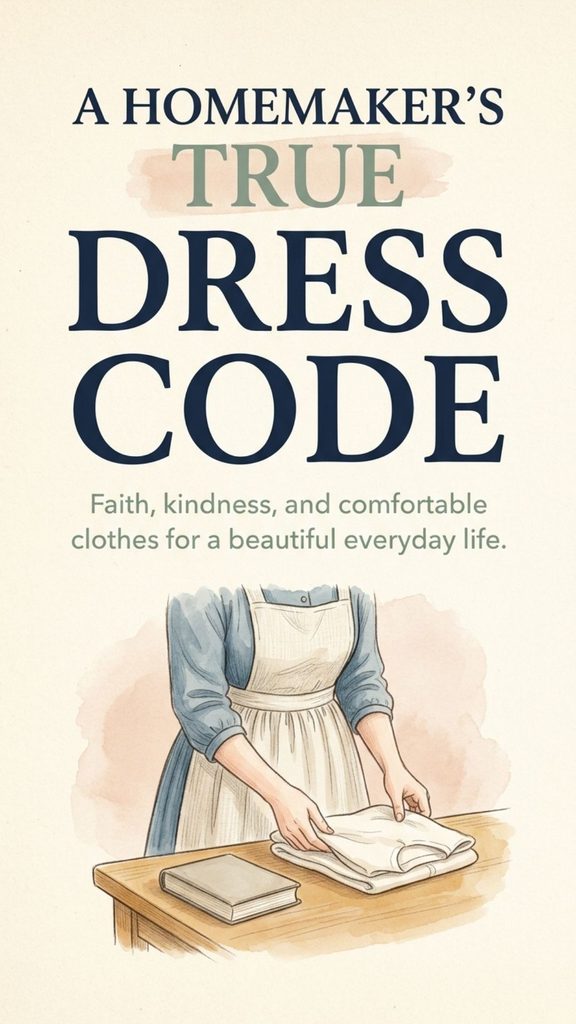
Being a homemaker involves far more than keeping the floors clean, preparing meals, and making sure everyone has fresh laundry. Much of what makes a home welcoming comes from the attitudes, habits, and small acts of care that shape everyday family life.
The way we dress can influence how prepared and comfortable we feel throughout the day. Yet clothing is only one part of the picture. A beautiful outfit cannot replace patience during a difficult morning, kindness toward a struggling family member, or the grace needed when everything goes wrong.
For Christian homemakers, this offers a meaningful way to think about personal appearance. Rather than treating homemaking as a performance that requires a particular wardrobe, we can consider what it means to cultivate beauty in our character while also caring for ourselves outwardly.
You Might Also Like:
- Loading posts...
The goal is not to become a perfectly dressed, endlessly cheerful woman. It is to develop a thoughtful, realistic approach to faith, appearance, and the responsibilities of home.
1. Let Kindness and Compassion Be the Foundation of Your Beauty
One of the most meaningful descriptions of Christian character appears in Colossians 3:12–14. The passage encourages believers to practice compassion, kindness, humility, gentleness, patience, forgiveness, and love.
These qualities have particular relevance to homemaking because life at home provides countless opportunities to practice them.
Consider an ordinary morning.
Someone spills a drink just after the kitchen has been cleaned. A child cannot find an important school item. The laundry needs attention, breakfast dishes are piling up, and an unexpected responsibility interrupts the day’s plans.
In moments like these, our reactions often matter more than how organized the house looks.
Compassion helps us recognize that others may be having a difficult morning, too. Patience gives us a moment to respond thoughtfully instead of reacting immediately. Humility reminds us that our own plans and preferences are not always the most important concerns in the room.
Love brings these qualities together.
This doesn’t mean ignoring misbehavior, accepting disrespect, or pretending that household responsibilities are never frustrating. Loving responses can include setting boundaries, correcting problems, and asking others to take responsibility.
The difference lies in how those situations are handled.
A household where people feel respected and valued can be deeply welcoming, even when the furniture is worn, the laundry is unfinished, and dinner is something simple.
Practice Inner Beauty Through Small Decisions
Character develops through ordinary choices, not just significant moments.
Try incorporating a few intentional habits into your day:
- Listen carefully when a family member wants to talk.
- Offer encouragement when someone is struggling.
- Apologize when your words have been unnecessarily harsh.
- Express appreciation for contributions that often go unnoticed.
- Allow room for mistakes, including your own.
- Look for opportunities to help without expecting recognition.
For Christians, these habits are also connected to spiritual growth.
Galatians 5:22–23 describes qualities traditionally known as the fruit of the Spirit, including love, joy, peace, patience, kindness, goodness, faithfulness, gentleness, and self-control.
These virtues provide a more meaningful foundation for personal beauty than any particular standard of dress.
2. Prepare Your Heart Before Facing the Demands of the Day
Homemaking requires mental and emotional energy.
There are decisions to make, responsibilities to manage, relationships to nurture, and problems that cannot always be anticipated.
Some days are productive and peaceful. Others feel disorganized before breakfast is finished.
For a Christian homemaker, spiritual preparation can provide an important source of encouragement during both.
Ephesians 6:10–18 uses the imagery of spiritual armor to describe qualities such as truth, righteousness, faith, salvation, and readiness to stand firm.
Although the passage addresses believers generally, its message can be applied to everyday life at home.
Begin With Truth Instead of Negative Self-Talk
It’s easy to measure personal worth against the condition of the house.
A cluttered kitchen might lead someone to think she is failing at homemaking. An unfinished project can become evidence, in her own mind, that she is lazy or incapable.
These conclusions are rarely fair.
An untidy room is a practical problem to address, not a verdict on someone’s character.
Faith can help challenge destructive patterns of thinking by reminding believers that their identity and worth are not determined by daily productivity.
Second Corinthians 10:5 speaks about bringing thoughts into obedience to Christ. In daily life, that can encourage a habit of examining discouraging thoughts rather than automatically accepting them.
Instead of thinking, “I never accomplish anything,” consider what actually happened.
Perhaps you cared for a sick child, prepared meals, managed appointments, or helped someone through a difficult situation.
Those responsibilities matter, even when they leave little visible evidence of progress.
Make Time for Spiritual Encouragement
Spiritual preparation doesn’t have to involve an elaborate morning routine.
Depending on your circumstances, it might include:
- Reading a short passage of Scripture.
- Spending a few quiet minutes in prayer.
- Reflecting on something you are grateful for.
- Listening to encouraging Christian teaching while completing suitable household tasks.
- Memorizing a meaningful Bible verse.
- Pausing during a stressful moment to pray for patience and wisdom.
The purpose isn’t to add another demanding obligation to an already busy schedule.
It is to create opportunities for spiritual reflection and encouragement throughout the day.
3. Wear a Genuine Smile, but Give Yourself Permission to Feel
A welcoming expression can make ordinary interactions feel warmer.
A smile when greeting a family member, a kind response to a question, or a moment of shared laughter can create pleasant memories in the middle of an otherwise ordinary day.
Yet anyone who manages a household knows that cheerful feelings are not constant.
There will be frustrating messes, disagreements, interrupted plans, and periods of genuine exhaustion.
Sometimes, the smallest inconvenience can feel enormous.
Perhaps you’ve just finished washing the floor when muddy shoes leave footprints across it. Or you’ve spent an hour preparing dinner only to hear complaints about the meal.
Feeling irritated in those moments doesn’t make someone a bad homemaker.
The useful question is what happens next.
Learn to Pause Before Reacting
When frustration begins to build, a brief pause can prevent an unpleasant situation from becoming worse.
Take a breath, identify what is bothering you, and decide whether the problem requires an immediate response.
Sometimes the answer is simple: ask someone to clean up the mess they made.
Other times, you may need a short break, help with household responsibilities, or a conversation about expectations.
Smiling can be a natural expression of contentment, but it should never become an obligation to hide sadness, anger, stress, or disappointment.
Ecclesiastes 3 acknowledges that life includes seasons of both joy and sorrow.
There is room for genuine laughter, but there is also room for grief, fatigue, and honest conversations about difficult feelings.
A peaceful home isn’t one where everyone smiles constantly. It’s one where people can express emotions respectfully and receive care when they need it.
4. Dress for Your Real Life, Not an Imaginary Standard
Images of traditional homemaking often feature women wearing carefully styled dresses, neat hairstyles, and beautiful accessories while performing household tasks.
There’s nothing wrong with enjoying that appearance.
However, a polished vintage-inspired outfit is not a requirement for being a capable, devoted, or faithful homemaker.
Neither is an expensive wardrobe.
The most appropriate clothing depends on personal preferences, household responsibilities, health, climate, and the activities planned for the day.
Someone gardening, scrubbing floors, or painting furniture may prefer durable trousers and a comfortable shirt.
A homemaker working from a desk might enjoy wearing a casual dress or coordinated separates.
A parent caring for a newborn may prioritize soft clothing that is easy to wash.
All of these choices are reasonable.
Comfort and Practicality Matter
When choosing everyday clothing, consider whether it allows you to move comfortably.
Can you bend, stretch, kneel, and complete household tasks without constantly adjusting your outfit?
Is the fabric suitable for the temperature?
Can the garment withstand regular washing?
Will you feel comfortable wearing it throughout the day?
Clothing that looks beautiful but makes ordinary activities unnecessarily difficult may not be the best choice for a busy day at home.
For cleaning tasks involving chemicals, protective gloves and appropriate clothing are more important than appearance.
Likewise, loose sleeves, dangling accessories, and long flowing garments deserve caution around open flames, machinery, and certain household equipment.
Looking presentable should never come at the expense of comfort or safety.
5. Make Getting Dressed a Simple Act of Self-Care
Although outward appearance does not determine personal worth, taking a little time to get dressed can still be a meaningful form of self-care.
For some people, changing out of sleepwear creates a helpful transition between resting and beginning the day’s responsibilities.
Others feel more comfortable remaining in casual loungewear while working at home.
Neither approach is automatically better.
The goal is to find a routine that helps you feel comfortable, prepared, and cared for without introducing unnecessary pressure.
Create an Easy Morning Routine
Consider a straightforward routine that takes only a few minutes.
Step 1: Choose clean, comfortable clothing.
Select something appropriate for the day’s weather and activities.
Step 2: Freshen up.
Wash your face, brush your teeth, and complete whatever personal hygiene routine works for you.
Step 3: Care for your hair.
A simple hairstyle that stays out of your way may be more practical than something requiring constant attention.
Step 4: Add a personal touch if you enjoy it.
This might mean wearing earrings, applying moisturizer, choosing a favorite color, or putting on a comfortable dress.
Step 5: Begin the day without demanding perfection.
If you are caring for a sick family member, recovering from illness, or facing an exhausting season of life, simplify the routine as much as necessary.
Personal care should support your well-being, not become another measure of success or failure.
6. Build a Homemaking Wardrobe You Actually Enjoy Wearing
A useful wardrobe doesn’t have to contain dozens of outfits.
In fact, having fewer clothes that fit well and work together can make everyday decisions easier.
Start by considering the activities that occupy most of your time.
If you spend your mornings cleaning and your afternoons running errands, you may benefit from comfortable outfits that work for both.
If you enjoy wearing dresses at home, look for washable fabrics and practical designs.
If leggings and oversized shirts suit your routine, there’s no reason to abandon them simply because someone else’s vision of homemaking looks different.
Focus on Versatile Everyday Pieces
Depending on your preferences, a practical wardrobe might include:
- Comfortable cotton tops
- Stretch trousers or leggings
- Casual everyday dresses
- Lightweight cardigans
- Practical skirts
- Comfortable shoes with appropriate support
- Durable clothing for messy projects
- A few outfits for occasions when you want to dress more formally
The exact pieces matter less than whether you actually wear and enjoy them.
Choose colors and styles that coordinate easily so you don’t have to spend much time planning outfits.
Shop Thoughtfully and Stay Within Your Budget
Looking put together doesn’t require purchasing an entirely new wardrobe.
Before shopping, examine what you already own.
You may discover that several favorite garments simply need minor repairs, better organization, or complementary pieces.
Secondhand shops, clothing swaps, and online resale marketplaces can be useful places to look for affordable options.
Styling and clothing subscription services are another possibility, but their costs and return policies should be considered carefully.
Avoid purchasing clothing solely because it looks attractive in photographs.
Think about how often you will wear it, how easily it can be cleaned, and whether it works with the rest of your wardrobe.
A small collection of comfortable, useful clothing can serve you better than a crowded closet filled with items you rarely choose.
7. Remember That Homemaking Is Not a Beauty Competition
Comparing yourself with other homemakers can quietly turn ordinary responsibilities into sources of dissatisfaction.
You might see someone online wearing an elegant dress while preparing homemade bread in a spotless kitchen.
What you don’t see is the rest of that person’s day.
Photographs rarely reveal every interruption, unfinished chore, financial concern, or personal struggle.
It’s perfectly reasonable to enjoy beautiful homemaking inspiration. Problems arise when inspiration becomes a rigid standard that everyone feels obligated to meet.
One homemaker may enjoy baking from scratch and arranging fresh flowers.
Another may create a welcoming atmosphere through simple meals, thoughtful conversations, and an organized family schedule.
Someone else may be balancing paid employment, caregiving, household tasks, and health challenges.
These different circumstances call for different priorities.
A Christian understanding of homemaking should leave room for individual abilities, family needs, and seasons of life.
It should also recognize that care for the home is a shared responsibility whenever circumstances allow.
Kindness, patience, and service are not qualities reserved for the person who manages the household. They are valuable expectations for every family member.
8. Extend the Same Grace to Yourself That You Offer Others
Many homemakers are generous with encouragement toward their families but surprisingly critical of themselves.
They readily forgive a child for making a mistake yet struggle to forgive themselves for forgetting an appointment or leaving a task unfinished.
They encourage loved ones to rest when they’re tired but feel guilty taking a break themselves.
This imbalance can make homemaking unnecessarily exhausting.
Compassion and patience should extend inward as well as outward.
If your family is going through an especially demanding period, reconsider which responsibilities truly need immediate attention.
Meals can be simpler. Some cleaning tasks can wait. Expectations may need to change.
Rest is not a reward that must be earned through complete productivity.
Taking care of your physical and emotional needs helps you approach responsibilities more sustainably.
It is also reasonable to ask other household members for help and to establish fair expectations about shared work.
A welcoming home should be a place where the homemaker can experience peace and belonging, too.
9. Let Your Appearance Reflect Your Personality
There is no single style that represents a good homemaker.
Some women love feminine dresses and vintage-inspired clothing. Others feel most like themselves in jeans, comfortable shirts, or athletic wear.
Some enjoy makeup and carefully styled hair. Others prefer a minimal approach.
Personal style can be a form of creativity and self-expression, but it doesn’t reveal someone’s spiritual maturity or character.
The important distinction is between caring about appearance and allowing appearance to determine self-worth.
You can enjoy beautiful clothing without becoming preoccupied with it.
You can make an effort to look neat without judging someone whose circumstances or preferences are different.
And you can have a genuinely difficult day without believing that your clothing, hairstyle, or facial expression makes you less valuable.
For Christians, passages such as 1 Peter 3:3–4 encourage attention to inner character rather than placing primary importance on external adornment.
That message doesn’t require abandoning personal style.
It provides perspective about what deserves the greatest emphasis.
10. Create a Home Where Inner Beauty Is Visible
One of the most meaningful expressions of homemaking is creating an atmosphere where people feel safe, respected, and loved.
That atmosphere isn’t determined by expensive decorations or elaborate meals.
It develops through everyday interactions.
A thoughtful greeting when someone returns home.
A willingness to listen without immediately criticizing.
A sincere apology after an argument.
Patience with someone who is learning a new responsibility.
A shared laugh over an unexpected mishap.
These gestures may seem small, but they shape the experience of living together.
For a Christian homemaker, caring for the home can become an opportunity to practice the faith she values.
That doesn’t mean every moment must be spiritually profound or emotionally uplifting.
Some days, faithful homemaking may involve nothing more glamorous than washing dishes, comforting a tired child, completing necessary errands, and treating others with kindness despite feeling worn out.
Those ordinary actions deserve recognition.
The Most Beautiful Thing You Can Wear at Home
There is nothing wrong with enjoying lovely clothes, a flattering hairstyle, or a comfortable outfit that makes you feel ready for the day.
Caring for your appearance can be pleasant and practical.
But the deepest beauty of homemaking cannot be purchased, styled, or arranged in a closet.
It is reflected in patience when plans change, compassion when someone struggles, humility when you make a mistake, and love expressed through ordinary acts of care.
For Christian homemakers, these qualities connect directly to the character described throughout Scripture.
Rather than measuring your success by how polished you look or how perfectly you maintain your house, consider the kind of atmosphere you are helping create.
Choose clothing that suits your life. Take care of your health and comfort. Enjoy your personal style without unnecessary guilt.
And give yourself permission to grow in kindness, patience, faith, and love without expecting perfection.
A beautiful home can be a wonderful gift, but a home shaped by genuine care, understanding, and grace offers something far more lasting.