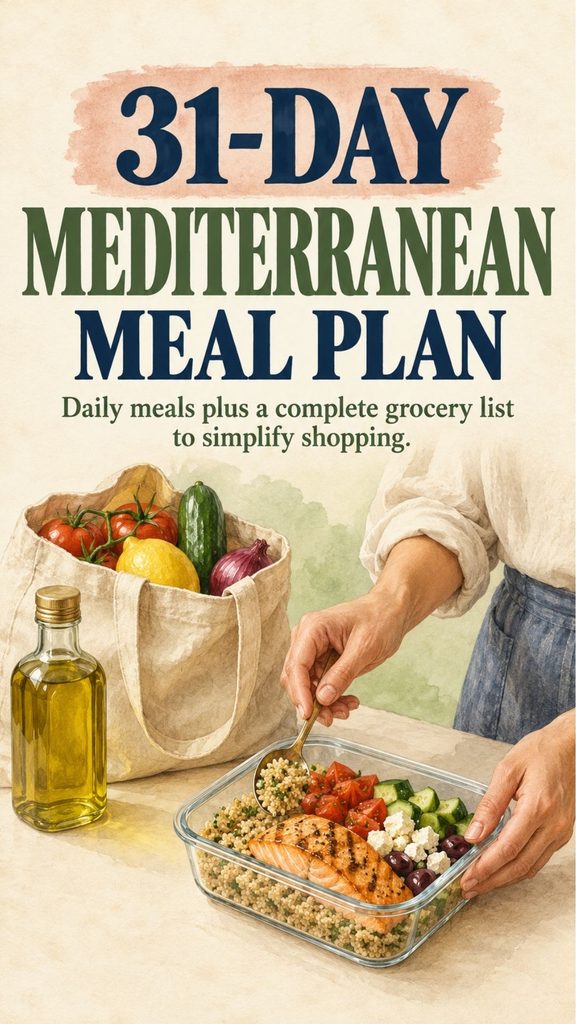
The Mediterranean diet is less about strict rules and more about building meals around simple, minimally processed foods.
Vegetables, fruits, whole grains, beans, lentils, nuts, seeds, olive oil, fish, seafood, eggs, poultry, yogurt, and cheese form the foundation of the eating pattern. Red meat, highly processed foods, refined grains, and foods with a lot of added sugar are generally eaten less often.
One of the biggest advantages of Mediterranean-style eating is flexibility. You do not need to cook complicated Mediterranean recipes every night or count every calorie. Instead, focus on combining wholesome ingredients in satisfying meals you can realistically prepare.
You Might Also Like:
- Loading posts...
This 31-day plan gives you a full month of breakfast, lunch, dinner, and snack ideas, followed by a master grocery list to make planning easier.
You can swap meals between days, repeat favorites, or adjust portions according to your appetite and household needs.
The Basic Mediterranean Diet Pattern
The source emphasizes a high intake of plant foods together with whole grains, legumes, nuts, seeds, olive oil, and regular fish and seafood.
A simple Mediterranean plate might contain:
- Plenty of vegetables
- A whole grain or potato
- Beans, lentils, fish, poultry, or eggs
- Extra-virgin olive oil
- Fresh herbs
- Fruit on the side
You do not need every food group at every meal.
Think about balance across the entire day and week.
Foods to Eat Often
Vegetables
Use a wide variety of vegetables, both raw and cooked.
Examples include:
- Tomatoes
- Peppers
- Cucumber
- Spinach
- Kale
- Broccoli
- Eggplant
- Zucchini
- Carrots
- Cauliflower
- Green beans
Fruit
Fresh fruit works well as breakfast, dessert, or a snack.
Good choices include:
- Apples
- Oranges
- Berries
- Pears
- Bananas
- Grapes
- Peaches
- Figs
Whole Grains
Choose whole-grain foods frequently.
Examples:
- Oats
- Brown rice
- Quinoa
- Bulgur
- Whole-wheat bread
- Whole-wheat pasta
- Whole-wheat pita
- Barley
- Polenta
Legumes
Beans and lentils are an important part of the pattern.
Try:
- Chickpeas
- Lentils
- White beans
- Black beans
- Kidney beans
Healthy Fats
Extra-virgin olive oil is a main cooking and dressing fat.
Other useful options include:
- Olives
- Avocado
- Nuts
- Seeds
- Tahini
Fish and Seafood
Include seafood regularly.
The source especially highlights fish such as salmon and sardines.
Other options include:
- Cod
- Trout
- Shrimp
- Tuna
- White fish
Poultry and Eggs
Chicken, turkey, and eggs can appear regularly but do not need to dominate every meal.
Dairy
Mediterranean meals can also include moderate amounts of:
- Greek yogurt
- Feta
- Ricotta
- Mozzarella
- Parmesan
Foods to Limit
The source recommends eating less:
- Red meat
- Processed meats
- Sugary foods and drinks
- Refined grains
- Highly processed foods
The goal is not perfection.
If most of your meals are built around vegetables, whole grains, legumes, fish, olive oil, fruit, and other minimally processed ingredients, there is room for flexibility.
WEEK 1
Day 1
Breakfast
Greek yogurt topped with:
- Strawberries
- Blueberries
- Chia seeds
Lunch
Whole-grain pita filled with:
- Hummus
- Cucumber
- Tomatoes
- Mixed greens
Dinner
Grilled salmon with lemon and herbs, served with:
- Roasted vegetables
- Quinoa
Snack
Apple with a handful of almonds.
Day 2
Breakfast
Steel-cut oats topped with:
- Sliced banana
- Walnuts
- Small drizzle of honey
Lunch
Mediterranean chickpea salad with:
- Chickpeas
- Feta
- Olives
- Tomatoes
- Cucumber
- Olive oil
Dinner
Baked cod with garlic and tomatoes.
Serve with:
- Steamed green beans
- Brown rice
Snack
Carrot sticks with hummus.
Day 3
Breakfast
Whole-grain toast topped with:
- Avocado
- Poached eggs
- Cherry tomatoes
Lunch
Lentil soup with:
- Whole-grain bread
- Side salad
- Olive-oil dressing
Dinner
Grilled chicken breast with:
- Roasted red peppers
- Zucchini
- Bulgur
Snack
Greek yogurt with honey and crushed pistachios.
Day 4
Breakfast
Smoothie made with:
- Spinach
- Banana
- Berries
- Greek yogurt
- Ground flaxseed
Lunch
Whole-wheat pasta salad with:
- Cherry tomatoes
- Olives
- Feta
- Fresh basil
Dinner
Baked white fish with lemon.
Serve with:
- Garlic-sautéed spinach
- Roasted potatoes
Snack
Fresh orange with walnuts.
Day 5
Breakfast
Egg-white omelet with:
- Mushrooms
- Spinach
- Tomatoes
Serve with whole-grain toast.
Lunch
Tabbouleh with grilled chicken and whole-wheat pita.
Dinner
Turkey meatballs in tomato sauce with:
- Whole-grain spaghetti
- Arugula salad
Snack
Bell-pepper slices with tzatziki.
Day 6
Breakfast
Greek yogurt parfait with:
- Granola
- Mixed berries
- Honey
Lunch
Caprese salad with:
- Fresh mozzarella
- Tomatoes
- Basil
- Balsamic vinegar
Serve with a whole-grain roll.
Dinner
Grilled shrimp with garlic and lemon.
Serve with:
- Roasted Brussels sprouts
- Quinoa
Snack
Apple slices with almond butter.
Day 7
Breakfast
Whole-grain pancakes with:
- Fresh berries
- Greek yogurt
Lunch
White bean and vegetable soup with:
- Mixed green salad
- Whole-grain bread
Dinner
Herb-baked chicken with:
- Roasted eggplant
- Zucchini
- Couscous
Snack
Mixed nuts with dried figs.
WEEK 2
Day 8
Breakfast
Oatmeal topped with:
- Sliced pear
- Cinnamon
- Chopped almonds
Lunch
Falafel bowl with:
- Hummus
- Tabbouleh
- Cucumber
- Tomato
- Tahini sauce
Dinner
Grilled salmon with dill.
Serve with:
- Roasted asparagus
- Brown-rice pilaf
Snack
Greek yogurt with berries.
Day 9
Breakfast
Scrambled eggs with:
- Feta
- Spinach
Serve with whole-grain toast.
Lunch
Quinoa salad with:
- Chickpeas
- Cucumber
- Red onion
- Lemon vinaigrette
Dinner
Baked cod with tomatoes and olives.
Serve with:
- Sautéed kale
- Polenta
Snack
Celery sticks with almond butter.
Day 10
Breakfast
Whole-grain toast topped with:
- Ricotta
- Strawberries
- Small drizzle of honey
Lunch
Mediterranean wrap with:
- Grilled vegetables
- Hummus
- Whole-wheat tortilla
Dinner
Grilled chicken kebabs with:
- Peppers
- Onions
- Greek salad
- Pita bread
Snack
Fresh grapes and walnuts.
Day 11
Breakfast
Smoothie bowl with:
- Banana
- Berries
- Granola
- Chia seeds
Lunch
Lentil and vegetable stew with:
- Whole-grain bread
- Mixed greens
Dinner
Baked trout with herbs.
Serve with:
- Roasted carrots
- Parsnips
- Bulgur
Snack
Hummus with cucumber slices.
Day 12
Breakfast
Greek yogurt topped with:
- Granola
- Banana
- Honey
Lunch
Whole-wheat pasta with:
- Pesto
- Cherry tomatoes
- Pine nuts
- Arugula
Dinner
Grilled lamb chops with rosemary.
Serve with:
- Roasted potatoes
- Green beans
Snack
Orange segments with almonds.
Day 13
Breakfast
Vegetable omelet with:
- Tomatoes
- Peppers
- Onion
Serve with whole-grain toast.
Lunch
Mediterranean tuna salad with:
- White beans
- Olives
- Greens
- Lemon dressing
Dinner
Baked chicken with lemon and garlic.
Serve with:
- Roasted cauliflower
- Quinoa
Snack
Greek yogurt with honey.
Day 14
Breakfast
Whole-grain waffles with:
- Fresh berries
- Greek yogurt
Lunch
Minestrone with:
- White beans
- Whole-grain roll
- Side salad
Dinner
Grilled shrimp skewers with:
- Tabbouleh
- Roasted vegetables
Snack
Apple with cashew butter.
WEEK 3
Day 15
Breakfast
Steel-cut oats with:
- Blueberries
- Walnuts
- Cinnamon
Lunch
Chickpea and vegetable curry over brown rice.
Dinner
Baked salmon with mustard-herb crust.
Serve with:
- Roasted Brussels sprouts
- Sweet potato
Snack
Pistachios with dried apricots.
Day 16
Breakfast
Scrambled eggs with:
- Spinach
- Feta
Serve with whole-grain toast.
Lunch
Greek salad with:
- Grilled chicken
- Whole-wheat pita
Dinner
White fish with tomato-caper sauce.
Serve with:
- Sautéed zucchini
- Couscous
Snack
Carrot sticks with tzatziki.
Day 17
Breakfast
Greek yogurt with:
- Sliced peaches
- Granola
- Honey
Lunch
Lentil salad with:
- Roasted vegetables
- Feta
- Balsamic dressing
Dinner
Herb-grilled chicken with:
- Roasted red peppers
- Bulgur pilaf
Snack
Fresh pear with almonds.
Day 18
Breakfast
Whole-grain toast with:
- Avocado
- Tomato
- Poached egg
Lunch
Whole-wheat pasta with:
- Marinara sauce
- White beans
- Spinach
Dinner
Baked cod with:
- Lemon
- Olives
- Roasted eggplant
- Brown rice
Snack
Greek yogurt with berries.
Day 19
Breakfast
Smoothie made with:
- Kale
- Banana
- Mango
- Greek yogurt
- Flaxseed
Lunch
Mediterranean quinoa bowl with:
- Chickpeas
- Cucumber
- Tomato
- Tahini
Dinner
Turkey meatballs with:
- Tomato sauce
- Whole-grain pasta
- Arugula salad
Snack
Bell-pepper strips with hummus.
Day 20
Breakfast
Oatmeal with:
- Apple slices
- Cinnamon
- Chopped walnuts
Lunch
White bean and vegetable soup with:
- Whole-grain bread
- Mixed greens
Dinner
Grilled salmon with dill sauce.
Serve with:
- Roasted asparagus
- Quinoa
Snack
Orange with almonds.
Day 21
Breakfast
Vegetable frittata with:
- Tomatoes
- Spinach
- Feta
Serve with whole-grain toast.
Lunch
Falafel wrap with:
- Hummus
- Tabbouleh
- Cucumber
- Tomato
Dinner
Baked chicken with rosemary.
Serve with:
- Roasted root vegetables
- Polenta
Snack
Greek yogurt with honey and pistachios.
WEEK 4
Day 22
Breakfast
Greek yogurt parfait with:
- Granola
- Mixed berries
- Chia seeds
Lunch
Caprese sandwich on whole-grain bread with a side salad.
Dinner
Garlic-grilled shrimp with:
- Roasted broccoli
- Brown rice
Snack
Apple slices with almond butter.
Day 23
Breakfast
Whole-grain toast with:
- Ricotta
- Sliced figs
- Honey
Lunch
Lentil and vegetable soup with:
- Whole-wheat pita
- Hummus
Dinner
Baked trout with herbs.
Serve with:
- Sautéed green beans
- Almonds
- Bulgur
Snack
Fresh berries with walnuts.
Day 24
Breakfast
Scrambled eggs with:
- Mushrooms
- Fresh herbs
Serve with whole-grain toast.
Lunch
Mediterranean chickpea salad with:
- Feta
- Olives
- Cucumber
- Tomatoes
Dinner
Grilled chicken kebabs with:
- Greek salad
- Whole-wheat pita
Snack
Carrot and celery sticks with hummus.
Day 25
Breakfast
Smoothie bowl with:
- Açaí
- Banana
- Berries
- Granola
- Coconut
Lunch
Whole-wheat pasta with:
- Pesto
- Cherry tomatoes
- White beans
Dinner
Baked cod with:
- Tomatoes
- Capers
- Roasted cauliflower
- Quinoa
Snack
Greek yogurt with honey.
Day 26
Breakfast
Steel-cut oatmeal with:
- Pear slices
- Cinnamon
- Pecans
Lunch
Tabbouleh with:
- Grilled vegetables
- Whole-wheat pita
Dinner
Grilled lamb with mint.
Serve with:
- Roasted potatoes
- Green beans
Snack
Orange segments with almonds.
Day 27
Breakfast
Egg-white omelet with:
- Peppers
- Onions
- Tomatoes
Serve with whole-grain toast.
Lunch
White bean and kale soup with:
- Whole-grain roll
- Side salad
Dinner
Baked salmon with lemon-dill sauce.
Serve with:
- Roasted Brussels sprouts
- Brown rice
Snack
Bell peppers with tzatziki.
Day 28
Breakfast
Greek yogurt topped with:
- Banana
- Granola
- Honey
Lunch
Mediterranean wrap with:
- Grilled chicken
- Hummus
- Vegetables
Dinner
Grilled shrimp skewers with:
- Quinoa tabbouleh
- Roasted vegetables
Snack
Apple with cashews.
WEEK 5
Day 29
Breakfast
Whole-grain pancakes with:
- Fresh berries
- Greek yogurt
Lunch
Lentil salad with:
- Roasted vegetables
- Feta
- Lemon dressing
Dinner
Baked white fish with herbs.
Serve with:
- Sautéed spinach
- Couscous
Snack
Mixed nuts with dates.
Day 30
Breakfast
Smoothie with:
- Spinach
- Pineapple
- Banana
- Greek yogurt
Lunch
Chickpea and vegetable stew with whole-grain bread.
Dinner
Herb-grilled chicken with:
- Roasted eggplant
- Zucchini
- Bulgur
Snack
Greek yogurt with berries and honey.
Day 31
Breakfast
Vegetable scramble with:
- Tomatoes
- Peppers
- Feta
Serve with whole-grain toast.
Lunch
Mediterranean quinoa bowl with:
- Chickpeas
- Cucumber
- Olives
- Tahini
Dinner
Baked salmon with mustard glaze.
Serve with:
- Roasted asparagus
- Brown-rice pilaf
Snack
Fresh fruit salad with mint.
Complete Grocery List
The exact quantities you need depend on the number of people you are feeding.
The source recommends shopping weekly for fresh produce rather than trying to purchase all fresh food for the entire month at once.
Vegetables
- Asparagus
- Arugula
- Bell peppers
- Broccoli
- Brussels sprouts
- Carrots
- Cauliflower
- Celery
- Cherry tomatoes
- Cucumbers
- Eggplant
- Garlic
- Green beans
- Kale
- Mixed salad greens
- Mushrooms
- Yellow onions
- Red onions
- Parsnips
- Potatoes
- Spinach
- Sweet potatoes
- Tomatoes
- Zucchini
Fresh Herbs
Keep several of these available:
- Basil
- Parsley
- Cilantro
- Mint
- Dill
- Rosemary
Fresh herbs are one of the easiest ways to make simple grains, beans, fish, and vegetables taste different from one day to the next.
Fruit
- Apples
- Avocados
- Bananas
- Blueberries
- Grapes
- Lemons
- Mangoes
- Oranges
- Peaches
- Pears
- Pineapple
- Strawberries
- Mixed berries
- Fresh or dried figs
- Dried apricots
- Dates
Fish and Seafood
- Salmon
- Cod or another white fish
- Trout
- Shrimp
- Canned tuna
Buying some fish frozen can make a month-long plan much easier because you can thaw individual portions as needed.
Poultry and Meat
- Chicken breasts
- Lean ground turkey
- Small amount of lamb
Mediterranean eating generally relies less heavily on red meat than many Western eating patterns.
Eggs
Keep eggs available for:
- Omelets
- Scrambles
- Frittatas
- Poached eggs
- Quick lunches
Dairy
- Plain Greek yogurt
- Feta
- Fresh mozzarella
- Parmesan
- Ricotta
- Milk or plant-based alternative
Choose unsweetened versions when practical so you can control how much honey or other sweetener you add.
Whole Grains
- Brown rice
- Quinoa
- Bulgur
- Whole-wheat couscous
- Steel-cut oats
- Rolled oats
- Polenta
- Barley
Breads and Pasta
- Whole-grain bread
- Whole-wheat pita
- Whole-wheat tortillas
- Whole-wheat pasta
- Whole-wheat spaghetti
If buying several loaves or packages at once, freeze extras so they do not spoil.
Beans and Legumes
Keep a combination of dried and canned options.
- Chickpeas
- Brown or green lentils
- White beans
- Black beans
- Kidney beans
Canned beans are particularly convenient for fast lunches.
Rinse them before adding them to salads or bowls.
Hummus and Falafel
Useful prepared options include:
- Hummus
- Falafel mix
- Prepared falafel
You can also make both at home if you prefer.
Nuts and Seeds
- Almonds
- Walnuts
- Pistachios
- Cashews
- Pine nuts
- Pecans
- Chia seeds
- Ground flaxseed
- Sunflower seeds
Portioning nuts into small containers can make snacks easier to grab.
Nut and Seed Butters
- Almond butter
- Cashew butter
- Tahini
Tahini is especially useful for Mediterranean-style dressings and bowls.
Oils
- Extra-virgin olive oil
- Avocado oil, optional
Extra-virgin olive oil can be used for:
- Salad dressing
- Roasting
- Marinades
- Grain bowls
- Finishing cooked vegetables
Vinegars
Keep one or two rather than buying everything at once.
Useful choices include:
- Balsamic vinegar
- Red-wine vinegar
- Apple-cider vinegar
Sauces and Condiments
- Marinara sauce
- Tomato sauce
- Tomato paste
- Pesto
- Dijon mustard
- Capers
- Kalamata olives
- Green olives
Look for products that fit your preferences regarding sodium and added sugar.
Sweeteners
- Honey
- Pure maple syrup, optional
These appear only in modest quantities throughout the meal plan.
Herbs and Spices
A practical Mediterranean spice cabinet can include:
- Oregano
- Thyme
- Bay leaves
- Cinnamon
- Cumin
- Coriander
- Paprika
- Turmeric
- Red-pepper flakes
- Black pepper
- Sea salt or kosher salt
- Garlic powder
- Onion powder
- Za’atar, optional
- Sumac, optional
You do not need every seasoning immediately.
Start with the ones you already use most frequently.
Pantry Basics
Useful extras include:
- Whole-wheat flour
- All-purpose flour
- Baking powder
- Baking soda
- Vanilla extract
- Low-sodium vegetable broth
- Low-sodium chicken broth
- Lower-sugar granola
- Dark chocolate
Drinks
The source includes:
- Water
- Green tea
- Herbal tea
- Coffee, if desired
The emphasis should remain on ordinary hydration rather than sweetened beverages.
How to Shop for This Plan Without Overspending
A 31-day grocery list can look enormous when everything is written together.
Do not buy the entire list at once.
Start by checking:
- Pantry
- Refrigerator
- Freezer
- Spice cabinet
You may already own olive oil, spices, rice, oats, canned beans, pasta, nuts, or frozen vegetables.
Then divide shopping into weekly categories.
Buy Monthly or Less Often
These can generally be purchased in larger quantities:
- Olive oil
- Brown rice
- Quinoa
- Oats
- Lentils
- Canned beans
- Nuts
- Seeds
- Spices
- Tahini
- Tomato products
Buy Weekly
Purchase smaller amounts of:
- Leafy greens
- Tomatoes
- Cucumbers
- Fresh berries
- Herbs
- Yogurt
- Fresh fish
- Avocados
- Bread
This reduces food waste.
Easy Weekly Meal Prep
You do not need to prepare 28 separate containers every Sunday.
Instead, prepare components.
Cook One or Two Grains
For example:
- Quinoa
- Brown rice
- Bulgur
Store them chilled and use throughout the next several meals.
Prepare Beans
Cook dried chickpeas or lentils in advance, or rinse several cans and portion them.
Roast Vegetables
Prepare a large tray containing vegetables such as:
- Zucchini
- Peppers
- Eggplant
- Onion
- Carrots
Use them for:
- Grain bowls
- Pasta
- Salads
- Side dishes
- Wraps
Make One Dressing
A very simple Mediterranean dressing is:
- Extra-virgin olive oil
- Fresh lemon juice
- Oregano
- Black pepper
- Small amount of salt
Shake everything together in a jar.
Prepare One Protein
Cook several portions of:
- Chicken
- Salmon
- Turkey meatballs
- Lentils
Then use them in different meals rather than preparing an entirely new protein every afternoon.
Make the Meal Plan Flexible
A meal plan should make life easier.
It is completely fine to switch Day 3 lunch with Day 5 lunch.
If salmon is expensive that week, substitute another suitable fish.
If you dislike kale, use spinach.
If fresh berries are unavailable, use frozen berries.
If you do not eat lamb, replace it with chicken, fish, or a bean-based meal.
The structure matters more than following every meal exactly.
Build a Mediterranean Plate Without a Recipe
Once you understand the basic formula, you may not need a detailed menu every day.
Try:
VEGETABLES
    +
WHOLE GRAIN
    +
PROTEIN OR LEGUMES
    +
OLIVE OIL
    +
HERBS / LEMON
For example:
Roasted zucchini
      +
   Quinoa
      +
  Chickpeas
      +
  Olive oil
      +
Parsley + lemon
Another combination:
Tomato + cucumber
       +
   Brown rice
       +
    Salmon
       +
  Olive oil
       +
 Dill + lemon
That is the basic Mediterranean pattern in a very practical form.
After the 31 Days
At the end of the month, do not feel that you need to begin another completely different meal challenge.
Instead, identify your favorites.
Choose:
- 3 breakfasts
- 4 lunches
- 7 dinners
- 4 snacks
that were easy and enjoyable.
Use those as your regular meal rotation.
You can introduce new recipes gradually without constantly rebuilding your menu from scratch.
The Mediterranean diet is intended to be flexible and sustainable.
Its strength is not one perfect month of eating.
It is the repeated habit of building enjoyable meals around vegetables, fruit, whole grains, beans, nuts, seeds, olive oil, fish, seafood, and other minimally processed foods.
Start with the meals that look easiest.
Repeat what works.
Adjust what does not.
By the end of 31 days, you should have something more useful than a finished meal plan:
a collection of simple meals you can keep making long after the month is over.