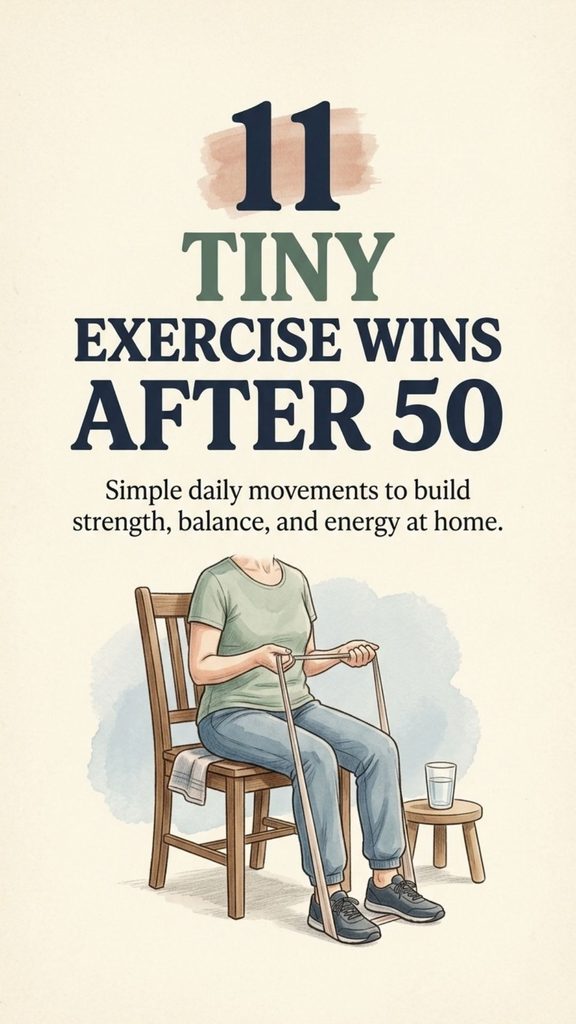
Staying active after 50 doesn’t have to mean spending hours at the gym, lifting heavy weights, or following complicated workout programs. Sometimes, the most useful changes come from small movements you can fit into an ordinary day.
A five-minute walk after breakfast. A few chair exercises while watching television. Standing on one foot while holding the kitchen counter. Dancing to a favorite song.
These activities might seem too simple to make a difference, but regular movement helps support muscle strength, balance, flexibility, cardiovascular health, and everyday mobility.
You Might Also Like:
- Loading posts...
As we get older, maintaining strength and mobility becomes increasingly important. Muscle mass and strength tend to decline with age, joints may become stiffer, and balance can change. However, regular exercise can help maintain physical function and independence.
The good news is that you don’t have to start with an intense fitness routine.
Small amounts of movement are valuable, especially when they become consistent habits.
Here are 11 simple ways to stay active after 50, along with practical instructions for getting started safely.
1. Take Five-Minute Walking Breaks
Walking is one of the easiest ways to add movement to your daily routine.
You don’t need a treadmill, expensive equipment, or a complicated training schedule.
Just get up and walk.
If you spend a lot of time sitting, try taking a five-minute walking break every hour or two when practical.
You can walk:
- Around your house
- Through the garden
- Along your driveway
- Around the neighborhood
- Through a shopping center
- During work breaks
- After meals
How to Start
Begin with five minutes at a comfortable pace.
Allow your arms to swing naturally and maintain an upright, relaxed posture.
As walking becomes easier, gradually increase the duration or pace.
If five minutes is too much initially, start with one or two minutes.
Why It Helps
Regular walking can support:
- Cardiovascular health
- Leg strength and endurance
- Joint mobility
- Mood
- Blood sugar management
- General physical fitness
Short walks also break up long periods of sitting.
Make It a Habit
Connect walking to something you already do.
For example:
After breakfast: Walk five minutes.
After lunch: Walk around the house or outdoors.
After dinner: Take a comfortable evening stroll.
These short sessions can accumulate into meaningful activity throughout the week.
2. Try Simple Chair Exercises
Chair exercises are especially useful if you’re beginning a fitness routine, have limited stamina, or prefer additional support while moving.
A sturdy chair allows you to work on mobility and strength without needing to stand throughout the entire workout.
Choose a stable chair without wheels.
Exercise A: Seated Marching
- Sit upright with both feet on the floor.
- Gently lift one knee.
- Lower it.
- Lift the opposite knee.
- Continue alternating.
Start with 10 lifts on each side.
Move slowly and avoid leaning backward.
Exercise B: Seated Leg Extensions
- Sit upright.
- Straighten one knee as comfortably as possible.
- Hold briefly.
- Lower your foot.
- Repeat with the other leg.
Try 8–10 repetitions per leg.
This exercise works the muscles at the front of the thighs.
Exercise C: Seated Arm Raises
- Sit with your back supported.
- Keep your shoulders relaxed.
- Raise both arms forward to a comfortable height.
- Lower slowly.
Repeat 8–10 times.
Stop or modify the movement if it causes shoulder pain.
Exercise D: Sit-to-Stand
- Sit near the front of a sturdy chair.
- Place your feet approximately hip-width apart.
- Lean forward slightly.
- Push through your feet to stand.
- Slowly sit back down.
Use the armrests if needed.
Start with five repetitions.
Sit-to-stand exercises are particularly practical because they strengthen muscles involved in getting out of chairs, climbing stairs, and performing other daily tasks.
3. Practice Balance for a Few Minutes Every Day
Balance often becomes more challenging with age, but it can be improved through appropriate practice.
You don’t need a complicated balance board or special equipment.
A stable kitchen counter or sturdy chair can provide support.
Exercise A: Supported Single-Leg Stand
- Stand beside a kitchen counter.
- Hold it with one or both hands.
- Shift your weight onto one foot.
- Lift the other foot slightly off the floor.
- Hold for 5–10 seconds if comfortable.
- Change sides.
Repeat a few times.
Gradually increase the duration as your balance improves.
Exercise B: Heel-to-Toe Standing
Stand near a counter and place one foot directly in front of the other, as though you’re standing on a narrow line.
Hold the position briefly while maintaining support.
If that feels too difficult, leave some space between your feet.
Exercise C: Side Leg Raises
- Hold a sturdy chair or counter.
- Stand tall.
- Slowly lift one leg out to the side.
- Keep your body upright.
- Return the leg to the starting position.
Repeat 8–10 times on each side.
Why Balance Exercises Matter
Balance training can support stability and reduce fall risk when incorporated into an appropriate exercise program.
It also helps with everyday situations such as:
- Walking on uneven ground
- Turning around
- Stepping over obstacles
- Climbing stairs
- Moving around the garden
Important: Practice close to sturdy support. If you have frequent falls, dizziness, or significant instability, seek professional guidance before attempting challenging balance exercises.
4. Build Strength With Resistance Bands
Resistance bands are an inexpensive way to add strength training at home.
They come in different resistance levels and can be used while standing or sitting.
Strength training is particularly valuable after 50 because maintaining muscle strength supports mobility, bone health, and everyday physical function.
Exercise A: Biceps Curls
- Sit or stand with good posture.
- Hold the resistance band securely beneath your feet.
- Keep your elbows close to your body.
- Slowly bend your elbows.
- Return to the starting position.
Start with 8–12 repetitions.
Exercise B: Seated Band Row
- Sit upright with your legs comfortably extended.
- Position the band securely around your feet.
- Hold one end in each hand.
- Pull your elbows backward.
- Gently bring your shoulder blades together.
- Return slowly.
Start with 8–12 repetitions.
Make sure the band cannot slip off your feet.
Exercise C: Gentle Band Pull-Aparts
- Hold a light band in front of your chest.
- Keep your shoulders relaxed.
- Pull your hands apart slowly.
- Return with control.
Use a light resistance and a comfortable range of motion.
Tips for Beginners
- Start with the lightest suitable band.
- Move slowly rather than snapping the band.
- Avoid holding your breath.
- Check bands for cracks or damage.
- Stop if you experience sharp pain.
Try strength training on two nonconsecutive days each week initially, allowing time for recovery.
As you become stronger, you can gradually increase the resistance.
5. Combine Gentle Stretching With Relaxed Breathing
Stretching can help maintain flexibility and make ordinary movements feel more comfortable.
You don’t need to touch your toes or perform advanced yoga poses.
A few gentle movements can be enough to get started.
Gentle Neck Movement
Sit upright.
Slowly turn your head toward one shoulder.
Return to the center.
Repeat on the other side.
Avoid forcing the movement or making large, rapid neck circles.
Shoulder Rolls
Lift your shoulders gently toward your ears.
Roll them backward and down.
Repeat five times.
Then reverse the direction if comfortable.
Chest Opener
Stand or sit tall.
Gently draw your shoulders backward and open your chest.
Hold for several seconds while breathing normally.
Release.
Calf Stretch
Stand facing a wall.
Place your hands against it.
Step one foot backward while keeping the heel on the floor.
Lean forward gently until you feel a mild stretch in the back calf.
Hold for 15–30 seconds.
Repeat on the opposite side.
Add Comfortable Breathing
Sit quietly and take a slow, natural breath.
Allow your abdomen to expand gently.
Exhale without forcing the air out.
Repeat for one or two minutes.
Slow breathing may help you relax, while regular stretching supports comfortable movement.
Stretching should feel mild, not painful. Avoid bouncing or forcing joints beyond their comfortable range.
6. Use Your Phone to Remind You to Move
You don’t need an expensive smartwatch to track physical activity.
A simple phone alarm, calendar reminder, or basic activity app can help you develop a consistent routine.
Useful Reminders
Consider setting reminders for:
- A morning walk
- Standing after prolonged sitting
- Afternoon stretching
- Strength-training sessions
- Drinking water
- An evening walk
You can also use a notebook or wall calendar.
Track Small Victories
Instead of obsessing over a large daily step target, record accomplishments such as:
Monday: Walked 10 minutes.
Tuesday: Completed chair exercises.
Wednesday: Practiced balance for five minutes.
Thursday: Walked after dinner.
Friday: Completed resistance-band exercises.
The purpose of tracking is to see your consistency and progress.
If counting steps motivates you, use it. If it makes activity feel stressful, track minutes or completed sessions instead.
You don’t need a perfect streak to improve your fitness.
7. Try Ten Minutes of Gentle Yoga
Yoga can be a useful way to practice flexibility, balance, posture, and controlled movement.
However, yoga doesn’t have to involve getting down onto the floor.
Chair yoga and supported standing yoga are excellent alternatives.
Seated Cat-Cow
- Sit upright in a sturdy chair.
- Rest your hands on your thighs.
- Slowly lift your chest and gently arch your upper body.
- Return toward neutral.
- Gently round your upper back.
- Repeat slowly.
Keep the movement comfortable.
Seated Side Stretch
- Sit upright with both feet on the floor.
- Raise one arm overhead if comfortable.
- Lean gently toward the opposite side.
- Hold briefly.
- Return to the center.
- Repeat on the other side.
Seated Spinal Rotation
- Sit upright.
- Turn your upper body gently to one side.
- Keep your hips facing forward.
- Hold briefly.
- Return to the center.
Repeat on the opposite side without forcing your back.
Why Gentle Yoga Can Help
Appropriately selected yoga exercises may support:
- Flexibility
- Balance
- Body awareness
- Mobility
- Relaxation
Choose poses suited to your ability and avoid anything that causes discomfort or dizziness.
If you have osteoporosis, significant spinal problems, or recent joint surgery, ask a qualified professional which movements are appropriate before attempting deep bends or twists.
8. Try Walking or Exercising in Water
Water-based exercise can be particularly comfortable for people who find some land-based movements difficult.
The buoyancy of water reduces the amount of body weight supported through the legs, while the water itself provides resistance.
That combination can make movement feel easier on some joints while still allowing muscles to work.
Easy Pool Exercises
Water Walking
Walk slowly through waist- or chest-deep water at a comfortable depth.
Side Steps
Hold the pool edge if necessary and step sideways several times in each direction.
Supported Leg Lifts
Stand near the pool wall and gently lift one leg forward or sideways.
Water Arm Movements
With your arms submerged, slowly push the water forward and backward.
Getting Started
Begin with 10–15 minutes if comfortable.
Choose a supervised pool with safe entry and exit.
Use flotation equipment when appropriate.
If you are not a confident swimmer, stay in a suitable shallow area and follow pool safety rules.
Aquatic exercise can be enjoyable, but it is not automatically suitable for every medical condition. Ask your healthcare professional about restrictions if you have significant heart, respiratory, or mobility concerns.
9. Improve Your Posture With Tiny Daily Habits
Posture is about comfortable alignment and the ability to move well—not holding your body stiffly in one supposedly perfect position all day.
Many people spend hours looking down at phones, working at computers, or sitting in positions that eventually become uncomfortable.
Small adjustments can help reduce unnecessary strain.
The Gentle Posture Reset
Try this several times during the day:
- Sit or stand comfortably tall.
- Relax your shoulders.
- Keep your head balanced over your body.
- Avoid pushing your chin far forward.
- Breathe normally.
- Change position regularly.
Add Shoulder Blade Squeezes
Sit upright.
Gently draw your shoulder blades toward each other.
Hold for three seconds.
Release.
Repeat five to ten times.
Check Your Everyday Setup
If you spend time at a computer:
- Keep the screen at a comfortable height.
- Support your feet.
- Relax your shoulders.
- Avoid reaching too far forward.
- Change positions frequently.
If you use your phone often, bring it closer to eye level rather than continuously bending your neck downward.
The best posture is not one position maintained indefinitely.
Regular movement and changing positions matter too.
10. Dance to One Favorite Song
Exercise doesn’t have to feel like exercise.
Dancing is a fun way to add physical activity while enjoying music.
Put on a favorite song and move in whatever way feels comfortable.
You can:
- Step side to side
- March gently
- Move your arms
- Sway to the rhythm
- Take small steps forward and backward
- Dance while seated
Choose music you enjoy.
The goal isn’t perfect choreography.
It’s moving your body.
Try a Five-Minute Dance Break
Start with one song.
Move at a comfortable pace.
Rest if necessary.
As your stamina improves, add another song or increase the intensity slightly.
Why Dancing Is Useful
Depending on the movements and intensity, dancing can support:
- Cardiovascular fitness
- Coordination
- Balance
- Endurance
- Mood
- Social connection
It can also make movement something you genuinely look forward to.
If balance is a concern, keep a sturdy chair or counter nearby and avoid quick turns.
11. Support Your Activity With Water and Balanced Meals
Food and hydration are not exercises, but they support an active lifestyle.
Your muscles need adequate nutrition, and your body needs enough fluid to function comfortably during physical activity.
Include Protein in Regular Meals
Protein supports the maintenance and repair of body tissues, including muscle.
Useful sources include:
- Eggs
- Fish
- Chicken
- Greek yogurt
- Milk
- Beans
- Lentils
- Tofu
- Nuts and seeds
You don’t need a complicated meal plan.
Try including a suitable protein source at breakfast, lunch, and dinner.
Eat a Variety of Foods
Build meals around:
- Vegetables
- Fruit
- Whole grains
- Protein-rich foods
- Healthy fats
For example:
Breakfast: Greek yogurt, berries, and walnuts.
Lunch: Chicken or chickpea salad with whole-grain bread.
Dinner: Fish, roasted vegetables, and potatoes.
Snack: Fruit with nuts or yogurt.
Stay Hydrated
Drink water regularly throughout the day.
You may need additional fluids when exercising in warm weather or sweating more than usual.
Fluid needs vary by person, activity level, and medical circumstances.
If you’ve been advised to limit fluids because of a medical condition, follow that guidance rather than a general hydration target.
A Simple 7-Day Exercise Plan for Beginners Over 50
You don’t need to do all 11 activities every day.
Start with a balanced combination of walking, strength, balance, and flexibility.
Here is an example week.
| Day | Simple Activity |
|---|---|
| Monday | 10-minute walk + 5 minutes of chair exercises |
| Tuesday | 5 minutes of balance + gentle stretching |
| Wednesday | 10-minute walk + light resistance-band exercises |
| Thursday | 10 minutes of chair yoga |
| Friday | 10-minute walk + 5 minutes of balance |
| Saturday | Water walking, dancing, or another enjoyable activity |
| Sunday | Easy walk or gentle stretching |
This is a starting routine, not a complete long-term fitness target.
Adjust the activities to your current ability.
You can begin with shorter sessions if necessary and gradually add time as your endurance improves.
How Much Exercise Should Adults Over 50 Aim For?
General physical activity guidelines for adults recommend working toward:
- At least 150 minutes of moderate-intensity aerobic activity per week, or an equivalent combination of activity.
- Muscle-strengthening activities on at least two days per week.
- Balance-focused activities, particularly for older adults at increased risk of falling.
These are long-term targets, not requirements you must meet immediately.
If you’re currently inactive, start below those amounts and increase gradually.
Moderate activity generally means your breathing becomes somewhat faster, but you can still talk.
A brisk walk may count as moderate exercise for one person, while a slower walk may be sufficiently challenging for another.
The right starting point depends on your current fitness and health.
Five Common Exercise Mistakes to Avoid After 50
1. Doing Too Much Too Soon
Starting an intense workout after months or years of inactivity can lead to excessive soreness or injury.
Increase activity gradually.
2. Ignoring Strength Training
Walking is valuable, but it doesn’t fully replace muscle-strengthening exercise.
Try to include safe resistance training in your weekly routine.
3. Forgetting Balance Exercises
Balance practice becomes increasingly important with age, especially if you’re concerned about falls.
Choose exercises that provide appropriate support.
4. Exercising Through Sharp Pain
Mild muscular effort is normal.
Sharp pain, severe dizziness, chest pain, or unusual breathlessness is not something to push through.
Stop exercising and seek medical advice when appropriate.
5. Believing Every Workout Has to Be Long
A short session is not wasted simply because it lasts only five or ten minutes.
Longer sessions may help you accumulate more activity, but small sessions can be a useful starting point and can add up across the week.
How to Stay Consistent Without Losing Motivation
The hardest part of exercising is often not the activity itself.
It’s making it a normal part of life.
Try these simple strategies.
Choose activities you enjoy. If you dislike jogging, walk, swim, cycle, or dance instead.
Connect movement to existing habits. Stretch after brushing your teeth or walk after lunch.
Keep equipment visible. Store resistance bands somewhere convenient.
Use realistic goals. Start with five minutes rather than demanding an hour.
Track progress occasionally. Notice improvements in endurance, strength, and confidence.
Make room for recovery. Muscles and joints need time to adapt, particularly when starting new exercises.
Most importantly, don’t treat a missed day as a reason to quit.
Simply return to your routine when you can.
Signs Your Fitness May Be Improving
Progress isn’t always visible on a scale.
In fact, some of the most useful improvements involve everyday activities.
You may notice that:
- Walking feels easier.
- You can stand from a chair with less effort.
- Stairs become more manageable.
- Your balance feels steadier.
- You can carry groceries more comfortably.
- You feel less winded during ordinary activities.
- Your muscles become stronger.
- Your flexibility improves.
- You can remain active longer before needing a rest.
These changes often happen gradually over weeks and months.
Pay attention to what your body can do rather than focusing only on appearance.
When to Get Medical Guidance Before Exercising
Gentle movement is appropriate for many people, but individual circumstances matter.
Speak with a healthcare professional before starting or substantially increasing activity if you have significant heart or lung disease, uncontrolled medical conditions, recent surgery, frequent falls, or other concerns that could affect exercise safety.
If you experience chest pain, fainting, severe breathlessness, or other alarming symptoms during activity, stop and seek appropriate medical attention.
Exercise should be adapted to your abilities, not forced into a routine that causes harm.
Small Movements Can Build a Stronger Future
Staying active after 50 does not have to involve expensive memberships, complicated routines, or exhausting workouts.
A few simple habits can make physical activity easier to fit into everyday life.
Take short walks.
Practice standing up from a chair.
Build strength with resistance bands.
Work on balance near a sturdy support.
Stretch gently.
Try chair yoga.
Move in the water.
Pay attention to posture.
Dance to music you love.
Eat balanced meals and stay hydrated.
None of these activities needs to be impressive.
What matters is repeating them often enough that movement becomes a normal part of your routine.
Start with one or two habits that feel manageable. Gradually increase the amount and variety of activity as your strength and confidence improve.
The goal isn’t to exercise like you’re 25 again. It’s to keep building the strength, balance, endurance, and mobility that help you enjoy life at 50, 60, 70, and beyond.