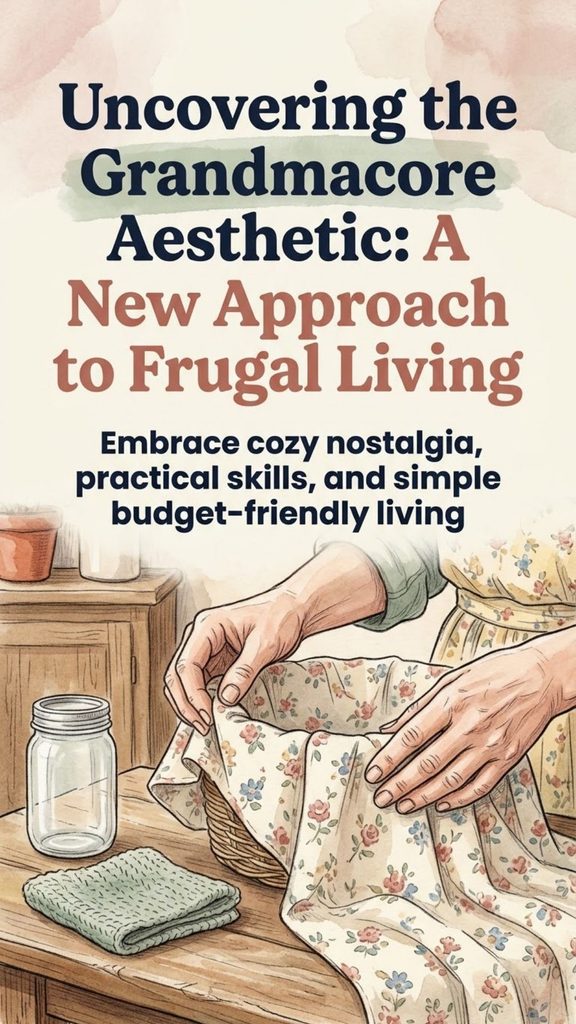
Grandmacore is easy to recognize: floral fabrics, handmade quilts, mismatched china, baskets of yarn, old cookbooks, fresh flowers, well-used wooden furniture, and the comforting feeling of a home that has been lived in rather than styled for a photograph.
But Grandmacore can be much more than a decorating trend.
At its most useful, it reflects an older approach to homemaking built around resourcefulness, practical skills, caring for what you own, making things by hand, and finding pleasure in ordinary routines. Those habits also happen to fit naturally with frugal living.
You Might Also Like:
- Loading posts...
You do not need to fill your house with antiques or dress as though you stepped out of another decade. Grandmacore works best when you borrow the parts that make everyday life warmer, slower, and more intentional.
The result can be a home that feels charming without requiring constant shopping.
What Grandmacore Really Means
Grandmacore draws inspiration from the kind of homes many people associate with grandparents: comfortable furniture, homemade food, gardens, sewing baskets, old dishes, crocheted blankets, practical storage, and objects kept because they were useful or loved.
Unlike highly polished interior styles, Grandmacore does not depend on everything matching.
A chipped pitcher can hold flowers. A stack of old cookbooks can stay on the kitchen shelf. A handmade blanket can be draped over a secondhand armchair. The appeal comes from familiarity, usefulness, and character.
That is where Grandmacore and frugal living begin to overlap.
A traditional household often made careful use of what was available. Items were repaired, repurposed, passed down, preserved, or reused rather than immediately replaced. Bringing some of those habits into a modern home can reduce unnecessary spending while also creating a more personal living space.
Start With What You Already Own
The easiest way to introduce Grandmacore into your home is not to go shopping.
Look through cupboards, closets, storage boxes, and forgotten shelves first.
You may already have items that fit beautifully into this style:
- Floral pillowcases or tablecloths
- Old baskets
- Mason jars
- Cookbooks
- Embroidered linens
- Ceramic pitchers
- Wooden bowls
- Quilts or knitted blankets
- Family photographs
- Vintage-style lamps
- Mismatched dishes
Instead of buying decorative storage containers, use jars or baskets you already own. Turn a pretty pitcher into a vase. Fold a quilt over the back of a sofa. Place fruit in a simple bowl rather than hiding it in a cupboard.
Grandmacore works especially well when a home develops gradually. It should feel collected, not purchased all at once.
Repurpose Before You Replace
Resourcefulness is one of the most practical parts of this lifestyle.
Before discarding something, ask whether it can serve another purpose.
An old cotton tablecloth might become napkins. A wooden crate can hold gardening supplies. Glass jars can organize dry goods, sewing notions, or small household items. Worn textiles can sometimes be turned into cleaning cloths, patches, or craft materials.
Repurposing does not mean saving everything.
Keeping piles of objects because they might someday be useful can simply create clutter. The goal is to reuse things when there is a clear purpose, not turn your home into permanent storage for future projects.
A good rule is simple: if you can name exactly how and when you will use an item, it may be worth keeping. If not, passing it along may be more practical.
Shop Secondhand With Patience
Thrift stores, flea markets, estate sales, and secondhand marketplaces can be excellent places to find Grandmacore-style pieces.
Look for objects that are both attractive and useful.
A sturdy wooden side table may serve you better than an inexpensive new one made to follow a temporary trend. Vintage glassware, baskets, serving dishes, lamps, frames, linens, and small pieces of furniture can give a room warmth without requiring an expensive decorating budget.
The trick is avoiding the temptation to buy something simply because it is inexpensive.
Thrifting is only frugal when you purchase things you genuinely need or love.
Before bringing something home, ask:
- Do I know where this will go?
- Will I actually use it?
- Is it in good condition?
- Can it be cleaned safely?
- Do I already own something similar?
Grandmacore should encourage thoughtful collecting, not a different form of overconsumption.
Make Homemade Gifts Meaningful, Not Complicated
Handmade gifts fit naturally into a Grandmacore lifestyle because they focus on thoughtfulness rather than price.
You do not need advanced crafting skills.
Simple homemade gifts might include:
- A jar of homemade cookies
- A loaf of bread
- A knitted scarf
- A small embroidered ornament
- Homemade jam, where safe preserving methods are followed
- A bundle of dried herbs
- A handwritten recipe collection
- A simple sewn pouch
- A propagated houseplant
A handmade gift is not automatically cheaper, especially when a craft requires expensive materials. The best frugal projects use skills and supplies you already have.
The value comes from giving something personal and useful rather than trying to compete with store-bought gifts.
Cook From Basic Ingredients More Often
Few things fit Grandmacore better than a kitchen that is actually used.
Cooking from scratch can make a home feel especially comforting because it brings familiar smells, routines, and shared meals into everyday life.
You do not have to bake bread every morning or prepare every ingredient from its raw form. Start with foods that are practical for your schedule.
Soups, casseroles, simple cakes, muffins, roasted vegetables, homemade sauces, stews, and basic breads are good examples.
Cooking at home can often be economical, particularly when meals use affordable staples such as beans, rice, potatoes, oats, seasonal vegetables, flour, eggs, or less expensive cuts of meat. However, homemade food is not automatically cheaper or healthier in every situation. Ingredient choices, portion sizes, preparation methods, and food prices all matter.
The most useful habit is learning several dependable recipes that your household actually enjoys.
A well-used collection of 15 reliable meals can save more money than an overflowing shelf of specialty ingredients.
Build a Cozy Kitchen Without Buying a New One
Grandmacore kitchens rarely need to look perfect.
In fact, a little visible usefulness adds charm.
Keep wooden spoons in a crock. Stack everyday cookbooks where you can reach them. Display a bowl of apples or lemons. Hang a practical apron from a hook. Use tea towels instead of buying decorative items that serve no purpose.
If you already have pretty serving bowls or dishes, use them.
There is no reason to keep everything saved for special occasions. Using beautiful everyday objects is one of the simplest ways to make homemaking feel richer without buying more.
Learn Traditional Skills One at a Time
Part of the appeal of Grandmacore comes from traditional household skills.
You might learn:
- Basic sewing and mending
- Knitting or crochet
- Baking
- Gardening
- Food preservation using tested methods
- Simple furniture care
- Hand embroidery
- Basic household repairs
- Flower arranging
- Composting
These skills do not need to become another source of pressure.
Choose one that genuinely interests you.
Learning to replace a button is useful even if you never sew an entire dress. Knowing how to make soup from leftovers is valuable even if you have no interest in gourmet cooking.
The goal is greater confidence and self-reliance, not recreating every household skill from a century ago.
Give Clothing a Grandmacore Feel Without Replacing Your Wardrobe
Grandmacore fashion tends to favor comfortable, timeless clothing rather than fast-moving trends.
Think cardigans, floral prints, long skirts, soft blouses, knitted pieces, simple dresses, aprons, practical shoes, and classic accessories.
But you do not need an entirely new wardrobe.
Start by combining what you already own differently.
A plain dress can feel more vintage-inspired with a cardigan. A floral blouse may work with a neutral skirt you already have. A brooch, scarf, simple pearl-style necklace, or handmade accessory can change the feel of an outfit without requiring many new clothes.
If you shop secondhand, focus on fabric condition and construction rather than the label.
Well-chosen pieces that mix easily with the rest of your wardrobe are far more useful than clothing purchased only because it fits an aesthetic.
Bring Traditional Hobbies Back Into Daily Life
Grandmacore celebrates hobbies that produce something tangible.
Knitting, crocheting, embroidery, baking, gardening, journaling, sewing, reading, and flower arranging all encourage a slower kind of attention.
These activities can be especially satisfying because progress happens gradually.
A garden develops over months. A blanket grows one row at a time. Bread needs time to rise. Seeds cannot be rushed.
That slower rhythm can be refreshing in a culture built around instant results.
You do not need to turn hobbies into side businesses or productivity projects. Some activities are worthwhile simply because you enjoy doing them.
Grow Something, Even If Your Space Is Small
Gardening is one of the strongest connections between Grandmacore and practical homemaking.
A large cottage garden is lovely, but unnecessary.
A windowsill herb pot, balcony planter, small vegetable bed, or few containers near the door can still bring growing into everyday life.
Herbs such as parsley, chives, mint, or basil can be useful in the kitchen, although what grows successfully depends on your climate and available light.
Flowers can be grown simply for enjoyment.
If you have room for vegetables, start small. Growing food does not always save money once soil, containers, tools, water, and other supplies are considered. The financial benefit varies widely.
The greater value for many people is learning how plants grow, spending time outdoors, and enjoying fresh herbs, flowers, or produce from home.
Practice Warm Hospitality Without Spending Much
Grandmacore hospitality is less about impressive entertaining and more about making people comfortable.
You do not need coordinated tableware, elaborate menus, or expensive decorations.
A pot of soup, sliced bread, tea, homemade cake, or simple family-style meal can be enough.
Set the table with what you have. Use mismatched plates. Add flowers from the garden if available. Light a candle where it is safe to do so. Clear enough space for everyone to sit comfortably.
People are more likely to remember how they felt in your home than whether every dish matched.
Frugal hospitality focuses spending on food and comfort rather than performance.
Learn Simple DIY, But Know Your Limits
Grandmacore often celebrates self-reliance, and basic home maintenance can certainly save money.
Useful skills might include painting a room, filling small nail holes, tightening loose hardware, cleaning gutters where it can be done safely, replacing simple fittings, or learning how to maintain furniture.
But frugal living does not mean attempting every repair yourself.
Electrical systems, gas appliances, major plumbing, structural problems, roofing, and other hazardous jobs may require qualified professionals.
The cheapest repair is not the one with the lowest upfront cost. It is the one that fixes the problem safely without creating a larger one.
A practical homemaker learns both how to do things and when to ask for help.
Let Your Home Look Collected Instead of Perfect
One of the most refreshing parts of Grandmacore is that perfection is almost beside the point.
A blanket can be slightly faded. Chairs do not need to match. Dishes can come from different sets. Furniture can show its age.
These small signs of use often make a home feel more comfortable.
Instead of asking whether everything coordinates perfectly, ask whether the room feels welcoming and functions well.
Can you sit comfortably?
Can you find what you need?
Is there enough open space to move around?
Can the room be cleaned without shifting dozens of decorative objects?
Beauty and practicality work best together.
Grandmacore Is Frugal When It Changes How You Consume
The easiest mistake is turning Grandmacore into another shopping trend.
Buying stacks of vintage dishes, floral dresses, decorative baskets, antique furniture, and cottage-style accessories does not automatically create a simpler lifestyle.
It may simply create more possessions.
The more meaningful version of Grandmacore is based on habits:
Use things longer.
Repair when practical.
Cook regularly.
Learn useful skills.
Buy secondhand thoughtfully.
Keep meaningful objects.
Give handmade gifts.
Grow what you can.
Welcome people without trying to impress them.
Make ordinary routines pleasant.
That is where the aesthetic becomes a lifestyle rather than another reason to shop.
Creating a Grandmacore Life That Feels Like Your Own
There is no checklist you need to complete.
Your version might include a vegetable garden and homemade bread. Someone else’s might mean thrifted furniture, knitting in the evenings, and Sunday dinners with family.
Choose the parts that genuinely improve your life.
Keep the old cookbook you actually use. Mend the cardigan you love. Put flowers in the slightly chipped pitcher. Bake the cake your family always requests. Learn one household skill you have wanted to master.
A Grandmacore home does not need to look as though it belongs to another generation.
It simply borrows some of the habits that generations before us understood well: care for what you have, make useful things last, find pleasure in everyday work, and do not confuse abundance with constant consumption.
That may be the most appealing part of Grandmacore living. Beneath the florals, quilts, teacups, gardens, and handmade details is a practical idea that still works beautifully today: a rich home life does not have to be an expensive one.