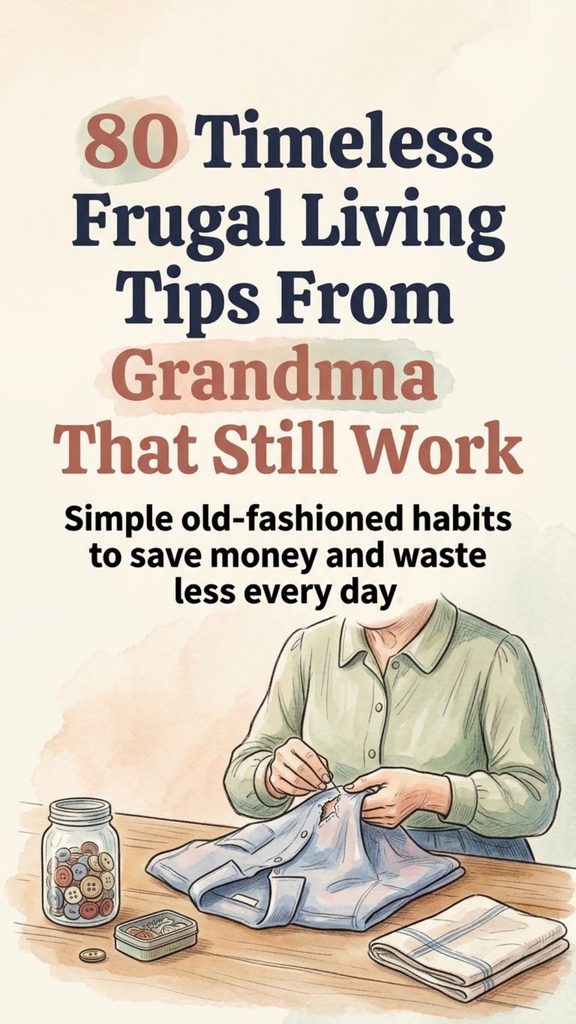
Frugal living has never really been about pinching every penny until life becomes miserable. At its best, it is about paying attention: using what you already have, wasting less, buying with purpose, maintaining things properly, and knowing which conveniences are worth the cost.
Many habits associated with earlier generations still make sense today because the basic principles have not changed. Food wasted is money wasted. An item repaired does not need to be replaced. A meal cooked at home usually costs less than restaurant food. Small recurring charges can quietly drain a budget.
Modern life has introduced new expenses, but it has also given us useful tools that older generations never had, from digital coupons to online marketplaces. The smartest approach is to combine practical old-fashioned habits with modern conveniences that genuinely save time or money.
You Might Also Like:
- Loading posts...
You do not need to adopt all 80 ideas. Choose the ones that fit your household, then build from there.
Save Money in the Kitchen
Food is one of the most flexible parts of a household budget, which makes the kitchen a good place to begin.
1. Cook More Meals at Home
Restaurant meals, delivery fees, tips, and convenience foods can quickly increase food spending.
Cooking at home gives you greater control over portions, ingredients, and leftovers. You do not need elaborate recipes. A rotation of inexpensive meals such as soups, pasta dishes, casseroles, beans, rice, eggs, roasted vegetables, and simple meat dishes can go a long way.
2. Plan Meals Before Shopping
Meal planning does not need to involve an elaborate weekly spreadsheet.
Look at what is already in the refrigerator, freezer, and pantry. Then plan several meals around those ingredients before making a shopping list.
This reduces duplicate purchases and makes it less likely that fresh food will be forgotten until it spoils.
3. Shop With a Grocery List
A written list gives you a purpose when you enter the store.
It will not eliminate every impulse purchase, but it makes unnecessary buying easier to notice. Organizing the list by section—produce, dairy, meat, pantry, frozen foods—can also make shopping faster.
4. Learn to Cook With Basic Ingredients
A well-stocked kitchen does not need dozens of specialty foods.
Rice, oats, potatoes, beans, lentils, eggs, flour, pasta, canned tomatoes, frozen vegetables, herbs, and a few basic seasonings can form the foundation of many inexpensive meals.
Knowing how to combine ordinary ingredients is often more valuable than owning a pantry full of products used only once.
5. Eat Your Leftovers
Leftovers are already-paid-for food.
Pack them for lunch, freeze individual portions, or turn them into another meal. Roasted vegetables can become soup. Cooked chicken can go into sandwiches, tacos, or casseroles. Rice can be used for fried rice.
Labeling leftovers with the date can prevent containers from disappearing into the back of the refrigerator.
6. Cook Larger Batches
If you are already making soup, chili, pasta sauce, or a casserole, consider preparing extra.
Freeze portions for busy evenings. Having a ready-to-heat meal available can make takeout much less tempting.
Batch cooking works best with meals your household genuinely enjoys. Filling a freezer with unwanted food does not save money.
7. Keep Several Emergency Meals at Home
An inexpensive pantry meal can rescue the budget when you are tired.
Pasta and sauce, eggs and toast, canned beans with rice, soup ingredients, frozen vegetables, or homemade freezer meals can all serve as alternatives to last-minute delivery.
8. Compare Unit Prices
The largest package is not automatically the cheapest.
Compare the price per ounce, pound, liter, or other unit rather than relying on package size. Many stores show the unit price on shelf labels.
Bulk buying only saves money if the unit price is lower and you can actually use the product before it spoils.
9. Buy Staples in Larger Quantities When It Makes Sense
Rice, dried beans, oats, flour, pasta, and other shelf-stable foods may cost less in larger packages.
Check the actual price difference first. Then make sure you have dry, pest-resistant storage and a realistic plan for using what you buy.
10. Choose Store Brands Carefully
Generic or store-brand foods are often less expensive than nationally advertised alternatives.
For basic staples such as flour, sugar, canned vegetables, pasta, spices, and cleaning supplies, trying the store brand can produce easy savings.
If you prefer a particular brand for certain products, keep buying it. Frugality does not require choosing the cheapest version of everything.
11. Build Meals Around Sales
Instead of planning a specific menu and then paying whatever those ingredients cost, reverse the process.
Check weekly specials and build some meals around well-priced vegetables, meat, fish, or pantry staples.
This works particularly well for ingredients that can be frozen for later.
12. Use Coupons Only for Things You Need
A coupon does not save money if it persuades you to buy something you would otherwise leave on the shelf.
Combine coupons with your normal shopping habits rather than designing your shopping around every available discount.
Digital coupons and loyalty programs can be useful, but check whether the discounted product is still cheaper than an alternative brand.
13. Make Coffee at Home More Often
A café drink can be an enjoyable treat. It becomes expensive when it turns into an automatic daily purchase.
Brewing coffee at home most days and buying café coffee occasionally can preserve the enjoyment while reducing the cost.
14. Pack Lunch
Workday lunches are another expense that can become almost invisible because each purchase seems relatively small.
Leftovers, sandwiches, salads, soups, fruit, and snacks from home are usually less expensive than buying lunch every day.
15. Eat More Inexpensive Protein Foods
Meat can be one of the more expensive items in a grocery cart.
Beans, lentils, eggs, chickpeas, and other lower-cost protein foods can replace meat in some meals without requiring the entire household to become vegetarian.
Start with dishes that naturally suit the substitution, such as soups, curries, tacos, chili, or grain bowls.
16. Make Some Sauces and Dressings Yourself
Many basic dressings and sauces require only a handful of ingredients.
A simple vinaigrette, yogurt sauce, tomato sauce, or marinade can be inexpensive to prepare at home.
Homemade is not automatically cheaper in every situation, so compare ingredients with the price of the products you normally buy.
17. Freeze Food Before It Goes Bad
Freezing is one of the simplest ways to protect food you have already paid for.
Bread, many cheeses, cooked meals, ripe fruit, meat, and numerous other foods freeze successfully when packaged properly.
Milk can also be frozen, although its texture may change somewhat after thawing, so it may be better suited to cooking or baking.
18. Preserve Seasonal Produce Safely
Freezing, dehydrating, pickling, and canning can help preserve produce when it is plentiful.
If you choose home canning, use tested recipes and current food-safety instructions from reliable sources. Canning is not a good place to improvise because processing time, acidity, temperature, and jar preparation all matter.
19. Grow Food You Actually Eat
A vegetable garden can be useful, but it is not automatically cheaper than buying groceries once soil, containers, tools, and water are considered.
Focus on crops your household regularly eats and that perform well in your space.
Herbs, salad greens, tomatoes, peppers, and other frequently used crops can be especially satisfying in small gardens or containers.
20. Grow Herbs in Pots
Fresh herbs are often sold in quantities larger than a recipe requires.
Growing parsley, basil, mint, chives, thyme, or other frequently used herbs can reduce repeat purchases and give you access to small amounts whenever you need them.
Choose herbs that suit your climate and available light.
Waste Less and Use What You Own
Many older frugal habits were built around a simple rule: do not discard something useful without a good reason.
21. Use Things Until They Are Truly Worn Out
Replacing a working item simply because a newer model exists is expensive.
Keep appliances, furniture, cookware, clothing, and electronics while they still meet your needs. Upgrade when there is a meaningful reason, not merely because advertising creates the feeling that your current version is outdated.
22. Repair Before Replacing
A loose handle, missing button, broken zipper, damaged cord, or dripping faucet does not always require replacing the entire item.
Compare repair cost with replacement cost and expected remaining life.
Some repairs are easy DIY jobs. Others, especially electrical, structural, gas, or safety-related repairs, belong with a qualified professional.
23. Learn Basic Sewing
A needle, thread, and a few basic techniques can keep clothing usable much longer.
Learn to sew on a button, close a small seam, repair a simple tear, and make minor alterations.
You do not need to become an expert seamstress to prevent a good garment from becoming waste.
24. Keep Old Towels and T-Shirts for Rags
Before throwing away worn cotton fabric, consider cutting it into cleaning cloths.
Reusable rags can replace many paper towels for dusting, spills, greasy jobs, and general household cleaning.
Keep separate cloths for bathrooms, kitchens, and especially dirty tasks.
25. Reuse Containers When Practical
Glass jars and sturdy containers can be useful for leftovers, dry goods, craft supplies, hardware, seeds, or small household items.
Do not save every container simply because it might someday become useful. Reuse should reduce clutter, not create another category of clutter.
26. Borrow Rarely Used Items
Some things are needed once a year or once in a decade.
Before buying a specialty tool, large serving dish, carpet cleaner, ladder, camping item, or party supply, ask whether you can borrow or rent one.
Ownership makes sense for frequently used items. Occasional use is different.
27. Share With Family and Neighbors
A small network of people willing to lend, share, and trade can reduce unnecessary purchases.
Tools, books, children’s equipment, gardening supplies, and party items are especially suitable for sharing when everyone treats borrowed belongings respectfully.
28. Barter When Both Sides Benefit
Trading skills can occasionally replace a cash transaction.
A person who knows how to repair a computer might exchange help with someone who can alter clothing or assist with garden work.
Be clear about expectations so the arrangement remains fair.
29. Sell What You No Longer Use
Unused furniture, electronics, clothing, tools, and hobby equipment may have value to someone else.
Selling them can recover part of their original cost while making the home easier to manage.
Be realistic about value. Sometimes donating an inexpensive item is worth more than spending hours trying to sell it.
30. Think Before Throwing Something Away
Ask three questions:
Can it still be used?
Can it be repaired?
Does someone else need it?
If all three answers are no, letting it go is reasonable. Frugality is resourcefulness, not hoarding.
Spend Less on Clothing and Personal Care
31. Buy Fewer, Better-Chosen Clothes
A large wardrobe is not necessarily a useful wardrobe.
Clothes that fit properly, work with one another, and suit your actual lifestyle usually offer better value than frequent trend-driven purchases.
Quality matters, but price alone is not proof of quality. Look at fabric, seams, fit, washing requirements, and how often you expect to wear the item.
32. Buy Secondhand
Thrift stores, consignment shops, resale websites, yard sales, and local marketplaces can be excellent sources for clothing, furniture, tools, books, and household goods.
Inspect items carefully before purchasing, especially upholstered furniture, electrical products, children’s safety equipment, and anything with significant wear.
33. Shop Out of Season
Retailers frequently reduce seasonal merchandise when they need room for new inventory.
Coats may be cheaper near the end of winter, while holiday supplies often go on clearance after the holiday.
Buy only what you are confident you will use next season.
34. Take Care of Clothes Properly
Follow care labels, treat stains promptly, avoid unnecessary high heat, and store clothing clean and dry.
Proper care can make a noticeable difference in how long garments remain wearable.
35. Wash Clothes in Cold Water When Appropriate
Modern detergents are generally designed to work in cooler water for everyday laundry.
Cold-water washing also reduces the energy needed to heat wash water and can be gentler on many fabrics.
Some heavily soiled loads or hygiene-sensitive items may require warmer temperatures, so follow care labels and household needs.
36. Air-Dry Clothing When Practical
A clothesline or drying rack can reduce dryer use and may be gentler on certain fabrics.
Not every climate or household makes line drying convenient, but even air-drying part of the laundry can reduce energy use.
37. Do Simple Hair Maintenance at Home
Basic trimming, children’s haircuts, beard maintenance, or fringe trims can sometimes be handled at home.
Complex cuts, major color changes, and chemical treatments carry more risk. Saving money is less useful if correcting a mistake costs more than the original salon visit.
38. Do Basic Manicures at Home
If you regularly pay for manicures mainly for grooming rather than specialized nail services, basic nail care at home can reduce recurring expenses.
A few tools purchased once can last for years.
39. Be Careful With Homemade Personal-Care Products
DIY scrubs and simple cosmetic products can be inexpensive, but homemade does not automatically mean safer or more effective.
Skin can react to essential oils, acids, baking soda, fragrances, and other common DIY ingredients.
For products such as sunscreen, medicated treatments, or anything intended to prevent disease, use properly formulated products rather than homemade substitutes.
40. Finish Products Before Replacing Them
Shampoo, lotions, cosmetics, cleaning products, and toiletries have a habit of accumulating.
Unless a product is unsafe or unsuitable, finish what is open before buying another version. This simple rule can prevent a surprising amount of unnecessary spending.
Lower Household Costs
41. Turn Off Lights You Are Not Using
This is one of the simplest energy habits.
The savings from a single bulb may be small, but there is little reason to illuminate an empty room.
42. Replace Frequently Used Bulbs With LEDs
LED bulbs use substantially less electricity than traditional incandescent bulbs and usually last much longer.
Prioritize fixtures that are used for many hours each day.
43. Use Heating and Cooling Thoughtfully
Heating and air conditioning can represent a significant portion of household energy use.
Small thermostat adjustments, weather sealing, suitable clothing, blinds, curtains, fans, and sensible ventilation may reduce the amount of heating or cooling required.
Do not sacrifice health or safety during extreme temperatures merely to reduce a utility bill.
44. Use Fans Strategically
Fans can make people feel cooler by moving air, but they do not lower the temperature of an empty room.
Turn them off when nobody is present unless the fan is serving another specific purpose.
45. Boil Only the Water You Need
Heating unnecessary water wastes energy and takes longer.
If you need one mug of tea, there is rarely a reason to fill an entire kettle.
Covering a pot while heating water or cooking can also reduce heat loss and speed cooking.
46. Run Full Loads When Appropriate
Dishwashers and washing machines are generally more efficient when used for reasonably full loads rather than many tiny ones.
Do not overload the appliance, since overcrowding can reduce cleaning performance.
47. Reduce Standby Power Where It Matters
Some electronics continue using small amounts of electricity while idle.
The effect of one device may be minor, so concentrate on clusters of equipment or devices with relatively high standby consumption. A switchable power strip can make this easier.
Do not unplug equipment that requires constant power for essential functions.
48. Maintain Appliances
Clean filters, remove lint, defrost equipment when necessary, and follow basic maintenance schedules.
An appliance that is neglected may work less efficiently or fail earlier.
49. Take Care of Your Home Before Small Problems Grow
A tiny leak, loose roof tile, dripping pipe, or deteriorating seal can become far more expensive if ignored.
Routine maintenance is one of the least glamorous but most valuable forms of frugality.
50. Use Simple Cleaning Supplies
You do not need a different cleaner for every surface in the home.
A small collection of products appropriate for your actual surfaces is usually enough.
Vinegar can be useful for some cleaning jobs, but it should not be used indiscriminately. Acids can damage natural stone and certain finishes, and household chemicals should never be mixed casually.
Reduce Transportation Costs
51. Walk Short Distances When Practical
For nearby destinations, walking can eliminate fuel and parking costs while adding everyday physical activity.
Whether it is practical depends on weather, safety, mobility, and local infrastructure.
52. Bike When Conditions Allow
Cycling can replace some short car journeys, especially in areas with safe cycling routes.
A bicycle still requires maintenance and safety equipment, but operating costs are generally far lower than those of a car.
53. Combine Errands
Instead of making separate trips throughout the week, group errands by area.
Fewer journeys can reduce fuel use, mileage, and time spent driving.
54. Use Public Transportation When It Saves Money
Buses, trains, subways, and other public transportation can be less expensive than driving in some places, especially after parking and vehicle operating costs are considered.
Compare the total cost and convenience rather than assuming one option is always cheaper.
55. Carpool
Sharing regular journeys can reduce commuting costs when schedules and routes line up.
Agree in advance on how fuel, parking, and driving responsibilities will be shared.
56. Keep a Reliable Car Longer
Frequent vehicle replacement can be expensive.
If a car remains safe, reliable, and economical to maintain, keeping it longer may be cheaper than continually financing newer vehicles.
There comes a point when repeated major repairs no longer make financial sense, so track maintenance costs realistically.
57. Learn Safe Basic Car Maintenance
Checking tire pressure, replacing some filters, topping up appropriate fluids, changing wiper blades, and understanding warning lights can help keep a vehicle in good condition.
Only attempt repairs you understand and can perform safely. Brakes, steering, electrical systems, and other critical components deserve professional attention when you are unsure.
Spend More Intentionally
58. Track Where Your Money Goes
You cannot improve a budget you do not understand.
For a month, record purchases or review bank and card statements. Look for patterns rather than judging every small expense.
Often the biggest opportunities are recurring habits, not the occasional treat.
59. Give Every Major Expense a Purpose
A budget does not have to feel restrictive.
Think of it as deciding in advance what your money needs to accomplish: housing, food, transportation, savings, debt payments, hobbies, entertainment, and other priorities.
60. Try an Envelope-Style Budget
The traditional envelope system uses cash divided into categories.
A modern version can use separate accounts or digital budget categories instead. The principle is the same: once the amount assigned to a category is gone, spending stops until the next budget period.
61. Use Cash If It Helps You Control Spending
Some people become more aware of purchases when they physically hand over cash.
Others prefer cards because transaction records make budgeting easier.
Use whichever method encourages responsible spending and allows you to avoid fees and interest.
62. Avoid High-Interest Consumer Debt
Buying something becomes much more expensive when significant interest is added.
For nonessential purchases, waiting until the money is available can protect the household budget from long repayment cycles.
63. Pay Bills on Time
Late fees are one of the least rewarding ways to spend money.
Calendar reminders, automatic payments, or a regular weekly bill-paying session can help.
If you use autopay, make sure sufficient funds will be available.
64. Review Subscriptions Regularly
Streaming services, cloud storage, software, memberships, apps, and subscription boxes can accumulate gradually.
Every few months, review recurring charges and ask whether each service is still worth its cost.
65. Turn Off Unwanted Auto-Renewals
A free trial can become a paid subscription simply because it was forgotten.
When signing up, note the renewal date or cancel automatic renewal immediately if you only intend to use the trial period.
66. Compare Before Making Large Purchases
Give expensive purchases time.
Read specifications, compare prices, check repairability, look at operating costs, and consider whether a refurbished or secondhand option would serve the same purpose.
67. Think Carefully About Extended Warranties
Some extended warranties provide useful protection; others duplicate coverage you already have or offer poor value.
Before buying one, check the manufacturer’s warranty, retailer terms, insurance coverage, credit-card benefits, exclusions, deductible, and cost of replacing the item yourself.
68. Avoid Paying for Gambling as Entertainment if Money Is Tight
Lottery tickets, betting, and other gambling are not reliable ways to improve household finances.
If saving money is a priority, removing gambling from the budget is a straightforward place to cut.
Find Low-Cost Ways to Enjoy Life
Frugality works better when it leaves room for enjoyment.
69. Use Your Library
Modern libraries often offer far more than printed books.
Depending on your local system, you may find ebooks, audiobooks, films, children’s programs, classes, internet access, research databases, and community events.
A library card can replace several recurring entertainment purchases.
70. Buy Used Books
If you prefer owning books, secondhand shops, library sales, online marketplaces, and book exchanges can reduce the cost considerably.
71. Spend Time Outdoors
Parks, beaches, walking trails, picnics, and backyard gatherings can provide inexpensive recreation.
Free does not mean inferior. Some of the best family traditions cost very little.
72. Have Game Nights at Home
Board games, card games, puzzles, homemade snacks, and simple gatherings can replace some expensive nights out.
The same idea works for movie nights or shared dinners.
73. Look for Discount Entertainment
If you enjoy cinemas, museums, zoos, theaters, or local attractions, check for matinees, community days, library passes, student or senior discounts, and off-peak pricing where available.
74. Take a Local Vacation
A staycation will not replace every trip, but it can provide a refreshing break when a large travel budget is not available.
Explore nearby parks, historic sites, markets, museums, trails, or towns you normally pass without visiting.
Make Family and Community Life More Affordable
75. Give Homemade Gifts
A thoughtful gift does not have to come from a store.
Baked goods, preserved foods, photographs, crafts, plants, handwritten collections of memories, or practical handmade items can be meaningful when matched to the recipient.
The key is making something the person genuinely wants rather than simply transferring clutter.
76. Simplify Holidays
Celebrations can become expensive when every tradition turns into a purchase.
Choose the parts that matter most. A shared meal, favorite dessert, familiar decorations, music, games, and time together may create more lasting memories than piles of new things.
77. Hold Potluck Gatherings
If hosting a large meal is expensive, invite guests to bring a dish.
Potlucks distribute both cost and work while still allowing people to gather around a shared table.
78. Trade Babysitting With People You Trust
Families who know one another well may be able to exchange occasional childcare rather than paying for every evening out.
Safety, trust, age-appropriate supervision, and clear expectations matter more than the savings.
79. Use Community Give-Away Networks
Local sharing groups, neighborhood exchanges, Freecycle-style communities, and similar networks can help useful items find new homes.
They can be particularly helpful for furniture, children’s items, garden supplies, moving boxes, and household goods.
Always use sensible safety precautions when meeting strangers or collecting items.
80. Make Resourcefulness a Habit
The most valuable frugal habit is not a specific trick. It is learning to pause before spending.
Ask yourself whether you can use what you have, repair something, borrow it, buy it secondhand, wait for a better price, or simply live without it.
Sometimes buying new is still the sensible choice. Frugality is not about refusing to spend money. It is about spending deliberately.
What Old-Fashioned Frugality Really Gets Right
Earlier generations did not possess a magical formula for cheap living, and not every old practice deserves to be revived. What remains useful is the mindset behind the best of those habits: waste less, maintain what you own, prepare food thoughtfully, avoid unnecessary debt, share resources, and make purchases slowly.
It is also worth separating history from nostalgia. For example, the famous American “victory gardens” were especially associated with the First and Second World Wars, when governments encouraged households to grow food to supplement the national supply. Home gardening was certainly valuable during other difficult periods as well, but not every frugal practice commonly described as “Depression-era” originated during the Great Depression.
Modern frugality can be easier in some ways. We can compare prices instantly, buy used goods online, borrow digital books, automate bills, and find repair instructions within minutes. At the same time, one-click shopping, subscriptions, delivery apps, and constant advertising make effortless spending easier than ever.
That is why the old principle of “use it up, wear it out, make it do, or do without” still resonates. It does not need to be followed literally in every situation, but its message is useful: get full value from what you already have before reaching automatically for something new.
A frugal household does not have to feel deprived. It can be comfortable, generous, well-fed, and enjoyable. The difference is that money and resources are used with intention. Start with a handful of habits that fit naturally into your life, keep the ones that make a measurable difference, and allow small savings to build over time.