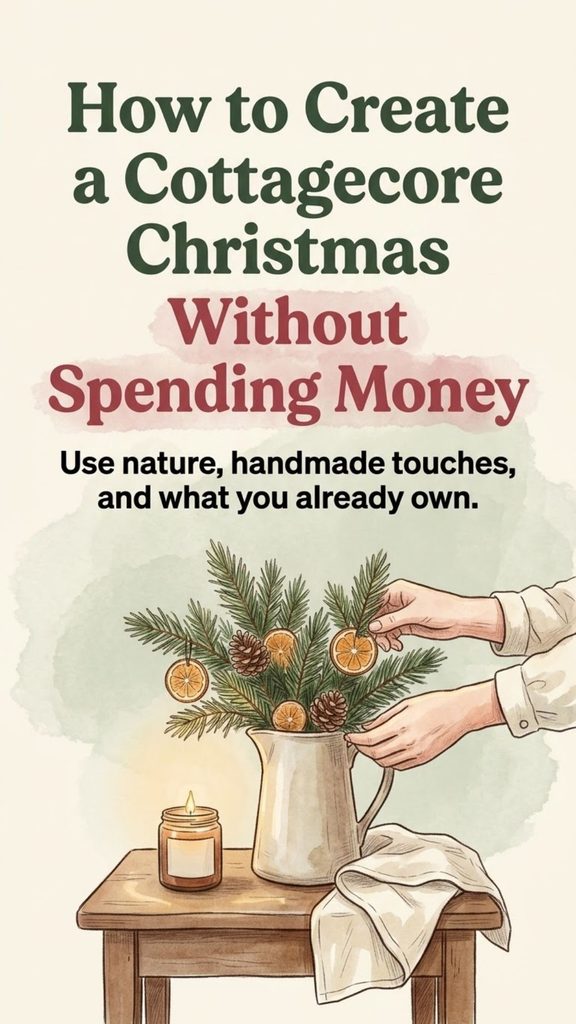
A beautiful Christmas does not have to begin with a shopping trip. In fact, some of the most convincing cottagecore holiday spaces are created with things that are already nearby: evergreen clippings, worn baskets, old books, cotton linens, candlelight, paper decorations, and the ordinary objects that make a home feel lived in.
That is part of what makes cottagecore especially suited to a low-cost Christmas. The style values nature, handmade details, usefulness, nostalgia, and imperfection rather than coordinated decorations or constantly changing trends.
If your goal is to spend nothing, the best approach is not to imitate expensive cottage-style Christmas displays with cheaper substitutes. Start with what you already own and allow the season to look personal.
You Might Also Like:
- Loading posts...
Here are practical ways to create a warm, old-fashioned cottagecore Christmas without buying anything new.
1. Let Nature Provide the Decorations
Start outside rather than in a store.
Winter gardens, yards, and permitted natural areas can provide beautiful seasonal materials. Depending on where you live, you may already have access to fallen pinecones, small branches, evergreen clippings, bare twigs, seed heads, or other dried plant material.
A few branches can often make more visual impact than a box of artificial decorations.
Try using natural materials to:
- Fill an old pitcher or vase with evergreen branches
- Arrange pinecones in a wooden bowl or basket
- Lay greenery across a mantel or shelf
- Tie small bundles of twigs together
- Tuck sprigs around existing decorations
- Make a simple wreath from flexible vines or branches
- Place bare branches in a crock and hang handmade ornaments from them
Keep the arrangement loose rather than overly polished. Cottagecore decorating tends to look best when it feels collected rather than manufactured.
There are a few sensible precautions. Collect only where you have permission, and avoid removing plants from protected land. Be cautious with unknown berries or plants, especially in homes with children or pets. Some decorative plants can be irritating or toxic if eaten.
If you bring damp greenery indoors, let excess moisture dry before placing it against painted walls, books, or wooden furniture.
2. Use Warm, Gentle Lighting
Lighting can change the feeling of a room more dramatically than adding another ornament.
Instead of trying to fill every surface with Christmas decorations, soften the lighting you already have. Table lamps, shaded lamps, existing string lights, and candles can all create the quiet glow associated with an old cottage in winter.
If you already own candles, group a few at different heights rather than scattering them everywhere. An ordinary jam jar can make a simple holder for a small candle if it is genuinely designed or safe for the heat involved.
Never improvise a candle holder from a container that may crack or overheat. Keep open flames away from dried greenery, paper decorations, curtains, pets, and children, and never leave candles unattended.
Flameless candles you already own are an easy alternative.
The goal is not maximum brightness. Cottagecore rooms often feel inviting because light appears in small pools: beside a chair, across a table, or near a window.
3. Shop Your Own Home First
Before deciding that you are missing decorations, walk through your rooms and look at ordinary household objects differently.
Many items can become part of a Christmas display without changing them permanently.
Look for:
- White or cream tablecloths
- Quilts and knitted blankets
- Woven baskets
- Wooden bowls
- Cutting boards
- Crocks and pitchers
- Glass jars
- Candlesticks
- Old books
- Enamelware
- Neutral scarves
- Mugs
- Baking tins
- Small stools
- Linen napkins
A stack of old books topped with a pinecone and a sprig of greenery can look more natural in a cottage-style room than a brand-new seasonal sign.
A wooden cutting board propped behind a bowl of apples can add warmth to a kitchen.
A folded quilt over the back of a chair instantly introduces color and softness without adding another object that has to be stored after Christmas.
This is one of the easiest ways to decorate for nothing because it changes how existing possessions are arranged rather than increasing the amount of stuff in the home.
4. Make Paper Decorations From Scraps
Handmade paper decorations fit naturally into cottagecore Christmas because a little unevenness makes them more charming.
Use whatever paper is already available: plain printer paper, kraft paper, paper grocery bags, leftover wrapping paper, old calendars, or other clean scraps.
You could make:
- Folded paper snowflakes
- Paper stars
- Simple chains
- Small gift tags
- Cutout ornaments
- Folded trees
- Hand-lettered labels
If using old books, choose damaged or unwanted copies rather than cutting apart books you value.
You can also write short seasonal phrases, favorite family sayings, or meaningful quotations on scraps of paper and place them in existing frames.
The aim is not complicated crafting. A few handmade pieces usually suit the cottagecore look better than dozens of identical decorations.
5. Dry Orange Slices If You Already Have Oranges
Dried citrus has become closely associated with natural Christmas decorating because it adds warm color without glitter or plastic.
If oranges are already part of your groceries, use a few slices rather than buying fruit specifically for decoration.
Cut the slices fairly thin and even, blot away excess juice, and dry them slowly in a low oven until the moisture has been removed. Exact drying time varies with slice thickness, fruit moisture, and the oven, so watch them rather than relying entirely on a timer. Turning the slices partway through can help them dry more evenly.
Once completely cool and dry, they can be threaded with string and used in:
- Garlands
- Small wreaths
- Tree ornaments
- Window decorations
- Gift wrapping
Do not store slices that are still damp, as remaining moisture can encourage mold.
If you do not already have oranges, skip this idea. A true zero-spend Christmas works best when you resist buying supplies simply because a project is labeled inexpensive.
6. Concentrate Decorations in a Few Areas
You do not need to decorate every room.
Trying to cover the whole house can create more work and make existing decorations feel insignificant. Instead, choose a few areas where your family naturally spends time.
For example, concentrate on:
- The kitchen table
- A living-room mantel or shelf
- A reading chair
- The entrance
- A bedroom dresser
- One windowsill
Create a small scene using only a handful of objects.
A chair with a quilt, a basket beside it, a small table with a book, and a sprig of evergreen nearby may create more atmosphere than decorations covering every wall.
These little pockets of warmth are especially useful in small homes because they create a seasonal feeling without adding clutter.
7. Decorate With Texture Instead of Buying a Color Scheme
You do not need matching Christmas decorations to create a cohesive look.
Texture can tie a room together even when colors and objects are mismatched.
Cottagecore interiors commonly combine materials such as:
- Worn or unfinished wood
- Linen and cotton
- Knitted wool
- Wicker and woven fibers
- Glass
- Stoneware
- Paper
- Evergreen foliage
- Dried natural materials
Look at what you already own and repeat similar textures around the room.
A knitted blanket beside a woven basket and an old wooden stool naturally belongs together even if none of the pieces was purchased as Christmas decor.
This is also a useful solution for anyone tired of buying a new holiday color palette every few years. Neutral household textiles combined with natural greenery already provide a strong seasonal foundation.
8. Give Everyday Kitchen Items a Seasonal Role
The kitchen can become one of the coziest Christmas spaces without traditional decorations.
Display ingredients and equipment that are already useful.
A bowl of apples, oranges, nuts, or other fruit can become part of the decor until the food is eaten. A stack of baking tins, wooden spoons in a crock, folded tea towels, or a basket of pantry staples can reinforce the handmade feeling of a cottage kitchen.
If you bake during the holidays, leave a cooling rack of cookies or a loaf of bread visible while it cools rather than immediately hiding everything away.
The cottagecore look works particularly well when practical objects remain practical. Not everything needs to exist solely as decoration.
9. Add Christmas Through Scent
Smell strongly influences how a home feels, and you may already have ingredients that create familiar winter scents.
Orange peel, cinnamon, cloves, or similar pantry ingredients can be simmered gently in water if they are already available.
Use a small amount rather than sacrificing ingredients needed for cooking. Keep plenty of water in the pot, use low heat, and never leave a simmering pot unattended.
You can also create seasonal scent simply by baking, making coffee, brewing tea, or cooking familiar holiday foods.
There is no need to purchase a special fragrance if your everyday kitchen can create one naturally.
10. Let Sound Become Part of the Decoration
Atmosphere is not purely visual.
Music can make the same undecorated room feel completely different. Use whatever music service, recordings, radio stations, or playlists you already have access to.
Depending on the feeling you want, try instrumental winter music, traditional folk, soft jazz, acoustic arrangements, or older seasonal recordings.
Natural background sounds can work too. The sound of a kettle, rain against a window, a crackling fire if you have one, or family conversation often contributes more to a cozy home than another decorative purchase.
The goal is not to create a staged cottage. It is to create an atmosphere people actually enjoy living in.
11. Use Handmade Ornaments With a Personal Story
A cottagecore Christmas becomes more interesting when the decorations reveal something about the household.
Instead of trying to make every ornament coordinate, use objects with history.
Bring out children’s old crafts, handmade decorations, inherited ornaments, ribbons saved from previous years, fabric scraps, or small keepsakes.
You can also make new ornaments from materials already around the house.
Pinecones can be tied with leftover ribbon or string. Cardboard can be cut into stars. Fabric scraps can become bows. Small bundles of cinnamon sticks can be tied together if cinnamon is already in the pantry.
A tree filled with imperfect handmade pieces often feels far more personal than one created entirely from matching sets.
12. Wrap Gifts With What You Already Have
If gifts are part of your celebration, the wrapping does not need to require another shopping trip.
Save and reuse:
- Brown packing paper
- Paper shopping bags
- Previous gift bags
- Ribbon
- Tissue paper
- Boxes
- Newspaper
- Fabric scraps
Turn printed sides inward when necessary and decorate plain packages with a small evergreen clipping, handwritten name tag, or reused ribbon.
Fabric can also be wrapped around certain gifts and tied securely, then returned to household use afterward.
Simple packages fit the cottagecore aesthetic particularly well because they feel practical and handmade rather than overly polished.
13. Allow the Home to Look Imperfect
Cottagecore loses much of its character when everything becomes too coordinated.
A genuine home contains mismatched furniture, worn baskets, chipped crockery, uneven handmade ornaments, old books, inherited pieces, and things that have been repaired instead of replaced.
You do not need to hide all of that for Christmas.
A patchwork quilt can be more fitting than a new holiday throw. Different mugs can look warmer than a matching seasonal set. Homemade paper stars do not need identical points.
Imperfection is especially helpful when decorating on a zero-dollar budget because it removes the pressure to make everything look as though it came from the same collection.
14. Make the Activities Part of the Christmas Atmosphere
A cottagecore Christmas is not only a decorating style. Much of its appeal comes from ordinary domestic activities performed slowly and intentionally.
Use what you already planned to do as part of the season:
Bake something familiar.
Mend something by hand.
Write cards or notes.
Read beside the window.
Make soup.
Take an evening walk.
Arrange branches gathered outside.
Pull out an old board game.
Drink tea at the table rather than while rushing around the house.
None of these activities needs to become a performance. They simply shift attention from acquiring Christmas to experiencing it.
That distinction is one of the easiest ways to make the season feel calmer.
15. Stop Decorating When the House Feels Warm Enough
Perhaps the hardest zero-spend Christmas habit is knowing when to stop.
Holiday marketing constantly suggests that one more ornament, pillow, wreath, sign, candle, or table decoration will finally make the room complete.
It rarely does.
Instead, step back after decorating and ask whether the room already feels welcoming.
Can people sit comfortably?
Can the dining table still be used?
Are surfaces reasonably easy to clean?
Can you enjoy the decorations without worrying about storing another pile of seasonal items afterward?
If the answer is yes, your home probably has enough.
A Cottagecore Christmas Is More About Attention Than Things
Creating a cottagecore Christmas without spending money is less about finding clever substitutes for store-bought decorations and more about changing what you notice.
Branches become decorations. A quilt becomes seasonal color. An old pitcher becomes a vase. Paper scraps become stars. Fruit becomes a centerpiece. Familiar music becomes part of the atmosphere.
None of those things needs to be expensive because the beauty comes from arrangement, texture, memory, and use.
The most convincing cottagecore Christmas is rarely the one with the most decorations. It is the one that feels comfortable enough for people to linger at the table, curl up under an old blanket, bake something together, or enjoy a quiet evening without thinking about what the house still needs.
Use what is already around you. Make a few things by hand. Bring a little nature indoors. Soften the lights. Leave some empty space.
That can be more than enough to make Christmas feel warm, personal, and beautifully at home.