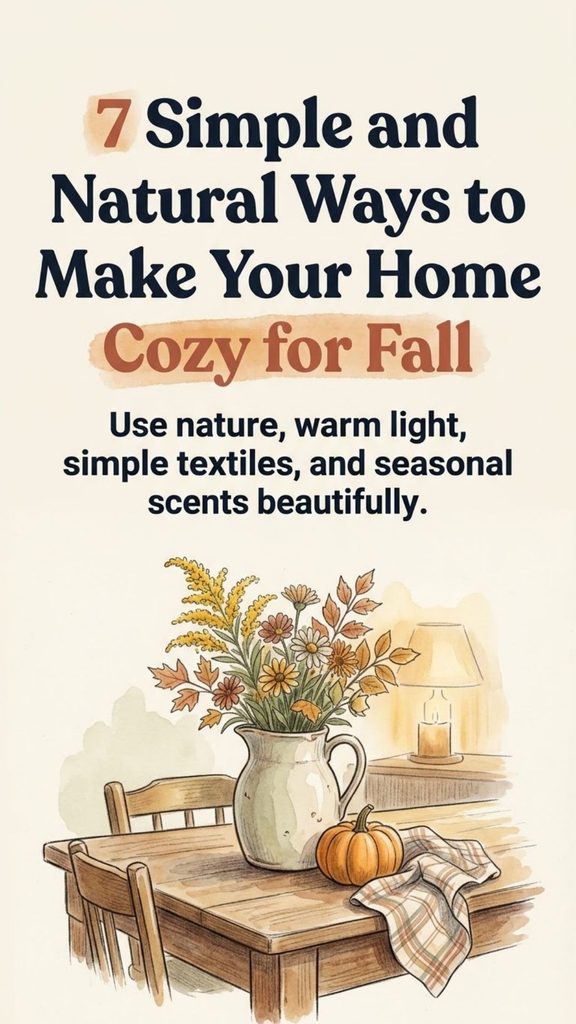
A cozy fall home does not have to begin with bins of decorations, artificial pumpkins, or a shopping trip for seasonal signs. Some of the most convincing autumn touches come from much simpler things: a bowl of apples, a few branches clipped from the yard, a warmer lamp in the evening, a quilt pulled from the closet, or the smell of cinnamon coming from the kitchen.
The easiest way to make fall decorating feel natural is to notice what is changing outdoors and let your home follow along. Autumn rarely arrives all at once, so your rooms do not need to transform overnight either.
A few thoughtful changes made gradually can create a home that feels warmer, calmer, and more connected to the season without becoming cluttered or expensive.
You Might Also Like:
- Loading posts...
1. Let the Real Season Set the Pace
Retail displays often announce autumn long before the weather does. In many places, August and even September can still feel completely like summer. The trees are green, gardens are producing tomatoes, and afternoons remain hot.
There is no reason to force a full fall atmosphere before your surroundings begin to change.
Instead, decorate in stages.
Early Fall
When mornings begin to cool but afternoons are still warm, make only small changes. Open the windows when the weather allows, place a lightweight throw on the sofa, and bring in late-summer flowers such as sunflowers.
A bowl of fresh apples or pears on the kitchen counter can be enough to suggest that the season is shifting.
Mid-Fall
As daylight shortens and leaves begin changing color, add a little more warmth indoors.
This is a good time for:
- thicker blankets
- warm-toned table linens
- candles or small lamps in the evening
- apples, pears, pumpkins, and gourds
- cinnamon, cloves, and other baking spices
Late Fall
Once mornings are genuinely cold and many trees have lost their leaves, heavier fabrics and deeper colors feel more appropriate.
Bring out quilts, add real pumpkins or dried plant material, make soups and baked dishes, and rely more on soft lighting during the darker evenings.
Following the actual weather keeps seasonal decorating from feeling forced. It also lets you enjoy each stage instead of rushing straight from summer into Halloween.
2. Decorate With Real Pumpkins, Branches, and Seasonal Produce
Nature already provides an excellent fall color palette.
Pumpkins, squash, apples, dried grasses, seed heads, branches, pinecones, acorns, and colorful leaves can all become seasonal decorations without looking overly themed.
You do not need dozens of pumpkins to make an impact. A small pumpkin beside the front door, three miniature gourds on a table, or a simple bowl filled with apples can be more attractive than an elaborate display.
Try using natural materials where they make sense:
Place several small pumpkins along a mantel rather than filling it with signs and figurines.
Arrange clipped branches with colorful leaves in a sturdy vase.
Set pears or apples in a wooden bowl on the dining table.
Fill a shallow dish with clean, dry acorns or pinecones.
Add a bundle of dried grasses to an entryway or kitchen.
For outdoor decorating, a few pumpkins beside a chair, basket, or planter can make a porch feel seasonal without covering every available surface.
If you gather natural materials yourself, collect responsibly. Avoid taking plants or flowers from private property or protected areas without permission. Be cautious with unfamiliar wild plants as well; some harmless-looking species have toxic look-alikes.
One advantage of seasonal produce is that much of it can be used rather than stored. Pumpkins can become food or jack-o’-lanterns, apples can be baked, and many compostable plant decorations can eventually return to the garden or compost pile.
3. Bring Fall Into the Kitchen With Real Spices
Scent changes the feeling of a house almost immediately.
Fall fragrances do not have to come exclusively from candles or room sprays. Cooking and baking can create the same warm atmosphere while also giving you something to eat or drink.
A simple stovetop simmer pot is one option.
Add water to a small saucepan along with ingredients such as:
- 2 or 3 cinnamon sticks
- a few whole cloves
- apple slices
- orange peel
- a small amount of nutmeg
Keep it at a very gentle simmer and add more water whenever the level becomes low.
Never leave a simmer pot unattended, and do not allow the pan to boil dry.
Another easy approach is simply to cook with traditional fall flavors. Apple bread, pumpkin bread, oatmeal cookies, baked apples, cinnamon rolls, or a fruit crisp can fill the kitchen with spice without requiring a separate fragrance product.
Warm apple cider works well too. Heat cider gently with cinnamon sticks, cloves, or orange peel and strain the spices before serving.
Coffee drinkers can experiment with adding a small pinch of cinnamon to coffee grounds before brewing. Start conservatively; too much ground spice can overwhelm the coffee and may not work well with every brewing method.
You can still use scented candles if you enjoy them. The point is not to eliminate them, but to remember that ordinary cooking can make a home smell seasonal in a much more natural way.
4. Add Cozy Textiles in Useful Places
Blankets are an obvious autumn addition, but textiles can change the atmosphere of almost every room.
Start with things you already own.
A quilt folded across the foot of the bed makes the room look warmer and is ready for chilly nights.
A table runner or cloth tablecloth can make an ordinary weekday dinner feel more seasonal without taking up any extra surface space.
Tea towels in rust, cream, brown, muted gold, forest green, or plaid can add fall color to the kitchen.
A folded blanket on an entry bench is both attractive and practical when mornings become cold.
You can also repurpose fabric rather than buying special seasonal textiles. An old plaid scarf can sit beneath a vase or bowl. A piece of linen can line a bread basket. A folded wool throw can soften the back of a wooden chair.
Texture often matters more than printed fall graphics.
Linen, cotton, wool, corduroy, woven fabrics, and quilted materials naturally make rooms feel warmer. You can create a distinctly autumnal space without a single fabric covered in pumpkins or leaves.
The goal is comfort first. Seasonal decorating works especially well when the objects are useful rather than simply occupying space.
5. Change the Lighting Before You Change the Decor
One of the biggest changes during autumn happens outside the house: daylight fades earlier.
Lighting therefore has an enormous influence on how cozy a room feels.
Instead of depending on one bright ceiling fixture, use several smaller sources of light. A table lamp beside the sofa, another lamp in a darker corner, and a small light near the dining area can create a softer atmosphere than a single harsh overhead light.
Warm-white bulbs generally produce a more inviting evening glow than very cool, blue-toned light.
If your fixtures have dimmers, lowering the brightness after sunset can make the transition into evening feel gentler.
Candles can add another layer of warmth, but place real flames on stable, heat-resistant surfaces and keep them away from curtains, dried leaves, paper decorations, children, and pets.
Flameless candles are an easy alternative in locations where an open flame would be inconvenient or unsafe.
Curtains can also affect the mood. Once darkness falls, closing them can make a room feel more enclosed and comfortable while reducing the contrast between a bright interior and a dark window.
Before buying another box of decorations, try adjusting your lighting. It can change the feeling of a room more dramatically than many decorative objects.
6. Keep Seasonal Wall Decor Simple
Fall decorating becomes cluttered quickly when every wall, shelf, and countertop receives something new.
A better approach is to choose one or two understated seasonal pieces.
A simple frame is especially useful because you can change what it displays throughout the year.
For autumn, consider:
- a botanical print of leaves or apples
- a vintage-style fruit illustration
- pressed leaves arranged behind glass
- dried flowers from the garden
- a small wreath
- a simple nature sketch
- a favorite seasonal poem or short quotation
You can also place a small wreath or dried branch inside an empty decorative frame for a three-dimensional display.
If you press your own leaves, choose specimens that are clean and dry and allow them to dry thoroughly before framing them. Fresh leaves sealed while damp can deteriorate.
The best seasonal wall decorations do not need to announce “fall” in large letters. A modest botanical picture or a few preserved leaves can communicate the season just as clearly.
7. Add the Warmth of Fire—Real or Flameless
Humans have gathered around fire for warmth and light for thousands of years, so it makes sense that a flickering flame instantly changes the atmosphere of a room.
If you have a working wood-burning fireplace, autumn is a natural time to prepare it for use. Chimneys and fireplaces should be maintained properly, and any fireplace that has not been used in a long time should be inspected before you start burning wood.
Firewood itself can become part of the decor. A small basket or rack of dry logs beside the fireplace looks seasonal because it is functional.
Outside, a fire pit can make cool evenings much more inviting, provided local rules and weather conditions allow fires.
No fireplace is necessary, though.
A few candles on a dining table, battery-operated tapers on a mantel, or flameless lanterns near an entryway can create a similar visual effect.
Electric fireplaces are another option for people who want the appearance of a flame without burning wood. Some models also provide supplemental heat, although they should always be operated according to the manufacturer’s clearance and electrical instructions.
Real candles and fireplaces should never be left unattended.
A Cozy Fall Home Can Stay Simple
The most convincing autumn homes rarely need the most decorations.
Start with what the season is already giving you. Bring in a pumpkin from the market, clip an interesting branch, put apples in a bowl, unfold an old quilt, lower the lights, and make something with cinnamon.
Then add more only as the weather changes.
This slower approach has another advantage: your home continues to evolve throughout the season rather than looking exactly the same from late August until Thanksgiving.
Fall decorating can be inexpensive, useful, and personal. Let color, texture, food, light, and natural materials do most of the work, and your home will feel seasonal without needing to look like a seasonal aisle at a store.