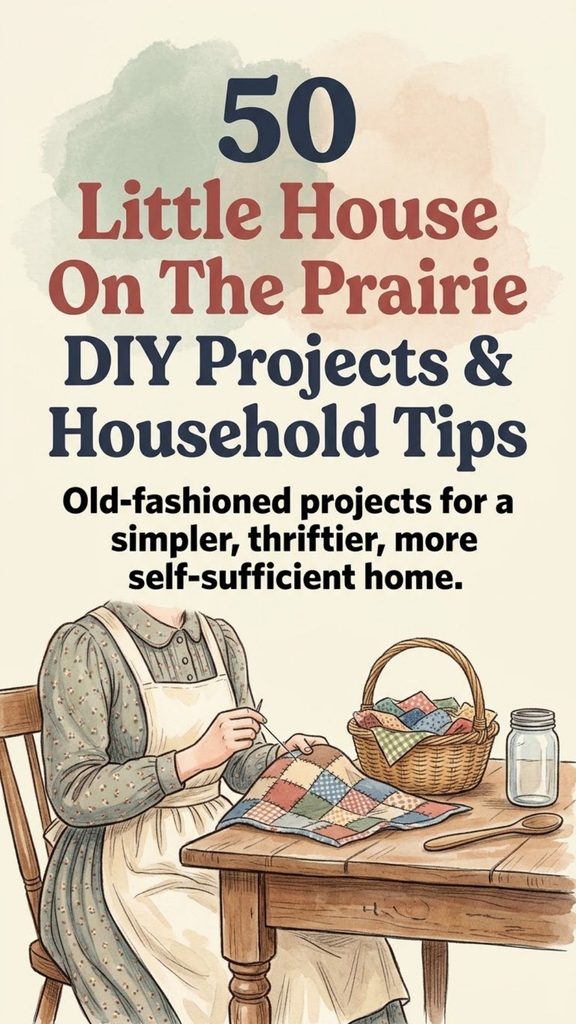
There is something appealing about the homemaking spirit found in Little House on the Prairie: meals made from basic ingredients, clothing repaired instead of discarded, gardens planted with purpose, and ordinary household objects made by hand.
Modern life is very different from the world described in Laura Ingalls Wilder’s books, and few people need to live exactly as a nineteenth-century homesteading family did. Still, many of the underlying skills remain surprisingly useful. Sewing, preserving food, growing herbs, repairing household items, reusing materials, and keeping practical records can save money while reducing waste.
The following projects are inspired by that resourceful, make-do-and-mend approach. Some are simple enough for an afternoon; others, such as canning, soapmaking, woodworking, and cheesemaking, require proper instructions and safety precautions.
You Might Also Like:
- Loading posts...
Sewing, Mending, and Fabric Projects
1. Turn Worn Clothing Into Useful Household Fabric
Before throwing away an old cotton shirt, dress, or pair of jeans, cut out the sections that are still in good condition.
Useful fabric can become cleaning cloths, quilt pieces, small drawstring bags, patches, napkins, or craft material. Remove buttons and zippers first and save those too.
It is one of the easiest ways to practice the old habit of using an item completely before replacing it.
2. Sew a Simple Work Apron
A sturdy apron protects clothing while cooking, gardening, cleaning, or crafting.
A basic version requires little more than durable cotton fabric, a waistband, and ties. Old tablecloths, denim, or large pieces of leftover fabric can work particularly well.
Add a large front pocket for clothespins, garden scissors, recipe cards, or other small tools.
3. Make a Patchwork Quilt
Patchwork developed partly because small pieces of usable fabric did not need to be wasted.
Start with simple squares rather than an elaborate traditional pattern. Collect coordinating cotton pieces, sew them into rows, add batting and backing, and finish the quilt by machine or hand.
A smaller lap quilt is an easier first project than a full bed-sized quilt.
4. Practice Visible Mending
Not every repair needs to be invisible.
A worn knee can be reinforced with a contrasting patch, while small holes can be covered with decorative stitching. Visible mending gives clothing character while extending its life.
The important part is repairing damage while it is still small.
5. Make Rag Rugs From Fabric Scraps
Long strips cut from old cotton clothing or sheets can be braided, woven, or crocheted into durable rugs.
Use similar-weight fabrics so the finished rug lies more evenly.
Place handmade rugs beside a bed, near a mudroom entrance, or anywhere a washable floor covering is useful.
6. Sew Patchwork Pot Holders
Small fabric scraps are ideal for pot holders because the finished project does not require large pieces.
Use proper heat-resistant batting rather than ordinary polyester filling, which may not offer suitable protection near high temperatures.
This is also a practical project for learning straight seams and basic quilting.
7. Make Reusable Cloth Napkins
Cloth napkins are easy to sew and can last for years.
Cut washable cotton into equal squares or rectangles, hem the edges, and keep a basket of them near the dining table.
Old linen or cotton tablecloths can often be turned into several sets.
8. Knit a Simple Scarf
A scarf is one of the most forgiving beginner knitting projects because it does not require complicated shaping.
Start with a basic stitch and inexpensive yarn. Once comfortable with the technique, move on to hats, mittens, washcloths, or blankets.
The value is as much in learning the skill as in producing the finished item.
9. Sew a Traditional Rag Doll
A simple cloth doll can be made from cotton fabric, stuffing, yarn, and embroidery thread.
Keep facial features stitched rather than relying on small detachable pieces when making one for a young child.
Scraps from other sewing projects can become tiny aprons, dresses, bonnets, or blankets.
10. Make Clothes for a Rag Doll
Once the doll is finished, use the smallest remaining fabric pieces to make its wardrobe.
Simple skirts, aprons, shawls, and blankets require very little material and provide excellent practice for hand sewing.
It is an especially good way to teach older children basic stitching without wasting expensive fabric.
Old-Fashioned Kitchen Skills
11. Make Butter in a Jar
Homemade butter is one of the easiest traditional food projects to demonstrate at home.
Place heavy cream in a clean jar with enough empty space for vigorous shaking. Continue shaking until the cream moves through the whipped stage and the butterfat separates from the buttermilk.
Drain the liquid, rinse the butter in cold water, and work out as much remaining liquid as practical before refrigerating it.
It is not necessarily cheaper than store-bought butter, but it is an excellent way to understand how a familiar food is made.
12. Start a Sourdough Culture
A sourdough starter uses flour, water, and naturally occurring yeasts and bacteria to create a culture capable of leavening bread.
It requires regular feeding and a little patience rather than expensive equipment.
Keep records of feeding amounts and timing until you understand how your starter behaves in your kitchen.
13. Bake a Simple Loaf of Bread
Bread baking is one of the most useful traditional kitchen skills to learn.
Start with a basic yeast loaf before moving into complicated sourdough recipes. Pay attention to dough texture rather than relying only on exact flour measurements, because flour absorbs water differently depending on type and environment.
Once comfortable with the basics, try rolls, sandwich bread, or rustic loaves.
14. Make Fresh Cheese
Some cheeses require specialized cultures, carefully controlled temperatures, and aging conditions, but simple fresh cheeses are much more approachable.
Recipes for ricotta-style cheeses, farmer cheese, or paneer can teach the basic process of separating curds from whey.
Use a reliable recipe and good food-safety practices rather than improvising dairy preservation.
15. Churn Homemade Ice Cream
An old-fashioned hand-crank ice cream maker turns dessert into a household project.
The freezing container is traditionally surrounded by ice and salt, which lowers the temperature around the ice-cream mixture. Modern hand-crank models make the process easier while keeping much of the traditional experience.
Fruit, vanilla, chocolate, or other familiar flavors are good places to start.
16. Dry Culinary Herbs
Drying herbs is one of the simplest ways to preserve a garden harvest.
Harvest clean, healthy leaves and dry them thoroughly using a suitable air-drying or dehydrating method. Herbs need to be fully dry before storage because retained moisture encourages spoilage.
Store them in labeled containers away from excessive heat, moisture, and light.
17. Blend Your Own Herbal Tea
Mint, lemon balm, chamomile, and other edible herbs can be dried and blended for tea.
Identify every plant correctly and make sure it is suitable for consumption. “Natural” does not automatically mean harmless, and some herbs can interact with medications or cause unwanted effects. The FDA likewise notes that plant-derived and essential-oil products should not automatically be assumed safe merely because they are natural.
Enjoy homegrown tea as food and drink rather than treating homemade herbal mixtures as substitutes for medical care.
18. Learn Safe Home Canning
Canning is one traditional household skill where modern safety knowledge should take priority over old family methods.
High-acid and properly acidified foods can be preserved with tested boiling-water canning procedures, while low-acid foods such as most vegetables, meats, poultry, and seafood require pressure canning. The National Center for Home Food Preservation specifically warns that low-acid foods need pressure-canner processing to control botulism risk.
Use a current tested recipe rather than relying on an unverified vintage method.
19. Make Refrigerator Pickles
If pressure canning feels too advanced, refrigerator pickles are an easier introduction to food preservation.
Vegetables are covered with an appropriate vinegar brine and kept refrigerated rather than being processed for shelf storage.
They do not have the long room-temperature shelf life of properly canned pickles, but the method is straightforward and useful for small harvests.
20. Keep a Family Recipe Book
Handwritten recipe books become more valuable with time.
Record recipes your household actually makes, along with practical notes such as pan size, substitutions that worked, baking times, or who originally shared the recipe.
Leave blank pages between sections so the collection can continue growing.
Garden and Homestead-Inspired Projects
21. Plant a Kitchen Garden
A useful kitchen garden does not need to be large.
Choose vegetables and herbs your household regularly eats and place frequently harvested plants where they are convenient to reach.
Parsley, chives, lettuce, basil, thyme, and other compact crops can fit into surprisingly small spaces when the climate and light conditions suit them.
22. Grow Herbs in Containers
A porch, patio, balcony, or sunny windowsill can provide enough room for several herbs.
Containers make it easier to give plants different soil and moisture conditions instead of assuming every herb prefers the same treatment.
Always check the growing requirements of each plant before grouping them.
23. Save Garden Seeds
Seed saving can make a garden more self-reliant, but not every seed will reproduce exactly like its parent plant.
Open-pollinated varieties are generally the best candidates for gardeners who want reasonably predictable offspring. Hybrid plants may produce seeds, but the next generation can differ substantially from the original.
Start with easy crops such as beans, peas, lettuce, or tomatoes and learn the isolation needs of each species.
24. Make Homemade Seed Packets
Once seeds are thoroughly dry, store them in labeled envelopes.
Write the plant name, variety, harvest year, and any useful notes on each packet. Keep seeds somewhere cool and dry until planting time.
Handmade packets also make inexpensive gifts for gardening friends.
25. Start a Compost Pile
Vegetable scraps, coffee grounds, dry leaves, and untreated garden debris can be transformed into compost rather than thrown away.
A successful pile needs a mixture of nitrogen-rich “green” material and carbon-rich “brown” material, along with moisture and air.
Avoid adding diseased plants, pet waste, or materials that are unsuitable for home composting.
26. Collect Rainwater for Appropriate Uses
A rain barrel connected to a downspout can reduce the amount of treated household water used outdoors.
Collected rainwater, however, is not automatically clean. Roof runoff may contain microorganisms, dirt, or chemicals. The CDC recommends limiting untreated rainwater to uses where swallowing it is unlikely and checking local rules governing collection.
Use a screened barrel, keep it covered, and maintain the system so it does not become a mosquito breeding site.
27. Turn Old Containers Into Planters
Buckets, galvanized tubs, wooden boxes, and other sturdy containers can sometimes be reused as planters.
The important requirements are adequate drainage and materials suitable for the plants being grown.
Avoid containers that previously held hazardous chemicals, particularly when growing food.
28. Build a Simple Birdhouse
A basic wooden nesting box is an approachable woodworking project.
Rather than choosing dimensions only for appearance, select a design appropriate for a bird species common to your region. Entrance-hole diameter, floor area, ventilation, drainage, and mounting location all influence which birds can safely use the box.
Avoid adding a perch unless the species actually needs one.
29. Create a Pollinator-Friendly Garden Corner
Instead of relying on decorative objects, devote a patch of the yard to flowers that provide nectar or pollen.
Native plants are particularly valuable because they can support insects adapted to local ecosystems.
Aim for flowers across several seasons so food is available for longer periods.
30. Hang an Outdoor Clothesline
Line drying requires no electricity from the dryer and gives linens the familiar fresh-air treatment associated with traditional homemaking.
Install the line securely in a sunny, well-ventilated location.
Shake garments before hanging them, leave space between pieces, and bring laundry inside before damp evening conditions return.
Woodworking and Traditional Crafts
31. Build a Simple Wooden Shelf
A basic wall shelf is an excellent first woodworking project.
Use straight boards, measure carefully, sand rough edges, and select mounting hardware capable of supporting the expected load.
A useful shelf does not need elaborate decorative details.
32. Make a Small Rustic Bench
A simple bench can serve as porch seating, a plant stand, or a place for removing muddy shoes.
Reclaimed lumber can work if it is sound, clean, and free from unsafe treatments or hidden nails.
For furniture that will bear body weight, strong joints and stability matter much more than achieving an intentionally “rustic” appearance.
33. Carve a Wooden Spoon
Spoon carving turns a small piece of suitable hardwood into a genuinely useful object.
Use purpose-made carving tools and work away from hands and body. Beginners should learn basic knife safety before attempting detailed carving.
After sanding, choose a food-contact finish appropriate for wooden utensils if a finish is desired.
34. Carve a Walking Stick
A straight, sturdy branch can become a useful walking stick after the bark and rough areas are carefully removed.
Allow freshly cut wood to dry appropriately before finishing it.
Check the stick regularly for cracks or weaknesses if it will actually be used for support.
35. Learn Basket Weaving
Basketry is both decorative and highly practical.
Begin with a small basket made from commercially prepared reed rather than gathering unknown plant material. Once the basic over-under pattern becomes familiar, handles, shaped sides, and decorative techniques become easier.
Finished baskets can hold yarn, produce, clothespins, or pantry items.
36. Make a Fabric-Coiled Basket
If traditional basket reeds are unavailable, strips of leftover fabric can be wrapped around cord and stitched into a bowl or basket.
This produces a sturdy storage container while using scraps too narrow for many other sewing projects.
Small versions are useful for keys, sewing notions, and other loose items.
37. Try Simple Pottery
Hand-built pottery can begin with pinch pots, coil pots, or slab-built forms.
Functional dishes require appropriate clay, glazing, and kiln firing. Decorative air-dry clay should not automatically be treated as food-safe pottery.
A local pottery studio is often the easiest place to learn the process without buying a kiln.
38. Make Corn Husk Decorations
Dried corn husks have long been used for simple decorative crafts.
Soak clean dried husks briefly to make them more flexible, shape them into flowers, small figures, or seasonal ornaments, then allow them to dry again.
Because dried plant material is flammable, keep finished pieces away from candles and open flames.
39. Try Decorative Tin Punching
Tin punching creates patterns by carefully making small holes in thin metal.
For a beginner project, use craft metal intended for this purpose and follow proper eye and hand protection practices.
Finished panels can decorate lantern-style objects, cabinet inserts, or wall hangings.
40. Make Rope or Cordage
Twisting fibers together teaches one of the oldest basic construction principles.
Practice first with cotton string, jute, or other commercially prepared fibers. Two strands twisted individually in one direction and then wrapped together in the opposite direction form surprisingly strong cordage.
Use homemade cord for crafts and light household jobs rather than safety-critical applications.
Practical Household Projects
41. Make Simple Household Cleaners
Many everyday cleaning jobs do not require a cabinet full of specialty products.
A few basic cleaners can handle a large amount of ordinary grime, but homemade mixtures should be kept simple. Never mix bleach with ammonia, acids such as vinegar, or other cleaners unless the product labels specifically indicate that combination is safe.
Label every homemade cleaner clearly and keep it away from children and pets.
42. Keep an Old-Fashioned Cleaning Basket
Instead of storing supplies throughout the house, gather frequently used items into one portable basket or caddy.
Include washable cloths, brushes, gloves, and the cleaners appropriate for your surfaces.
The idea is simple: make routine cleaning easier to start by keeping the essentials together.
43. Make Your Own Cleaning Rags
Worn cotton T-shirts, towels, and flannel sheets make excellent washable rags.
Cut away seams and damaged sections, then sort the cloths by purpose.
Keeping separate rags for bathrooms, kitchens, furniture, and especially dirty jobs prevents confusion later.
44. Organize Dry Goods in Reusable Jars
Glass jars make pantry ingredients easy to see and can help keep cupboards orderly.
Use clean food-safe containers with sound lids, and label ingredients that could easily be confused.
Jars are particularly useful for dry goods such as rice, lentils, oats, dried beans, and baking ingredients.
45. Make a Clothespin Bag
A clothespin bag is a tiny sewing project that makes line drying more convenient.
It can be made from sturdy scrap fabric or even adapted from an old child-sized shirt.
Hang it directly on the clothesline so pins are always within reach.
46. Make Safe Fire Starters
Small fire starters can be made for a properly maintained fireplace, wood stove, or outdoor fire pit using materials intended for that purpose.
Keep them small and store them away from heat and flame. Never use gasoline or other highly volatile liquids to start a household fire.
Whatever method you use, follow the instructions for your particular stove, fireplace, or fire pit.
47. Build a Proper Outdoor Oven
A masonry or cob-style outdoor oven can produce excellent bread and pizza, but it is considerably more involved than a casual weekend craft.
The base must safely support the oven’s weight, the firebox needs appropriate heat-resistant materials, and the structure should be positioned with fire safety and local building requirements in mind.
Use a proven oven design rather than improvising around open flame and extreme temperatures.
48. Learn Traditional Broom Making
A simple whisk broom can be made from broomcorn or similar craft material bound tightly around a handle.
Full-sized working brooms require more technique to balance the broom and secure the stitching properly.
Even a small version offers an interesting introduction to how an everyday tool can be constructed from basic materials.
49. Keep a Household or Homestead Journal
A practical household journal is more useful than relying on memory.
Record planting dates, harvest quantities, food-preservation batches, repairs, seasonal chores, recipes, project measurements, and supplies that need replacing.
Over several years, the journal becomes a personal reference book tailored to your own home.
50. Create a Family Skills Book
Take the family cookbook idea one step further and record household knowledge as well as recipes.
Include instructions for repairing a button, making bread, planting tomatoes, caring for cast iron, preserving favorite foods, starting seeds, or completing annual home-maintenance jobs.
Add photographs, handwritten notes, measurements, and stories connected with particular traditions.
The finished book becomes more than a collection of instructions. It preserves practical knowledge that can otherwise disappear between generations.
Bringing the Prairie Spirit Into a Modern Home
The most useful lesson to borrow from Little House on the Prairie is not that every household should abandon modern convenience. It is the habit of knowing how to do things.
Learning to mend a shirt means one less item has to be replaced immediately. Growing herbs makes a small garden productive. Baking bread teaches how a few ordinary ingredients work together. Composting finds another use for kitchen and garden waste. Keeping a household notebook prevents useful knowledge from being forgotten.
Start with two or three projects that solve an actual need in your home. Sew an apron from fabric you already own, plant herbs you regularly cook with, hang a clothesline, start a recipe book, or learn how to bake a dependable loaf of bread. Once those skills become ordinary, add another.
Resourcefulness does not require living like a nineteenth-century pioneer. It simply means looking at what you already have, learning useful skills, wasting less, and becoming a little more capable of making, repairing, growing, and preserving things for yourself.