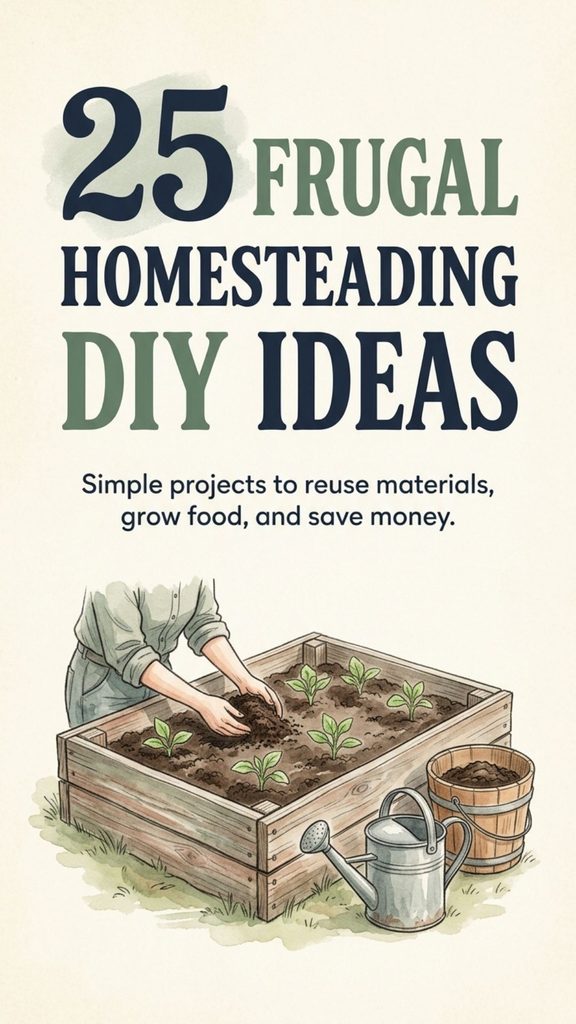
Homesteading doesn’t have to begin with acres of land, expensive equipment, or a perfectly organized farmhouse. Some of the most useful homesteading skills are surprisingly simple, and many can be practiced in an ordinary backyard, a small garden, or even an apartment.
Growing your own vegetables, making compost, preserving seasonal produce, repairing household items, and reducing unnecessary purchases are all ways to become more self-sufficient.
The best part? You don’t need to tackle everything at once.
You Might Also Like:
- Loading posts...
In fact, frugal homesteading works best when you start small, use what you already have, and choose projects that genuinely reduce your household expenses.
Buying hundreds of dollars’ worth of gardening supplies to grow a few tomatoes may be enjoyable, but it won’t necessarily save money. On the other hand, turning kitchen scraps into compost, starting seeds in reused containers, and learning to preserve garden harvests can provide lasting value.
Whether you’re a beginner or already enjoy a more traditional lifestyle, these 25 practical homesteading ideas can help you waste less, develop useful skills, and make your home more resourceful.
Start With These Money-Saving Garden Projects
A productive garden is one of the most rewarding parts of homesteading, but it doesn’t need to be large or expensive. These projects focus on improving your soil, growing useful crops, and making the most of limited space.
1. Build a Simple Backyard Compost Bin
Composting is an excellent place to begin because it transforms common household and garden waste into a valuable soil amendment.
Instead of throwing away vegetable peelings, coffee grounds, dry leaves, and grass clippings, you can turn many of them into compost.
Choose a well-drained spot and create a simple bin using suitable untreated lumber, wire mesh, or a reused container with adequate airflow.
Add a mixture of nitrogen-rich materials, such as fruit and vegetable scraps, and carbon-rich materials, such as dry leaves and shredded cardboard.
Keep the pile as damp as a wrung-out sponge and turn it periodically to introduce oxygen.
Avoid adding meat, dairy products, oily foods, pet waste, or diseased plants to a basic backyard compost pile.
Finished compost can improve soil structure and reduce the need to purchase bagged soil amendments.
2. Make Free Leaf Mold From Autumn Leaves
Fallen leaves are one of the most overlooked resources in a backyard.
Instead of bagging them for disposal, use them to make leaf mold.
Leaf mold is produced when leaves gradually decompose, primarily through fungal activity. The finished material can improve moisture retention and soil structure.
Gather fallen leaves, shred them with a lawn mower if practical, and place them in a ventilated wire enclosure or suitable perforated bags.
Moisten the leaves lightly and leave them to break down.
Depending on conditions, the process may take approximately one to two years, sometimes longer.
The result is a useful material for mulching and improving garden soil.
It’s a particularly good low-cost project for gardeners with mature trees nearby.
3. Start Vegetable Seeds in Reused Containers
Buying established plants every spring can become expensive, especially if you’re planting several garden beds.
Starting seeds indoors may reduce costs and gives you more control over the varieties you grow.
You don’t necessarily need specialized seed trays.
Clean yogurt containers, suitable plastic food tubs, and other reused containers can work if they’re sturdy, food-safe for their intended use, and have drainage holes.
Fill them with an appropriate seed-starting mix and sow seeds according to their packet instructions.
Keep seedlings in adequate light and avoid overwatering.
Before moving indoor-grown seedlings outside, gradually acclimate them to outdoor conditions over about a week or more.
This process, called hardening off, helps reduce transplant stress.
4. Grow Vegetables You Actually Buy
A garden is most useful when it produces food your household will eat.
Before planting, look at your grocery receipts.
Do you regularly buy lettuce, tomatoes, cucumbers, peppers, herbs, or green beans?
Start with crops that suit your climate and have a realistic chance of producing worthwhile harvests.
For a small garden, productive crops such as leafy greens, bush beans, tomatoes, and herbs can be good choices.
Avoid growing large quantities of vegetables simply because they’re popular.
A small harvest that gets eaten is more valuable than a large harvest that goes to waste.
Keep track of seed costs, growing supplies, water use, and harvest amounts to see which crops provide the best value for your household.
5. Create a Container Garden With Reused Pots
You don’t need permanent raised beds to grow food.
Container gardening allows you to use patios, balconies, and other suitable sunny spaces.
Large food-safe buckets, sturdy reused planters, and appropriately sized containers can be practical alternatives to expensive decorative pots.
Make sure every container provides adequate drainage.
Choose the container size according to the plant. Tomatoes and peppers generally need considerably more root space than small herbs.
Use a suitable potting mix rather than dense garden soil, which can drain poorly in containers.
Group plants according to their sunlight and watering needs.
Container gardening won’t eliminate all costs, but it can provide fresh produce where in-ground gardening isn’t possible.
6. Make Your Own Garden Mulch
Mulch helps reduce evaporation, suppress some weeds, and protect soil from temperature extremes.
Instead of purchasing several bags of decorative mulch, look for suitable materials already available around your property.
Shredded dry leaves, untreated wood chips, and clean straw can all be useful, depending on the plants and conditions.
Spread mulch over the soil surface while leaving a little space around plant stems and tree trunks.
Avoid piling mulch directly against stems, as persistent moisture can contribute to problems.
Don’t use grass clippings recently treated with unsuitable herbicides, and avoid unknown materials that may contain contaminants.
Free mulch can reduce garden maintenance while improving soil conditions over time.
7. Practice Low-Cost Garden Pest Management
Garden pests can be frustrating, but spraying everything with a homemade mixture isn’t always the answer.
A better approach is integrated pest management.
Begin by identifying the pest and checking whether it’s causing meaningful damage.
Sometimes removing affected leaves, handpicking insects, protecting seedlings with insect netting, or encouraging beneficial insects is enough.
Floating row covers can help protect suitable crops when installed correctly.
Healthy soil, appropriate watering, and good plant spacing also help plants tolerate certain stresses.
Be cautious with homemade sprays containing soap, vinegar, essential oils, or other concentrated ingredients. These may damage plants or pose other risks.
When a pesticide is necessary, choose one labeled for the crop and pest, and follow all instructions.
Make the Most of Water and Garden Resources
8. Collect Rainwater for Garden Use
Rain barrels can provide an additional source of water for suitable outdoor uses.
A basic system directs rainwater from a roof gutter into a covered storage container.
Use a sturdy container designed for water storage, fitted with appropriate screening, overflow management, and a secure lid.
Keep the system away from children and prevent mosquitoes from breeding in standing water.
Check local rules before installing a collection system, since requirements vary.
Roof runoff may contain contaminants, so collected rainwater isn’t automatically safe for drinking or washing fresh produce.
Use it appropriately for ornamental plants or other garden purposes consistent with local guidance.
A rain barrel is especially helpful when rainfall patterns and your garden’s water needs make collection worthwhile.
9. Build an Affordable Mini Greenhouse
A small greenhouse or covered growing structure can extend the useful growing season in some climates.
You don’t have to start with a full-size greenhouse.
A simple low tunnel made from hoops and suitable garden covering can protect certain crops from wind and light frost.
Another option is a cold frame constructed with sturdy lumber and a safe, suitable transparent lid.
Reclaimed materials can reduce costs, but they must be structurally sound.
Avoid old windows with dangerous broken glass or questionable coatings.
Anchor your structure securely and provide ventilation.
Even in cool weather, temperatures inside enclosed growing spaces can rise quickly on sunny days.
A small, well-built structure may be more practical than an inexpensive large greenhouse that cannot withstand local weather.
10. Use Compost and Other Soil Amendments Wisely
Homemade compost can reduce the amount of purchased soil amendment your garden needs.
However, it’s important to understand that compost isn’t a complete replacement for every fertilizer.
Different plants and soils have different nutritional requirements.
Before adding large quantities of amendments, consider getting a soil test.
A soil test can help identify pH and nutrient conditions, potentially preventing unnecessary purchases.
Well-composted animal manure may also be useful when sourced and handled properly.
Fresh manure can introduce harmful microorganisms and should not be casually added around crops that will soon be harvested.
Use properly composted materials and follow relevant food-safety guidance for edible gardens.
Save Money in the Homestead Kitchen
The kitchen is another excellent place to practice self-sufficiency. Making certain foods at home, planning meals, and preserving seasonal harvests can help reduce waste and unnecessary spending.
11. Make a Sourdough Starter From Scratch
A sourdough starter requires only flour, water, and suitable care.
Naturally occurring yeasts and bacteria establish themselves during fermentation.
To begin, combine equal weights of flour and water in a clean container.
Continue following a reliable sourdough starter method, discarding or using portions appropriately and refreshing it with flour and water.
A healthy starter typically develops bubbles and a pleasantly tangy smell over time.
Never use a starter that develops visible mold or suspicious discoloration.
Once established, it can be used for bread, pancakes, and other baked goods.
Homemade sourdough isn’t automatically cheaper than every store-bought loaf, especially when electricity and specialty flour are considered.
However, using affordable flour and baking regularly can make it a rewarding household skill.
12. Learn to Preserve Seasonal Produce
When fruit and vegetables are abundant, preserving some of the harvest can help reduce waste.
Freezing is often the easiest method for beginners.
Many vegetables benefit from blanching before freezing, while berries can frequently be frozen on trays before being transferred to containers.
Drying suitable herbs and produce is another option.
Canning can also be useful, but food safety is essential.
Use scientifically tested recipes and current instructions from sources such as the USDA or the National Center for Home Food Preservation.
Low-acid foods, including most vegetables and meats, require proper pressure canning rather than ordinary boiling-water canning.
Never improvise canning processing times, acidity levels, or equipment procedures.
13. Make Homemade Vegetable Broth
Vegetable broth is a practical way to use suitable kitchen scraps.
Clean carrot peelings, celery ends, onion pieces, and other fresh vegetable trimmings can provide flavor.
Keep usable scraps in a covered container in the refrigerator for a short period or freeze them promptly until you have enough.
Avoid spoiled or moldy ingredients.
Simmer the vegetables in water with herbs and strain.
The finished broth can be used in soups, rice, and stews.
Refrigerate promptly and use within the recommended leftover-storage period or freeze for later use.
This simple habit can reduce food waste and eliminate some purchases of packaged broth.
14. Cook More Meals From Basic Ingredients
Making more meals from scratch can sometimes reduce grocery spending, especially when you use inexpensive staples.
Rice, dried beans, lentils, potatoes, oats, eggs, and seasonal vegetables can form the foundation of many satisfying meals.
Start with recipes your household already enjoys.
Homemade soup, vegetable stew, bread, pasta sauce, and simple casseroles are good examples.
Batch cooking can also save time.
Prepare enough for another meal and freeze suitable leftovers promptly.
Compare the actual cost of ingredients, energy, and your time rather than assuming every homemade item is cheaper.
A few reliable recipes are often more useful than constantly experimenting with complicated dishes.
15. Grow a Small Culinary Herb Garden
Fresh herbs can be expensive when purchased in small supermarket packages.
Fortunately, many herbs grow well in modest spaces.
Parsley, chives, basil, mint, rosemary, and thyme are familiar choices, although their sunlight and climate preferences differ.
You can grow herbs in suitable containers, raised beds, or a dedicated garden area.
Mint is particularly vigorous and is often easier to manage in a separate container.
Harvest regularly without removing so much foliage that the plant struggles to recover.
When you have extra herbs, dry or freeze suitable varieties for later cooking.
A productive herb garden can make everyday meals more flavorful while reducing the need to buy fresh herbs repeatedly.
Reduce Household Expenses With Simple DIY Habits
16. Replace Some Disposable Products With Reusables
Reusable household items can reduce recurring purchases when they’re used consistently.
Instead of relying entirely on paper towels, keep washable cleaning cloths available.
Old cotton T-shirts can sometimes be cut into soft cleaning rags.
Cloth napkins are another easy substitute for disposable paper products.
Keep separate cloths for different household tasks to reduce cross-contamination.
Wash dirty cloths appropriately, particularly after cleaning bathrooms or handling food spills.
Not every disposable product should be replaced, especially when hygiene requirements make single-use products appropriate.
Start with the items you use most frequently and evaluate whether reusables genuinely save money.
17. Dry Laundry on a Clothesline
A clothesline is a simple way to reduce some of the electricity or fuel used by a tumble dryer.
It also provides an alternative drying method during suitable weather.
Install a sturdy outdoor line in a location with good airflow.
Choose proper supports and make sure the line won’t create a tripping hazard.
For indoor drying, use a rack in a well-ventilated area.
Avoid placing large amounts of wet laundry in poorly ventilated rooms, since excess moisture can contribute to dampness and mold.
Some clothes may also last longer when they’re not repeatedly exposed to high dryer temperatures.
Check garment labels before choosing a drying method.
18. Make Simple Household Cleaners
You don’t always need a specialized cleaning product for every surface.
A little mild dishwashing liquid diluted in water can handle many ordinary cleaning tasks on compatible surfaces.
White vinegar may help remove certain mineral deposits from acid-resistant materials.
However, vinegar can damage natural stone and some finishes.
Baking soda may be useful for gentle cleaning in certain situations, but it can scratch delicate surfaces.
Never mix bleach with vinegar, ammonia, acids, or other cleaners.
Homemade mixtures also shouldn’t be assumed to disinfect surfaces unless their effectiveness for that use has been established.
Read surface-care instructions and use suitable disinfectants when disinfection is necessary.
Simple cleaning can be frugal without relying on unsafe combinations.
19. Learn Basic Soapmaking With Beginner-Friendly Supplies
Soapmaking is a traditional homesteading skill that can become an enjoyable hobby.
For beginners, a ready-made melt-and-pour soap base is generally an easier starting point than making soap from raw oils and sodium hydroxide.
Melt-and-pour projects allow you to customize plain soap with suitable cosmetic ingredients and molds.
However, they may not be cheaper than purchasing ordinary soap, so compare costs.
Traditional cold-process soapmaking involves sodium hydroxide, a highly caustic substance capable of causing severe burns.
It requires accurate measurements, suitable protective equipment, ventilation, and careful handling.
It’s not an appropriate project for improvisation.
If your main goal is saving money, begin by comparing simple store-bought soaps with the actual cost of homemade ingredients.
20. Reduce Energy Waste Around the House
Small improvements can make heating and cooling systems more efficient.
Begin by looking for drafts around doors and windows.
Suitable weatherstripping and door seals may reduce unwanted air leakage.
Check that vents aren’t blocked and that heating or cooling equipment is maintained according to manufacturer instructions.
A programmable or smart thermostat may help when used with appropriate settings for your climate, equipment, and occupancy patterns.
Actual savings depend on your home and energy use.
Large projects such as window replacement or installing wood-burning heating systems require a much more careful cost-benefit assessment.
A wood stove, for example, also introduces installation, ventilation, emissions, and fire-safety considerations and is not automatically a money-saving upgrade.
Reuse, Repair, and Build More Yourself
21. Shop Secondhand for Homesteading Tools
Before purchasing new equipment, check local secondhand stores, community sales, and reputable resale listings.
Garden tools, sturdy shelving, plant pots, buckets, and some kitchen equipment may be available at lower prices.
Inspect items carefully for damage.
A secondhand shovel with a solid handle may be excellent value, while an electric tool with damaged wiring should be avoided.
For equipment with safety-critical components, be especially cautious and consider professional inspection.
Buying used is worthwhile when the item is safe, durable, and less expensive than a suitable new alternative.
22. Repurpose Safe Reclaimed Wood
Reclaimed wood can be useful for simple outdoor projects.
Potential applications include garden shelving, tool racks, compost enclosures, and other non-structural builds.
Pallet wood is popular because it may be inexpensive or free.
However, not every pallet is suitable for reuse.
Look for identifiable heat-treated markings where relevant, and reject wood with chemical stains, strong odors, spills, rot, or an unknown industrial history.
A heat-treatment stamp doesn’t guarantee that a pallet has never carried hazardous materials.
Use caution around edible growing areas, and avoid questionable wood for projects where people or food may contact it regularly.
Remove nails and inspect each board before cutting.
23. Build a Mobile Chicken Shelter if You Already Keep Poultry
A movable chicken enclosure, sometimes called a chicken tractor, can allow chickens to access different areas of suitable ground.
Moving the enclosure periodically may help distribute manure and provide access to fresh vegetation.
However, keeping chickens requires an ongoing commitment to animal welfare, feed, veterinary care, predator protection, and local regulations.
A mobile enclosure must provide secure protection, adequate space, shade, ventilation, drinking water, and suitable shelter.
It also needs to remain safe in local weather conditions.
Building one isn’t automatically cheaper than buying eggs or maintaining a permanent coop.
This project makes the most sense for households already prepared to keep poultry responsibly.
24. Learn to Mend and Repair Instead of Replacing
Basic repair skills can save money across many areas of household life.
Sewing on a button, repairing a loose hem, tightening cabinet hardware, or maintaining garden tools may extend the useful life of belongings.
Start with simple repairs that don’t require specialized training.
Keep a small kit with needles, thread, scissors, screwdrivers, and other appropriate tools.
For appliances, plumbing, electrical systems, gas equipment, and structural components, recognize the limits of DIY work.
Unsafe repairs can create far more expense than hiring a qualified professional.
The goal is to develop practical independence, not to attempt every repair yourself.
25. Trade Skills, Tools, and Surplus Produce With Neighbors
Homesteading doesn’t have to be an entirely individual activity.
A supportive local community can make projects more affordable and enjoyable.
Perhaps you grow more zucchini than your household can use, while a neighbor has extra apples.
Trading suitable surplus produce can help both households reduce waste.
Tool sharing can also be practical.
If you only need a particular piece of garden equipment once or twice a year, borrowing or renting may cost less than buying and storing it.
You might also exchange skills, such as basic sewing assistance for help with a gardening project.
Make arrangements clearly and respectfully, and check any local rules that apply to food sales, exchanges, or other activities.
Which Frugal Homesteading Projects Should Beginners Try First?
With 25 ideas to choose from, it’s easy to become overwhelmed.
The most sensible approach is to start with projects that require minimal investment and provide practical benefits.
| Project | Approximate Startup Cost | Beginner Difficulty |
|---|---|---|
| Composting with available materials | Low | Easy |
| Reusing seed-starting containers | Low | Easy |
| Growing herbs in existing pots | Low to moderate | Easy |
| Making vegetable broth | Low | Easy |
| Switching to washable cleaning cloths | Low | Easy |
| Starting a sourdough culture | Low | Moderate |
| Making a leaf mold bin | Low | Easy |
| Setting up a rain barrel | Moderate | Moderate |
| Building a cold frame | Moderate | Moderate |
| Learning safe home canning | Moderate to high | More involved |
Actual costs depend on what you already own and local prices.
Begin with one or two projects, then evaluate what you’ve learned before moving to something larger.
How to Tell Whether a Homesteading Project Really Saves Money
Not every DIY project is automatically frugal.
Before beginning, consider four questions.
What will the project cost to start? Include tools, materials, supplies, and any equipment you don’t already own.
What will it cost to maintain? Gardens need water and sometimes fertilizer. Equipment may need repairs. Animals require feed and care.
How much will you actually use the result? Growing vegetables or preserving food only saves money if your household consumes the harvest.
How long will it take to recover the startup costs? A small initial investment may be easier to justify than an expensive system that produces limited savings.
For example, a few pots of herbs may quickly replace regularly purchased supermarket herb packages.
A large greenhouse may take years to recover its costs, if it ever does.
Both projects can be enjoyable, but they serve different purposes.
Being frugal means understanding the trade-offs rather than assuming homemade always equals cheaper.
A Simple 30-Day Frugal Homesteading Challenge
You can introduce homesteading habits gradually over one month.
| Week | Focus | Practical Goals |
|---|---|---|
| Week 1 | Reduce waste | Start composting, organize reusable cloths, save suitable kitchen scraps |
| Week 2 | Grow food | Start seeds, plant herbs, prepare containers |
| Week 3 | Improve household efficiency | Inspect drafts, establish a laundry-drying routine, review energy use |
| Week 4 | Learn useful skills | Make broth, practice a simple repair, explore safe preserving methods |
By the end of the month, you may have established several useful habits without making any major purchases.
Afterward, decide which activities are worth continuing and which don’t suit your household.
The purpose is to create a more resourceful lifestyle, not fill every weekend with additional chores.
Common Frugal Homesteading Mistakes to Avoid
One of the biggest mistakes beginners make is trying to become completely self-sufficient immediately.
It’s tempting to build raised beds, purchase chickens, start a greenhouse, learn canning, and buy specialized equipment all at once.
But doing too much too quickly can turn an enjoyable lifestyle into an expensive, exhausting project.
Another mistake is purchasing supplies before learning the basics.
You may discover that the equipment you thought you needed isn’t necessary at all.
It’s also important not to ignore safety for the sake of saving money.
Unsafe preserving methods, contaminated reclaimed materials, poorly built structures, and hazardous DIY repairs can create serious risks.
Finally, remember to account for your time.
Some homesteading activities save money, while others are better understood as hobbies that offer enjoyment, exercise, learning, or a sense of accomplishment.
Both are worthwhile, but they shouldn’t be confused.
Final Thoughts: Build a More Self-Sufficient Home One Project at a Time
Frugal homesteading isn’t about doing everything the old-fashioned way or refusing to purchase anything new.
It’s about becoming more thoughtful with the resources you already have.
Composting kitchen scraps, growing useful crops, saving seeds where appropriate, cooking from basic ingredients, repairing belongings, and sharing resources with neighbors can all contribute to a more practical household.
Some projects may reduce spending immediately. Others require patience, practice, and an initial investment before they provide meaningful value.
You don’t need a large property or a perfect garden to begin.
Start with the opportunities already available in your home, learn one useful skill at a time, and expand only when it makes sense for your budget and lifestyle.
The most successful frugal homestead isn’t the one with the most equipment or the biggest garden. It’s the one that makes thoughtful use of what it has, wastes less, and becomes a little more resourceful each year.