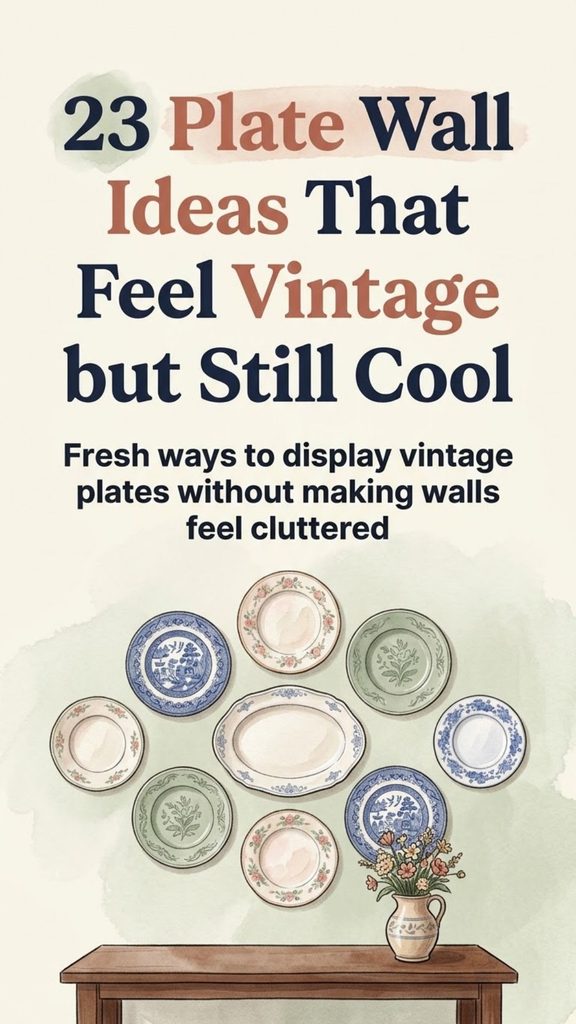
A plate wall can do something framed artwork often cannot: bring pattern, shape, shine, history, and a slightly unexpected sense of personality to a room all at once. A few blue-and-white plates above a console can feel quietly traditional, while a floor-to-ceiling collection of mismatched china can turn an ordinary wall into the most memorable feature in the house.
The challenge is not finding pretty plates. Thrift shops, flea markets, inherited china cabinets, and even everyday dinnerware can provide plenty of possibilities. The harder part is arranging them so the display feels intentional rather than crowded.
You do not need a complete matching set, and you certainly do not need valuable antique china. What matters more is finding a thread that connects the pieces. That might be color, shape, material, era, pattern, or simply the way the arrangement is composed.
You Might Also Like:
- Loading posts...
These 23 plate wall ideas range from restrained and symmetrical to colorful and maximalist, with practical guidance for making each version work in a real home.
Before You Hang Anything: Plan the Collection
Plate walls look spontaneous when they are done well, but the best ones usually involve some planning.
Start by gathering the pieces you are considering and arranging them on the floor. Use an area roughly proportional to the wall you want to decorate. Move the plates around until the overall shape feels balanced, then take a photo before transferring the arrangement to the wall.
A few principles make the process easier:
- Choose an anchor. A large platter, mirror, painting, or central plate can give the arrangement somewhere to begin.
- Vary the scale. Mixing dinner plates, saucers, bowls, and platters creates more movement than using one size exclusively.
- Repeat something. Repeating a color, pattern family, shape, or material helps unrelated pieces feel connected.
- Watch the spacing. Tighter spacing feels collected and traditional; wider spacing gives patterned plates more visual breathing room.
- Consider the wall itself. Dark paint, beadboard, wallpaper, brick, and plain white walls all change how the same collection will look.
Most importantly, use hanging hardware suitable for the plate’s weight, the wall surface, and the value of the piece. Adhesive hanging products have specific surface and weight limits, and manufacturers warn against using some removable adhesive systems for valuable or irreplaceable objects.
Once you have the practical side sorted, the fun begins.
1. Build an Eclectic Mix Around One Bold Piece
If you love collecting without following a strict theme, embrace the mismatch.
Start with one plate or platter that has a strong presence—perhaps an unusual motif, rich color, or oversized shape—and build outward with smaller pieces. Floral china, striped plates, novelty designs, painted ceramics, and traditional transferware can coexist surprisingly well when their sizes and spacing are balanced.
Odd numbers often make an informal grouping easier to arrange because they prevent the composition from feeling overly rigid.
The trick is to let the collection look varied without making every piece compete for attention. If several plates have extremely bold patterns, add quieter pieces between them.
2. Create a Symmetrical Sage-Green Display
A limited palette can make inexpensive or mismatched plates look remarkably sophisticated.
Soft sage, celadon, olive, and cream work especially well with dark timber furniture. Center the arrangement on a large oval platter, then mirror smaller plates on either side.
Symmetry gives the display a more formal character, making it a good choice for dining rooms, entryways, or a wall above a sideboard.
The plates do not have to be identical. Keeping their colors related is often enough to create order.
3. Keep Blue-and-White China Loose and Airy
Blue-and-white china is popular for plate walls because different patterns tend to work together naturally.
Rather than packing every plate tightly together, try a long, gently staggered arrangement. Imagine the collection moving horizontally like a vine rather than sitting inside an invisible rectangular frame.
This approach works particularly well above:
- a breakfast table
- a kitchen counter
- a long console
- a bench
- a bed or daybed
Leave enough open wall around the pieces for individual patterns to remain visible.
4. Mix Plates Into a Traditional Gallery Wall
Plates do not have to form a separate collection.
Mixing them with paintings, framed drawings, mirrors, and wall lights can make the display feel as though it evolved over many years.
Use ceramics to fill awkward spaces where rectangular artwork does not fit naturally. A round plate beside a portrait or an oval platter below a small landscape introduces shapes that soften the hard edges of frames.
For a calmer result, repeat colors already present in the artwork.
5. Stack Three Botanical Plates Vertically
Not every plate display needs a large wall.
A narrow strip between a window and cabinet, beside a doorway, or at the end of a hallway can be enough for three decorative plates stacked vertically.
Botanical motifs are particularly effective because the vertical arrangement naturally resembles a column of leaves or flowers.
Keep the centers of the plates aligned if you want a polished look. For something more relaxed, shift each one slightly to one side.
6. Add Floral Plates Above a Coffee Station
A coffee nook is an ideal place for playful ceramics because the display can be smaller and more decorative than a formal dining-room arrangement.
Try flower-shaped plates, scalloped saucers, pastel ceramics, or small floral dishes above the coffee machine.
Because the area already contains mugs, jars, and appliances, avoid covering every inch of wall. A compact cluster of three to seven pieces is usually enough to create a focal point without overwhelming the counter.
7. Fill an Alcove With Red Transferware
A shallow recess or narrow wall can become a natural frame for a plate collection.
Red or burgundy transferware looks especially striking in this setting because the color creates a strong contrast against pale walls and cabinetry.
Mix dinner plates with smaller saucers and one or two elongated platters. Brass or warm-toned decorative details nearby can reinforce the traditional character without needing to be part of the wall itself.
Architectural spaces such as alcoves are useful because they visually contain a collection that might feel too busy on a broad, uninterrupted wall.
8. Pair Cabbageware With Blue-and-White Ceramics
A plate wall becomes much more interesting when texture joins the pattern.
Green leaf-shaped ceramics or cabbageware have raised surfaces and organic edges that contrast beautifully with smooth blue-and-white plates.
Use the green pieces sparingly so they behave like accents rather than dominating the display.
A strong composition might include one large blue platter in the center, several smaller patterned plates, and two or three dimensional green pieces placed around the edges.
The result feels collected but still connected by a restrained palette.
9. Hang Three Matching Platters in a Straight Line
If an eclectic gallery feels too busy for your home, simplify.
Three matching or closely related platters hung vertically can create just as much impact as a large collection. Their elongated shapes draw the eye upward, which is useful on tall dining-room or kitchen walls.
Careful spacing matters here because there are so few pieces. Measure rather than relying entirely on sight.
This arrangement works especially well with heirloom serving platters that are beautiful but rarely used.
10. Turn a Large Collection Into a Grid
Busy patterns can actually look calmer when the arrangement is strict.
A grid of plates creates repetition, making even highly patterned ceramics appear organized. Choose pieces with approximately similar diameters and maintain consistent horizontal and vertical spacing.
The grid can be:
- completely matching
- one color in several patterns
- alternating between two designs
- a mixture of patterns in one repeated size
This is one of the strongest choices for a large blank dining-room wall because the entire collection reads almost like wallpaper or one oversized artwork.
11. Build a Tonal Blue Collection
A successful plate wall does not require identical blue-and-white china.
Try combining cobalt, faded navy, pale blue, white, and cream. Add plain white or lightly patterned plates between heavily decorated pieces so the eye gets occasional pauses.
Perfect alignment is unnecessary. In fact, a slightly irregular composition often makes a tonal collection feel older and more naturally accumulated.
Aim for balance rather than symmetry: if one side contains a large dark platter, the opposite side may need several smaller pieces to carry similar visual weight.
12. Use a Wooden Plate Rack Instead of Hanging Everything
A wall-mounted plate rack offers a different look from individual plate hangers.
Instead of displaying each dish separately, plates can overlap slightly behind cups, pitchers, small bowls, or other ceramics. The result feels more like an old kitchen or cottage dresser than a formal gallery.
It is also practical for anyone who likes changing the display seasonally.
A rack works particularly well with:
- transferware
- ironstone
- handmade pottery
- floral china
- everyday dishes in a limited palette
Do not overload a decorative rack beyond what it is designed to support. Its mounting and weight capacity matter just as much as the arrangement.
13. Create an Arch Around a Doorway
Rather than treating the wall as a rectangle, allow the architecture to determine the shape of the display.
Small plates can follow the curve around the top of a doorway, mirror, arched opening, or tall piece of furniture.
Begin with the central point and work outward on both sides. The spacing does not have to be mathematically identical, but the overall visual weight should feel balanced.
A mixture of floral and plain plates works particularly well because the plain pieces keep the curved arrangement from looking excessively ornate.
14. Make a True Collector’s Wall
Sometimes the lack of a theme becomes the theme.
If you have spent years collecting plates that genuinely appeal to you, there is no requirement to suddenly reduce them to a single color story. Floral china, commemorative plates, transferware, leaf plates, landscapes, novelty designs, and unusual shapes can all share one wall.
The secret is density and repetition.
Repeat several colors in different areas rather than placing every green piece on one side and every blue piece on the other. Distribute large shapes around the arrangement and fill gaps gradually with smaller dishes.
A collector’s wall should feel abundant, but each piece still needs enough room to be recognized.
15. Hang White Ironstone on a Dark Green Wall
If patterned china feels too busy, let shape become the decoration.
White, ivory, and cream plates look dramatic against olive, forest, charcoal, or deep blue walls. Without colorful patterns competing for attention, scalloped rims, molded borders, oval platters, rectangular dishes, and subtle relief work become much more noticeable.
This look is particularly effective on beadboard or paneled walls.
Mixing many shapes while staying within one pale color family creates contrast without visual clutter.
16. Fill an Awkward Nook From Floor to Ceiling
Narrow staircase landings and strange little recesses often resist conventional artwork. Plates are flexible enough to turn those awkward spaces into features.
Instead of hanging one picture in the center, fill much of the available vertical area with a cohesive collection.
Blue-and-white pieces are an easy choice because you can combine many different patterns without losing unity.
Do not feel compelled to form a perfect rectangle. Let the boundaries of the nook determine the outer edge of the composition.
This approach can make a formerly overlooked architectural space feel deliberate.
17. Keep It Simple With One Horizontal Row
Three matching plates above a small table may be all the wall needs.
A straight horizontal row feels clean and calm while still introducing the charm of decorative china.
This is an excellent starting point if you like plate walls but are unsure about committing to a large collection. It also works well in smaller homes where a sprawling arrangement could dominate the room.
For the strongest connection between the furniture and plates, keep the row narrower than or approximately proportional to the piece beneath it.
18. Frame a Mirror With Matching Plates
A mirror can serve as the anchor for the entire composition.
Place an equal number of matching or closely related plates on either side to create a symmetrical frame. Three plates on each side often creates enough presence without obscuring the mirror itself.
This works beautifully above:
- a bedroom dresser
- an entry console
- a bathroom vanity where appropriate materials are used
- a dining-room sideboard
Repeating the same plate design gives the display a formal rhythm. If you use mismatched plates instead, keep their size and palette similar.
19. Create a Neutral Transferware Statement Wall
Maximalism does not have to mean bright color.
Brown, black, grey, cream, and sepia-toned transferware can cover a large wall while still feeling remarkably restrained. From across the room, the collection reads as one textured neutral composition.
Mix:
- large oval platters
- dinner plates
- small saucers
- rectangular serving dishes
- unusually shaped pieces
This type of arrangement benefits from being built slowly. There is no reason to find 30 perfect plates at once. Establish the color palette, hang the best pieces you already own, and leave room for future discoveries.
That gradual growth often produces a more convincing collected look than purchasing an entire coordinated display in one shopping trip.
20. Crown an Arched Mirror With Pastel China
Instead of surrounding a mirror completely, arrange plates only around its upper half.
A loose crown of pink, pale blue, soft green, cream, and floral china can give an ordinary mirror much greater presence.
The mirror provides the central shape, so the plates can remain intentionally irregular.
Begin with two or three pieces close to the top of the mirror and fan the rest outward. Keep the lowest plates reasonably aligned on both sides so the arrangement feels balanced rather than accidental.
This is particularly well suited to bedrooms, cottage-style sitting rooms, and romantic home offices.
21. Celebrate Bold 1970s Floral Plates
Not every vintage plate needs to look Victorian.
Large 1960s- and 1970s-inspired florals in mustard, avocado, orange, brown, and earthy green can create a completely different kind of plate wall.
Instead of trying to neutralize those colors, lean into them. Olive, cream, warm white, or muted brown walls can make retro ceramics feel deliberate rather than dated.
Keep other nearby decorations relatively simple so the bold flower patterns remain the focus.
This is also a good reminder that thrifted decor becomes much more personal when you collect what genuinely catches your eye rather than restricting yourself to whatever vintage style happens to be fashionable.
22. Hang Plates Over Wallpaper
Pattern on pattern can work beautifully when the scales are different.
If the wallpaper has a small geometric, trellis, stripe, or delicate botanical pattern, choose plates with larger, softer motifs. Alternatively, use mostly solid ceramics against a busier wallpaper.
Color is the bridge between the two.
For example, pink-and-cream floral china can sit comfortably against pale patterned wallpaper when those same shades appear in both surfaces.
Before making holes, temporarily position paper templates where the plates will go. Wallpaper makes mistakes more noticeable because moving a hanger later may leave a visible mark.
For removable adhesive products, always check compatibility first; some common picture-hanging systems specifically warn against application on wallpaper.
23. Mix Plates With Wood, Baskets, and Useful Kitchen Pieces
A plate wall does not have to consist entirely of ceramics.
Mixing blue-and-white dishes with wooden cutting boards, shallow baskets, small shelves, or woven pieces creates a softer farmhouse or cottage-style display.
The variety of materials is what makes this arrangement work:
smooth glazed china provides shine, wood adds warmth, and wicker introduces texture.
Keep one element consistent. If the ceramics are all blue and white, for example, the mixed materials can vary without making the wall feel random.
This approach is especially useful in kitchens because it can blur the boundary between storage and decoration. A shelf might hold pitchers and bowls while plates and cutting boards fill the surrounding wall.
How to Make Mismatched Plates Look Intentional
You can combine completely different plates successfully if the arrangement has at least one unifying idea.
Repeat a Color
The easiest method is choosing a color that appears again and again. It does not need to cover every plate. A small amount of blue repeated across eight different patterns may be enough to connect the collection.
Repeat Shapes
A wall of mostly round plates can accommodate several unusual platters because the repeated circles establish the basic rhythm.
Or reverse the idea and create a wall dominated by oval and rectangular serving pieces.
Limit the Palette
If the patterns are complicated, reduce the number of colors.
If the colors are varied, consider keeping the shapes or style more consistent.
Allowing one element to be wild while another remains controlled is a reliable way to create balance.
Use the Furniture Below as an Anchor
A plate arrangement floating in the middle of a large wall can feel disconnected.
A console, dresser, bench, fireplace, desk, or sideboard provides an obvious visual foundation. Center the display over the furniture for a traditional look, or let it extend slightly to one side for something more relaxed.
Leave Room for the Collection to Grow
A plate wall does not need to be finished on the first day.
If you love thrifting, leave a few deliberate gaps. New finds can be added over time, which is often exactly what gives these displays their charm.
Choosing Plates for a Wall Display
Decorative value matters more than age.
A plate does not have to be a genuine antique to look beautiful on a wall. Vintage pieces, modern reproductions, inexpensive thrift-store china, handmade ceramics, and even attractive everyday dishes can all work.
Look beyond the front pattern and pay attention to:
- rim shape
- depth
- diameter
- glaze
- relief details
- overall silhouette
- how the plate relates to pieces you already own
Small saucers are especially useful because they fill gaps between larger plates. Oval platters introduce movement, while large round plates make strong anchors.
Before hanging an inherited or potentially valuable piece, consider whether permanent display is worth the risk. Manufacturers of removable adhesive systems themselves caution against using such products for valuable or irreplaceable objects. A securely mounted mechanical hanger or another display method appropriate to the piece may be the better choice.
A Plate Wall Should Look Like Your Home, Not a Formula
There is no single correct plate-wall arrangement.
A row of three matching plates can be just as successful as a collection covering an entire stairwell. White ironstone against olive paint feels very different from colorful retro florals in a kitchen, yet both work because the relationship between the plates, wall, and room has been considered.
Start with what you already have. Pull forgotten serving pieces from cupboards, look at inherited china with fresh eyes, or pick up one interesting plate when you find it secondhand. Then decide what connects those pieces before worrying about filling the wall.
The most convincing plate displays rarely look as though someone bought a complete decorating kit. They look collected—something added here, another piece found later, a family platter finally brought out of storage.
That sense of accumulation is exactly what allows a plate wall to feel vintage without feeling stuck in the past.