Some of the most memorable household advice comes from the little tricks passed down through generations. A marshmallow tucked into an ice cream cone, a piece of bread used to soften brown sugar, or a pair of rubber gloves pulled out to open a stubborn jar can make everyday life a little easier.
Before kitchen gadgets, organizing products, and endless online tutorials became common, families often relied on inexpensive household items to solve ordinary problems. These clever shortcuts were shared between mothers and daughters, written on recipe cards, or exchanged over the kitchen table.
Many of those tricks are still useful. Others have survived because they sound convincing, even though they don’t always work as promised.
You Might Also Like:
- Loading posts...
The best approach is to keep the practical wisdom while leaving behind advice that is ineffective, wasteful, or potentially unsafe.
Here are 22 old-fashioned household tips, including clever kitchen shortcuts, food-storage ideas, cleaning tricks, and common remedies, with practical explanations of which ones deserve a place in your home.
Clever Kitchen Tricks for Everyday Cooking
1. Put a Mini Marshmallow in the Bottom of an Ice Cream Cone
One of the sweetest little kitchen tricks involves placing a miniature marshmallow inside the pointed bottom of a sugar cone before adding ice cream.
The marshmallow can help plug the small opening at the tip of the cone, slowing down melted ice cream that might otherwise drip onto your hands.
Simply place one miniature marshmallow in the bottom of the cone, then add your favorite ice cream.
This works best when the cone is intact and the marshmallow fits snugly into the tip.
It won’t prevent every drip, especially on a hot summer day, but it can make eating ice cream a little less messy.
As a bonus, you get a small marshmallow treat when you reach the bottom.
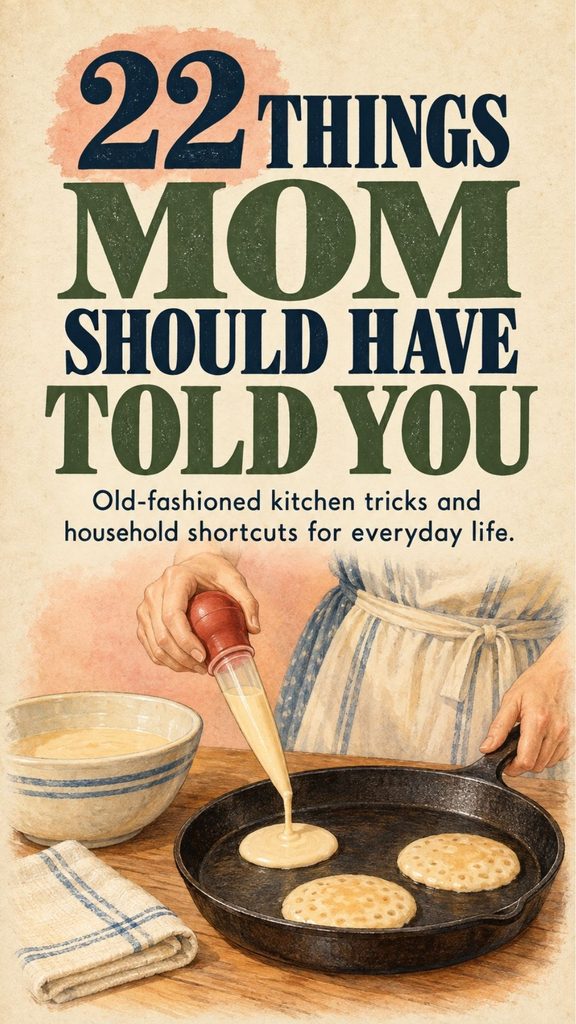
2. Use a Squeeze Bottle to Make Neater Pancakes
Pouring pancake batter directly from a mixing bowl can leave uneven circles and messy countertops.
An old-fashioned suggestion is to use a turkey baster to dispense the batter onto a hot griddle.
The idea is sound, although a clean, food-safe squeeze bottle is often easier to use and clean.
Pour your prepared pancake batter into the bottle, then squeeze small portions onto a lightly greased pan.
This allows you to control the amount of batter and make pancakes of similar sizes.
It can also be helpful for making miniature pancakes or simple shapes.
Avoid using a squeeze bottle with very thick batter or large fruit pieces, which may block the opening.
3. Wet Your Hands Before Pressing Marshmallow Cereal Treats
Anyone who has made marshmallow cereal squares knows how quickly the sticky mixture can cling to fingers and utensils.
A simple solution is to lightly moisten clean hands with cool water before pressing the mixture into the pan.
The small amount of moisture can temporarily reduce sticking.
Alternatively, lightly grease a spatula or the back of a spoon with butter.
Allow the mixture to cool enough to handle safely before touching it, since melted marshmallow can cause burns.
Press gently rather than packing the mixture too tightly, which can make the finished treats unnecessarily dense.
4. Roll Lemons Before Squeezing Them
A lemon that’s firm and cold can sometimes be difficult to juice.
Before cutting it, bring it toward room temperature and roll it across the kitchen counter using gentle pressure from your palm.
This can help loosen some of the internal juice sacs, making the fruit easier to squeeze.
Cut the lemon in half and use a citrus reamer or juicer to extract the juice.
If you’re using the peel for zest, wash and zest the lemon before squeezing it.
The exact amount of juice depends on the lemon’s size, ripeness, and condition, so rolling isn’t a guarantee of a particular yield.
Still, it’s a handy preparation trick that requires no additional equipment.
5. Use Dry Chocolate Cake Mix Instead of Flour to Dust a Cake Pan
When baking a chocolate cake, greasing and flouring the pan can sometimes leave pale marks on the finished cake.
A clever alternative is to use a little dry chocolate cake mix or unsweetened cocoa powder instead of plain white flour.
First, grease the pan according to your recipe.
Add a small amount of the dry mixture, tilt the pan to distribute it evenly, and tap out the excess.
For chocolate cakes, cocoa powder is especially useful because it doesn’t leave obvious white patches.
Use only a thin coating. Too much dry mix can create an uneven crust.
Remember that cake mix may contain sugar and other ingredients, so cocoa powder is often the more predictable choice.
6. Fix an Oversalted Dish Without Relying on the Potato Trick
A familiar kitchen tale suggests that dropping a peeled potato into an oversalted soup will absorb the excess salt.
Unfortunately, potatoes don’t selectively remove salt.
They absorb some of the cooking liquid, along with the salt dissolved in it, but they don’t reliably reduce the salt concentration of the remaining dish.
A better approach is to increase the amount of unsalted food.
For example, add unsalted broth, water, vegetables, beans, or other suitable ingredients to a salty soup or stew.
If the recipe allows it, prepare an additional unsalted portion and combine the two.
A little lemon juice or another acidic ingredient may help balance the perception of saltiness in some dishes, but it doesn’t actually remove sodium.
Taste carefully as you adjust the recipe.
7. Cook Sweet Corn While It’s Fresh
An older cooking suggestion recommends adding a pinch of sugar to boiling water to bring out the sweetness of corn.
Sugar can sweeten the cooking liquid, but it doesn’t restore the natural sweetness that corn gradually loses during storage.
The better approach is to start with fresh, good-quality sweet corn and avoid overcooking it.
Remove the husks and silk, bring water to a boil, and cook the corn until tender.
The time required depends on the size and maturity of the ears.
Fresh corn often needs only a short cooking period.
Serve with your preferred seasonings.
If the corn is naturally sweet, additional sugar usually isn’t necessary.
8. Prevent Cracked Eggs by Cooking Them Gently
Some old-fashioned instructions recommend adding salt to boiling water to prevent eggshells from cracking.
Salt doesn’t reliably stop shells from cracking during cooking.
Cracks can occur when eggs strike the pan, experience sudden temperature changes, or are boiled too vigorously.
For more predictable results, place eggs gently into the saucepan and avoid rough handling.
Use a cooking method that maintains gentle heat rather than allowing the eggs to bounce against one another in a violently boiling pot.
If an egg cracks while being hard-boiled, USDA guidance indicates that it can still be safe when thoroughly cooked.
However, eggs that were already cracked before cooking should not be treated the same way.
9. Don’t Rely on the Floating Egg Test Alone
Another classic kitchen trick involves placing an egg in a bowl of cool water.
According to the familiar rule, an egg that sinks is fresh, while one that floats should be thrown away.
The test isn’t quite that simple.
As an egg ages, its internal air cell grows larger. An older egg may eventually float because the enlarged air cell increases its buoyancy.
According to the USDA, floating indicates reduced freshness, but it doesn’t automatically prove that the egg is spoiled.
Likewise, sinking doesn’t guarantee that an egg is free from harmful bacteria.
Store eggs correctly, pay attention to their condition, and use them within appropriate storage periods.
If you’re uncertain about an egg’s safety, discarding it is the sensible choice.
Old-Fashioned Food Storage Tips That Reduce Waste
10. Store Potatoes Away From Apples
A traditional pantry tip suggests putting an apple in a bag of potatoes to keep them from sprouting.
This is one of those household ideas that deserves correcting.
Apples release ethylene gas, and exposure to ethylene can promote potato sprouting under certain storage conditions.
Iowa State University Extension recommends storing potatoes away from apples and other fruits.
For better storage, keep potatoes in a cool, dark, well-ventilated location.
Avoid airtight plastic bags that trap unnecessary moisture.
Check stored potatoes occasionally and remove any that are rotting or badly deteriorated.
Don’t eat green potato portions or sprouts, which may contain elevated levels of harmful glycoalkaloids.
The best potato-storage method depends on your climate and available storage conditions, but adding apples isn’t a dependable solution.
11. Wrap Celery in Aluminum Foil to Help Keep It Crisp
Celery can become limp surprisingly quickly when stored poorly.
One practical old-fashioned method involves wrapping an unwashed bunch of celery in aluminum foil and keeping it in the refrigerator’s produce drawer.
The foil helps create a suitable storage environment while allowing some gas exchange.
This technique can help celery stay crisp longer than it might in certain unsuitable packaging.
Keep the celery refrigerated and inspect it regularly.
For celery that has already been cut, a clean covered container may be more convenient.
If the stalks are beginning to lose their crispness but remain wholesome, placing them briefly in cold water may improve their texture.
Discard celery showing slime, mold, or other signs of spoilage.
12. Soften Hardened Brown Sugar With a Little Moisture
Brown sugar becomes hard when it loses moisture.
The molasses coating its sugar crystals dries, causing the grains to stick together.
An old-fashioned solution is to place a slice of apple inside a container with hardened brown sugar.
The fruit can transfer moisture to the sugar and help soften it, but apples may also introduce unwanted moisture or flavor.
A piece of fresh bread is another traditional option.
For quicker results, put the sugar in a microwave-safe bowl, cover it with a slightly damp paper towel, and heat briefly in small intervals, checking and breaking up lumps between intervals.
Use caution because heated sugar can become very hot.
For longer-term storage, keep brown sugar in a tightly sealed container. A food-safe brown sugar moisture disk is another option.
If you use bread or fruit, remove it promptly and don’t allow it to spoil inside the sugar container.
13. Keep Fresh Herbs From Going to Waste
Fresh herbs are useful for adding flavor to inexpensive home-cooked meals, but they can spoil before an entire bunch is used.
A little preparation can extend their usefulness.
For sturdy herbs such as parsley and cilantro, trim the stems and place them in a container with a small amount of clean water.
Cover loosely when appropriate and store in the refrigerator.
Change the water as needed and remove any deteriorating leaves.
Basil generally prefers different storage conditions and can suffer from chilling damage, so it is often better kept at moderate room temperature for short periods.
If you have more herbs than you can use, chop suitable varieties and freeze them for later cooking.
Frozen herbs won’t have the same texture as fresh herbs, but they can work well in soups, sauces, and stews.
14. Freeze Leftover Wine for Cooking
If you occasionally cook with wine, you don’t necessarily need to open a fresh bottle every time a recipe requires a small amount.
Leftover wine can be frozen in small portions for future cooking.
Pour it into a clean ice cube tray, freeze, and transfer the cubes into a labeled freezer-safe container.
Wine contains alcohol, so it may not freeze as firmly as water.
These portions can be convenient for suitable soups, stews, braises, and sauces.
Remember that alcohol may remain in a dish even after cooking, so wine-based recipes aren’t appropriate for everyone.
Freezing is primarily a convenience and quality-preservation technique, not a method for making spoiled wine usable again.
Clever Cleaning and Household Shortcuts
15. Loosen Burned Food With Water Before Scrubbing
Burned food stuck to a saucepan can be frustrating, especially when ordinary washing doesn’t remove it.
A practical approach is to let the cookware cool enough to handle safely, then add warm water and allow the residue to soak.
For suitable cookware, you can also gently simmer a small amount of plain water to loosen stubborn food.
Turn off the heat, let the pan cool, and wash it with dish detergent and a nonabrasive sponge.
Avoid boiling soapy water unnecessarily, since it can foam and overflow.
Always follow the manufacturer’s cleaning instructions, particularly for nonstick, cast-iron, aluminum, and specialty-coated pans.
Don’t use sharp metal tools that may scratch or damage the cooking surface.
16. Reduce Tomato Stains in Plastic Food Containers
Tomato sauce can leave orange or reddish stains on plastic storage containers.
These stains are often caused by pigments in the food, especially when the container holds oily tomato-based sauces.
An old suggestion involves coating the container with nonstick cooking spray before adding tomato sauce.
Although a thin oily barrier may affect how pigments contact the surface, this method isn’t guaranteed to prevent staining and can leave additional greasy residue.
A more practical solution is to use glass containers for strongly colored sauces when available.
If plastic containers become stained, wash them with warm water and dish detergent according to their care instructions.
Some cosmetic staining may remain even after the container is clean.
Avoid using abrasive cleaning methods that damage the surface.
17. Use Rubber Gloves to Open Stubborn Jars
A tight jar lid can be difficult to grip, especially when your hands are wet or the lid is smooth.
A simple pair of clean rubber dishwashing gloves can provide extra friction.
Put on the gloves, grip the jar securely, and turn the lid.
You may find that the additional traction makes the job easier.
A silicone jar opener or rubber gripping mat works on the same principle.
If the lid remains stuck, try gently tapping around its edge with an appropriate utensil or using a purpose-made jar opener.
Avoid hitting glass forcefully or using a sharp knife to pry the lid, which can cause injuries.
For anyone with a latex allergy, choose latex-free gloves or a silicone gripping aid.
18. Don’t Assume Fizzy Antacid Tablets Are Miracle Cleaners
Old household-tip collections sometimes recommend effervescent antacid tablets for cleaning toilets, jewelry, glassware, bottles, and even clogged drains.
The fizzing action may help loosen light residue in certain situations, but this doesn’t make antacid tablets a reliable general-purpose cleaning product.
Some formulations contain aspirin or other medicinal ingredients that serve no useful purpose in household cleaning.
They may also be unsuitable for delicate materials.
For everyday jobs, choose a cleaner designed for the surface.
Use suitable dish detergent for bottles and washable containers, manufacturer-approved cleaners for bathroom fixtures, and jewelry-cleaning methods appropriate to the metal and gemstones involved.
Never mix household cleaning chemicals unless the product instructions explicitly permit it.
For a blocked drain, removing accessible debris or using a suitable drain tool is often more useful than dropping tablets into the pipe.
Traditional Remedies and Pest-Control Tricks: What Really Works?
19. Wash Mosquito Bites, but Don’t Expect Soap to Stop the Itching
An old household remedy recommends rubbing soap onto a mosquito bite for immediate itch relief.
Washing the area gently with soap and water is a sensible first step because it helps keep the skin clean.
However, ordinary soap isn’t a reliable treatment for the allergic reaction responsible for mosquito-bite itching.
For mild bites, a cool compress can help reduce discomfort.
An appropriate over-the-counter hydrocortisone cream or other recommended itch treatment may also help.
Avoid scratching, since broken skin can increase the risk of infection.
Seek medical advice if the bite becomes increasingly red, painful, swollen, or is accompanied by fever or other concerning symptoms.
Prevention is also important. Use suitable insect repellent and remove standing water where mosquitoes may breed.
20. Don’t Rub Lime Juice on Your Forehead to Treat a Headache
Another traditional remedy suggests cutting a lime in half and rubbing it across the forehead to relieve a headache.
There is no good evidence that this is a dependable headache treatment.
Citrus juice can also irritate the skin, and contact with certain citrus compounds followed by sunlight exposure may cause a skin reaction known as phytophotodermatitis.
A safer approach for an ordinary, mild headache may include resting, drinking water if dehydrated, eating if you’ve missed a meal, or using an appropriate over-the-counter pain reliever when safe for you.
The right treatment depends on the type and cause of the headache.
Seek urgent medical attention for a sudden, extremely severe headache or one accompanied by neurological symptoms, significant fever, neck stiffness, or other warning signs.
Natural ingredients aren’t automatically effective or harmless simply because they’re familiar kitchen foods.
21. A Chalk Line Won’t Reliably Keep Ants Away
A popular household story claims that ants will never cross a line drawn with ordinary chalk.
Chalk may temporarily interfere with some ants’ movement or scent trails, but it isn’t a dependable barrier.
Ants can often find another route, cross gaps, or continue entering through nearby openings.
For better control, identify what’s attracting the ants.
Wipe up food spills, store sweet foods in sealed containers, and remove crumbs from counters and floors.
Clean visible ant trails and locate the areas where ants are entering.
Seal suitable cracks and gaps where practical.
If the problem persists, appropriately placed ant baits may be effective, provided you follow the product directions and keep them away from children and pets.
The best long-term strategy addresses food sources and entry points instead of relying on a chalk boundary.
22. Build a Small Collection of Dependable Household Basics
One of the most useful lessons behind old-fashioned homemaking is that a few ordinary supplies can handle many common household jobs.
You don’t need a cupboard full of specialty products to manage every small problem.
Consider keeping a practical collection of everyday essentials:
- Dish detergent for appropriate kitchen cleaning
- Clean microfiber cloths for dusting and wiping
- Baking soda for suitable deodorizing and mild cleaning tasks
- Rubber or silicone gripping tools for stubborn lids
- A good vegetable peeler to reduce unnecessary food waste
- Airtight containers for pantry storage
- A food thermometer for checking safe cooking temperatures
- A simple sewing kit for minor clothing repairs
- Reusable food-storage containers
- An appropriate first-aid kit
Use every product according to its intended purpose, and check surface compatibility before trying unfamiliar cleaning methods.
Sometimes the most valuable household trick isn’t an unusual ingredient or clever experiment.
It’s knowing which simple tool solves the problem safely and consistently.
Why Some Old-Fashioned Household Tips Work Better Than Others
Traditional household advice developed through observation, experimentation, and repetition.
Some tricks have straightforward explanations.
Rubber gloves improve grip because they provide friction.
A squeeze bottle makes pancake portions easier to control.
Brown sugar softens when it absorbs moisture.
Other tips became popular because people assumed the explanation was true.
A potato doesn’t magically pull excess salt out of soup. Floating eggs aren’t automatically rotten. Adding an apple to stored potatoes doesn’t reliably prevent sprouting.
These differences matter because household advice should make daily life easier, not create food waste, damage belongings, or introduce avoidable risks.
Before using an unfamiliar tip, ask whether it has a reasonable explanation, whether it could damage the item involved, and whether there is a safer or simpler alternative.
It’s perfectly fine to appreciate traditional wisdom while updating it with better information.
How to Make Household Shortcuts Part of Your Routine
The most practical tricks are those you can remember and use naturally.
Instead of trying 22 ideas in one afternoon, begin with a few that address problems you regularly encounter.
If your brown sugar often hardens, improve the way you store it.
If you frequently struggle with jars, keep a rubber gripping mat in the kitchen drawer.
If you waste celery or fresh herbs, try better storage methods.
If cooking leaves you with stubborn pans, establish a gentle soaking and cleaning routine.
You can also keep a small household notebook with the tips that genuinely work for your family.
Organize it into sections for cooking, food storage, cleaning, laundry, and household maintenance.
This is especially useful when different family members share kitchen or cleaning responsibilities.
A good household system doesn’t depend on remembering dozens of tricks.
It makes the most useful ones easy to repeat.
Final Thoughts: Keep the Wisdom, Update the Methods
Old-fashioned household tips have a charm that goes beyond saving a few minutes or dollars.
They remind us of a time when people were encouraged to use what they had, avoid unnecessary waste, and find practical solutions to everyday problems.
Many of those habits are still worth practicing.
Keeping celery crisp, using a marshmallow in an ice cream cone, making neater pancakes, rescuing hardened brown sugar, and loosening stubborn jar lids are simple ideas that can make ordinary tasks easier.
Other familiar remedies are better left behind or replaced with safer methods.
The real value of household wisdom isn’t following every inherited instruction exactly. It’s understanding what works, recognizing what doesn’t, and passing along reliable advice.
Sometimes the smartest household lesson is also the simplest: use what you have, take good care of it, and never stop learning better ways to do things.