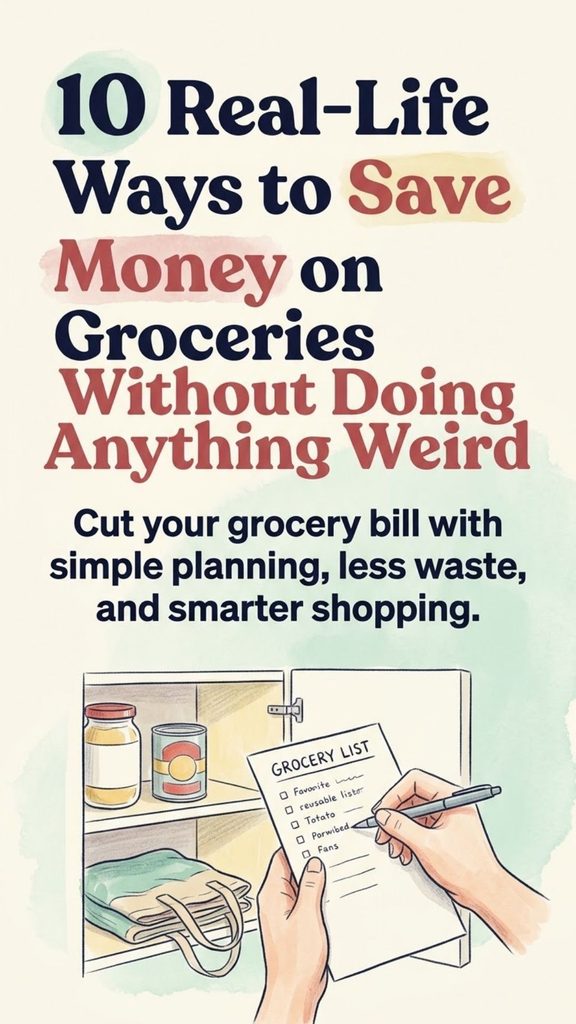
Saving money on groceries does not require extreme couponing, eating the same meal every night, or driving across town to save a few cents on milk. The biggest savings usually come from much simpler habits: wasting less food, planning meals before shopping, comparing prices carefully, and buying convenience only when it is genuinely useful.
A lower grocery bill is often less about finding a magical bargain and more about controlling the decisions that happen before food reaches your cart.
If your grocery spending has been creeping upward, these ten realistic strategies can help you bring it back under control without turning shopping into a full-time job.
You Might Also Like:
- Loading posts...
1. Start With the Food You Already Own
Before writing a grocery list, check your refrigerator, freezer, pantry, and any produce you already have.
This sounds obvious, but it is one of the easiest habits to skip.
Look for ingredients that need to be used soon:
- Vegetables beginning to soften
- Open packages of cheese or deli foods
- Leftover cooked meat
- Frozen chicken, beef, or fish
- Half-used jars and sauces
- Bread or tortillas approaching their best-by date
- Fruit that can be used in oatmeal, smoothies, or baking
Then build at least a few meals around those foods.
If you already have rice, frozen chicken, carrots, and a jar of sauce, you may need only one or two inexpensive ingredients to turn them into dinner.
This reduces two expenses at once. You buy less new food, and you are less likely to throw away food you already paid for.
A useful habit is to keep a small “use first” area in the refrigerator. Put foods that need attention there so they do not disappear behind newer groceries.
2. Plan Meals Before You Shop
Meal planning does not have to mean creating an elaborate weekly menu.
Its main purpose is to answer one question before you enter the store:
What are we actually going to eat?
Start with dinners because they tend to be the most expensive meals. Then think about breakfasts, lunches, snacks, and leftovers.
A practical seven-day plan might include:
- Four or five planned dinners
- One leftovers night
- One easy pantry or freezer meal
- Flexible breakfast and lunch options
You do not need seven complicated recipes.
In fact, a rigid plan can sometimes create waste if your week changes. Planning a few flexible meals is often easier.
For example, roasted chicken can become dinner one night, sandwiches the next day, and soup later in the week.
Meal planning saves money because it gives every purchase a purpose. It also reduces those last-minute moments when nobody knows what to cook and takeout becomes the easiest option.
3. Make a Grocery List Based on Meals, Not Cravings
Once you know what you are cooking, turn the meal plan into a shopping list.
The difference between a useful list and an expensive one is simple: a useful list is connected to actual meals.
If tacos are on the menu, list the tortillas, meat or beans, vegetables, and toppings you are missing. If oatmeal is breakfast, check whether you already have oats before adding another container.
Organizing the list by store section can also make shopping easier:
- Produce
- Meat and seafood
- Dairy
- Frozen foods
- Pantry
- Household items
The goal is not to ban every enjoyable extra. If your budget allows for chocolate, soda, chips, or another treat, include it intentionally.
The problem starts when most of the cart consists of unplanned extras.
A grocery list gives you a default answer when something tempting catches your eye: if it is not needed and there is no room in the budget, leave it.
4. Set a Grocery Budget You Can Actually Follow
A grocery budget only works if it reflects your household.
Food costs vary based on family size, location, dietary needs, cooking habits, and how often people eat at home. There is no single weekly number that works for everyone.
Start by reviewing what you normally spend. Then choose a realistic target rather than immediately cutting the budget so severely that it becomes impossible to maintain.
You can manage the budget weekly or monthly.
A weekly limit offers tighter control. A monthly budget gives you more flexibility when one week includes a large restocking trip.
Whichever system you choose, keep track of the total while shopping.
With online ordering, this is easy because you can see the running total before checking out.
In a physical store, use your phone calculator or round prices upward as items enter the cart.
If you reach your limit, look for things you can postpone rather than simply accepting the higher bill.
A budget is not punishment. It is a decision made before temptation takes over.
5. Consider Grocery Pickup When It Prevents Impulse Buying
Grocery pickup can sometimes reduce spending even if the service includes a small fee.
The advantage is not necessarily cheaper groceries. It is greater control.
Shopping online allows you to:
- See the total before paying
- Remove unnecessary items easily
- Search directly for what you need
- Avoid displays designed to encourage impulse purchases
- Check your pantry while ordering
- Compare similar products without walking back and forth through the store
However, pickup does not automatically save money.
Stores may charge service fees, offer different online prices, or have fewer low-cost choices available. Substitutions can also affect your final bill.
Compare the complete cost rather than assuming pickup is cheaper.
Home delivery usually adds another layer of convenience and may include delivery charges, markups, membership fees, or tips depending on the service. It can still be worthwhile, but convenience and savings are not always the same thing.
6. Compare Unit Prices, Not Just Package Prices
One of the most useful numbers in a grocery store is the unit price.
A large package may cost more overall but less per ounce, pound, liter, or individual serving. On the other hand, a smaller package on sale can sometimes be the better deal.
Do not automatically assume:
- Bigger means cheaper
- Store brands are always cheapest
- Sale signs guarantee the lowest price
- Warehouse packages are always bargains
Compare the unit price whenever possible.
Store brands are also worth trying. Many basic foods such as flour, sugar, rice, canned vegetables, pasta, oats, and spices can cost less under a store label.
That does not mean you have to give up every brand-name favorite. If you strongly prefer a particular coffee, cereal, sauce, or other product, keep it and save elsewhere.
Successful budgeting is easier when it leaves room for preferences that genuinely matter to you.
7. Pay Less for Convenience You Do Not Need
Convenience foods can be valuable, but convenience has a price.
Pre-cut fruit, individually wrapped snacks, single-serving yogurt, bottled drinks, prepared meals, and other ready-to-eat foods often cost more than less-processed alternatives.
You may save money by switching some of them.
For example:
- Buy a larger container of yogurt and portion it yourself.
- Cook oatmeal instead of buying individual packets.
- Pop plain popcorn rather than buying snack-size bags.
- Brew tea at home instead of buying bottled tea.
- Bake muffins and freeze extras.
- Cook extra dinner portions for lunch.
- Slice leftover roast chicken for sandwiches.
But do not turn this into an all-or-nothing rule.
Time has value too.
If frozen vegetables make it easier for you to cook at home, they may save money compared with ordering dinner. If individual yogurt cups make mornings manageable, keeping them may be worthwhile.
The best grocery budget is not the one with the lowest theoretical cost. It is the one you can realistically maintain.
8. Give Frozen and Canned Foods a Fair Chance
Fresh food is not automatically the cheapest or most practical choice.
Frozen vegetables and fruits can be especially useful because you can use only what you need and return the rest to the freezer. That can reduce waste.
Good freezer staples include:
- Peas
- Corn
- Spinach
- Green beans
- Mixed vegetables
- Berries
- Chopped fruit
Canned foods can also provide inexpensive pantry options, including beans, tomatoes, corn, tuna, and certain fruits and vegetables.
Compare prices because fresh produce can sometimes be cheaper when it is in season.
Nutrition also varies by product and preparation. Frozen produce is generally processed soon after harvest and can retain nutrients well. Canned vegetables may contain added sodium, while canned fruit may be packed in syrup, juice, or water. Reading the label helps you choose the option that fits your household.
Most importantly, think about what you will actually eat.
A slightly more expensive bag of frozen vegetables that gets used is a better value than cheaper fresh vegetables that spoil in the refrigerator.
9. Buy in Bulk Only When the Math and Your Habits Make Sense
Bulk buying can reduce the cost per unit, but it can also create expensive waste.
Before buying the family-size package, ask three questions.
Will we actually use it?
A huge container is not a bargain if half of it expires or becomes stale.
Is the unit price really lower?
Compare carefully. Promotions sometimes make smaller packages cheaper.
Do I have somewhere appropriate to store it?
Buying large amounts of food without pantry or freezer space can create clutter and forgotten food.
Bulk buying works particularly well for products your household consumes consistently and that store well, such as rice, pasta, oats, flour, canned goods, frozen foods, or household staples.
Be more cautious with highly perishable products or foods you have never tried before.
Stocking up during a good sale can also make sense, but only if you were already going to use the item. Buying five unnecessary products at half price still costs more than buying none.
10. Try Lower-Cost Stores Without Making Shopping Complicated
The store you choose can have a surprisingly large effect on your total bill.
Discount grocery chains, warehouse stores, local markets, and conventional supermarkets may have very different prices for the same types of food.
If you have an affordable store nearby, compare the cost of a typical basket rather than judging based on one or two products.
However, cheaper groceries are not always worth a long trip.
Consider:
- Fuel
- Driving time
- Membership fees
- Whether you tend to overspend at the store
- Whether you can get most of what you need in one trip
Driving 30 minutes to save a few dollars may not make sense.
Some households find that using one inexpensive primary store and another store only for a few specialty items gives them the best balance.
Build Savings Around Reducing Food Waste
Many grocery-saving strategies eventually lead back to the same idea: use more of what you buy.
Food that ends up spoiled, forgotten, or thrown away is expensive regardless of how cheaply it was purchased.
A few simple habits can reduce that waste:
Freeze bread before it goes stale.
Turn ripe bananas into smoothies or baking ingredients.
Use leftover roasted vegetables in eggs, soup, or grain bowls.
Freeze extra portions of meals you know you will not finish.
Move older groceries toward the front when putting new groceries away.
Schedule a leftovers meal before cooking something new.
Check the refrigerator before ordering takeout.
None of these techniques are dramatic, but that is exactly why they work. They can become ordinary habits rather than temporary attempts to spend less.
Do Not Chase Every Sale
Sales are useful only when they help you buy something you genuinely need at a lower price.
A common budgeting mistake is confusing saving money with buying discounted things.
If pasta normally costs $2 and you buy ten boxes for $1.50 each, you have saved money only if your household will use those boxes and the purchase fits comfortably within your budget.
Otherwise, you simply spent $15 you may not have planned to spend.
Once your regular grocery spending is stable, consider leaving a small portion of the budget for stocking up on frequently used staples when prices are especially good.
Start slowly. A well-stocked pantry should reduce future spending, not become a collection of forgotten bargains.
A Simple Grocery Routine That Works
You do not need every strategy in this article to see a difference.
A realistic weekly system can be as simple as this:
- Check the pantry, refrigerator, and freezer.
- Identify foods that need to be used soon.
- Plan several meals around what you have.
- Write down only the missing ingredients.
- Set a spending limit.
- Compare prices while shopping.
- Skip unplanned purchases unless there is room in the budget.
- Store groceries properly when you get home.
- Plan a leftovers meal later in the week.
- Repeat the process before the next shopping trip.
After a few weeks, this requires much less thought because you begin to understand how much your household actually consumes.
Saving Money on Groceries Should Make Life Easier
A sustainable grocery budget does not depend on perfection.
There will be weeks when you spend more. Prices change, families have celebrations, schedules become hectic, and occasionally convenience is worth paying for.
The goal is not to win every grocery trip.
It is to develop enough good habits that the average cost of feeding your household becomes easier to control.
Start with what you already have. Plan meals before shopping. Give each purchase a reason to be in the cart. Compare unit prices. Use leftovers. Buy convenience strategically rather than automatically.
Those habits may not look dramatic, but over dozens of shopping trips they can make a meaningful difference—and they do not require anything weird.