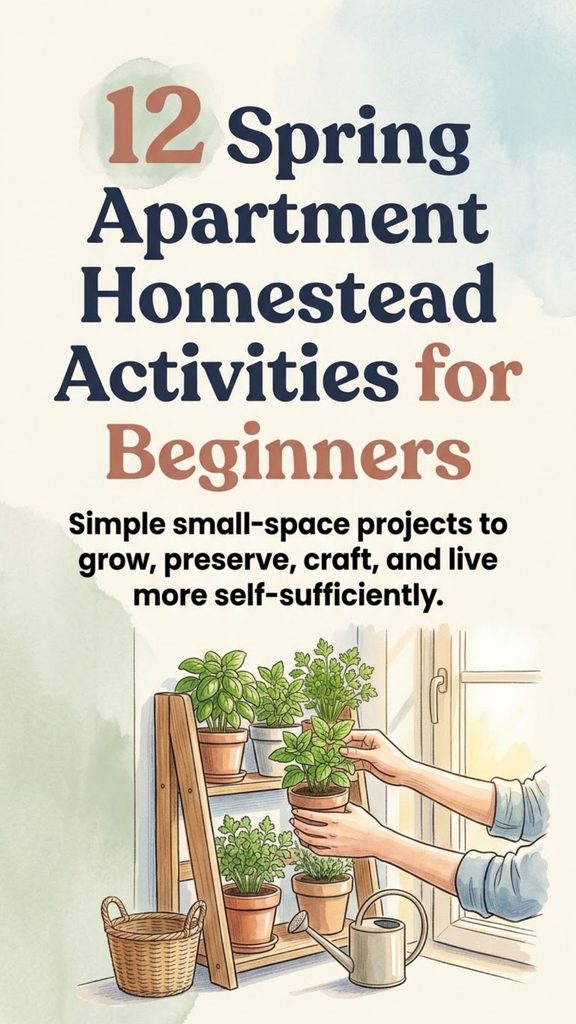
You do not need a farmhouse, a large garden, or even a backyard to begin living more self-sufficiently. Spring is an especially good season to experiment with small homesteading habits because longer days and warmer temperatures make growing plants, preserving seasonal food, composting, and spending time outdoors easier.
Apartment homesteading is really about working with the space you have. A sunny windowsill can become a herb garden. A balcony can produce salad greens and flowers. A kitchen counter can hold sprouts, homemade vinegar infusions, or a small fermentation project. Even if your apartment is tiny, a few practical habits can make everyday life feel more intentional and connected to the food and resources you use.
The best approach is to begin with one or two projects rather than trying to transform your whole lifestyle at once. These 12 spring activities are practical for beginners and can be adapted to apartments, balconies, small kitchens, and rented homes.
You Might Also Like:
- Loading posts...
1. Start a Small Indoor Herb Garden
Fresh herbs are one of the easiest edible crops to grow in a small space. They do not require a vegetable plot, and many varieties grow well in containers near a bright window.
If counter space is limited, consider using a narrow shelf, hanging planter, or vertical plant stand. Whatever setup you choose, make sure the containers have adequate drainage. Herbs generally struggle more from waterlogged soil than from being slightly dry.
Good beginner choices include:
- Basil
- Chives
- Parsley
- Mint
- Thyme
Basil appreciates warmth and strong light, while parsley and chives can tolerate somewhat cooler conditions. Mint is vigorous and is usually best kept in its own pot so it does not crowd neighboring plants.
Start with two or three herbs you already use regularly in the kitchen. There is little benefit in growing ten different varieties if most of them will never make it into your meals.
2. Preserve Seasonal Food Without Canning
Food preservation does not have to begin with pressure canners, jars, and complicated equipment.
Freezing and drying are two of the simplest preservation methods for apartment kitchens.
Berries can be washed, dried thoroughly, frozen in a single layer on a tray, and then transferred to freezer containers. Freezing them separately first helps prevent them from becoming one solid block.
Fresh herbs can be dried or frozen depending on the variety. You can also freeze chopped vegetables for later use in soups, sauces, and cooked dishes.
Other easy options include:
- Freezing chopped greens
- Making refrigerator pickles
- Drying herbs for seasoning
- Freezing vegetable scraps for broth
- Portioning ripe fruit for smoothies
Preserving small amounts is often more realistic in an apartment because freezer and pantry space may be limited.
3. Make Herbal Vinegar Infusions
Herb-infused vinegar is a simple way to use extra herbs and learn a basic preserving skill.
Culinary vinegars can be flavored with herbs such as rosemary, thyme, tarragon, or basil. Use a clean container and food-safe ingredients, and follow a reliable recipe designed for edible infused vinegar.
Herbal vinegar can later be used in salad dressings, marinades, and sauces.
You may also see homemade vinegar mixtures recommended for household cleaning. Plain white vinegar diluted appropriately can be useful on some surfaces, but it should not be treated as a universal cleaner. Acidic vinegar can damage natural stone and certain finishes, so always consider the surface before using it.
Keeping culinary and cleaning preparations clearly separate is also a sensible habit.
4. Learn Safe Urban Foraging
Foraging can be an interesting way to learn more about plants growing in your neighborhood, but correct identification is essential.
Never eat a wild plant based only on a photograph, social-media post, or casual resemblance. Some edible plants have dangerous look-alikes.
If you want to learn, begin with a local field guide, experienced instructor, or reputable regional resource. Confirm both the plant and the part that is considered edible.
Location matters too. Avoid gathering food from areas that may have been treated with herbicides or pesticides, places contaminated by animal waste, heavily polluted roadsides, and private property where you do not have permission to collect.
Dandelion is commonly discussed as an edible plant, for example, but that does not mean every patch growing beside a road or on a treated lawn should be harvested.
For beginners, think of foraging first as a plant-identification skill. Eating should come only after you can identify a plant confidently and know that the gathering location is appropriate.
5. Try a Simple Fermentation Project
Fermentation is one of the oldest food-preservation traditions, but it requires more care than simply leaving sweetened drinks on the counter.
Kombucha is made by fermenting sweetened tea with a culture commonly called a SCOBY along with starter liquid from a previous batch. Clean equipment, proper preparation, and a dependable recipe are important because fermentation conditions affect the finished drink.
Beginners should follow established instructions rather than improvising with herbs, honey, or random starter cultures.
If you are interested in fermentation but kombucha feels complicated, fermented vegetables made from a tested recipe can be another project to explore.
Fermentation is rewarding, but it is one area of apartment homesteading where careful food-handling practices matter more than experimentation.
6. Mix a Few Simple Household Cleaners
Making every cleaning product from scratch is unnecessary, but a few simple mixtures can reduce the number of bottles stored under the sink.
For example, diluted dish soap and water can handle many ordinary washable surfaces. Baking soda can be useful for some gentle scrubbing jobs, and diluted vinegar has limited uses on suitable surfaces.
Avoid assuming that natural ingredients are harmless simply because they come from the kitchen.
Never mix cleaning chemicals casually. In particular, bleach should not be combined with vinegar, ammonia, or other household cleaners because dangerous gases can form.
Before using any homemade solution, check whether it is appropriate for the material you are cleaning.
A simple cleaning routine with a few well-chosen products is often more practical than maintaining a cupboard full of homemade formulas.
7. Grow Vegetables in Containers
A sunny balcony can produce a surprising amount of food when the plants are chosen carefully.
Container gardening works best when you match each crop to the available light, pot size, and season.
Leaf lettuce, radishes, herbs, and some compact vegetables are particularly useful for small spaces. Tomatoes can also grow in containers, but they need much larger pots, strong light, regular watering, and appropriate support.
Before planting, check how many hours of direct sunlight your balcony receives. Many fruiting crops require considerably more light than leafy vegetables.
Containers should have drainage holes, and potting mix is usually more suitable than digging ordinary garden soil into pots. Garden soil can become dense and poorly aerated when used in containers.
Start with a few plants you genuinely enjoy eating. A small successful garden is more useful than a crowded balcony full of struggling plants.
8. Create a Balcony Garden for Pollinators
A few flowering containers can make a balcony more attractive while also providing food for visiting insects.
Rather than buying any packet labeled “wildflowers,” look for flowering plants appropriate to your climate and, where possible, species native to your region. Native plants are often particularly useful to local pollinators.
Suitable container flowers may include compact varieties of cosmos, zinnias, calendula, or other regional favorites.
Choose pesticide-free plants or seeds when possible, provide adequate sun, and keep flowers blooming by removing spent blooms when appropriate.
Even a small balcony will not replace larger areas of natural habitat, but it can still provide a useful stopping point for some bees, butterflies, and other insects.
9. Set Up a Small Worm Composting Bin
Vermicomposting allows apartment dwellers to turn certain kitchen scraps into a soil amendment without maintaining an outdoor compost pile.
A worm bin typically uses composting worms such as red wigglers rather than ordinary earthworms. They live in moist bedding and consume suitable organic material.
Shredded cardboard, plain paper, or similar materials can provide bedding. Food can be added gradually so the worms are not overwhelmed.
Suitable additions often include:
- Vegetable scraps
- Fruit scraps in moderate amounts
- Coffee grounds
- Crushed eggshells
- Tea leaves without plastic-containing bags
A well-managed worm bin should be moist but not waterlogged. Persistent odors are usually a sign that something needs adjusting, such as too much food, excess moisture, or poor airflow.
Apartment dwellers should also consider where the bin will be kept and whether their lease or building rules create any restrictions.
10. Grow Sprouts Indoors
Sprouts are among the fastest foods you can grow indoors, often requiring only a jar, water, and seeds specifically sold for sprouting.
However, sprouts need careful handling because the same warm, moist conditions that help seeds germinate can also allow harmful bacteria to multiply.
Use seeds intended for edible sprouting, keep equipment clean, rinse according to reliable growing instructions, and store mature sprouts properly.
People who are pregnant, very young, elderly, or immunocompromised are often advised to avoid raw sprouts because of the risk of foodborne illness.
For households where raw sprouts are appropriate, they can be a convenient way to practice growing food with almost no outdoor space.
11. Replace Disposable Wrap With Reusable Options
Homesteading is not only about growing food. Reducing household waste can be part of the same mindset.
Reusable beeswax wraps are one option for covering certain foods and containers. The warmth of your hands softens the wrap so it can form around bowls, bread, fruit, or other foods.
They are not suitable for every situation. Beeswax wraps are generally better for cool or room-temperature foods and should be kept away from high heat. Follow the manufacturer’s cleaning and food-safety recommendations, particularly regarding raw meat.
Reusable containers, silicone covers, glass jars, and washable cloth bags are other alternatives.
You do not need to replace every disposable product at once. Start with whichever item your household throws away most often.
12. Build a Simple Self-Watering Planter
Self-watering containers can help reduce how quickly small pots dry out, which is particularly useful on sunny balconies.
One simple homemade design uses two sections of a food-safe container or bottle. The lower portion holds water while a wick carries moisture toward the potting mix above.
The basic idea is straightforward:
- Create a water reservoir at the bottom.
- Add a wick made from suitable absorbent material.
- Position the planting section above the reservoir.
- Fill it with potting mix.
- Plant a small herb or other suitable crop.
- Refill the reservoir when necessary.
The soil should remain moist rather than permanently saturated. Even self-watering systems can cause problems if roots sit in stagnant water or if drainage and airflow are inadequate.
Use the planter as a watering aid, not as a reason to stop checking the plant.
Choosing Your First Apartment Homestead Project
The easiest way to become overwhelmed is to begin all 12 activities in the same weekend.
Instead, choose one project based on the conditions you already have.
If you have no outdoor area, start with herbs, sprouts, food preservation, or a carefully managed worm bin.
If you have a bright window, try herbs or leafy vegetables.
If you have a sunny balcony, experiment with containers of vegetables and pollinator-friendly flowers.
If you have very little free time, begin with something you only need to set up once, such as reusable food wraps or a simple self-watering planter.
Quick successes matter. Harvesting your first handful of herbs or freezing a tray of seasonal berries can make self-sufficiency feel practical rather than overwhelming.
Make Spring the Beginning, Not the Deadline
Apartment homesteading is not a smaller, inferior version of owning a rural homestead. It is simply a different way of practicing useful skills.
Growing basil on a windowsill teaches you about soil, light, and plant care. Preserving berries teaches you to waste less seasonal food. A worm bin introduces you to composting. Container vegetables show you how much food can come from a surprisingly small area.
You do not need to do everything yourself to live more intentionally. The goal is not complete independence from shops, utilities, or modern conveniences. A more realistic goal is to become a little more capable, observant, resourceful, and connected to the things you use every day.
Choose one activity this spring, learn it well, and then add another when you are ready. A few pots, jars, scraps, seeds, and simple household habits may not look like a traditional homestead, but they can still become the beginning of a more self-sufficient home.