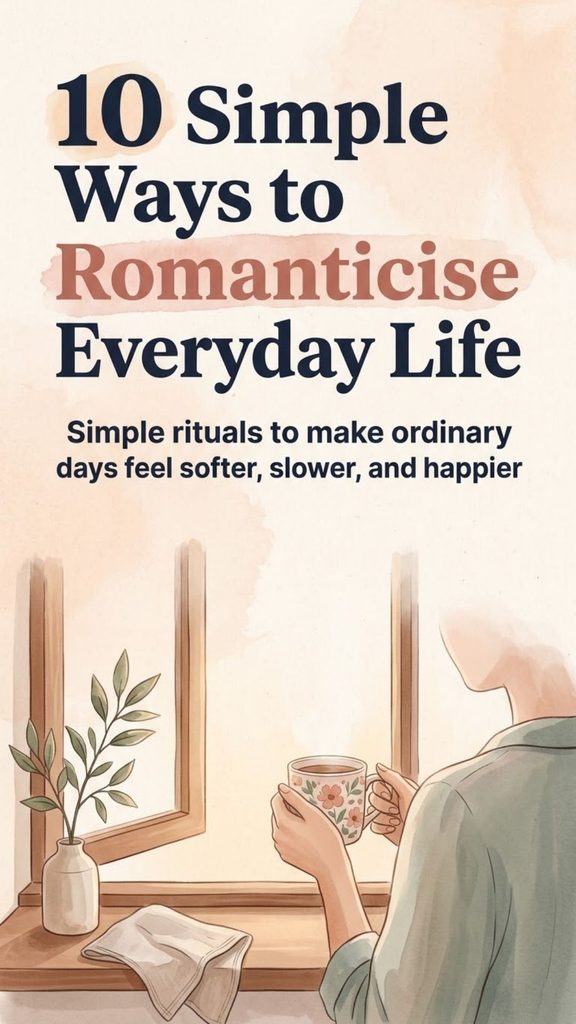
Some days are memorable. Most are ordinary.
They are filled with making breakfast, answering messages, commuting, tidying rooms, preparing dinner, putting laundry away, and getting ready to do it all again tomorrow. There is nothing wrong with routine, but when life becomes dominated by tasks, it is easy to stop noticing the parts of the day that are actually pleasant.
Romanticising everyday life is a simple way of paying more attention to those moments.
You Might Also Like:
- Loading posts...
It does not require an expensive home, elaborate morning routines, constant shopping, or pretending that difficult days are beautiful. It simply means becoming more intentional about the atmosphere you create, the things you notice, and the way you move through routines you already have.
The goal is not to manufacture a perfect life. It is to enjoy the real one a little more.
Here are ten practical ways to begin.
1. Give Yourself a Gentler Start to the Morning
A peaceful morning does not require waking up hours before everyone else.
Even a few quiet minutes can change how the beginning of the day feels.
Instead of reaching for your phone immediately, try creating a small gap between waking up and entering the noise of the day. Open the curtains. Stretch. Drink some water. Stand near a window for a moment. Make your coffee or tea without simultaneously checking notifications.
The idea is not to perform a complicated morning routine. It is simply to experience the first few minutes of the day rather than rushing through them.
If mornings are particularly busy, choose one small habit you can repeat consistently:
- drink your first cup of coffee sitting down
- open a window while getting dressed
- play one favourite song while making breakfast
- step outside for a minute before starting work
- make your bed before checking social media
A tiny ritual that actually fits your life is more useful than an idealised routine you abandon after three days.
2. Turn Ordinary Habits Into Personal Rituals
Routines are things we have to do. Rituals are routines that have been given a little meaning or atmosphere.
The difference can be surprisingly small.
You might light a candle while preparing dinner, play a particular playlist when cleaning the kitchen, make herbal tea before reading at night, or open the windows for a few minutes every morning.
These little associations can make ordinary parts of the day feel familiar and comforting.
Try attaching a pleasant detail to something that already happens regularly.
For example:
- Sunday evening could mean fresh sheets and a favourite television programme.
- Folding laundry could become audiobook time.
- Friday dinner could include candles, even if you are serving leftovers.
- Your evening shower could be followed by comfortable pyjamas and ten quiet minutes without your phone.
The best rituals are easy enough that they do not become another obligation.
3. Actually Use the Things You Save for “Special”
Many homes contain perfectly good things that are rarely used because they are being saved for some vague future occasion.
The pretty mug stays in the cupboard. The nicer hand cream remains unopened. The good plates are used twice a year. The notebook is considered too beautiful to write in.
There is nothing wrong with keeping certain items for celebrations, but everyday life makes up far more of your time than special occasions do.
Use the cup you love.
Put the blanket you enjoy on the sofa.
Write grocery lists with the pen that feels nice in your hand.
Serve an ordinary Tuesday breakfast on a plate you usually reserve for guests.
This does not mean constantly buying prettier replacements. In fact, romanticising your life can involve buying less and appreciating what you already own more.
Before purchasing something new, look around your home. You may already have forgotten objects that would make daily routines more pleasant.
4. Bring More Nature Into Your Home
A room often feels softer when it contains something natural, and you do not need a weekly flower budget to achieve that.
A few herbs in a glass, a branch in a vase, fallen leaves arranged on a table, a bowl of seasonal fruit, or simply more natural light can make a space feel connected to the outside world.
Use what is already available to you.
If you have a garden, you might bring in rosemary, lavender, flowers, or a small leafy branch. If you live in an apartment, an open window and a sunny windowsill can still change the atmosphere of a room.
When gathering natural materials outdoors, take only what you are permitted to collect and avoid damaging plants on private or protected land.
You can also let nature stay outside and simply notice it more. Sit near a window while drinking your morning coffee. Watch rain instead of immediately closing the curtains. Notice how the evening light changes your living room.
Romanticising life is as much about attention as decoration.
5. Make Chores More Pleasant Instead of Waiting to Love Them
Most household jobs will never become exciting.
There is no need to convince yourself that scrubbing a sink or putting away laundry is secretly magical. A more realistic goal is to make the experience less unpleasant.
Atmosphere can help.
Put on music while washing dishes. Listen to an audiobook while cleaning the bathroom. Open the windows while tidying. Wear comfortable clothes. Make yourself something cold to drink before tackling a hot kitchen.
You can also work in short bursts rather than allowing chores to consume the whole day.
For example, set aside fifteen minutes to reset the kitchen, then stop. Fold laundry while watching one episode of a familiar programme. Clean one room instead of attempting to transform the entire house in an afternoon.
Romanticising housework does not mean pretending chores are entertainment. It means making necessary work fit more comfortably into your life.
6. Get Dressed for Your Own Enjoyment
Clothing can affect the tone of a day, even when nobody else sees what you are wearing.
You do not need to dress formally at home. The point is to choose clothes intentionally instead of automatically reaching for whatever happens to be nearby.
Maybe that means a comfortable matching lounge set. Maybe it means earrings with a simple sweater. Maybe it means fresh socks, brushed hair, a favourite perfume, or changing out of sleepwear before beginning the day.
Choose clothing based on how you want to feel.
Comfortable.
Put together.
Relaxed.
Creative.
Energetic.
There is no correct aesthetic.
The habit works best when it serves you rather than becoming another standard you feel pressured to meet. Some days, romanticising your life may mean wearing a beautiful dress. On another day, it may mean putting on your softest oversized sweater and cancelling everything unnecessary.
7. Create More Small Moments With Other People
A beautiful life is not created entirely through objects and atmosphere. Much of it comes from relationships.
Small acts of attention often matter more than elaborate gestures.
Send someone a message simply because they came to mind. Sit at the table with your child for ten minutes without multitasking. Call a family member during a walk. Make your partner a cup of tea when you make your own.
You might also revive simple social habits that easily disappear when life becomes busy:
- invite someone over for coffee rather than waiting until the house is perfect
- eat dinner together without phones when possible
- leave a handwritten note
- share fruit or dessert after dinner
- ask someone about their day and actually listen to the answer
- take an evening walk together
Not every meaningful moment needs to be planned.
Often, the most memorable parts of ordinary life begin when we stop treating connection as something that must wait until there is more time.
8. Make Everyday Meals Feel More Intentional
Food does not need to be elaborate to feel enjoyable.
Even a sandwich, a bowl of soup, or afternoon fruit can feel more satisfying when you stop long enough to actually eat it.
Whenever practical, put your food on a plate instead of eating directly from the packet. Sit somewhere comfortable. Pour your drink into a glass you like. Clear one small section of the table rather than waiting until the whole kitchen is immaculate.
At dinner, try switching off the harshest overhead light and using a lamp or candles instead. Play quiet music if you enjoy it. Put a jug of water on the table.
None of these details improves the nutritional value of the meal. They simply make eating feel less like another task to complete.
The same principle works when eating alone.
You are still worth setting the table for.
9. Let the Seasons Change Your Routines
One reason the year can begin to feel monotonous is that we sometimes live exactly the same way in every season.
Paying attention to seasonal changes gives each part of the year its own character.
Winter might mean thicker blankets, soups, reading in the evening, earlier nights, and warm drinks.
Spring can bring open windows, lighter bedding, gardening, fresh greenery, and longer walks.
Summer might mean cold fruit, outdoor meals, linen clothing, later evenings, and early mornings before the heat.
Autumn can be a natural time for baking, warmer lighting, layered clothing, seasonal produce, and preparing the house for colder weather.
You do not need to redecorate your home every three months.
A few small shifts are enough.
Change the flowers on the table. Cook what is in season where you live. Move your evening routine outside when the weather is pleasant. Choose hobbies that make sense for the time of year.
Seasonal living gives you something new to notice without requiring constant novelty.
10. Record Ordinary Moments Without Turning Them Into Content
Photography can be a lovely way to pay attention to your own life, especially when nobody else needs to see the pictures.
Take a photograph of sunlight across the kitchen floor.
The cake you baked.
Your garden after rain.
A child concentrating on a drawing.
Your coffee beside an open book.
A table covered in the harmless mess of a good afternoon.
A sunset you almost missed.
Not every photograph needs to be polished, posted, edited, or shared.
Keeping pictures privately can help you notice how many moments would otherwise disappear from memory.
You could create a simple album on your phone called “Little Things” and add photographs whenever something makes you pause.
Months later, those ordinary images may mean more than carefully staged photographs because they capture what your life actually looked like.
Romanticising Your Life Should Make It Simpler, Not More Expensive
One of the easiest mistakes is turning romantic living into another form of consumption.
Social media can make the idea look like a shopping list: new mugs, expensive candles, matching pyjamas, elaborate flowers, perfect kitchens, beautiful stationery, seasonal decorations, and endless home upgrades.
None of that is required.
Buying something you genuinely love and will use is fine. But romanticising daily life works just as well through actions that cost nothing:
- watch the sunset
- make the bed
- put your phone away during breakfast
- walk somewhere slowly
- use the good plates
- play music while cooking
- sit outside with your coffee
- write someone a note
- open the curtains
- read instead of scrolling for ten minutes
The point is not to make your life photograph better.
It is to experience it more fully.
Start With One Small Change
Trying to make every part of your life beautiful at once defeats the purpose.
Choose one ordinary part of the day that currently feels rushed or dull and improve it slightly.
Maybe tomorrow you will drink your coffee without your phone.
Maybe dinner will be eaten at the table instead of over the kitchen counter.
Maybe you will play music while folding laundry.
Maybe you will take five minutes to sit outside before going back indoors.
Small moments are enough because everyday life is made almost entirely from them.
Romanticising your life is not about escaping responsibilities or pretending difficult things do not exist. It is about refusing to overlook everything pleasant simply because it is ordinary.
A calmer breakfast, a familiar song, clean sheets, an evening walk, flowers from the garden, dinner under softer light—none of these things needs to be extraordinary to matter.
Sometimes the best way to make life feel richer is simply to notice what is already there.