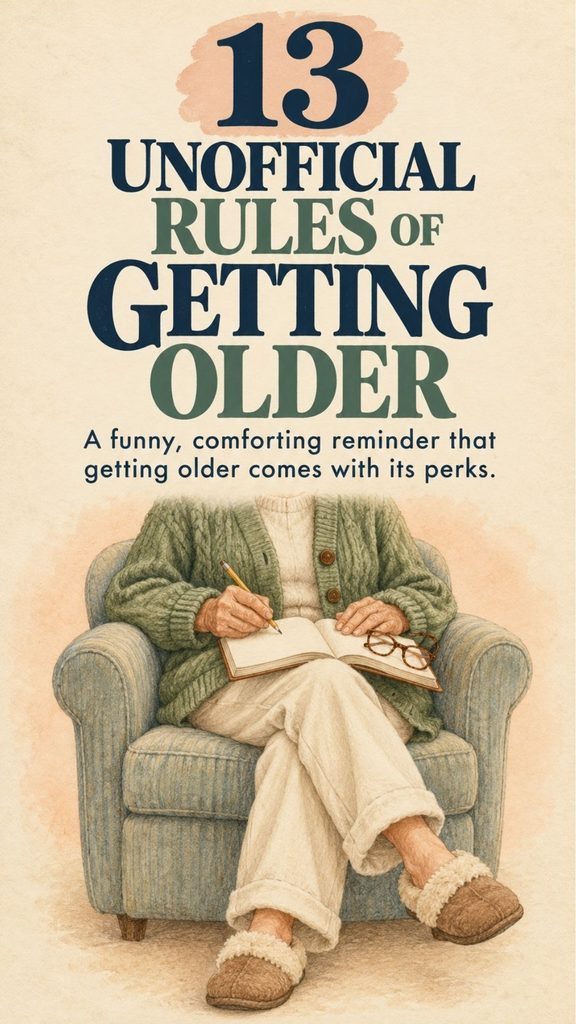
Getting older comes with a collection of lessons nobody bothers to include in the instruction manual. Some are surprisingly useful, some are a little ridiculous, and others make you wonder why it took so many years to figure them out.
At some point, comfortable shoes become more appealing than impressive ones. A quiet afternoon starts sounding better than a crowded evening. You discover that writing something on a sticky note is far more reliable than promising yourself you’ll remember it later.
And perhaps the biggest surprise is that growing older doesn’t necessarily mean becoming a completely different person. Sometimes, it simply means becoming more comfortable with the person you’ve always been.
You Might Also Like:
- Loading posts...
Here are twelve unofficial rules of getting older that bring a little humor, perspective, and practical wisdom to everyday life.
1. Talking to Yourself Can Be Surprisingly Helpful
There comes a point when having a conversation with yourself feels perfectly natural.
You might talk through your grocery list while searching the pantry, remind yourself where you put your keys, or explain out loud why you walked into the kitchen in the first place.
Talking to yourself isn’t automatically a sign that something is wrong. Ordinary self-directed speech can help people organize their thoughts, concentrate on a task, or remember what they intended to do.
Sometimes hearing a thought spoken aloud makes it easier to work through.
Of course, there’s a difference between intentionally talking through a problem and experiencing distressing voices or confusion. Persistent, unusual changes deserve medical attention.
For everyday moments, though, there’s no reason to feel embarrassed about narrating your search for the television remote.
Especially when you’re the only person actively looking for it.
2. Comfortable Clothes Deserve a Permanent Place in Your Wardrobe
Fashion advice changes constantly. One year, a particular style is essential. The next, it’s supposedly outdated.
With age, many people begin to care less about keeping up with every trend and more about wearing clothes that actually work for their lives.
A favorite sweater that still looks good and feels wonderful? Keep it.
A pair of shoes that allows you to walk comfortably all afternoon? Those deserve appreciation.
Jeans that fit properly without requiring a complicated strategy to sit down? Practically a treasure.
Comfort doesn’t have to mean giving up personal style. Well-fitting clothing, breathable fabrics, supportive footwear, and colors you genuinely enjoy can make getting dressed both pleasant and practical.
The best wardrobe isn’t necessarily the newest or most expensive. It’s the one that lets you move through your day feeling comfortable and confident.
3. Patience Becomes More Selective
Getting older doesn’t always make people less patient. Sometimes it simply changes where they choose to spend their patience.
Waiting for a grandchild to finish telling a long, winding story might feel perfectly worthwhile. Spending an hour arguing over something trivial might not.
There’s a difference between being impatient and understanding that not every disagreement deserves your attention.
You can listen carefully without agreeing. You can be courteous without accepting unreasonable demands. And you can walk away from an argument without needing to deliver the final word.
One of the most useful habits at any age is asking yourself whether a situation genuinely needs your involvement.
If it doesn’t, you’re allowed to move on.
Peace and quiet can be more satisfying than proving a point.
4. Your Memory Doesn’t Have to Do All the Work
Forgotten appointments, misplaced reading glasses, and grocery items that disappear from your mind the moment you enter the store can be frustrating.
Occasional forgetfulness happens at every age, although some aspects of memory and attention can change as people grow older.
The practical solution isn’t to expect your brain to remember everything. It’s to create simple systems that make remembering easier.
Keep a notebook in a convenient place. Use a calendar for appointments. Set reminders on your phone. Give frequently misplaced belongings a permanent home.
A small bowl near the entrance can help keep keys together. A written shopping list prevents unnecessary trips back to the store.
These habits aren’t admissions of defeat. They’re useful ways to reduce mental clutter.
Normal occasional forgetfulness should also be distinguished from significant or worsening memory problems. Changes that interfere with everyday independence deserve a conversation with a healthcare professional.
For ordinary busy-day forgetfulness, a good notebook can be a wonderful companion.
Just remember where you put it.
5. Arriving Calmly Is Better Than Arriving in a Panic
Being punctual is useful, but rushing everywhere isn’t a requirement for being responsible.
Leaving home a little earlier gives you room to find your keys, put on your coat, check the weather, and make sure you’ve actually locked the front door.
It also means fewer frantic moments trying to accomplish six things in the final thirty seconds before leaving.
A few practical habits can make outings easier:
- Prepare anything you’ll need the evening before.
- Keep essentials together near the door.
- Allow extra time for traffic and unexpected delays.
- Wear footwear suitable for the outing.
- Avoid carrying more bags than you can comfortably manage.
These habits are sensible at any age. As mobility, balance, or energy levels change, they can become even more valuable.
Arriving five minutes early and feeling relaxed is a much better experience than arriving breathless and wondering whether you left the stove on.
6. Not Every Little Problem Requires a Big Solution
Life provides an endless supply of minor annoyances.
A neighbor has an odd habit. Someone organizes the dishwasher differently. A family member insists on telling the same story for the hundredth time.
Some things genuinely need to be addressed. Others are harmless differences that can be accepted without turning them into a project.
Learning to recognize the distinction saves time and unnecessary frustration.
A useful approach is to consider whether the problem affects your health, safety, relationships, finances, or responsibilities. If it does, it may deserve thoughtful action.
If it’s merely an inconvenience that won’t matter tomorrow, you might decide to let it pass.
This isn’t about ignoring serious problems or pretending everything is fine. It’s about choosing your battles wisely.
Sometimes the most peaceful response is a smile, a shrug, and a change of subject.
7. Naps Are Wonderful, Even If They Don’t Count as Exercise
Imagine how popular afternoon naps would become if sleeping for twenty minutes offered the same fitness benefits as taking a brisk walk.
Unfortunately, resting doesn’t replace physical activity.
But that doesn’t mean a nap is wasted time.
Short daytime naps can help some people feel more alert, particularly after a poor night’s sleep. The key is finding a rest routine that supports rather than interferes with nighttime sleep.
For some adults, a brief early-afternoon nap works well. Long or late naps may make it harder to fall asleep at bedtime.
Resting quietly with a book, enjoying a peaceful cup of tea, or simply sitting outside can also provide a welcome break.
There’s no need to turn every free moment into another chore.
Exercise has its place. So does rest.
And a favorite chair in a sunny corner deserves to be enjoyed.
8. Everyone Else Starts Looking Surprisingly Young
One of the stranger experiences of aging is noticing how much younger other adults begin to look.
The new doctor seems barely old enough to have finished school. The person managing the bank looks younger than your children. Even people your own age may seem surprisingly youthful.
Our ideas about what different ages should look and feel like often change as we grow older.
There’s also an important distinction between chronological age and how old someone feels. Two people of the same age can have very different interests, energy levels, abilities, and outlooks.
Some people enjoy dancing well into later life. Others prefer quiet hobbies much earlier. Neither preference determines whether someone is aging correctly.
Rather than measuring people against an imagined version of what a particular age should look like, it’s more useful to recognize that adulthood doesn’t follow a single script.
A birthday tells you how many years have passed. It doesn’t tell the whole story of a person.
9. The Years Can Feel Like They’re Moving Faster
Childhood summers once seemed to stretch endlessly. Now an entire season can pass before you’ve finished making plans for it.
The way people experience time is influenced by attention, routine, memory, and other factors. Researchers continue to study why the passage of time can feel different across ages and circumstances.
One practical observation is that repetitive routines can make days less distinct when we look back on them.
Trying something unfamiliar can help create stronger memories of a particular period.
You don’t need an expensive vacation or a dramatic change to make life feel more memorable.
Try a new walking route. Cook something you’ve never made before. Visit a local museum. Invite a friend for lunch. Learn a small skill simply because it interests you.
Even small changes can give an ordinary week a little more character.
You may not be able to slow the clock, but you can fill your days with moments worth remembering.
10. Having Strong Opinions Doesn’t Mean You Must Share Every One
Years of observing people, making mistakes, solving problems, and changing your mind can give you a clearer sense of what matters.
That experience may also make you less willing to pretend you agree with something simply to keep everyone happy.
There’s value in expressing your preferences honestly.
It’s fine to say you don’t enjoy a certain activity. You can decline an invitation politely. You can share a thoughtful opinion without apologizing for having one.
But confidence and stubbornness aren’t the same thing.
Good judgment includes the ability to listen, consider new information, and recognize when another person has a better idea.
Age doesn’t automatically make anyone correct.
The real advantage of accumulated experience is having more opportunities to learn which opinions matter, which deserve reconsideration, and which can remain comfortably unspoken.
11. You Don’t Have to Keep Reinventing Yourself to Please Other People
Earlier in life, it’s easy to spend considerable energy worrying about expectations.
Should you dress differently? Be more outgoing? Follow a different career? Enjoy different hobbies? Act more like everyone else?
With time, some people find that those questions become less important.
You can prefer gardening to crowded parties. You can love old-fashioned music without explaining why. You can enjoy a quiet morning routine that would bore someone else.
Personal growth doesn’t require abandoning everything familiar.
It can mean becoming better at recognizing what genuinely makes your life satisfying.
Healthy boundaries are part of that process. Saying no when necessary leaves more room for meaningful relationships, responsibilities, and activities.
Of course, being true to yourself doesn’t mean refusing to change. There is always room to learn, apologize, improve, and develop new interests.
The goal isn’t to become set in your ways. It’s to become secure enough in yourself that every passing opinion doesn’t shake your confidence.
12. Never Underestimate the Value of a Bathroom Stop
And now for the unofficial rule that deserves a special place in the handbook of everyday practicality.
Before heading out, consider making one final visit to the bathroom.
It doesn’t matter whether you’re driving across the country or heading to the grocery store ten minutes away. A little preparation can make the outing more comfortable.
That said, needing the bathroom more frequently isn’t something everyone should simply accept as an unavoidable part of aging.
Changes in urination can have several causes, including medications, drinking habits, and treatable medical conditions. New urgency, pain, leakage, or a substantial change in bathroom habits should be discussed with a healthcare professional.
There’s also no reason to deliberately avoid drinking enough water just to reduce bathroom stops.
The sensible approach is to stay hydrated, plan ahead when convenient, and know where facilities are available during longer outings.
And if someone asks why you’re going to the bathroom again when you haven’t even left the house?
You don’t owe them a lengthy explanation.
The Best Rule of Getting Older: Keep Your Sense of Humor
Aging can bring real adjustments, and not every change is easy. Health concerns, loss, shifting responsibilities, and unexpected limitations deserve more than a cheerful slogan.
But alongside those challenges, there can also be valuable changes in perspective.
You may become more appreciative of ordinary pleasures, more deliberate about spending your time, and more comfortable choosing what works for you instead of following someone else’s expectations.
There’s a certain freedom in enjoying the familiar, accepting occasional mistakes, asking for help, and laughing when a perfectly ordinary day turns ridiculous.
Keep the comfortable shoes. Write down the appointment. Take the afternoon rest when you need it. Speak your mind kindly, and save your energy for the people and activities that matter.
And when you leave the house, make sure you have your keys, your glasses, and whatever else you came back inside to find.
If you can remember what that was, you’re already off to a good start.