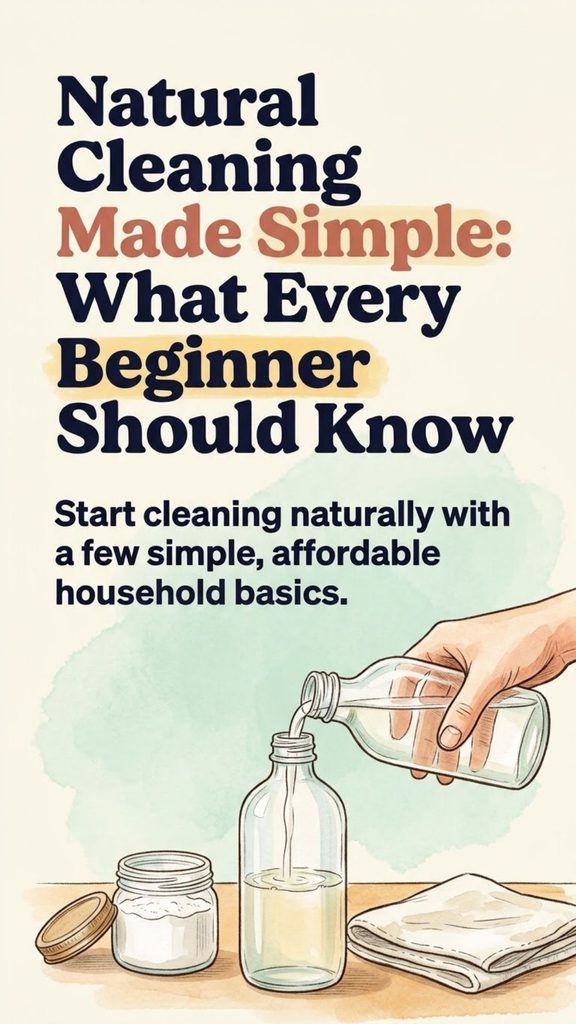
A cleaning cupboard can get crowded fast. One spray for the kitchen, another for the bathroom, something else for glass, one more for floors, and still another for laundry stains. Before long, you are spending more money than you want to, storing a pile of bottles, and still not feeling as if cleaning has become any easier.
That is one reason natural cleaning appeals to so many people. It strips the process back to a few dependable ingredients and a small set of useful tools. You do not need a complicated system to keep a home clean. In many cases, a handful of simple staples will handle daily messes just as well as a shelf full of specialty products.
If you are new to natural cleaning, the goal is not to make your life harder. It is to make it simpler, more affordable, and more manageable. Here is what to keep on hand, how to use it wisely, and what beginners should know before they start mixing their own cleaners.
You Might Also Like:
- Loading posts...
Why Natural Cleaning Appeals to So Many Homemakers
Natural cleaning is not a new idea. Long before modern supermarkets were lined with highly scented sprays and foaming cleaners, people relied on basic household ingredients to wash surfaces, freshen fabrics, and tackle grime.
People are drawn to this approach for a few practical reasons:
- It can save money. A bottle of white vinegar, a bag of baking soda, and a bottle of liquid castile soap usually go a long way.
- It cuts clutter. Fewer products mean fewer bottles under the sink.
- It reduces strong chemical smells. Many people prefer a home that smells clean rather than heavily perfumed.
- It can be a more sustainable option. Refillable containers, reusable cloths, and multi-purpose ingredients create less waste.
- It encourages a simpler routine. Once you learn what each ingredient does well, everyday cleaning becomes much more straightforward.
Natural cleaning does have limits. It is excellent for routine cleaning, deodorizing, and general household upkeep. But not every “natural” ingredient is a disinfectant, and not every homemade recipe is suitable for every surface. Learning those differences is what makes the system work.
The Core Ingredients Worth Keeping at Home
You do not need a long shopping list. Start with a few basics and add more only if you truly need them.
White Vinegar
White vinegar is one of the most useful natural cleaners for everyday tasks. It helps cut through soap scum, dissolve mineral buildup, reduce odors, and leave glass looking clear.
It works especially well for:
- windows and mirrors
- taps and shower doors
- kettles and areas with limescale
- general wipe-downs in kitchens and bathrooms
There are a few surfaces where vinegar is a poor choice. It should not be used on natural stone such as marble or granite, because its acidity can damage the finish. It is also not ideal for every type of hardwood surface.
Baking Soda
Baking soda is one of the best beginner ingredients because it is simple, inexpensive, and versatile. It acts as a gentle abrasive, which makes it useful for scrubbing sinks, stovetops, and tubs. It also helps absorb odors, so it is handy in bins, fridges, shoes, and laundry.
It is especially useful when a mess needs a little more scrubbing power than a spray can provide.
Castile Soap
Castile soap is a plant-based soap that can be diluted for many household tasks. It works well for washing dishes, wiping counters, mopping some floors, and making hand soap.
It is one of the most practical “do-many-things” products in a natural cleaning routine.
One thing beginners often miss: castile soap should not be mixed directly with vinegar in the same bottle. Vinegar is acidic, while soap is alkaline, and mixing them can reduce how well the soap works.
Hydrogen Peroxide
Hydrogen peroxide is useful when you want a stronger sanitizing option than vinegar can offer. It is commonly used for bathrooms, stain treatment, and cleaning certain hard surfaces.
It should be stored in its original dark bottle or another opaque container because light reduces its effectiveness over time.
Do not mix hydrogen peroxide with vinegar in the same container.
Salt
Salt can act as a coarse scrubber for certain stubborn messes. It is helpful for scouring pans, lifting grime from rough surfaces, and assisting with cleaning jobs that need a bit of texture.
Borax
Borax is often used as a laundry booster and for tougher cleaning jobs. Some people include it in a natural cleaning routine because it is a naturally occurring mineral compound. Others prefer to skip it. If you want a very simple beginner setup, you can leave borax out until you know you need it.
Essential Oils
Essential oils are mostly a finishing touch. They can make homemade cleaners smell pleasant, and some are popular in cleaning blends, especially lemon, lavender, peppermint, eucalyptus, and tea tree.
That said, essential oils should not be treated as a guaranteed substitute for proper disinfection. They are best thought of as optional, not essential.
The Tools That Make Natural Cleaning Easier
The right tools matter just as much as the ingredients. A few sturdy basics will make your routine smoother.
Here are some of the most useful items to keep in a natural cleaning cupboard:
- Spray bottles for homemade cleaners
- Glass jars for powders, cloths, or refill supplies
- Microfiber cloths for mirrors, windows, and general wiping
- Cotton rags or old tea towels for everyday cleaning
- Scrubbing brushes in a couple of sizes
- A broom and dustpan for quick daily tidying
- A bucket for mopping or carrying supplies
- Reusable gloves to protect your hands
- Soap dispensers for homemade hand or dish soap
- Labels so every bottle is clearly marked
If you like using a steam mop, it can be a helpful addition because it cleans with water and heat alone. Just make sure your floor type is suitable for steam before using one regularly.
A Few Natural Cleaning Rules Beginners Should Know
Natural cleaning is simple, but a few good habits make a big difference.
Start small
Do not feel that you need to replace every commercial product overnight. Begin with one or two homemade cleaners you will actually use, such as an all-purpose spray and a glass cleaner.
Label everything
Once you start using refillable bottles and jars, many of them begin to look alike. Clear labels prevent confusion and make your cupboard easier to manage.
Use the right cleaner for the right surface
Natural does not automatically mean safe for every material. Vinegar, for example, is excellent in many places but should stay away from stone surfaces.
Let the cleaner sit when needed
One reason natural cleaning sometimes seems “less effective” is that people spray and wipe too quickly. Soap scum, grease, and grime often loosen better when a cleaner sits for a few minutes before scrubbing.
Do not mix random ingredients together
Homemade cleaners should still be treated with care. More ingredients do not always make a better cleaner. Some combinations cancel each other out, and others can be irritating or unsafe.
Simple Recipes to Begin With
You do not need advanced formulas to get started. A few reliable mixtures will cover most routine jobs.
1. All-Purpose Cleaning Spray
For many non-porous household surfaces, mix:
- 1 cup white vinegar
- 1 cup water
If you like, add a few drops of essential oil for scent.
Use this on counters, appliance exteriors, and bathroom surfaces, but avoid natural stone.
If you dislike the smell of vinegar, a castile soap-based all-purpose cleaner is another good option:
- 2 cups warm water
- 1 teaspoon liquid castile soap
Shake gently and use as needed.
2. Glass Cleaner
For mirrors and windows, a simple mix of equal parts water and white vinegar often works well. Spray lightly and wipe with a microfiber cloth for the best finish.
Using too much cleaner is one of the main reasons glass ends up streaky.
3. Shower and Sink Scrub
Mix baking soda with a small amount of castile soap or water to create a soft paste. Use it on sinks, tubs, and areas with stuck-on residue.
Apply, scrub gently, and rinse well.
4. DIY Hand Soap
For a gentle homemade hand soap, combine:
- 1 cup water
- 2 to 3 tablespoons liquid castile soap
You can add a few drops of essential oil if you want fragrance, but it is optional.
Because homemade soaps usually do not contain the stabilizers found in commercial products, it is best to make small batches.
5. Laundry Booster
A natural laundry routine does not have to begin with fully homemade detergent. Many beginners do better starting with a simple laundry booster, such as baking soda or borax, to help freshen loads and support cleaning performance.
If you decide to experiment with homemade laundry detergent, start cautiously. Some DIY recipes work better in some machines and water conditions than others, and residue can be an issue for certain households.
Common Mistakes That Make Natural Cleaning Frustrating
Many beginners give up not because the method is bad, but because they run into a few avoidable problems.
Here are the most common ones:
- Expecting one cleaner to do everything
- Using vinegar on the wrong surfaces
- Adding too many ingredients to one recipe
- Making large batches that sit too long
- Assuming “natural” and “disinfecting” mean the same thing
- Scrubbing immediately instead of giving the cleaner time to work
A simpler routine is usually a better routine.
Questions Beginners Often Ask
Does vinegar kill germs?
Vinegar is useful for cleaning and deodorizing, but it should not be relied on as a full disinfectant for situations that require proper sanitizing.
Do natural cleaners really work?
Yes, for most everyday household messes they work very well. They may require a little more patience in some cases, especially when loosening heavy buildup, but they are effective when used correctly.
Which essential oils are best for cleaning?
Lemon, lavender, tea tree, peppermint, and eucalyptus are all popular choices. Most people use them for scent and freshness rather than as the main cleaning agent.
Do I need to buy special tools?
Not necessarily. Old cloths, jars, and basic brushes often work perfectly well. Start with what you already have and upgrade only when something is missing.
A Simple Way to Start This Week
Natural cleaning becomes much easier once you stop thinking of it as a complete lifestyle overhaul. It is really just a return to a simpler system: a few hardworking ingredients, a few reusable tools, and a little practical know-how.
If you are just starting, keep it easy. Buy white vinegar, baking soda, and castile soap. Set up one spray bottle for an all-purpose cleaner, one cloth for glass, and one scrub paste for sinks or showers. Use them for a week and see how far those basics take you.
That small start is often enough to show that a clean home does not require a cupboard full of harsh-smelling products. A simple routine, used consistently, can do the job beautifully.