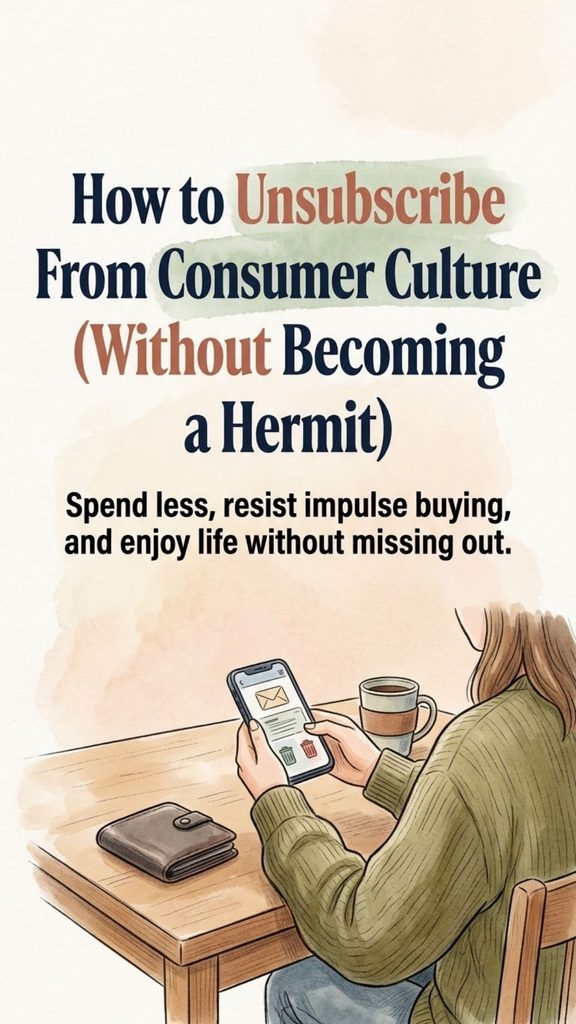
You do not have to stop buying things, reject modern life, or disappear into an off-grid cabin to consume less.
For most people, the real problem is not shopping itself. It is the constant background pressure to shop: promotional emails arriving before breakfast, influencers introducing another “essential,” limited-time sales creating urgency, and social feeds quietly turning everyday life into a catalog.
After enough exposure, buying can start to feel less like a decision and more like the default response to boredom, stress, insecurity, celebration, or the desire for something new.
You Might Also Like:
- Loading posts...
Stepping away from consumer culture means changing that default.
You can still replace worn-out shoes, enjoy restaurants, buy gifts, travel, decorate your home, and occasionally purchase something simply because you love it. The difference is that spending becomes intentional rather than automatic.
Here is how to create that shift without cutting yourself off from friends, entertainment, or ordinary life.
Start by Defining What You Are Opting Out Of
Consumerism and consumption are not the same thing.
Everyone consumes. We need food, housing, clothing, transportation, household supplies, entertainment, and countless other goods and services.
The problem begins when buying becomes closely tied to identity, status, entertainment, or emotional regulation.
Consumer culture often encourages ideas such as:
- Your wardrobe constantly needs updating.
- Your home should always be improved.
- A new product will make daily life dramatically easier.
- Keeping up with trends proves that you are successful or informed.
- A sale is an opportunity you lose by not participating.
- Owning the right things will help you become the person you want to be.
You do not have to reject every purchase to reject those assumptions.
A more useful goal is simple: buy what supports your life and stop allowing advertising, trends, boredom, and comparison to decide what you want.
That is a much more sustainable approach than trying to become someone who never spends money.
Reduce the Number of Things Asking You to Buy
Willpower is helpful, but your environment matters more than most people realize.
If you encounter shopping prompts dozens of times a day, resisting each one requires repeated decisions. Instead of becoming better at resisting advertising, reduce your exposure to it.
Unsubscribe From Retail Emails
Promotional emails are designed to create reasons to shop even when you had no intention of buying anything.
Free shipping. Flash sale. New arrivals. Last chance. Members-only discount.
None of these save you money if they persuade you to spend $80 you had not planned to spend.
Spend a few days unsubscribing from retailers, deal newsletters, brand announcements, and shopping alerts.
Keep emails that genuinely serve a purpose, such as receipts, order updates, or notifications for products you regularly need. Remove the ones whose main job is reminding you that shopping exists.
Unfollow Accounts That Trigger Spending
You do not need to dislike someone to stop following them.
Pay attention to how you feel after viewing an account. If you regularly leave wanting new clothes, cosmetics, furniture, kitchen gadgets, supplements, electronics, or home decor, the content is affecting your spending whether you notice it or not.
Replace some of those accounts with people who emphasize:
- outfit repeating
- repairing and maintaining possessions
- cooking with ordinary ingredients
- borrowing and sharing
- secondhand shopping
- realistic product reviews
- decluttering without immediately rebuying
- hobbies unrelated to shopping
You can enjoy fashion, technology, beauty, or interior design without turning every interest into a purchasing habit.
Delete Shopping Apps
A shopping app stored beside your messaging and entertainment apps makes purchasing almost frictionless.
That convenience is useful when you genuinely need something. It is less useful when you open the app because you are bored.
Delete apps you routinely browse without a purpose.
You can still use the website when you need to place an order. The extra steps involved in opening a browser, searching for the store, and signing in give you a few more moments to ask whether you actually want to buy something.
Small amounts of inconvenience can prevent a surprising number of impulse purchases.
Remove Saved Payment Information
One-click checkout exists because reducing hesitation increases purchases.
Consider removing saved cards from retailers where you tend to overspend. Having to find your card and enter the information is not difficult, but it interrupts the automatic sequence from wanting to buying.
That pause is valuable.
Stop Using Shopping as a Default Activity
Reducing consumption becomes difficult when shopping is one of your primary forms of recreation.
Browsing a mall, wandering through discount stores, visiting home decor shops, or scrolling online marketplaces may feel harmless because you do not intend to buy anything.
The problem is that shopping environments are built to turn browsing into buying.
You do not have to stop spending time with people who enjoy shopping. You simply need more ways to socialize that do not revolve around purchasing things.
Try suggesting:
- coffee followed by a walk
- dinner at home
- a potluck
- board games
- movie night
- hiking
- a picnic
- visiting a park
- free museum days
- exploring a neighborhood
- cooking or baking together
- exercising together
- volunteering
- working on a craft with supplies you already own
The point is not to make every social activity free. Paying for a movie ticket or restaurant meal can be an intentional choice.
The goal is to stop assuming that spending money is required for spending time together.
If someone invites you shopping and you are trying to spend less, a simple response is enough:
“I’m cutting back on shopping right now, but I’d still love to hang out. Want to grab coffee or go for a walk instead?”
You do not owe anyone a philosophical explanation.
Replace the Excitement You Used to Get From Buying
People rarely shop only because they need objects.
Shopping can provide anticipation, novelty, distraction, and the pleasant feeling of having something new to look forward to.
If you remove shopping without replacing those experiences, your new habits can feel restrictive.
Find other ways to create novelty.
Shop Your Own Home
Objects become invisible when you see them every day.
Try rotating things you already own:
- Put part of your wardrobe away seasonally.
- Move artwork between rooms.
- Restyle a bookshelf using existing objects.
- Bring rarely used kitchenware back into rotation.
- Rediscover unfinished books.
- Revisit games, puzzles, hobby materials, or craft supplies you already own.
You may find that the novelty you were searching for was already sitting in a drawer.
Use the Library
Libraries remain one of the best tools for consuming more entertainment while buying less.
Depending on your local system, you may be able to borrow books, ebooks, audiobooks, movies, magazines, games, museum passes, or other resources.
Instead of automatically buying a book you heard about online, borrow it first.
If it becomes something you genuinely want to reread or reference for years, you can always buy a copy later.
Learn Something That Produces Instead of Consumes
A new skill provides progress and variety without constantly generating more possessions.
You might learn:
- basic cooking techniques
- gardening
- sewing repairs
- drawing
- photography using equipment you already own
- a language
- bread making
- bicycle maintenance
- furniture repair
- coding
- music
- local history
Free tutorials and public resources make it possible to explore many interests before investing heavily in equipment.
This also helps prevent another consumer trap: buying everything required for a hobby before discovering whether you actually enjoy the hobby.
Learn to Let a Want Stay a Want
Not every desire needs to end in ownership.
You can admire a jacket without buying it. You can think a new phone looks impressive while keeping your current phone. You can enjoy seeing a beautifully designed kitchen without remodeling yours.
That sounds obvious, but modern advertising often tries to collapse the distance between noticing something and purchasing it.
Rebuilding that distance is one of the most useful skills you can develop.
Create a Waiting Period
For nonessential purchases, add a mandatory delay.
Thirty days works well for more expensive discretionary purchases, but the exact period can vary.
You might use:
- 24 hours for small impulse purchases
- 7 days for medium purchases
- 30 days for larger wants
Instead of buying immediately, put the item on a written wish list.
Include the date and price.
Then do nothing.
A real need usually survives the waiting period. A passing urge often does not.
Waiting also gives you time to compare alternatives, look for something you already own, borrow the item, find it secondhand, or decide the purchase is not worth the cost.
Be Suspicious of Urgency
“Only three left.”
“Sale ends tonight.”
“Limited edition.”
“Last chance.”
Urgency changes the question from “Do I want this?” to “Will I regret missing this?”
Those are very different questions.
Before reacting to scarcity, ask yourself:
Would I want this at the same price if it were still available next month?
If not, you may be responding to the deadline rather than the product.
Buy for Your Current Life
One of the easiest ways to accumulate clutter is buying for an imaginary future version of yourself.
The elaborate cookware for the gourmet meals you rarely cook.
The professional exercise equipment for the workout routine you have not started.
The formal clothes for hypothetical events.
The expensive notebook for the organized person you plan to become.
The photography equipment for a hobby you have not practiced.
Aspirational purchases are appealing because they feel like progress. But purchasing the equipment for a habit is not the same thing as building the habit.
Try reversing the order.
Start the activity with what you already own or can borrow.
If you consistently use it and your current equipment becomes limiting, then upgrade.
This allows your real behavior to justify the purchase rather than expecting the purchase to create the behavior.
Be Careful With “Buy It for Life” Thinking
Buying durable products can reduce replacement costs and waste. But quality-focused shopping can become another form of consumerism.
You do not need to replace something functional just because you discovered a better version.
A $250 jacket that lasts ten years may be sensible if you genuinely need a jacket and will wear it regularly. It is not automatically a wise purchase because someone online called it an “investment piece.”
Before paying extra for quality, ask:
- Will I use this frequently?
- Is durability actually important for this item?
- Can it be repaired?
- Is the cheaper version genuinely inadequate?
- Am I paying for construction or simply branding?
- Do I already own something that performs the same job?
Sometimes the inexpensive version is enough.
Sometimes secondhand is better.
Sometimes the best purchase is no purchase.
Replace Things When They Need Replacing
Consumer culture encourages preventive purchasing.
Backup products. Duplicate tools. Extra clothing. Upgrades before anything breaks. Pantry items bought because they were discounted rather than because they were needed.
Some backups make sense, especially for essential supplies that are difficult to obtain quickly. But habitual “just in case” buying can fill a home surprisingly fast.
Before buying a replacement, ask:
- Is the current item actually unusable?
- Can it be cleaned or repaired?
- Do I already have an alternative?
- Can I borrow one temporarily?
- Do I still need this type of item at all?
A broken toaster needs replacing if you use toast every morning.
A broken kitchen gadget you have touched twice in three years may not.
Try a No-Buy or Low-Buy Period
If your shopping habits feel automatic, a temporary set of rules can make those habits much easier to see.
A no-buy year does not have to mean buying literally nothing for twelve months.
Most people still need groceries, medication, transportation, repairs, replacement essentials, gifts, and other normal expenses.
Instead, create categories.
For example:
Allowed:
- groceries
- toiletries when existing products are finished
- necessary clothing replacements
- home and car repairs
- medical needs
- planned gifts
- previously budgeted experiences
Paused:
- decorative home items
- unnecessary clothing
- beauty backups
- hobby supplies you have not used
- new gadgets
- impulse purchases
- trend-driven products
A low-buy can be even more flexible. You might allow yourself a limited number of discretionary purchases each month or establish a fixed spending amount.
The value comes from having rules before temptation appears.
Create Better Measures of Having “Enough”
It is difficult to stop chasing possessions if possessions remain your main measurement of success.
Consider using different measures.
Financial Breathing Room
Having an emergency fund may be less visible than owning a newer car, but it can provide far more security.
Paying down debt, saving consistently, and being able to handle an unexpected expense are meaningful forms of progress.
Time
A purchase is not only measured in dollars.
It also costs some portion of the time you spent earning that money, plus the time required to clean, maintain, organize, store, insure, repair, or eventually dispose of what you bought.
Owning less can reduce those hidden demands.
Skills
The ability to cook, repair something, grow food, manage money, communicate well, or solve problems stays useful even when fashions change.
Skills are difficult to display on a shelf, but they often improve everyday life more than possessions do.
Relationships and Experiences
You are unlikely to remember every object you bought five years ago.
You may remember the people you spent time with, the places you visited, meals shared at someone’s kitchen table, projects you completed, and experiences that changed how you think.
That does not mean experiences are automatically superior to possessions. Experiences can also become expensive status symbols.
The healthier goal is to decide what genuinely matters to you rather than adopting someone else’s definition of a good life.
Do Not Turn Anti-Consumerism Into Another Competition
There is an odd trap waiting at the other end of consumer culture: trying to become the person who owns the least, spends the least, or lives the most perfectly minimalist life.
That can become just another identity to perform.
You do not need to count every possession.
You do not need a perfectly empty home.
You do not need to refuse every invitation that costs money.
You do not need to judge friends who enjoy shopping.
You also do not need to buy a collection of expensive minimalist products in order to prove that you have stopped consuming.
The goal is freedom from unnecessary pressure, not a new set of rules designed to make you feel guilty.
Build a Life That Makes Shopping Less Interesting
The easiest way to care less about buying things is not to spend every day thinking about how not to buy things.
Fill your attention with something better.
Cook.
Read.
Walk.
Exercise.
Garden.
Call someone.
Learn a skill.
Work toward a financial goal.
Fix something.
Visit somewhere new.
Make something.
Use something you already own.
Over time, you may notice that fewer products feel urgent. Sales become easier to ignore. Trends arrive and disappear without requiring your participation. You start recognizing the difference between something that would genuinely improve your life and something that simply caught your attention for ten minutes.
You can still shop. You can still go out with friends. You can still enjoy nice things.
You simply stop treating consumption as the main route to novelty, identity, belonging, and happiness.
That is what unsubscribing from consumer culture really looks like: not disappearing from society, but becoming much more selective about what gets your money, your attention, and your space.