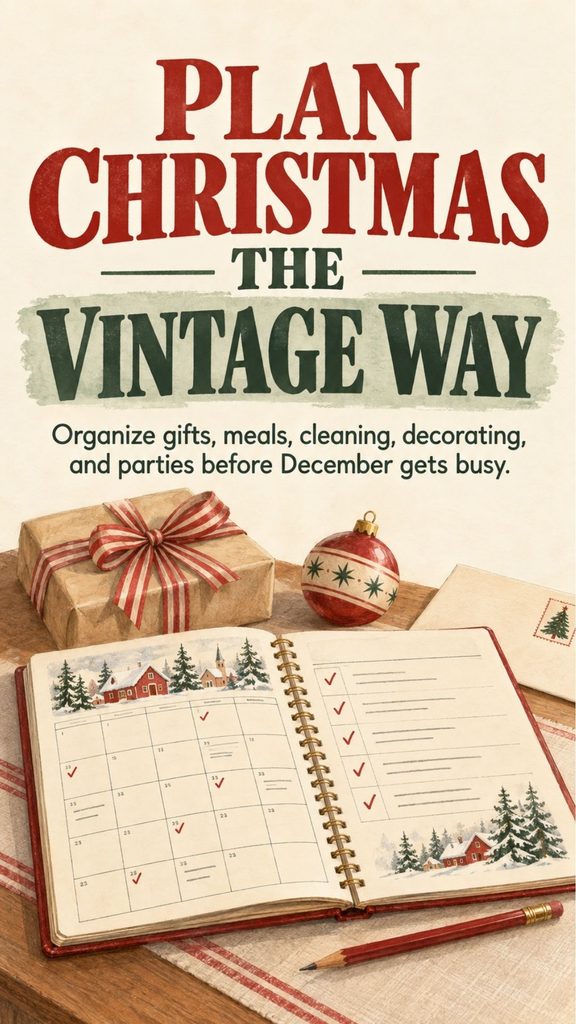
Christmas can become stressful surprisingly quickly. Decorating, gifts, meals, cards, baking, parties, shopping, cleaning, and family traditions all compete for attention during the same few weeks. The easiest way to make December feel calmer is not to work faster once the month becomes busy. It is to decide what needs doing before the busiest days arrive.
A practical Christmas plan does not have to be complicated. A notebook, planner, spreadsheet, or printed checklist is enough. The important part is getting all the moving pieces out of your head and arranging them in a sensible order.
A vintage-inspired approach works especially well because it emphasizes preparation: write the lists early, stock the pantry, plan the meals, simplify housekeeping, and decide what traditions matter most before December fills up.
You Might Also Like:
- Loading posts...
Start With One Master Christmas List
Before making separate shopping or decorating lists, write down everything you expect to handle during the season.
Your master list might include:
- Christmas cards
- Gifts
- Stocking stuffers
- Wrapping supplies
- Holiday meals
- Everyday December meals
- Baking
- Decorating
- Cleaning
- Parties and gatherings
- Guest preparation
- Holiday clothing
- Crafts or homemade gifts
- Travel arrangements
- Grocery shopping
- Seasonal household supplies
Do not worry about putting everything in perfect order yet.
The first goal is simply to stop relying on memory. Once all the responsibilities are visible, you can decide what needs to happen early, what can wait, and what you can eliminate entirely.
Christmas planning becomes much easier when every task has a place.
Decide What Can Be Done Before December
One of the most useful ideas from older household-planning systems is simple: December should not contain every Christmas job.
Some tasks are much easier when completed in October or November.
Before December begins, consider handling things such as:
- Ordering Christmas cards
- Updating your address list
- Buying or making invitations
- Purchasing major gifts
- Checking wrapping supplies
- Planning holiday outfits
- Checking winter or travel equipment
- Choosing your main decorating theme
- Buying nonperishable baking supplies
- Preparing guest-room essentials
There is no rule saying these jobs must be finished months ahead. The point is to move anything flexible away from the most crowded part of the calendar.
If you are already well into December, the same principle still works. Identify the tasks that can be completed immediately and finish those first.
Prepare and Send Christmas Cards Early
Christmas cards are a perfect example of a small task that becomes unnecessarily stressful when left until the last minute.
Start by checking your mailing list.
Remove outdated addresses, add anyone new, and make sure you have enough cards, envelopes, and stamps.
Then divide the work if necessary.
One evening can be used for writing messages. Another can be used for addressing envelopes. A final short session can handle stamps and mailing.
Breaking the job into several small sessions makes it much easier than trying to complete dozens of cards in one sitting.
If traditional cards are important to your family, treat them as an early-season task rather than something squeezed into the final week before Christmas.
Make a Complete Gift List
A good gift list prevents two common holiday problems: forgetting someone and repeatedly wondering whether you have bought enough.
Create a simple list with columns for:
- Recipient
- Gift idea
- Budget
- Purchased
- Wrapped
- Delivered or mailed
If your family prefers a simple gift tradition, establish the rule before shopping begins.
For children, for example, some families choose a small number of categories such as something to wear, something to read, and something for fun.
A limit can make shopping easier because you know when you are finished.
For extended family, neighbors, hosts, teachers, delivery workers, or others you want to remember, homemade food can be a thoughtful alternative when appropriate.
Cookies, breads, candies, preserves, or other homemade treats can work especially well if you already enjoy baking.
Just avoid creating such an ambitious homemade-gift schedule that it turns into another source of pressure.
Plan Homemade Gifts in Batches
If you enjoy giving baked goods or homemade treats, December becomes much easier when you work in batches.
Rather than trying to prepare everything during the final few days, decide what can be made ahead.
Depending on the recipe, you might prepare and freeze:
- Quick breads
- Yeast breads
- Cookie dough
- Baked cookies
- Certain candies
- Cakes intended for freezing
Make a calendar showing what you will prepare and when.
Also check storage space before beginning. A freezer full of holiday baking is useful only if you actually have room for it.
Label everything clearly with the item and date.
This turns holiday baking into a planned routine instead of a marathon.
Make a Meal Plan for the Entire Month
Christmas dinner is not the only meal you will need in December.
In fact, ordinary breakfasts, lunches, and dinners are often what make the month feel exhausting. You may spend the afternoon shopping or decorating and suddenly realize everyone still needs dinner.
A monthly meal plan removes many of those daily decisions.
You do not need thirty elaborate menus. December is a good time to rely on familiar, dependable meals.
Build your plan around:
- Easy weeknight dinners
- Leftover nights
- Slow-cooker or one-pot meals
- Freezer meals
- Sandwich or soup nights
- Simple breakfasts
- Holiday baking days
- Party nights
- Christmas Eve
- Christmas Day
Consider intentionally making extra portions of a few meals so that leftovers can cover another busy evening.
The purpose of the meal plan is not perfection. It is to reduce the number of times you have to stop in the middle of a busy day and decide what everyone will eat.
Simplify Housekeeping During December
December is usually not the best time for an ambitious whole-house cleaning project unless you genuinely have the time.
Instead, focus on maintenance.
Keep up with the basics:
- Dishes
- Laundry
- Kitchen surfaces
- Bathroom cleaning
- Floors
- Trash
- General tidying
Then add only the cleaning that directly supports your holiday plans.
If guests are staying overnight, prepare the guest room.
If you are hosting dinner, concentrate on the kitchen, dining area, entryway, and bathroom guests will use.
Tasks that are neither urgent nor visible can often wait until January.
A simpler housekeeping plan leaves more time for the parts of Christmas you actually want to enjoy.
Plan Your Decorating Before Opening Every Box
Decorating becomes easier when you know the look you want before bringing everything out of storage.
A traditional approach is to choose one general theme or color palette and repeat it throughout the house.
You might choose:
- Classic red and green
- Gold and greenery
- Mid-century Christmas
- Handmade country Christmas
- Natural woodland decorations
- Vintage ornaments
- White and silver
- A family-memory theme
A theme can make the house feel coordinated, but it should not force you to abandon meaningful family decorations.
Some ornaments and decorations earn their place because they carry memories, not because they match the year’s color scheme.
Keep those.
A Christmas home usually feels warmer when it reflects the people living there rather than looking like a showroom.
Protect the Family Traditions That Matter
Planning Christmas is not only about becoming more efficient.
It also helps you protect the things your family genuinely looks forward to.
Make a short list of traditions you want to keep.
That might include:
- Decorating the tree together
- Watching a favorite Christmas movie
- Baking a particular cookie
- Visiting relatives
- Driving to see Christmas lights
- Opening one gift on Christmas Eve
- Making a traditional meal
- Playing board games
- Listening to favorite holiday music
Put these traditions on the calendar just as you would appointments.
Otherwise, practical chores can easily consume the whole month and leave the meaningful parts until there is no time left.
Finish Party Planning Early
If you are hosting a holiday party, open house, dinner, or casual gathering, finish the basic decisions as early as possible.
Start with:
- Date and time
- Guest list
- Invitations
- Menu
- Drinks
- Seating
- Serving dishes
- Decorations
- Music
- Shopping
- Cleaning
- Food preparation schedule
Then work backward from the event date.
Decide which foods can be purchased early, which can be prepared a day or two ahead, and which must be made shortly before guests arrive.
If you are serving several dishes, write down which serving plate or bowl will hold each one. This small step can prevent last-minute searching.
Also think about the practical details guests will notice first: somewhere to put coats, enough seating, a clean bathroom, accessible drinks, and a welcoming entryway.
Create Separate Shopping Lists
One enormous Christmas shopping list can become confusing.
Separate it into categories.
You might keep lists for:
Everyday Groceries
These are the ingredients needed for your normal December meal plan.
Christmas Dinner
Keep the main holiday meal separate so important ingredients do not disappear into ordinary grocery shopping.
Baking Supplies
Check flour, sugar, butter, chocolate, spices, nuts, extracts, decorating supplies, parchment paper, and any special ingredients your recipes require.
Party Supplies
Include food, drinks, napkins, candles, serving items, and anything else needed for entertaining.
Gifts and Stocking Stuffers
Keep these separate from household shopping so your gift budget remains easy to track.
Decorating and Craft Supplies
List ribbon, greenery, hooks, tape, glue, craft materials, replacement lights, and similar items.
Wrapping Supplies
Check wrapping paper, gift bags, boxes, tissue paper, tags, ribbon, tape, and scissors before buying more.
Separate lists make shopping trips faster and reduce duplicate purchases.
Create a Small Company-Ready Pantry
Unexpected visitors are much easier to welcome when you already have a few simple foods available.
You do not need an elaborate entertaining pantry.
Keep a modest supply of items that can quickly become snacks, drinks, or an easy meal.
Depending on your household, that could include:
- Crackers
- Cheese
- Nuts
- Coffee and tea
- Frozen appetizers
- Soup ingredients
- Pasta and sauce
- Baking supplies
- Cookies or other freezer treats
Choose foods your family will also eat so nothing is purchased solely for the possibility of visitors and later wasted.
This is one old-fashioned hospitality habit that still works beautifully today: keep enough on hand to offer something simple without turning an unexpected visit into an emergency shopping trip.
Prepare for Overnight Guests
If relatives or friends will stay with you, prepare their space before the final holiday rush.
Check:
- Clean bedding
- Extra blankets
- Towels
- Toiletries
- Toilet paper
- Basic medications you normally keep for household use
- Charging access
- Space for luggage
- A bedside light
- Drinking glasses or water
You do not need to create a hotel room. The goal is simply to make guests comfortable without searching for necessities after they arrive.
Check Household Supplies Too
Holiday planning often focuses so heavily on food and gifts that ordinary household supplies are forgotten.
Before December becomes hectic, check your stock of:
- Cleaning products
- Laundry supplies
- Trash bags
- Paper goods
- Batteries
- Light bulbs
- Pet supplies
- Toiletries
- Everyday pantry staples
If winter weather or power interruptions are possible where you live, it is also sensible to maintain basic emergency supplies appropriate to your household.
This is not specifically a Christmas task, but having essentials already available means one less shopping trip during a busy month.
Give Every Task a Date
A Christmas list becomes much more useful once every important item has a place on the calendar.
Instead of writing:
Bake cookies
write:
December 10 — prepare dough
December 11 — bake and freeze cookies
Instead of:
Wrap gifts
schedule two wrapping evenings.
Instead of:
Clean for guests
assign different areas to specific days.
You do not have to schedule every tiny chore. Reserve dates for the larger tasks that are likely to be postponed.
Then leave some blank space.
A calendar filled completely from morning to night leaves no room for delays, tiredness, illness, unexpected invitations, or simply enjoying Christmas.
Let Christmas Planning Create More Free Time
The best holiday plan is not the one with the longest checklist.
It is the one that helps you stop thinking about unfinished tasks.
Plan meals so you are not deciding dinner at 5 p.m. Keep one gift list so you know when shopping is complete. Prepare baking ingredients before baking day. Simplify cleaning. Decide on decorations before unpacking them. Schedule traditions before the calendar fills.
Most importantly, decide what does not need to happen.
You do not need every decoration, every homemade gift, every party, or every elaborate meal to create a memorable Christmas.
Prepare the essentials early, protect the traditions your family values, and leave enough room in December to actually enjoy the season you spent so much time planning for.