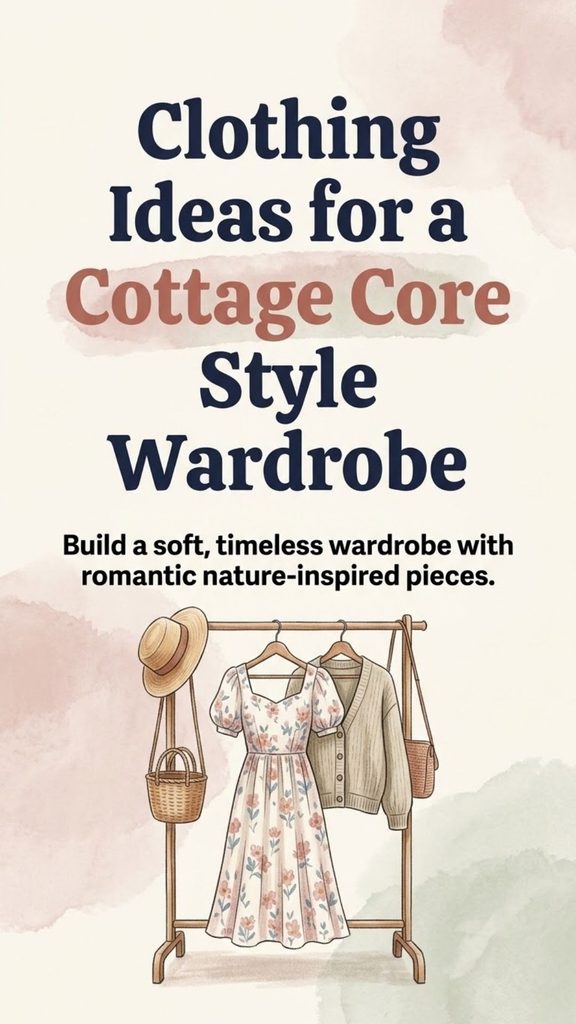
Cottagecore fashion is easy to recognize: soft dresses, tiny floral prints, cozy knits, natural fabrics, vintage-inspired details, and clothing that looks equally appropriate for gathering flowers, baking bread, browsing a farmers’ market, or spending a quiet afternoon at home.
But creating a cottagecore wardrobe does not mean dressing like a character from another century.
The most wearable version of the style combines romantic details with practical everyday clothing. A floral blouse can be worn with jeans. A chunky cardigan can go over a simple dress. A linen skirt can be paired with a plain cotton top. Even a ribbon, embroidered collar, or woven bag can introduce the aesthetic without changing your entire wardrobe.
You Might Also Like:
- Loading posts...
The goal is to build a collection that feels comfortable, natural, slightly nostalgic, and easy to combine.
Start With a Soft, Nature-Inspired Color Palette
Cottagecore wardrobes tend to work best when the colors feel connected to the natural world.
That does not mean everything must be beige.
Useful foundation colors include:
- Cream
- Ivory
- Oatmeal
- Warm white
- Soft brown
- Sage green
- Olive
- Dusty blue
- Muted yellow
- Rust
- Faded rose
- Soft lavender
These shades are easy to layer because they rarely compete with one another.
You can then introduce stronger colors through floral prints, embroidery, scarves, or accessories.
Instead of trying to make every item match perfectly, aim for colors that look comfortable together. Cottagecore style often feels charming precisely because it is slightly collected rather than overly coordinated.
Make Dresses the Easiest Starting Point
A dress can create an entire cottagecore outfit with almost no styling.
Look for relaxed silhouettes rather than very structured tailoring.
Good choices include:
- Midi dresses
- Prairie-inspired dresses
- Tiered dresses
- Wrap dresses
- A-line dresses
- Smocked dresses
- Simple linen dresses
Floral prints are especially useful, but they do not need to be dramatic. Tiny wildflowers, scattered blossoms, vines, leaves, or faded botanical patterns often feel more versatile than oversized prints.
Details such as gathered waists, small ruffles, covered buttons, square necklines, and softly puffed sleeves can add the vintage character associated with cottagecore without making the dress look like a costume.
For everyday wear, prioritize comfort.
A beautiful dress that requires constant adjusting will probably remain in the closet. Look for fabrics, lengths, and necklines that allow you to walk, sit, cook, garden, or run errands comfortably.
Add Puff-Sleeve and Peasant-Style Blouses
Romantic blouses are one of the easiest ways to bring cottagecore elements into clothes you already own.
A soft blouse can completely change an ordinary pair of jeans.
Look for features such as:
- Puff sleeves
- Gathered shoulders
- Square necklines
- Peter Pan collars
- Lace trim
- Pintucks
- Embroidery
- Small buttons
- Ruffled cuffs
- Smocking
Cotton and linen are especially attractive because they develop a relaxed texture with wear.
For a subtle outfit, pair a cream blouse with straight-leg jeans and simple leather shoes.
For a more romantic look, tuck the same blouse into a long floral or solid-colored skirt.
The advantage of these tops is that they can move between cottagecore and ordinary everyday style depending on what you wear with them.
Keep a Few Long, Comfortable Skirts
A midi or ankle-length skirt brings movement and softness to a cottagecore wardrobe.
You do not need elaborate layers of fabric. Simple shapes are often much more wearable.
Consider:
- A-line skirts
- Tiered cotton skirts
- Linen skirts
- Soft floral skirts
- Gingham skirts
- Button-front skirts
Neutral skirts can become particularly useful because they work with patterned blouses, sweaters, and cardigans.
If you prefer a more modern version of cottagecore, choose an uncomplicated skirt in brown, olive, cream, or dusty blue and let your blouse or accessories provide the romantic detail.
A skirt should also be practical enough for your actual life. Pockets, washable fabrics, and comfortable waistbands often matter more than decorative details.
Build Around Cozy Cardigans
Few pieces fit cottagecore style as naturally as a cardigan.
A cardigan adds warmth while keeping an outfit soft rather than sharply structured.
Chunky knitted versions are wonderful in cold weather, while lightweight cotton cardigans work through spring and early autumn.
Look for:
- Cable knits
- Simple ribbed knits
- Cropped cardigans
- Oversized cardigans
- Embroidered details
- Wooden or vintage-style buttons
- Soft wool or cotton blends
Cream, oatmeal, moss green, warm brown, and muted blue are especially easy to combine.
Wear one over a floral dress, with a blouse and skirt, or with jeans and a simple shirt.
Cardigans also make seasonal wardrobes easier because they allow lightweight dresses to remain useful beyond summer.
Try Crochet and Handmade-Looking Layers
Cottagecore celebrates the visual character of handmade items, so crochet, knitting, embroidery, and patchwork fit naturally into the style.
A crochet vest over a plain blouse can add texture without overwhelming the outfit.
You might also try:
- Crochet cardigans
- Knitted vests
- Handmade scarves
- Embroidered collars
- Patchwork accessories
- Crocheted bags
Handmade pieces do not need to be perfect.
Slight irregularity is part of what makes them appealing.
If you knit, crochet, embroider, or sew, your wardrobe can also become a place to use those skills. Adding embroidery to a plain pocket or replacing ordinary buttons with prettier ones can make an inexpensive garment feel much more personal.
Choose Natural Fabrics When They Make Sense
Linen and cotton are often associated with cottagecore because of their texture, comfort, and traditional appearance.
Wool works beautifully for sweaters, coats, and winter accessories.
But there is no need to reject every synthetic fiber.
A practical wardrobe considers durability, climate, laundering, price, and comfort as well as aesthetics.
For warm weather, lightweight linen or cotton can feel particularly comfortable.
For cooler months, wool blends, heavy cotton, corduroy, and knitted layers can add warmth.
Instead of checking whether every label fits a strict cottagecore formula, ask whether the garment feels pleasant, lasts well, and works with the rest of your wardrobe.
Do Not Forget Everyday Denim
Cottagecore does not have to mean wearing dresses every day.
Denim provides a useful modern counterbalance to highly romantic pieces.
Try pairing:
- Jeans with an embroidered blouse
- Denim shorts with a loose linen shirt
- Overalls with a puff-sleeve blouse
- A denim skirt with a cardigan
Straight, relaxed, or vintage-inspired denim usually blends more naturally with cottagecore elements than very sleek or heavily distressed styles.
This combination is particularly helpful if you like the aesthetic but want outfits that feel ordinary enough for errands and everyday activities.
Add Lace, Ruffles, and Embroidery Carefully
Small details often create more character than an entire outfit filled with decoration.
Choose one or two romantic elements at a time.
A simple cotton blouse with an embroidered collar may be enough.
A plain dress can become more cottagecore with a lace-trimmed cardigan.
Other useful details include:
- Eyelet fabric
- Broderie anglaise
- Smocking
- Scalloped edges
- Crochet trim
- Tiny bows
- Floral embroidery
- Fabric-covered buttons
Too many decorative elements together can push an outfit toward costume territory.
Let one piece provide the focus and keep the rest calmer.
Look for Comfortable, Practical Shoes
Cottagecore footwear should feel as though you could actually spend several hours wearing it.
Possible options include:
- Leather ankle boots
- Mary Janes
- Ballet flats
- Clogs
- Lace-up boots
- Simple sandals
- Loafers
Choose footwear based on the weather and your activities rather than the aesthetic alone.
A delicate pair of flats may look beautiful with a floral dress but will not be useful for a muddy garden walk.
Practical boots can still fit the style beautifully, especially with wool socks, a skirt, and a cardigan.
Use Straw Hats and Simple Headwear
A straw hat is one of the clearest cottagecore accessories and also serves a practical purpose in sunny weather.
Wide-brimmed styles work well with summer dresses, linen shirts, and gardening clothes.
Other options include:
- Simple headscarves
- Cotton kerchiefs
- Ribbons
- Soft knitted hats
- Hair bows
- Fabric headbands
Flower crowns can be lovely for photographs, festivals, weddings, or special occasions, but they are not necessary for everyday cottagecore style.
A small ribbon tied around a ponytail can provide the same softness much more subtly.
Choose Bags Made From Textured Materials
Accessories provide an easy way to experiment before investing in an entire wardrobe.
Woven, leather, canvas, or fabric bags usually work well.
Consider:
- Wicker baskets
- Rattan handbags
- Canvas totes
- Leather satchels
- Crochet bags
- Quilted fabric bags
A basket bag can make even a plain summer outfit feel cottagecore.
For everyday practicality, however, make sure the bag closes securely and can carry what you actually need.
Style should still serve function.
Keep Jewelry Delicate and Personal
Cottagecore jewelry usually works best when it looks subtle rather than highly polished or dramatic.
Ideas include:
- Small lockets
- Botanical pendants
- Tiny floral earrings
- Simple gold or silver chains
- Vintage-inspired brooches
- Pearl details
- Small rings
Secondhand jewelry can be especially interesting because older pieces often have the slightly unusual details that suit this aesthetic.
You do not need an entire matching set. A single small pendant can be enough.
Build Cottagecore Outfits From Clothes You Already Own
Before shopping, look through your current wardrobe.
You may already own several useful pieces.
A white blouse, long cardigan, jeans, floral skirt, plain dress, ankle boots, and neutral sweater can all become part of a cottagecore wardrobe with different styling.
Try combinations such as:
Everyday:
Floral blouse + straight-leg jeans + cardigan + simple flats.
Warm weather:
Linen dress + straw hat + sandals + woven bag.
Autumn:
Long skirt + cotton blouse + chunky cardigan + ankle boots.
Casual:
Overalls + puff-sleeve blouse + canvas shoes.
Winter:
Midi dress + thick cardigan + wool tights + boots.
Building outfits before buying anything new helps reveal what is genuinely missing.
Shop Secondhand for Vintage Character
Cottagecore is particularly well suited to secondhand shopping.
Thrift shops, vintage stores, clothing swaps, and online resale platforms can offer pieces with embroidery, unusual buttons, natural fabrics, or silhouettes that are harder to find in current mass-market collections.
Check construction carefully.
Look at seams, zippers, buttons, underarms, hems, and fabric condition.
A small repair may be worthwhile, particularly if you already know basic sewing.
Secondhand shopping also encourages the collected-over-time feeling that suits cottagecore better than buying a complete matching wardrobe in one afternoon.
Avoid Turning Cottagecore Into Another Reason to Overbuy
One of the appealing ideas behind cottagecore is appreciation for slower, simpler living.
Buying dozens of new dresses, baskets, shoes, and accessories simply to achieve the aesthetic can work against that idea.
Build slowly.
Choose clothing you genuinely enjoy wearing.
Repair what you can.
Alter secondhand pieces.
Repeat outfits.
Invest in versatile items instead of chasing every version of the trend.
A strong cottagecore wardrobe could be surprisingly small.
A few dresses, several blouses, two comfortable skirts, good denim, cardigans, practical shoes, and a handful of accessories can create many different outfits.
Let Your Version of Cottagecore Be Personal
There is no official cottagecore uniform.
Some people prefer romantic florals and lace. Others lean toward simple linen, gardening clothes, aprons, and practical boots. Some combine cottagecore with vintage fashion, while others mix it with modern basics.
Your climate matters too.
A wardrobe built for hot summers will look very different from one designed for rainy winters.
So will your work, hobbies, comfort preferences, and budget.
Use the aesthetic as inspiration rather than a set of rules.
The most successful cottagecore wardrobe should feel as comfortable in real life as it looks in photographs. Choose fabrics you enjoy touching, colors that make you happy, silhouettes you can move in, and pieces that work together easily.
That is what keeps cottagecore from becoming a costume.
At its best, the style is simply a softer approach to getting dressed: natural textures, thoughtful details, comfortable layers, well-loved clothes, and a little old-fashioned charm woven into everyday life.