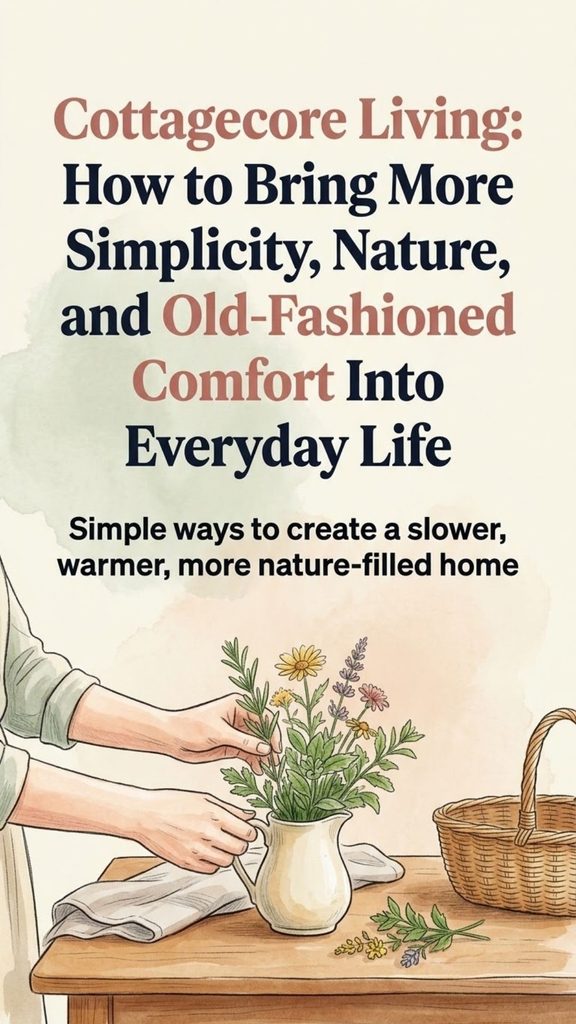
Cottagecore is easy to recognize in photographs: wildflowers in a glass jar, a loaf of bread cooling on a wooden table, faded floral fabric, baskets by the door, and a garden that looks slightly untamed.
But the appeal of cottagecore goes deeper than decorating a room to resemble a countryside cottage.
At its most useful, cottagecore is about making ordinary life feel more deliberate. It favors useful skills over constant convenience, natural materials over disposable trends, handmade objects over mass-produced clutter, and everyday rituals that encourage you to slow down.
You Might Also Like:
- Loading posts...
You do not need to live in an old farmhouse, move to the countryside, or replace your entire wardrobe to enjoy it. Cottagecore can fit into an apartment, suburban home, city balcony, or modern kitchen.
The goal is not to recreate life from another century. It is to borrow the parts that still make sense: growing things, cooking at home, repairing what you own, making your rooms comfortable, spending time outside, and creating with your hands.
What Cottagecore Really Means
Cottagecore is a modern lifestyle and visual aesthetic inspired by an idealized version of rural domestic life.
Its imagery often includes gardens, handmade crafts, traditional cooking, vintage furniture, natural landscapes, old books, floral textiles, baskets, pottery, and simple clothing.
The lifestyle side is more interesting than the photographs.
Cottagecore often encourages habits such as:
- Cooking from basic ingredients
- Growing herbs, vegetables, or flowers
- Buying secondhand
- Learning traditional crafts
- Spending more time outdoors
- Mending clothing
- Decorating slowly
- Reducing unnecessary consumption
- Creating comforting household routines
It is worth remembering that real historical rural life was not always peaceful or picturesque. Domestic work could be physically demanding, food security was uncertain for many families, and modern conveniences have solved plenty of genuine problems.
Cottagecore works best when it takes inspiration from traditional skills without pretending that every part of the past was better.
Start With the Feeling, Not the Shopping List
One of the easiest mistakes is turning cottagecore into another reason to buy things.
A room does not become more meaningful because it contains a dozen new floral cushions, decorative baskets, artificial vines, and mass-produced “vintage” signs.
Start instead with the atmosphere you want.
Most cottagecore interiors feel:
- Warm rather than stark
- Collected rather than perfectly matched
- Useful rather than overly styled
- Natural rather than glossy
- Comfortable rather than formal
- Personal rather than showroom-perfect
You may already own much of what you need.
Move a wooden chair into a sunny corner. Put fresh herbs in a jar. Use the old ceramic bowl that normally stays hidden in a cupboard. Display books you actually read. Bring out a quilt instead of buying another throw.
The most convincing cottage-style homes often look as though they developed gradually.
That takes time—and that is part of the charm.
Use Natural Materials Where They Make Sense
Wood, cotton, linen, wool, wicker, stone, pottery, and metal all work naturally within cottagecore interiors.
You do not need every surface to be rustic.
A modern sofa can sit beside an old wooden side table. Stainless-steel appliances can exist in a kitchen with linen towels, open shelves, and pottery bowls. A simple cotton tablecloth can soften a very contemporary dining area.
Natural materials are especially effective when they are also useful.
Consider:
- Wicker baskets for blankets or produce
- Wooden cutting boards kept within reach
- Linen or cotton kitchen towels
- Ceramic pitchers used for flowers
- Wool blankets
- Wooden stools
- Stoneware bowls
- Simple woven rugs
Choose materials that fit your household rather than forcing an aesthetic that creates more maintenance.
Let Vintage Pieces Add Character
Cottagecore favors objects that look as though they have lived a little.
That does not mean everything needs to be antique.
One or two older pieces can make a modern room feel more personal: a small dresser, framed landscape painting, wooden stool, old mirror, embroidered tablecloth, ceramic jug, or stack of secondhand books.
Secondhand shops, flea markets, estate sales, family attics, and online marketplaces can be better sources than buying brand-new objects designed to imitate age.
Look for quality first.
A slightly scratched wooden table can often be cleaned or refinished. A sturdy basket can last for years. Old frames can be reused with different artwork.
The goal is not to collect old things indiscriminately. Choose pieces you genuinely enjoy and can use.
Bring Plants and Seasonal Nature Indoors
Few things change a room as quickly as something living.
You do not need elaborate floral arrangements. A small jar of garden flowers, a branch with autumn leaves, fresh herbs on a kitchen windowsill, or a pot of trailing greenery can provide the natural softness associated with cottagecore.
Work with what is available seasonally.
Spring might bring flowering branches and bulbs.
Summer offers herbs, garden flowers, and greenery.
Autumn lends itself to dried seed heads, branches, apples, and small pumpkins.
Winter can be quieter: evergreen cuttings, bare branches, dried flowers, and bowls of seasonal fruit.
If you gather materials outdoors, do so responsibly and only where collecting is permitted.
Create a Softer Lighting Plan
Cottagecore rooms rarely depend on one harsh ceiling fixture.
Use several smaller sources of light instead.
Table lamps, reading lamps, wall lights, and candles can make a room feel warmer in the evening.
Choose warm-toned bulbs where practical and place lighting around the activities that actually happen in the room.
A reading chair needs a good lamp. A kitchen work area needs enough illumination to prepare food safely. A hallway needs enough light to navigate comfortably.
Cosiness should never come at the expense of function.
If you use candles, keep them away from curtains, dried flowers, books, children, and pets, and never leave them burning unattended.
Build a Cottagecore Kitchen Around Usefulness
The kitchen is one of the easiest places to bring cottagecore from appearance into everyday life.
Instead of focusing only on décor, think about what you want to do there.
Maybe you want to bake bread more often.
Perhaps you want to make soup from leftovers, dry herbs, preserve seasonal produce, cook family breakfasts, or keep a small pantry of useful staples.
Keep frequently used tools easy to reach.
A kitchen can feel welcoming with very ordinary things:
- A wooden spoon crock
- A basket of onions
- Fresh herbs
- A loaf under a clean cloth
- Cookbooks with handwritten notes
- A ceramic butter dish
- Jars of oats, rice, beans, or flour
- A fruit bowl
The charm comes from signs that the room is actually used.
Learn One Traditional Skill at a Time
Cottagecore often celebrates skills that were once normal parts of household life.
You do not need to learn all of them.
Choose one that genuinely interests you.
You could try:
- Hand sewing
- Mending clothes
- Embroidery
- Crochet
- Knitting
- Bread baking
- Jam making
- Gardening
- Flower arranging
- Pressing flowers
- Making simple candles
- Drying herbs
- Furniture refinishing
- Writing letters by hand
Learning slowly is better than buying supplies for ten hobbies and finishing none.
A small skill becomes satisfying when it becomes part of your real life.
Knowing how to replace a button may be more useful than owning an elaborate sewing room.
Grow Something, Even if You Have Very Little Space
Gardening plays a major role in cottagecore imagery, but you do not need acreage.
A sunny windowsill can hold herbs.
A balcony might support containers of lettuce, strawberries, flowers, or compact tomatoes.
A small patio can accommodate grow bags and pots.
If you have a yard, begin with a manageable bed rather than immediately trying to create an enormous garden.
Easy crops such as herbs and salad greens can help beginners gain confidence.
Flowers are worthwhile too.
A small cutting garden can provide bouquets throughout the growing season, while pollinator-friendly flowers can support insects when you select species suitable for your region.
Cottagecore gardening should feel enjoyable, not like another standard you have failed to meet.
Dress for Comfort Before Aesthetic
Cottagecore fashion often borrows from vintage and rural clothing without attempting to reproduce any specific historical period.
Common elements include:
- Floral dresses
- Cotton blouses
- Long skirts
- Knitted cardigans
- Loose trousers
- Overalls
- Aprons
- Woven bags
- Practical boots
- Simple leather shoes
- Soft earthy colors
You do not need an entirely new wardrobe.
Begin with what you already wear.
A cardigan over a simple dress may be enough. A cotton blouse with jeans can fit the aesthetic without looking like a costume.
Secondhand shopping can also make sense here, particularly if the philosophy of buying less is part of what attracts you to cottagecore.
Choose clothes that work for your weather, routines, body, and lifestyle.
Practicality is far more consistent with cottage living than suffering through an uncomfortable outfit for the sake of a photograph.
Make Handmade Things Part of Daily Life
There is something satisfying about using an object you made yourself.
It does not need to be perfect.
A crooked first scarf still keeps you warm. A hand-stitched napkin is still useful. A slightly uneven loaf of bread can still taste wonderful.
Handmade projects slow down consumption because they reveal how much effort goes into producing ordinary things.
That can make you more likely to repair, reuse, and appreciate what you already own.
You may also begin to prefer fewer possessions of better quality.
Cook More Often Without Making It Complicated
Cottagecore is frequently associated with pies, fresh bread, elaborate cakes, preserves, and beautiful farmhouse meals.
Every dinner does not need to look like that.
Simple home cooking fits the lifestyle just as well.
Soup and bread, baked potatoes, pasta with vegetables, eggs and toast, roasted vegetables, oatmeal, or a basic stew can all be comforting meals.
Start with dishes you can realistically make during an ordinary week.
Save longer baking and preserving projects for days when you have time to enjoy them.
The goal is to become more comfortable preparing food, not to create extra pressure around meals.
Use Seasons to Give the Year a Rhythm
One appealing part of cottagecore is paying attention to seasonal change.
Modern life can make every month feel similar. Stores sell many foods throughout the year, entertainment is available constantly, and indoor environments remain relatively controlled.
Seasonal routines create small markers in the year.
In spring, you might plant herbs and open windows.
Summer can mean outdoor meals, fresh berries, and flowers.
Autumn might bring soups, apples, mending projects, and warmer textiles.
Winter can become a season for baking, reading, indoor crafts, and quieter evenings.
You do not need an elaborate seasonal decorating budget.
Often the change in food, flowers, lighting, and household routines is enough.
Shop Locally When It Makes Sense
Farmers’ markets, independent bakeries, local growers, craftspeople, repair shops, and secondhand stores can fit naturally into cottagecore living.
Buying locally is not automatically cheaper, more sustainable, or possible for everyone, so it should not become a rule.
Use it where it provides genuine value.
Maybe that means buying seasonal vegetables from a nearby farm, having shoes repaired by a local cobbler, purchasing handmade pottery occasionally, or visiting a neighborhood bakery instead of a large chain.
Cottagecore is at its best when it strengthens your relationship with where you live rather than simply creating a certain visual style.
Reduce Digital Noise Without Rejecting Technology
Cottagecore often carries an anti-screen mood, but abandoning useful technology is unnecessary.
A better approach is deciding when you want technology present.
You might:
- Keep phones away from meals
- Read a physical book before bed
- Garden without headphones occasionally
- Spend one evening on a craft instead of scrolling
- Turn off unnecessary notifications
- Leave your phone behind while sitting in the garden
- Use a paper notebook for lists or recipes
Technology can remain useful without occupying every quiet moment.
The point is to create room for slower activities that require your attention.
Make Hospitality Simple Again
A cottage-style home should not become so carefully decorated that you are afraid to let anyone use it.
Invite people in.
Hospitality can be tea at the kitchen table, soup and bread, coffee in the garden, or a casual meal where everyone brings something.
Your house does not need to be spotless.
You do not need coordinated dishes or an elaborate menu.
Comfort matters more than presentation.
A lived-in home can often feel more welcoming than a perfect one.
Avoid the Perfection Trap
Social media tends to show cottagecore through an unusually polished lens.
Real homes have cords, appliances, laundry baskets, plastic containers, bills, work equipment, and things that do not match the color palette.
Real gardens have weeds.
Real bread occasionally fails.
Real handmade projects go crooked.
None of that disqualifies you.
Cottagecore becomes far more useful when you stop treating it as a visual performance.
A household can be deeply aligned with its values while looking completely ordinary.
Someone who grows herbs, repairs clothing, cooks dinner, shops secondhand, spends evenings reading, and walks outdoors regularly may be living closer to the spirit of cottagecore than someone who simply owns perfect floral wallpaper.
A More Grounded Way to Begin
If cottagecore appeals to you, resist the urge to transform everything at once.
Try a quieter beginning.
Grow one pot of herbs.
Visit a secondhand shop before buying something new.
Learn one simple bread recipe.
Repair a piece of clothing.
Put flowers from the garden on the table.
Turn off your phone during dinner.
Read on the porch.
Bake something because you enjoy making it.
Replace one disposable habit with a reusable one.
Create one corner of your home where you genuinely like to sit.
These changes are small, but that is exactly the point.
Cottagecore does not have to be an escape into an imaginary countryside. It can be a practical reminder that a satisfying home life is often built from ordinary things: useful work, natural beauty, familiar routines, creativity, good food, and enough quiet to notice them.