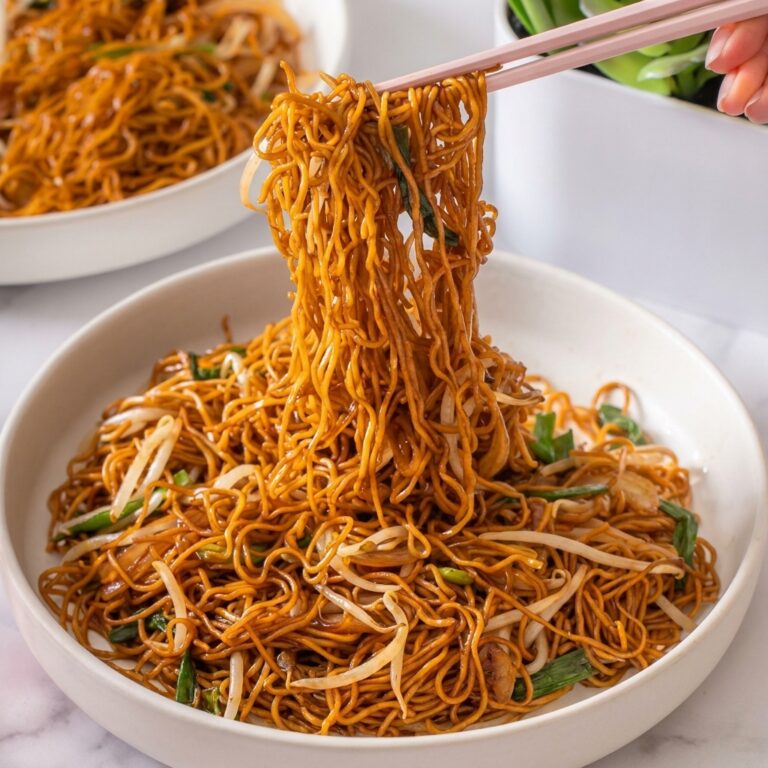
Ingredients
For the Chow Mein Sauce:
1/4 cup low-sodium soy sauce
2 tablespoons oyster sauce or vegetarian mushroom stir-fry sauce
1 tablespoon toasted sesame oil
1 tablespoon packed light brown sugar
1 tablespoon water
2 teaspoons cornstarch
1/2 teaspoon ground black pepper
For the Noodles and Vegetables:
12 ounces fresh chow mein noodles or 8 ounces dried chow mein noodles
2 tablespoons neutral cooking oil, divided
3 garlic cloves, finely minced
1 teaspoon freshly grated ginger
2 cups thinly sliced green cabbage
1 medium carrot, cut into thin matchsticks
2 cups fresh bean sprouts, rinsed and well drained
4 green onions, cut into 2-inch pieces
1 teaspoon sesame seeds, optional
Instructions
1. Add the soy sauce, oyster sauce, sesame oil, brown sugar, water, cornstarch, and black pepper to a small bowl.
2. Whisk until the cornstarch has completely dissolved, then set the sauce aside.
3. Prepare the chow mein noodles according to the package directions. Cook them only until just tender.
4. Drain the noodles and rinse them briefly under cool water to stop the cooking.
5. Shake away as much water as possible. Toss the noodles with a small drizzle of oil if they begin sticking together.
6. Heat a large wok or wide skillet over medium-high heat.
7. Add 1 tablespoon of the cooking oil.
8. Add the sliced cabbage and carrot. Stir-fry for 2 to 3 minutes, until they begin to soften but remain slightly crisp.
9. Push the vegetables toward the sides of the pan.
10. Add the remaining tablespoon of oil to the center of the pan.
11. Add the minced garlic and grated ginger. Cook for about 30 seconds, stirring constantly, until fragrant.
12. Add the drained noodles to the skillet.
13. Use tongs or two wooden spoons to toss the noodles with the vegetables.
14. Leave some noodles against the hot surface for 20 to 30 seconds before tossing again to create lightly browned edges.
15. Whisk the prepared sauce again because the cornstarch may have settled.
16. Pour the sauce evenly over the noodles.
17. Toss continuously for 1 to 2 minutes, until the sauce thickens slightly and coats the noodles.
18. Add the bean sprouts and green onions.
19. Stir-fry for another 1 to 2 minutes, just until the bean sprouts are warmed but still crisp.
20. Remove the skillet from the heat.
21. Taste and add a small splash of soy sauce if additional seasoning is needed.
22. Divide the chow mein among four bowls.
23. Garnish with sesame seeds or additional green onions and serve immediately.
Notes
Do not overcook the noodles during the initial boiling step. They will continue cooking in the skillet.
Drain the noodles thoroughly because excess water can make them steam instead of fry.
Rinse fresh bean sprouts and allow them to drain well before adding them to the pan.
Use a large wok or wide skillet so the noodles have enough contact with the hot surface.
Cook in two batches if your skillet is small. Overcrowding produces softer noodles without browned edges.
Whisk the sauce immediately before adding it because the cornstarch settles quickly.
Vegetarian mushroom stir-fry sauce may replace oyster sauce.
Bell peppers, mushrooms, snow peas, bok choy, celery, broccoli, or thinly sliced onions may be added.
For chicken chow mein, cook 1 pound of thinly sliced chicken before the vegetables. Remove it from the skillet, then return it with the noodles.
Thinly sliced beef, peeled shrimp, or firm tofu may also be added.
Store leftover chow mein in an airtight container in the refrigerator for up to 4 days.
Reheat in a lightly oiled skillet over medium heat. Add 1 to 2 teaspoons of water if the noodles appear dry.