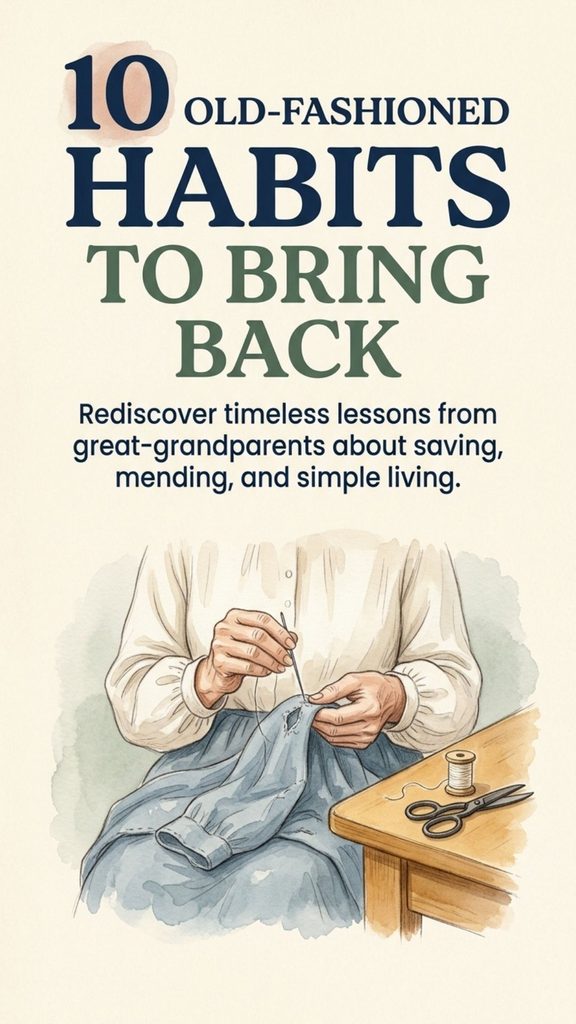
Life looked very different when our great-grandparents were growing up. There were fewer conveniences, fewer possessions, and no smartphones constantly demanding attention.
For many families, everyday life revolved around making things last, preparing meals at home, caring for the household, and finding happiness in simple activities.
Clothes were repaired instead of immediately replaced. Leftovers were turned into another meal. Neighbors exchanged help, and handwritten letters kept distant family members connected.
You Might Also Like:
- Loading posts...
Of course, life in the past wasn’t always easier or better. Many households faced difficult working conditions, limited healthcare, financial insecurity, and exhausting domestic responsibilities. Not every family lived on a farm or practiced the same traditions.
Still, some of the practical habits that helped previous generations manage their homes and resources are worth rediscovering.
Today, we’re surrounded by products designed to save time. Yet we often feel busier than ever, spend more than we intend, and struggle to find moments of peace.
Perhaps the answer isn’t to abandon modern conveniences but to combine the best of modern life with the wisdom of earlier generations.
Here are 10 old-fashioned habits worth bringing back, along with simple ways to practice them in your own home.
1. They Hung Their Laundry Outside to Dry
Before electric tumble dryers became common in homes, hanging laundry on a clothesline was a familiar household chore.
Freshly washed sheets, towels, shirts, and dresses were carefully pinned to a line and allowed to dry in the open air.
Depending on the weather, laundry might dry in the sunshine or under a covered porch where the breeze could circulate.
This simple tradition still offers several benefits.
Line drying can reduce household energy consumption and may help certain garments last longer by avoiding repeated exposure to high dryer temperatures.
It also provides an opportunity to spend a few minutes outdoors while completing an everyday task.
How to Bring This Habit Back
You don’t need a large backyard.
A retractable clothesline, balcony drying rack, or indoor folding rack may be sufficient.
Start by line drying towels, sheets, or a few suitable clothing items.
Check garment-care labels before hanging delicate fabrics.
For indoor drying, ensure the room has adequate ventilation to prevent excess moisture and condensation.
Old-fashioned lesson: Use simple, low-energy methods when they’re practical instead of automatically reaching for an appliance.
2. They Grew and Ate More Seasonal Food
For many families in earlier generations, home gardens were an important source of fresh food.
Vegetable patches supplied potatoes, beans, carrots, greens, onions, and other seasonal produce.
Fruit trees and berry bushes sometimes provided ingredients for pies, preserves, and desserts.
Families without gardens often depended more heavily on local markets and the foods available during particular seasons.
Modern transportation and refrigeration have made a much wider variety of food available year-round, which is a valuable convenience.
But seasonal cooking still offers practical advantages.
When produce is abundant locally, it may be fresher or more affordable.
Growing even a small amount of food can also help you appreciate the work involved in producing it.
How to Bring This Habit Back
Start with one or two crops you regularly eat.
If you have a backyard, consider a small vegetable bed.
If you live in an apartment, try container gardening.
Herbs such as parsley, basil, mint, and chives can be useful additions to a small home garden.
Visit local produce markets and plan meals around seasonal ingredients.
Learn which vegetables grow best in your climate rather than trying to cultivate everything at once.
Old-fashioned lesson: Appreciate the food available around you, reduce waste, and learn where your meals come from.
3. They Cooked More Meals From Scratch
Home cooking was an essential part of life in many earlier households.
Instead of relying as heavily on prepared meals, families often made soups, stews, bread, biscuits, sauces, and other everyday foods using basic ingredients.
A simple pot of beans might become several meals.
Vegetable scraps could be used for broth, and leftover meat might be added to soup or a pie.
Recipes were often adapted to whatever ingredients were available.
Cooking from scratch wasn’t always a choice. For many families, it required considerable time and labor.
Today, we have the advantage of choosing which traditional cooking habits fit our schedules.
How to Bring This Habit Back
You don’t need to prepare every meal from scratch.
Begin by learning five or six reliable recipes your family enjoys.
Good starting points include homemade soup, roasted vegetables, simple bread, casseroles, and pasta sauce.
Keep affordable pantry staples such as rice, oats, lentils, beans, and flour on hand.
Try planning meals that use overlapping ingredients so nothing goes to waste.
You can also prepare larger batches of suitable foods and freeze extra portions for busy days.
If you want to learn traditional food preservation, follow scientifically tested canning recipes and current food-safety instructions. Low-acid foods require proper pressure canning, not ordinary boiling-water processing.
Old-fashioned lesson: A few basic cooking skills can make everyday meals more affordable, satisfying, and flexible.
4. They Walked More During Everyday Life
Before widespread car ownership, walking was a necessary part of daily routines for many people.
Depending on where they lived, people might walk to school, shops, workplaces, neighboring homes, or community gatherings.
Household and agricultural work also involved considerable physical activity.
Of course, transportation wasn’t equally accessible to everyone, and walking long distances could be difficult or exhausting.
But there’s something valuable about treating movement as part of everyday life rather than something that happens only during scheduled exercise.
How to Bring This Habit Back
Look for small opportunities to walk more often.
Take a short walk after dinner.
Walk to a nearby shop when the route is safe and practical.
Spend time gardening, doing household tasks, or exploring a local park.
If you work at a desk, take occasional movement breaks.
You don’t have to meet an unrealistic daily step target.
The goal is to incorporate comfortable, regular physical activity into your routine.
Walking supports cardiovascular health, mobility, and general well-being.
Old-fashioned lesson: Movement doesn’t always need a gym membership or a complicated fitness plan.
5. They Found Entertainment Without Screens
Before televisions, computers, and smartphones became central forms of entertainment, families had different ways of spending their evenings.
Card games, board games, storytelling, music, reading, crafts, and conversation were common activities in many households.
Friends and neighbors sometimes gathered to play games or share a meal.
Children made up games using whatever materials were available.
Not every moment was entertaining, of course. But people often found enjoyment without needing to purchase a new product or subscribe to another service.
How to Bring This Habit Back
Choose one evening each week for a screen-free activity.
Invite family members to play cards or a board game.
Put together a puzzle.
Read a book, bake something together, or work on a craft project.
You might also host a simple game night with friends.
There’s no need to make it elaborate.
A bowl of popcorn, a deck of cards, and good company may be enough.
Screen-free entertainment can create opportunities for conversation and help you enjoy the people around you.
Old-fashioned lesson: Some of the most memorable moments come from shared experiences rather than expensive entertainment.
6. They Reused, Repaired, and Saved Before Buying New
Many households in previous generations had fewer possessions and worked hard to make them last.
Glass jars were reused for storage.
Worn fabric could become cleaning rags.
Furniture was repaired, and usable materials were saved for future projects.
Major purchases often required careful planning.
These habits were shaped partly by necessity, but they also encouraged resourcefulness.
Today, replacing a broken or outdated item can seem easier than repairing it.
Yet constantly buying replacements can place unnecessary pressure on household finances.
How to Bring This Habit Back
Before purchasing something new, ask yourself three questions:
Can I repair what I already own?
Can I borrow or buy the item secondhand?
Do I genuinely need it?
Try establishing a waiting period before making nonessential purchases.
Keep reusable containers when they are suitable for their intended purpose.
Turn old cotton clothing into cleaning cloths.
Maintain tools and appliances according to their instructions.
However, don’t reuse containers that are unsafe for food or attempt hazardous repairs to electrical, gas, or safety-critical equipment.
Old-fashioned lesson: Taking care of what you already own is often one of the simplest ways to save money.
7. They Traded Goods, Skills, and Favors With Neighbors
Before online marketplaces and digital payment systems, trading was an important part of community life in many places.
Someone with extra vegetables might exchange them for another useful product.
A neighbor who understood carpentry could help repair something, while another person might offer sewing or other practical assistance.
Not every community relied heavily on barter, but informal exchanges and mutual help have long been part of everyday life.
These relationships provided more than financial value.
They helped build trust, cooperation, and a sense of belonging.
How to Bring This Habit Back
Think about the useful skills and resources you could share.
Perhaps you grow more tomatoes than your household can eat.
Maybe you’re good at sewing, gardening, baking, or basic home organization.
You could exchange suitable surplus produce with a neighbor or offer help with a project.
Community tool-sharing arrangements are another practical idea.
Instead of buying equipment you’ll only use once, consider borrowing or renting it when appropriate.
Be clear about expectations and follow local rules concerning food preparation, sales, or other regulated activities.
Old-fashioned lesson: Strong communities can make everyday life easier, less wasteful, and more connected.
8. They Knew How to Sew and Mend Clothing
A missing button or small tear didn’t automatically mean a garment needed replacing.
Basic sewing and mending skills were common in many households.
Clothing could be patched, hems adjusted, and worn seams repaired.
Socks might be darned, and usable fabric was often saved for another purpose.
For households with limited money, these skills were essential.
Today, clothing is widely available at many price points, but learning to maintain it can still be worthwhile.
How to Bring This Habit Back
Start with a basic sewing kit.
You only need a few essentials:
- Needles and thread
- Small fabric scissors
- Spare buttons
- Straight pins
- A measuring tape
- A seam ripper
Learn how to sew on a button, repair a small seam, and fix a loose hem.
There are many beginner-friendly tutorials available for these simple skills.
You don’t need to become an expert dressmaker.
Even learning a handful of repairs can extend the life of your favorite clothing.
Buying fewer, better-suited pieces and caring for them properly may also reduce unnecessary spending.
Old-fashioned lesson: Knowing how to repair everyday items gives you more control over what you keep and what you replace.
9. They Were More Involved in Producing Their Food
For some rural households, raising chickens, keeping other livestock, and preserving meat were ordinary parts of life.
Families might collect fresh eggs, care for animals, tend vegetable gardens, and prepare food for storage.
These responsibilities required substantial knowledge, physical effort, and time.
Today, relatively few households need to produce their own meat or keep farm animals.
And raising livestock isn’t necessarily cheaper than buying food.
Feed, shelter, veterinary care, equipment, local regulations, and animal welfare all create ongoing responsibilities.
Still, the broader lesson is valuable: earlier generations often had a closer connection to how their food was produced.
How to Bring This Habit Back
You don’t need livestock to develop more food-producing skills.
Start with a few edible plants.
Learn to grow herbs, tomatoes, lettuce, or another useful crop.
Try making compost to improve garden soil.
Visit a local farm or farmers market to learn more about food production.
If you’re interested in keeping chickens or other animals, research local regulations, space requirements, welfare standards, ongoing costs, and veterinary access before making a commitment.
Learning safe food handling and preservation practices is another useful skill.
Old-fashioned lesson: Understanding the work behind food production encourages appreciation, responsibility, and less waste.
10. They Wrote Handwritten Letters
Before instant messaging and email, handwritten letters were one of the main ways people maintained long-distance relationships.
Family members shared news about daily life, children, celebrations, and important events.
Letters were written, sealed, posted, and sometimes kept for years.
A handwritten note could become a treasured reminder of someone special.
Today, communication is much faster.
We can send a message across the world in seconds, which is an extraordinary convenience.
Yet there’s still something meaningful about receiving a letter or card that someone took the time to write.
How to Bring This Habit Back
Try writing one handwritten letter each month.
Send it to a relative, old friend, or someone who would appreciate hearing from you.
You don’t need beautiful stationery or perfect handwriting.
Tell them what you’ve been doing.
Share a memory.
Ask about their life.
You could also write thank-you notes, birthday cards, or short messages of encouragement.
For a meaningful family project, consider writing down favorite recipes, childhood memories, or family stories for future generations.
Old-fashioned lesson: Thoughtful communication can strengthen relationships in ways that quick messages sometimes overlook.
Why These Old-Fashioned Habits Still Matter Today
The appeal of traditional living isn’t simply nostalgia.
Many of these habits encourage qualities that remain useful in modern life.
| Traditional Habit | Modern-Day Benefit |
|---|---|
| Line drying laundry | May reduce energy use and dryer wear |
| Growing seasonal food | Encourages gardening and food awareness |
| Cooking from scratch | Builds practical kitchen skills |
| Walking regularly | Supports physical activity |
| Playing games together | Creates opportunities for connection |
| Repairing and reusing | Reduces unnecessary purchases and waste |
| Trading with neighbors | Encourages cooperation and resource sharing |
| Mending clothes | Helps extend garment life |
| Learning food-production skills | Builds self-sufficiency and appreciation for food |
| Writing letters | Encourages thoughtful communication |
These aren’t rules for how everyone should live.
They’re ideas you can adapt according to your schedule, resources, household needs, and personal preferences.
The goal isn’t to recreate the past exactly.
It’s to borrow the practical wisdom that still works today.
7 More Old-Fashioned Skills Worth Learning
If you enjoy the idea of bringing traditional homemaking habits into your routine, there are several other useful skills worth exploring.
Make Homemade Broth
Use suitable vegetable scraps or safely handled bones and ingredients to prepare flavorful broth.
Freeze portions for soups and other recipes.
Learn Basic Gardening
Understand soil preparation, watering, seasonal planting, and harvesting.
Start with a small garden rather than attempting a large project immediately.
Organize a Practical Pantry
Keep a reasonable supply of foods your household regularly eats.
Rotate ingredients and check expiration dates to avoid waste.
Learn to Preserve Food Safely
Freezing, drying, and tested canning methods can help manage seasonal abundance.
Always follow current food-safety recommendations.
Maintain Your Household Tools
Clean, inspect, and store tools properly.
Good maintenance may extend their useful life.
Make Simple Handmade Gifts
Knitted items, sewn projects, homemade cards, and suitable baked goods can make thoughtful gifts.
Keep a Household Notebook
Use a notebook to record meal plans, important expenses, garden notes, household maintenance, and useful recipes.
This can be a simple way to stay organized without relying entirely on digital tools.
How to Start Living a Little More Like Your Great-Grandparents
You don’t need to make dramatic changes to enjoy the benefits of old-fashioned habits.
In fact, starting small is usually more realistic.
Choose two or three practices that fit naturally into your current lifestyle.
You might begin by cooking one additional homemade dinner each week.
Then try line drying some of your laundry.
The following weekend, mend a shirt or spend an afternoon planting herbs.
Over time, these simple changes can become familiar routines.
A Four-Week Old-Fashioned Living Challenge
Week 1: Reduce waste. Repair one item, reuse something safely, and plan meals using ingredients already in your kitchen.
Week 2: Make more at home. Prepare a homemade soup, bake a simple recipe, and learn one useful kitchen skill.
Week 3: Enjoy simple living. Take regular walks, plan a screen-free evening, and spend time outdoors.
Week 4: Strengthen connections. Write a handwritten note, visit someone you care about, and consider sharing or exchanging useful items with a neighbor.
By the end of the month, you’ll have tried several traditional habits without needing to change your entire lifestyle.
Keep the activities that feel useful and enjoyable.
Let go of the ones that don’t fit your circumstances.
What We Shouldn’t Romanticize About the Past
It’s tempting to imagine earlier generations living peaceful, uncomplicated lives.
But history was much more complex.
Daily chores often required exhausting physical labor.
Many families experienced financial hardship, food insecurity, limited access to healthcare, and fewer opportunities than people have today.
Domestic work also fell disproportionately on women in many households.
Modern appliances, medicine, transportation, and technology have improved life in important ways.
There’s no reason to reject those benefits simply to imitate the past.
Instead, we can appreciate traditional skills while recognizing the value of modern progress.
Use the washing machine, but consider line drying when practical.
Enjoy modern communication, but write an occasional letter.
Buy groceries, but grow a few herbs if you enjoy gardening.
The best approach is to combine convenience with resourcefulness.
Can Old-Fashioned Living Really Save Money?
Some traditional habits can reduce expenses, but results vary.
Cooking from basic ingredients may cost less than frequently ordering prepared food.
Mending clothing can prevent unnecessary replacements.
Line drying may lower electricity or gas use.
Growing herbs can reduce grocery purchases when you regularly use what you grow.
However, not every DIY project saves money.
Buying expensive gardening supplies to grow a few vegetables may cost more than purchasing the produce.
Making every household product from scratch can also require additional time, ingredients, and equipment.
Before beginning a project, consider the startup cost, maintenance requirements, and how often you’ll use the result.
Being frugal isn’t about doing everything yourself.
It’s about using your resources thoughtfully.
The Value of Slowing Down
One of the most meaningful lessons from earlier generations is the importance of making time for everyday life.
Modern technology allows us to accomplish things quickly.
But speed doesn’t always produce satisfaction.
Sometimes, a slower activity can be enjoyable precisely because it asks us to pay attention.
Kneading bread, tending a garden, sewing a small repair, or writing a letter can provide a welcome break from constant notifications.
These activities aren’t automatically relaxing for everyone, and they can become burdensome when treated as obligations.
But when chosen freely, they can create a sense of accomplishment and connection.
You don’t have to be productive every minute.
There is value in simply enjoying the process of making, learning, and caring for what you already have.
Frequently Asked Questions About Old-Fashioned Living
What Are the Most Useful Skills Our Great-Grandparents Had?
Practical skills such as cooking, gardening, sewing, basic repairs, food preservation, and household budgeting remain useful today.
The most valuable skills depend on your lifestyle and needs.
Is It Cheaper to Live an Old-Fashioned Lifestyle?
Some traditional habits can reduce expenses, particularly when they help you avoid waste or unnecessary purchases.
However, certain activities require significant time and startup costs.
How Can I Start Old-Fashioned Homemaking?
Start with one manageable habit, such as preparing meals from basic ingredients, mending clothing, organizing your pantry, or creating a small herb garden.
Do I Need to Live in the Country?
No.
Many traditional homemaking skills work just as well in apartments and city homes.
Container gardening, cooking, sewing, and reducing household waste don’t require a homestead.
What Is the Biggest Lesson We Can Learn From Older Generations?
One valuable lesson is that resourcefulness, practical skills, and strong relationships can improve everyday life.
You don’t need to reject modern conveniences to benefit from these ideas.
Final Thoughts: Sometimes the Old Ways Still Have Something to Teach Us
Our great-grandparents lived in a world very different from the one we know today.
They didn’t have access to all the conveniences, choices, and technology we now enjoy.
But many developed practical skills and habits that helped them manage everyday life with the resources available.
They repaired clothing, prepared homemade meals, grew food when possible, reused useful materials, and stayed connected with their communities.
These habits remind us that a fulfilling home life doesn’t always require buying more, owning more, or doing everything faster.
Sometimes, small changes are enough.
Hang your laundry outside when the weather is suitable.
Cook a favorite family recipe.
Grow something edible.
Write someone a thoughtful letter.
Repair something you might otherwise throw away.
You don’t have to bring back every tradition or live exactly as previous generations did.
The real wisdom is knowing which old-fashioned habits still make life better—and making room for them in the modern world.