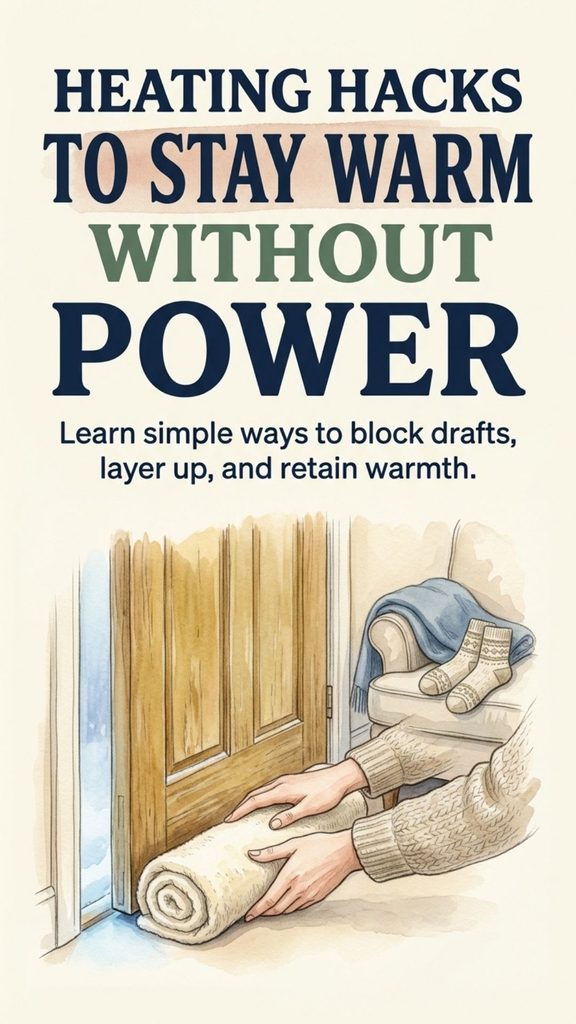
When the power goes out during winter, keeping your home warm becomes more than a matter of comfort. As indoor temperatures begin to drop, protecting yourself and your family from the cold becomes an important part of staying safe.
A winter storm, unexpected blackout, or heating-system failure can leave you without the warmth you normally rely on. And when electricity isn’t available, even simple activities like preparing a hot drink or warming a bedroom may become difficult.
Fortunately, there are practical ways to conserve body heat, reduce drafts, insulate your surroundings, and make your living space more comfortable without electricity.
You Might Also Like:
- Loading posts...
Some of these ideas use things you probably already own, such as blankets, towels, curtains, rugs, and warm clothing. Others involve a little preparation before severe weather arrives.
But there’s an important distinction between keeping existing heat from escaping and generating new heat safely.
Not every popular DIY heating trick is safe. Candle-powered flowerpot heaters, outdoor camping stoves, charcoal grills, and improperly vented heaters can cause fires or carbon monoxide poisoning.
The safest strategy is to retain warmth, protect your body, use only approved heating equipment, and know when it’s time to relocate somewhere warmer.
Here are 25 practical ways to stay warmer without electricity, along with important winter safety advice every household should know.
1. Wear Several Layers of Clothing
One of the simplest ways to stay warm is to dress in layers.
Instead of relying on a single thick sweater, combine several pieces of clothing that work together to reduce heat loss.
Start with a comfortable base layer, ideally one that helps move moisture away from your skin.
Add an insulating layer, such as fleece or wool.
Finish with a warm sweater or jacket if necessary.
The air trapped between clothing layers helps provide insulation.
Avoid wearing damp clothing because moisture can increase heat loss.
If you begin sweating, adjust your layers to remain comfortably warm without becoming wet.
2. Keep Your Feet Warm With Insulated Socks
Cold feet can make your entire body feel uncomfortable.
Floors often become particularly chilly during a winter power outage, especially in homes with tile, concrete, or poorly insulated flooring.
Wear dry, insulating socks.
Wool or suitable thermal blends can be helpful in colder conditions.
You can also wear slippers with sturdy, non-slip soles.
If you’re wearing several pairs of socks, make sure they aren’t so tight that they restrict circulation.
Avoid walking around in damp socks or footwear.
Keeping your feet dry and insulated is a small but useful way to maintain comfort.
3. Wear a Warm Hat Indoors
You don’t need to be outside to benefit from wearing a hat.
When the indoor temperature drops, a comfortable beanie or soft fleece hat can help reduce heat loss from your head.
A hat is particularly useful when you’re resting or sitting still for long periods.
Choose something that fits comfortably without feeling too tight.
A neck warmer can provide additional insulation around your neck.
However, avoid loose scarves or dangling fabric near cooking equipment, open flames, or other hazards.
4. Choose One Room as Your Warm Space
Trying to keep an entire house comfortable without a working heating system can be difficult.
Instead, consider gathering in one suitable room.
Choose a room that’s relatively small, has minimal drafts, and can be used safely by everyone who needs shelter.
A room with fewer exterior windows may be easier to keep comfortable.
Bring in blankets, pillows, sleeping bags, warm clothing, and essential supplies.
Close doors to unused rooms where appropriate.
This helps limit unnecessary air movement between spaces.
Remember that simply gathering in one room does not generate enough heat to keep a dangerously cold home safe indefinitely.
Monitor the temperature and be prepared to leave if conditions become unsafe.
5. Block Drafts Beneath Doors
Cold air can enter through gaps around doors.
An easy temporary solution is to place a rolled towel or draft stopper along the bottom of a door.
This can reduce unwanted airflow.
You can also use a tightly rolled blanket if it fits safely.
Don’t block an exit or create a tripping hazard.
Most importantly, never seal ventilation openings or prevent the airflow required by fuel-burning appliances.
Draft reduction is helpful, but proper ventilation remains essential.
6. Close Curtains and Blinds at Night
Windows can contribute significantly to heat loss.
Closing curtains or blinds after sunset helps add a barrier between the room and the cold glass.
Heavy, well-fitting curtains may provide more insulation than very thin window coverings.
If you have insulated curtains, use them.
Make sure curtains remain safely away from fireplaces, heaters, candles, and other heat sources.
When daylight returns, consider opening curtains on sunny windows to allow some natural solar warmth into the room.
This works best when the sunlight is strong enough to provide a benefit.
Close them again as temperatures fall.
7. Add Extra Insulation Around Windows
If your windows are drafty, temporary insulation may help reduce cold airflow and heat loss.
Window insulation film designed for residential use is one option.
Weatherstripping around suitable window frames can also help reduce leaks.
For temporary solutions, use materials that won’t damage the window or interfere with safe operation.
Never permanently seal windows that may be needed as emergency exits.
Also avoid covering necessary ventilation openings.
For the best results, install winterizing materials before severe weather arrives rather than trying to work on windows during a blackout.
8. Cover Cold Floors With Rugs
Hard floors can feel especially cold when indoor heating stops.
Area rugs can provide a more comfortable surface for walking and sitting.
If you already have spare rugs, place them in the room where your household plans to spend most of its time.
A suitable rug pad may provide additional insulation and help keep the rug from slipping.
For sleeping arrangements, an insulated camping mat is often more effective than a thin blanket laid directly on a cold floor.
Whatever you use, keep walking routes clear.
Loose rugs and layered fabrics can create tripping hazards, particularly in low light.
9. Use Sleeping Bags Designed for Cold Conditions
A suitable sleeping bag can be extremely useful during a winter outage.
Unlike an ordinary blanket, a sleeping bag wraps around much of the body and helps limit heat loss.
Choose one with a temperature rating appropriate to the conditions.
Keep in mind that sleeping bag ratings vary and may not represent comfortable temperatures for every person.
Use an insulated sleeping mat if you’re sleeping on the floor.
A sleeping bag alone may not provide enough insulation from cold ground or concrete.
Children should use age-appropriate bedding rather than adult sleeping bags that may create entrapment or suffocation hazards.
For infants, follow safe sleep guidance and avoid loose blankets, pillows, and other soft bedding in the sleep space.
10. Layer Blankets Properly
When you’re trying to stay warm, how you arrange your blankets can make a difference.
Start with dry, comfortable clothing.
Add a soft blanket close to your body, followed by a thicker insulating blanket or comforter.
If necessary, place another suitable blanket on top.
Don’t pull blankets tightly over your face.
Avoid using so many layers that you become overheated or begin sweating.
And remember that a blanket only slows heat loss; it doesn’t create heat.
If indoor conditions become dangerously cold, adding more blankets may not be enough.
11. Sleep Above the Cold Floor
Sleeping directly on a cold floor can increase heat loss through contact.
If your bed is available, using it may be more comfortable than sleeping on the floor.
If you need to create a temporary sleeping arrangement, place a suitable insulated camping mat or mattress beneath your bedding.
Cardboard and blankets may provide limited additional separation from the floor, but they shouldn’t be relied on as adequate insulation in severe cold.
Keep temporary bedding away from fireplaces, heaters, electrical equipment, and exits.
Make sure everyone has adequate space and can get up safely during the night.
12. Gather Together for Warmth and Companionship
During an outage, spending time together in one suitable room can make the situation easier to manage.
Family members can share a comfortable space, talk, read, or play quiet games while waiting for power to return.
Shared blankets may also provide additional comfort when used safely.
However, children and vulnerable adults still need individual protection from the cold.
Never rely on shared body heat as a substitute for adequate heating when temperatures become unsafe.
Check regularly on anyone who is elderly, very young, ill, or unable to communicate discomfort easily.
13. Use a Proper Hot Water Bottle if You Have Safe Hot Water
A purpose-made hot water bottle may provide temporary warmth.
If you have a safe way to obtain warm water, fill the bottle according to its manufacturer’s instructions.
Do not use boiling water unless the product explicitly permits it.
Check for damage or leaks before every use.
Wrap the bottle in a protective cover and avoid prolonged direct contact with skin.
Hot water bottles can cause burns, particularly for people with reduced sensation, diabetes-related nerve problems, or limited mobility.
Don’t use ordinary glass jars or unsuitable plastic bottles as substitutes.
They may crack, leak, or fail when exposed to heat.
And never operate an outdoor stove, charcoal grill, or camping burner indoors just to heat water.
14. Use Air-Activated Hand Warmers Carefully
Disposable air-activated hand warmers can provide a small amount of localized warmth.
They may be useful for keeping hands comfortable during a cold-weather emergency.
Follow the product’s instructions carefully.
Don’t place them directly against bare skin for prolonged periods.
They can cause burns, particularly when pressed against the body under tight clothing or during sleep.
Keep them away from infants and use caution with anyone who has reduced skin sensation.
Hand warmers are supplemental comfort items, not a replacement for adequate indoor heating.
15. Make Use of Emergency Thermal Blankets
Emergency thermal blankets, often made from thin reflective material, are lightweight and compact.
They can reduce certain forms of heat loss when used appropriately.
Because they provide little insulation on their own, they’re generally more useful when combined with suitable insulating clothing and bedding.
Use them according to their intended purpose.
Avoid covering your face or restricting airflow.
The shiny side doesn’t have to face a particular direction to create the benefits commonly associated with reflective emergency blankets.
They are worth keeping in a household emergency kit, but shouldn’t be treated as a substitute for a proper sleeping bag or a heated shelter.
16. Set Up an Indoor Tent for Extra Shelter
A small camping tent can sometimes create a more enclosed sleeping environment inside a room.
Its main advantage is limiting drafts and organizing a protected sleeping space.
However, an ordinary tent doesn’t generate heat, and it shouldn’t be assumed capable of maintaining a safe temperature during severe indoor cold.
If you use one, choose a suitable location away from heating equipment and emergency exits.
Maintain appropriate ventilation.
Never use a stove, lantern with an open flame, propane heater, charcoal burner, or other unapproved combustion device inside the tent.
For families with infants or young children, use appropriate age-specific sleeping arrangements and avoid unsafe enclosed spaces.
An indoor tent may improve comfort in a mildly cold room, but it isn’t a reliable emergency heating system.
17. Keep Moving Without Overexerting Yourself
Light physical movement can help you feel warmer.
Walking around the room, gently stretching, or performing suitable movements may increase heat production temporarily.
Choose activities appropriate to your health and mobility.
Avoid strenuous exercise that causes heavy sweating.
Damp clothing can increase heat loss once you stop moving.
If you’re feeling weak, unusually tired, dizzy, or extremely cold, don’t attempt to solve the problem through exercise.
Those symptoms may require medical attention or relocation to a warm environment.
18. Eat Regular Meals and Snacks
Your body needs energy to function and maintain its normal temperature.
Eating enough food is especially important during cold conditions.
Keep shelf-stable foods in your emergency supplies.
Examples include crackers, canned beans, nut butter, dried fruit, cereal, and other foods that meet your household’s dietary needs.
If you have a safe, approved way to prepare food, a warm meal can provide comfort.
But don’t use outdoor camping equipment indoors, and don’t attempt to heat the home with a gas oven.
Food supplies should be practical even when cooking isn’t possible.
19. Drink Enough Fluids
It’s easy to overlook hydration during winter.
Cold weather doesn’t eliminate your body’s need for water.
Keep safe drinking water available and sip regularly according to your needs.
If hot water is safely available, a warm drink may feel comforting.
But don’t rely on hot beverages to protect against dangerous cold exposure.
Avoid using alcohol as a way to warm up.
Alcohol can interfere with temperature regulation and judgment, making cold-weather emergencies more dangerous.
People with medical conditions affecting fluid requirements should follow their usual healthcare guidance.
20. Use Only Indoor-Approved Emergency Heating Equipment
If you want an actual backup heat source, it’s important to plan ahead.
Some fuel-burning heaters are designed and certified for specific indoor uses, but they still require careful attention to ventilation, fuel, clearance, and carbon monoxide risks.
Other products are intended strictly for outdoor use.
Never assume a portable heater is safe indoors simply because it’s small or marketed for camping.
Follow the appliance manufacturer’s instructions and applicable local fire and building codes.
Use only the specified fuel.
Keep combustible materials at the required distance.
Make sure the heater is suitable for the room and that required ventilation is maintained.
Install working carbon monoxide alarms and smoke alarms.
A permanently installed, properly maintained fireplace or wood stove may offer backup heat in some homes, but it must be used with an inspected chimney and appropriate safety precautions.
If you don’t have a verified safe heating option, a warming center or another heated location may be the safest choice.
21. Keep Battery-Powered Carbon Monoxide Alarms Working
Carbon monoxide is an invisible, odorless gas produced by incomplete combustion of fuels.
It can build up when generators, grills, stoves, engines, and other fuel-burning equipment are used improperly.
Exposure can be fatal.
Symptoms of carbon monoxide poisoning may include headache, dizziness, nausea, weakness, confusion, and vomiting.
If you suspect carbon monoxide exposure, get everyone into fresh air immediately and call emergency services.
During a power outage, battery-powered carbon monoxide alarms are especially important.
Make sure your household has functioning alarms positioned according to local requirements and manufacturer instructions.
Test them regularly and replace batteries or units when necessary.
Never ignore an alarm.
22. Keep Generators Outside and Away From Openings
A portable generator can provide electricity for certain essential appliances when used correctly.
But generators produce carbon monoxide and must never be operated inside a home, garage, basement, enclosed porch, or other partially enclosed space.
The CDC recommends placing generators outdoors at least 20 feet from doors, windows, and vents, with exhaust directed away from the home.
Additional distance may be necessary depending on conditions.
Never run a generator inside a garage, even with the door open.
Keep it dry and follow all manufacturer instructions.
If you connect a generator to household wiring, use an appropriate transfer arrangement installed by a qualified professional.
Improper electrical connections can endanger utility workers and create serious hazards.
23. Prepare a Cold-Weather Emergency Kit
The best time to prepare for a power outage is before the weather turns dangerous.
Keep essential supplies together in an accessible location.
A useful winter emergency kit may include:
- Flashlights and spare batteries
- Battery-powered or hand-crank radio
- Warm blankets and appropriate sleeping bags
- Extra dry clothing and socks
- Drinking water
- Shelf-stable food
- Essential medications
- First-aid supplies
- Portable phone chargers
- Working carbon monoxide alarms
- A thermometer to monitor indoor temperature
- Important contact information
Use flashlights or battery-powered lanterns instead of candles whenever possible.
They provide lighting without introducing an open flame.
Keep supplies appropriate for children, older adults, pets, and anyone with medical needs.
24. Monitor the Indoor Temperature and Watch for Warning Signs
A room can become dangerously cold even when people are wearing multiple layers.
Use a thermometer to monitor conditions rather than relying entirely on how the room feels.
The point at which indoor cold becomes dangerous depends on temperature, exposure time, clothing, health, age, and other factors.
Pay particular attention to infants, older adults, and people with chronic medical conditions or limited mobility.
Signs of Possible Hypothermia
Warning signs can include:
- Persistent shivering
- Unusual fatigue
- Confusion
- Slurred speech
- Poor coordination
- Drowsiness
- Slow breathing
- A body that feels very cold
Severe hypothermia may occur without continued shivering.
Hypothermia is a medical emergency.
If someone shows concerning signs, call emergency services, move them to a warmer place if possible, remove wet clothing, and provide gentle insulation while awaiting help.
Avoid aggressive rubbing or applying extreme direct heat.
Don’t give food or drink to someone who is confused, drowsy, or unable to swallow safely.
25. Know When to Leave for a Heated Shelter
Sometimes the smartest heating strategy is recognizing that your home is no longer safe.
If indoor temperatures continue falling, the outage is expected to last a long time, or vulnerable family members are becoming cold, consider relocating.
Options may include a designated warming center, an appropriately heated community facility, a trusted family member’s home, or another safe location.
Local emergency management agencies may provide information about warming shelters during major outages.
Don’t wait for a medical emergency before making arrangements.
Bring essential medication, necessary medical equipment, important documents, warm clothing, and supplies for children or pets.
If travel conditions are hazardous, follow local emergency instructions and seek assistance when necessary.
Leaving a dangerously cold home isn’t a failure to prepare.
It’s often the safest decision.
Dangerous DIY Heating Hacks You Should Never Try
Some popular winter survival tricks circulate online because they look inexpensive and clever.
Unfortunately, several can create serious hazards.
Terra-Cotta Pot Candle Heaters
Placing clay flowerpots over burning candles doesn’t create additional energy.
The heat still comes from the candle flames.
The arrangement may concentrate heat, increase fire risk, and create dangerously hot surfaces.
It’s not a safe or effective substitute for a heating system.
Charcoal Grills Indoors
Never burn charcoal inside a home, garage, tent, or enclosed area.
Charcoal produces carbon monoxide and can be deadly even when there is no noticeable smoke.
Using a Gas Oven to Heat the House
Gas ovens and stovetops are not designed to function as home heating systems.
Using them for space heating can create carbon monoxide, fire, and other hazards.
Running a Vehicle in the Garage
Never run a vehicle inside a garage, even with the garage door open.
Carbon monoxide can accumulate or enter the home.
Unvented Outdoor Camping Stoves
Camping stoves intended for outdoor use must never be operated indoors.
Opening a window doesn’t automatically make an outdoor appliance safe inside.
Sealing Every Opening in the House
Blocking drafts is useful, but sealing vents required for combustion air or ventilation can create serious problems.
Never interfere with a heating appliance’s safety requirements or obstruct emergency exits.
How to Keep Your Home Warmer Before the Next Power Outage
While many emergency steps are temporary, some home improvements can reduce heat loss all winter.
Inspect Weatherstripping
Check exterior doors and windows for worn or damaged weatherstripping.
Replacing suitable seals may reduce drafts and improve comfort.
Improve Insulation Where Appropriate
Proper attic and wall insulation can reduce heat loss.
Major insulation work may require professional assessment, especially where ventilation or moisture-control issues are involved.
Maintain Your Heating System
Arrange routine service according to the manufacturer’s recommendations.
If you use a fireplace or wood stove, have the chimney and equipment inspected appropriately.
Prepare Window Coverings
Install suitable curtains or insulating blinds before winter.
Keeping these materials ready makes it easier to respond to an outage.
Make an Emergency Plan
Decide where your household will gather and where you can go if the house becomes too cold.
Keep important emergency contacts available even when your phone or internet connection isn’t working.
How Long Can a House Stay Warm Without Electricity?
There isn’t one universal answer.
Heat loss depends on outdoor temperature, wind, insulation, air leakage, house size, and how warm the building was when the power failed.
A well-insulated home may retain warmth longer than a poorly insulated one.
However, even a well-insulated house can eventually become unsafe during prolonged freezing conditions without heat.
For this reason, it’s better to monitor actual indoor temperatures and personal safety rather than rely on a fixed number of hours.
If the power outage lasts longer than expected, reassess conditions regularly.
Frequently Asked Questions About Staying Warm Without Power
What Is the Safest Way to Stay Warm During a Power Outage?
Wear dry insulating layers, reduce unnecessary drafts without blocking ventilation, use appropriate bedding, and stay in a suitable room while monitoring indoor temperature.
If your home becomes dangerously cold, relocate to a heated shelter.
Can Candles Heat a Room?
Candles produce small amounts of heat, but they’re not an effective or safe way to heat a room.
Using multiple candles or improvised candle heaters increases fire and burn risks.
Battery-powered lights are preferable during outages.
Do Blankets Over Windows Really Help?
Suitable curtains or temporary coverings can reduce some heat loss and drafts, although results vary by window and installation.
Never block emergency exits or required ventilation.
Can I Sleep in a Tent Inside My House?
An indoor tent may reduce drafts and offer some comfort in a mildly cold room, but it isn’t a reliable solution for dangerously low temperatures.
Never use an open flame or unapproved heater inside it.
Will Closing Unused Rooms Help?
Closing doors may help limit air movement and make a smaller area easier to manage.
However, consider whether closed rooms contain plumbing that could freeze or appliances that require proper airflow.
What Should I Do if I Have No Safe Backup Heater?
Focus on personal insulation and monitoring conditions while making arrangements to reach a safe heated location.
Do not improvise indoor combustion heating.
Final Thoughts: Stay Warm, Stay Prepared, and Put Safety First
Losing electricity during cold weather can be stressful, especially when you’re unsure how long the outage will last.
But there are many simple ways to retain warmth and make your surroundings more comfortable.
Layering clothing, protecting your feet, using proper sleeping bags, reducing drafts, covering windows, and gathering in one suitable room can all help limit heat loss.
Preparing supplies in advance also makes a big difference.
However, no collection of blankets or household tricks can guarantee safety when indoor temperatures become dangerously low.
Avoid improvised heaters, outdoor fuel-burning appliances, and other methods that introduce fire or carbon monoxide hazards.
Keep carbon monoxide alarms working, monitor indoor conditions, and have a plan for relocating if necessary.
The smartest way to stay warm without electricity is to conserve the heat you have, avoid dangerous shortcuts, and recognize when a safely heated shelter is the best protection for your family.